
In this story
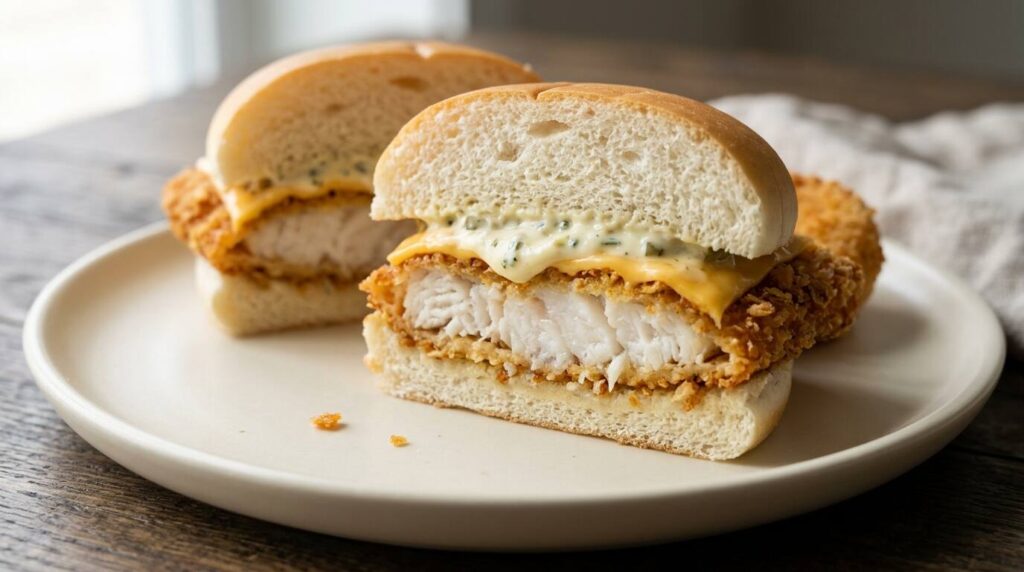
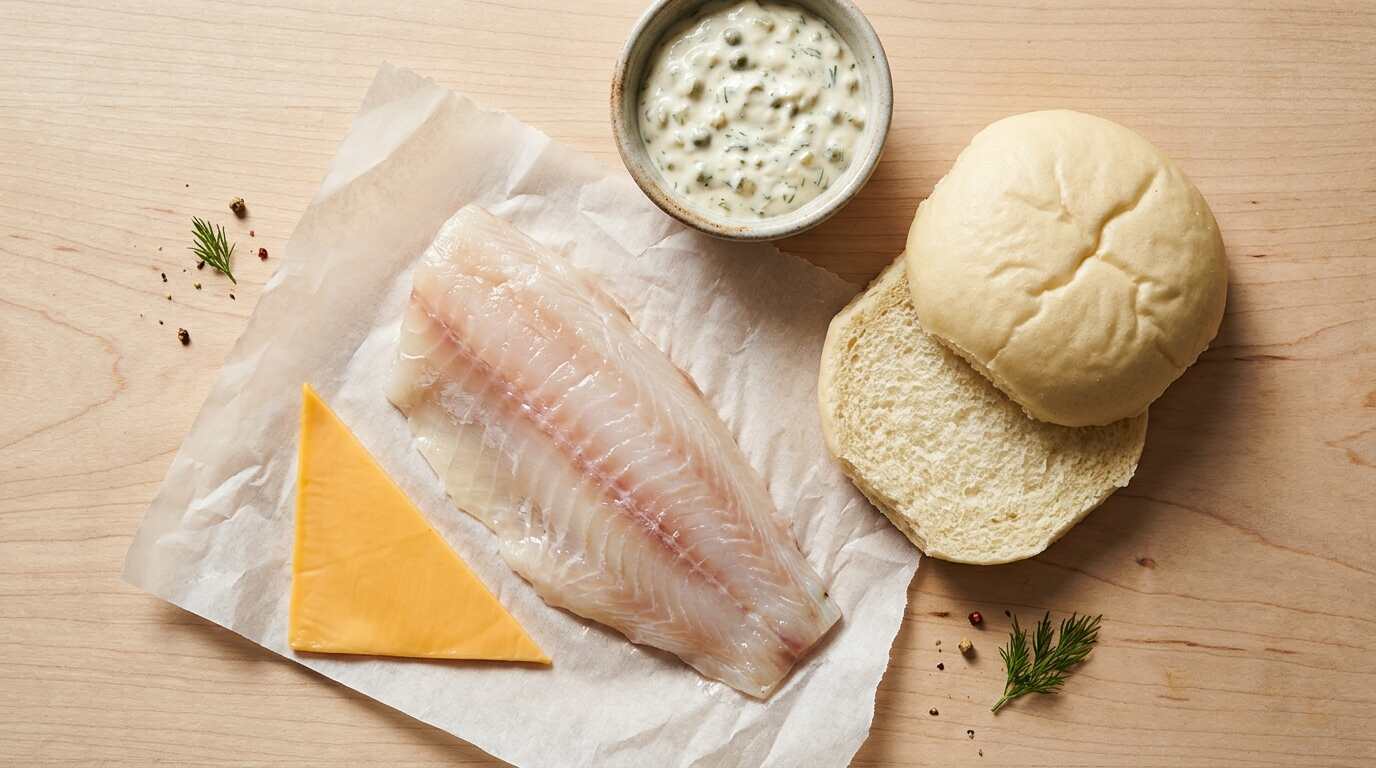
The Filet-O-Fish is a fried fish fillet on a steamed bun with tartar sauce and half a slice of cheese, as QSR Magazine describes it, and it exists because a Cincinnati franchisee could not sell hamburgers to Catholics on Fridays. According to McDonald’s own account, Lou Groen noticed Friday sales falling at a restaurant in a predominantly Roman Catholic neighborhood and persuaded the company to test a breaded whitefish sandwich for customers abstaining from meat. Most of the rest of the story, including the year, the fish and the Hula Burger that Ray Kroc backed instead, is told differently depending on who is telling it.
Video: Filet-O-Fish invented by Cincinnati McDonald’s franchise owner — from the WCPO 9 YouTube channel
A Franchise in a Catholic Neighborhood
Lou Groen opened in 1959 with a hamburger menu and a customer base that skipped meat on Fridays
Groen opened his McDonald’s in the Cincinnati area in 1959. The National Catholic Register says it was the first McDonald’s in Ohio and the 69th overall, with hamburgers at 15 cents and cheeseburgers at 19 cents. An undated Smithsonian Magazine article, which appears to date from early 2013, places the store in Monfort Heights, Ohio, and gives opening day as January 13, 1959, with sales of $307.38. Ohio Magazine and the Catholic Telegraph both place the restaurant on North Bend Road, and Ohio Magazine specifies West North Bend Road.
The neighborhood was heavily Catholic. Smithsonian and the National Catholic Register both put the figure at roughly 87 percent, and both report that Friday sales ran only about $75 a day. Tasting Table, in an April 2026 piece, rounds the figure to nearly 90 percent. McDonald’s quotes Groen’s son Paul on the scale of the problem: “Barely doing $300 in daily sales back in 1962.” The numbers do not match across sources, and they describe different days and years, so they are best read as an outline of a slow restaurant and not as a single ledger.
Groen was a McDonald’s franchisee from 1959 to 1986, according to Wikipedia, which is used here as a pointer to its references (a USA Today profile, a Cincinnati Business Courier interview and an Enquirer obituary, none of which could be retrieved for this post). The entry says he reached 43 restaurants in Ohio and northern Kentucky at his peak. The National Catholic Register and FOX19 give the number as 42.
The Friday Rule
Catholics were then expected to skip meat every Friday, not only in Lent
The sales problem had a specific cause. The Catholic Telegraph and Tasting Table both state that Catholics of the period abstained from meat on every Friday of the year, not only during Lent. The National Catholic Register adds that in 1966 U.S. bishops’ conferences allowed Catholics to replace the no-meat rule with another penance.
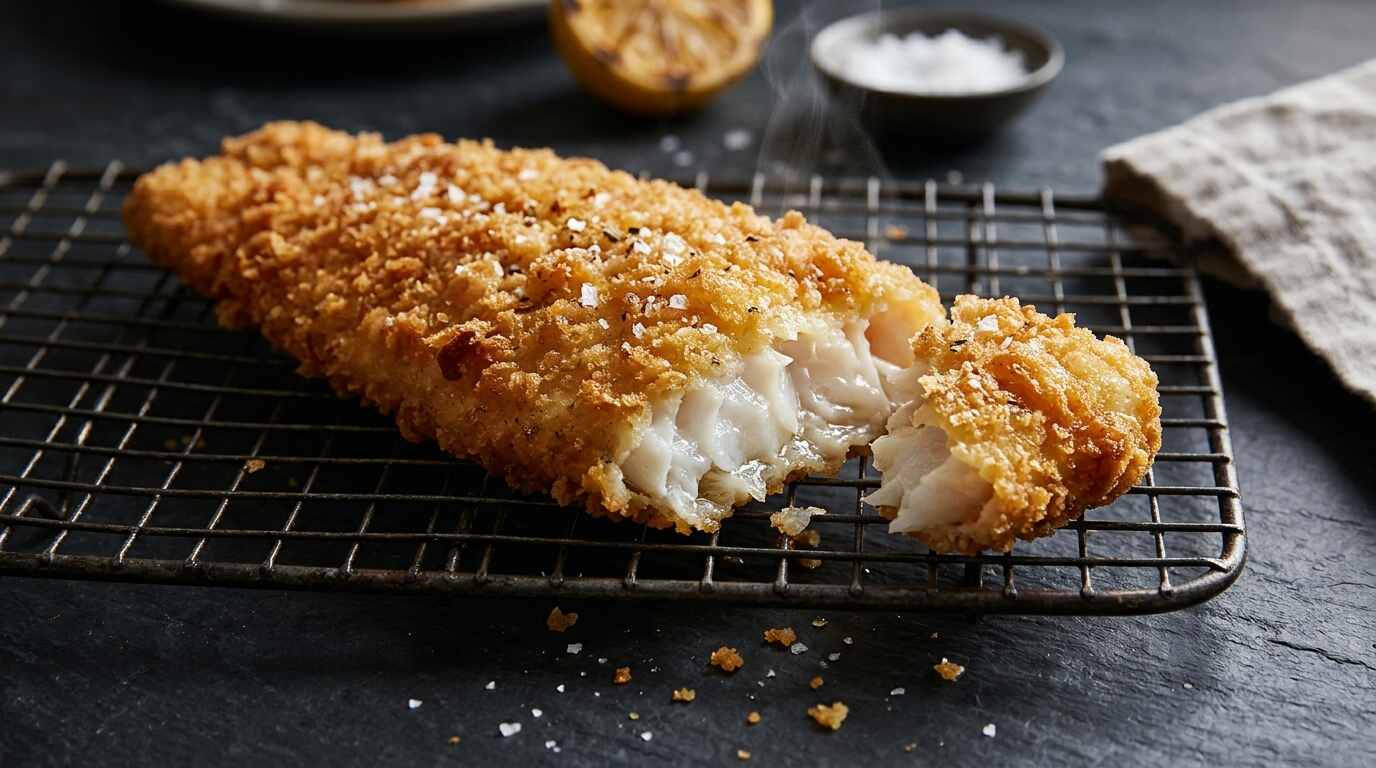
Competition for the Friday customer already existed. The National Catholic Register quotes a source it names as Shadoin, apparently Groen’s granddaughter Erica: “Everyone was going down the street on Fridays to Frisch’s restaurant that sold a fish sandwich.” Tasting Table says Groen saw a nearby Big Boy selling fish sandwiches and developed his own. The Catholic Telegraph describes the original two-piece halibut sandwich as similar to the one sold at Frisch’s Big Boy.
The Smithsonian article quotes a line that Paul Groen attributes to his father, Lou: “If I’m gonna survive, I’ve got to come up with a fish sandwich.” Smithsonian dates the pitch to corporate to 1961, and Tasting Table and Food Republic agree on 1961 for the sales trouble, with Food Republic placing the first proposal to Kroc in 1962.
Persuading Ray Kroc
The company founder objected to the smell, and the quotes vary by source
Kroc did not welcome the idea. Food Republic, in a December 2024 article by Adam Raphael, and Tasting Table both quote a line from Kroc’s memoir, Grinding It Out: “We are not going to stink up our restaurants with any of your damned fish.” Tasting Table prints the same sentence with the profanity partly masked. The National Catholic Register and Smithsonian quote a different wording, taken from a 2006 Cincinnati Business Courier interview with Groen: “I don’t want my stores stunk up with the smell of fish.” Both versions carry the same objection, and the sources do not say whether they are two recollections of one remark or two separate remarks.
Food Republic reports that Fred Turner and Nick Karos persuaded Kroc to allow development of the sandwich, and that Al Bernardin, a food technologist credited with inventing the Quarter Pounder, helped develop it. Tasting Table says two other McDonald’s executives convinced Kroc to test the idea, without naming them. The two accounts are compatible, though only Food Republic names names.
The Smithsonian article adds a second quote from Kroc, apparently about the Hula Burger he preferred: “It was a giant flop when we tried it in our stores.”
The Hula Burger
Kroc’s meatless sandwich was a pineapple and cheese idea, described a few different ways
Kroc had his own answer to the Friday problem. McDonald’s describes the Hula Burger as “a slice of grilled pineapple and cheese on a bun.” The other accounts fill in the details in conflicting ways.
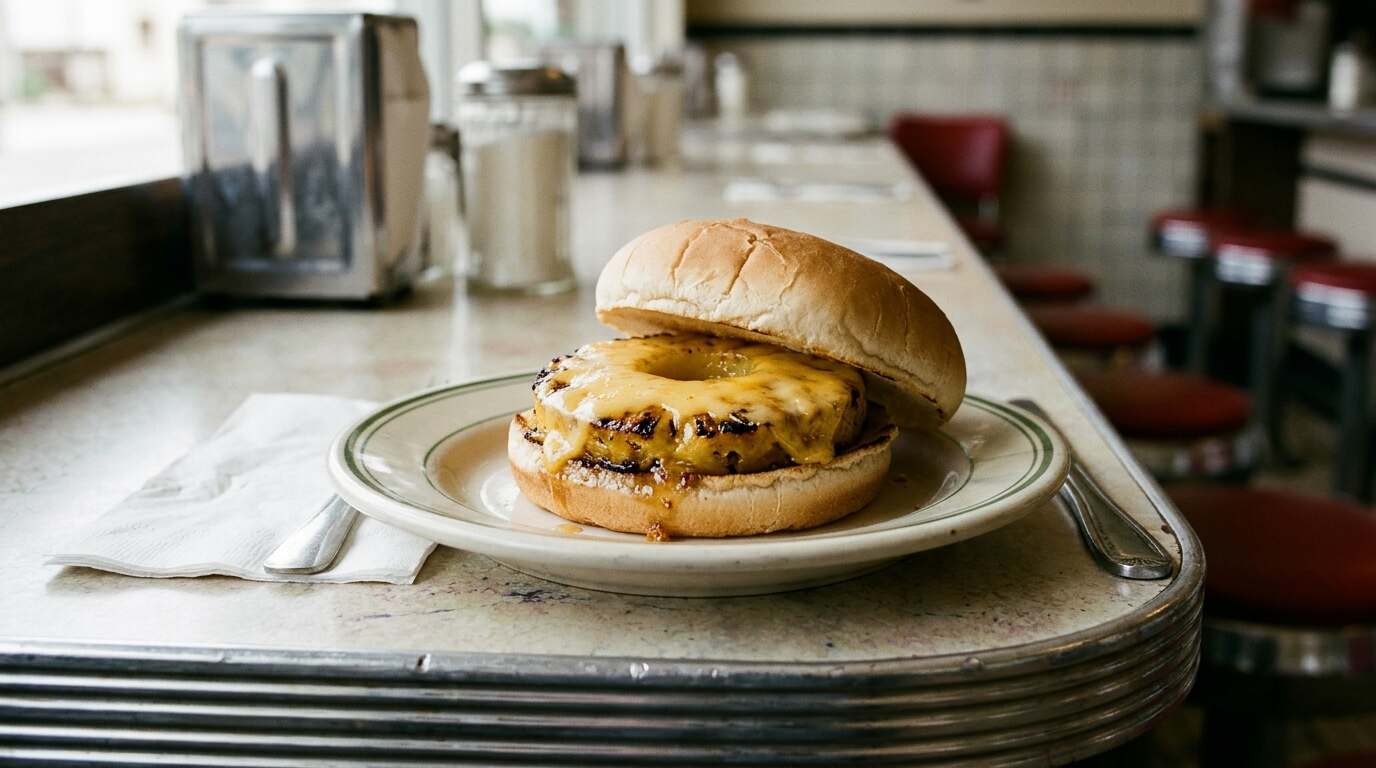
Food Republic describes a grilled pineapple round with a slice of melted American cheese on each side. Tasting Table says two slices of grilled pineapple and a slice of cheese, and calls it “The Hula.” FOX19 describes a cold bun, a pineapple slice and cheese. The Catholic Telegraph calls it a deep-fried pineapple slice on a bun. Wikipedia’s Lou Groen entry describes a breaded, fried pineapple slice with a toasted bun and cheese. Ohio Magazine says only grilled pineapple and cheese, and reports that Kroc expected it to appeal to Catholics avoiding meat during Lent.
These descriptions cannot all be right, and none of the pages consulted cite a menu card or a recipe for it. The consistent core is pineapple, cheese and a bun. The name is also treated unevenly: Tasting Table notes that its source calls it a sandwich, not a burger.
The Test Day
One Friday, two sandwiches, and a result of 350 to 6
The agreement for settling the matter is told almost identically in several places. McDonald’s says Kroc agreed with Groen to sell both sandwiches on one Friday, with the top seller joining the permanent menu. Ohio Magazine quotes Erica Shadoin, Groen’s granddaughter, in a March 2025 press release: “Kroc’s Hula Burger soon went up against the Filet-O-Fish and whichever item sold more on a certain Friday would be added to the permanent menu.”
McDonald’s adds a wager. In its telling, Kroc was so confident that he bet Turner, his first grillman, a new suit that the Hula Burger would win. The result was 350 to 6, and company historian Mike Bullington is quoted: “Fred got a new suit and McDonald’s got the Filet-O-Fish.” Wikipedia’s entry gives a different arrangement, saying Groen made the wager with Kroc, but marks the outcome claim [citation needed], so the McDonald’s version stands as the documented one.
Smithsonian and Tasting Table both date the test to Good Friday 1962, and Tasting Table says the figures were for the test restaurant. Smithsonian adds that, per the store’s sales ledger, February 13, 1962 was the first day the sandwich sold at Groen’s store. The National Catholic Register gives the same 350 and 6 figures without naming a year, and dates Groen’s fish sandwich to 1963.
Dates That Do Not Line Up
Test in 1962, menu addition in 1963, national item in 1965, with sources split on which counts
The date conflict is real. McDonald’s, Ohio Magazine, Tasting Table, the Catholic Telegraph and Wikipedia place the creation or the test in 1962. Smithsonian places the test in 1962 but says the whitefish version was officially added to the menu in 1963; the Catholic Telegraph also dates the introduction of the Filet-O-Fish to 1963. The National Catholic Register dates the idea itself to 1963.
On the national date the sources converge. McDonald’s says that in 1965 the Filet-O-Fish became the first addition to the original menu, the only non-hamburger option, at $0.29. QSR Magazine gives the same price as 29 cents. Ohio Magazine, Smithsonian and Tasting Table also say 1965 for the nationwide rollout.
Smithsonian reports that 2,324 fish sandwiches sold in the first month; Tasting Table gives “over 2,300.” Harry Groen, Lou’s son, who worked in the restaurant as a student at Elder High School, is quoted in a 1992 Catholic Telegraph column recalling the early weeks: “It sold like hotcakes.”
What Went Into the Sandwich
Halibut at first, then other fish; the bun, sauce and cheese have stayed closer to constant
The fish changed. The Catholic Telegraph says the original sandwich used halibut with two pieces of fish, and the National Catholic Register and Food Republic both say the first version used halibut, which the Register says was later replaced by Alaskan pollock because halibut was too expensive to scale. Paul Groen is quoted by the Catholic Telegraph saying the halibut version was on the Cincinnati menu from about 1963 to 1968 and that rising costs ended it. Smithsonian says the prototype was a battered halibut patty with cheese between two buns, and that the sandwich later used New Zealand hoki. QSR Magazine says McDonald’s previously used halibut and cod. McDonald’s, for its part, calls the original a breaded whitefish sandwich, which fits any of these.
Today the fish is Alaska pollock. McDonald’s says its U.S. restaurants use only wild-caught pollock certified by the Marine Stewardship Council, and that in 2013 McDonald’s USA became the first national U.S. restaurant chain to adopt the MSC blue ecolabel.
Cheese is another point of difference. Food Republic reports that the first version had no cheese and that a young employee of Groen’s added it, while Smithsonian describes the original prototype as including cheese. Ohio Magazine and QSR Magazine describe the current build: a steamed bun, tartar sauce and half a slice of cheese, which Ohio Magazine specifies as American. Grill Cheesy covers the cheese separately in its piece on American cheese. QSR also reports the recipe has changed little since 1962.
Regional variants exist. McDonald’s says some Asian locations add wasabi and select U.S. restaurants use an Old Bay tartar sauce. FOX19 also lists a steamed bun, tartar sauce, a fish fillet and cheese as the original configuration.
After 1965
Lent still drives a quarter of sales, and the franchisee idea became a pattern
McDonald’s reports that 25 percent of the prior year’s Filet-O-Fish sales occurred during Lent; QSR Magazine gives the same figure for 2016. The National Catholic Register puts Lent at 19 percent of receipts at the original franchise, with about 520 fish sandwiches a day then and about 70 a day otherwise. Smithsonian cites a company-wide figure of 23 percent in Lent and about 300 million sandwiches sold yearly.
QSR Magazine quotes Bullington on the broader pattern: franchisee ideas also led to the Big Mac, Egg McMuffin, hot apple pie and Shamrock Shake. Grill Cheesy’s history of the Egg McMuffin follows one of those. Other fish and seafood sandwiches covered on the site include the tuna melt and the lobster roll.
Smithsonian notes a short-lived mascot, Phil A. O’Fish, in 1976 advertising, gone by 1977. Groen sold his restaurants back to the company in 1986, per Smithsonian, the National Catholic Register and Wikipedia, and died on May 30, 2011, in Cincinnati at age 93, according to Wikipedia. The family still operates McDonald’s restaurants; the National Catholic Register reports that his granddaughter Erica Shadoin took over the original franchise in May 2018.
Sources
- McDonald’s Corporate, “Filet-O-Fish Journey”: https://corporate.mcdonalds.com/corpmcd/en-us/our-stories/article/ourstories.filet_o_fish_journey.html
- National Catholic Register, “How a Catholic Businessman Put the Filet-O-Fish on the McDonald’s Menu”: https://ncregister.com/features/how-a-catholic-businessman-put-the-filet-o-fish-on-the-mcdonald-s-menu
- Smithsonian Magazine, “The Fishy History of the McDonald’s Filet-O-Fish Sandwich”: http://www.smithsonianmag.com/arts-culture/the-fishy-history-of-the-mcdonalds-filet-o-fish-sandwich-2912/
- The Catholic Telegraph, “Throwback Thursday: McDonald’s Filet-O-Fish history tied to Cincinnati Catholics”: https://www.thecatholictelegraph.com/throwback-thursday-mcdonalds-filet-o-fish-history-tied-to-cincinnati-catholics/21458
- Food Republic, “Why The McDonald’s Filet-O-Fish Almost Didn’t Make It To The Menu”: https://www.foodrepublic.com/1736527/mcdonalds-filet-o-fish-menu-history
- Tasting Table, “Why The Founder Of McDonald’s Refused To Sign Off On The Original Filet-O-Fish”: https://www.tastingtable.com/2134275/mcdonalds-founder-reservations-original-filet-o-fish
- Ohio Magazine, “McDonald’s Famous Filet-O-Fish Was Created in Ohio”: https://www.ohiomagazine.com/food-drink/article/mcdonalds-famous-filet-o-fish-was-created-in-ohio
- FOX19, “The story of the Filet-o-Fish sandwich begins in Cincinnati”: https://www.fox19.com/story/14238124/the-story-of-the-filet-o-fish-sandwich-begins-in-cincinnati
- QSR Magazine, “History of McDonald’s Filet-O-Fish”: https://www.qsrmagazine.com/news/history-mcdonalds-filet-o-fish
- Wikipedia, “Lou Groen” (used as a pointer to its references): https://en.wikipedia.org/wiki/Lou_Groen
- YouTube, WCPO 9, “Filet-O-Fish invented by Cincinnati McDonald’s franchise owner”: https://www.youtube.com/watch?v=pYhyRAo2jEo