
In this story
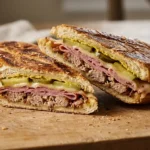
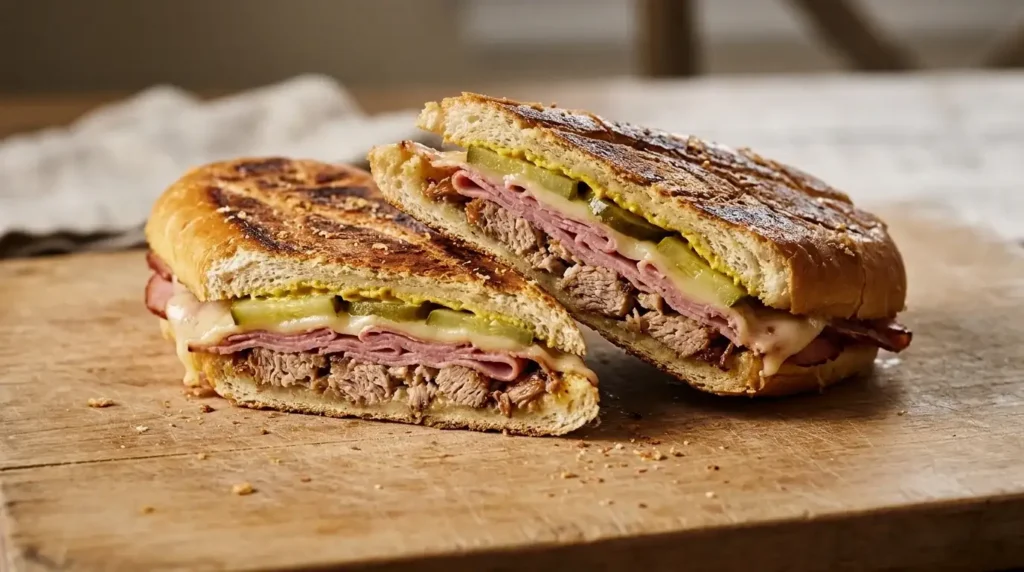
The Cuban sandwich is pressed Cuban bread filled with roast pork, ham, Swiss cheese, pickles and mustard, and two Florida cities have argued for years over who made it first and what belongs in it. Tampa puts Genoa salami in the stack. Miami leaves it out. Behind that single ingredient sits a longer story about cigar factories, immigrant neighborhoods and a city council that put the question to a vote.
Video: Columbia Restaurant – History of the Cuban Sandwich, 1905 Family Of Restaurants
Where the Cuban sandwich started
No single document fixes the birthplace. Researchers at the University of South Florida who wrote a book on the sandwich told NPR that Havana conceived it and that Florida cities then shaped it, and that they never found a “smoking gun” naming an inventor or a place, according to NPR’s report via Connecticut Public. A University of South Florida news story adds that the sandwich shows up on Havana menus in the 1800s, where Cubans called it a mixto, meaning mixed.
The Florida chapter runs through tobacco. A Matador Network history describes Cuban workers fleeing the independence wars between 1868 and 1898 and finding jobs in Key West, which had around 80 cigar factories, where the mixto took on an American ham-and-cheese influence. The same account says a fire at Vicente Martinez Ybor’s Key West factory around 1886 sent him to Tampa, and the workers followed him into what became Ybor City. That timeline comes from a travel publication rather than an archive, so the dates are best read as the commonly told version.
Barbara Cruz, one of the USF authors, describes the immigrant route as passing through Key West before reaching Ybor City and Tampa, per the same NPR report. Tampa then held the largest Cuban community in the country from 1890 to 1950, the report says.
Not everyone treats the lunch-for-cigar-rollers story as settled fact. Chantal Hevia, president of the Ybor City Museum Society, told Bay News 9 that the history is passed along by word of mouth and called the origin tale “purely conjecture.”
Tampa’s case
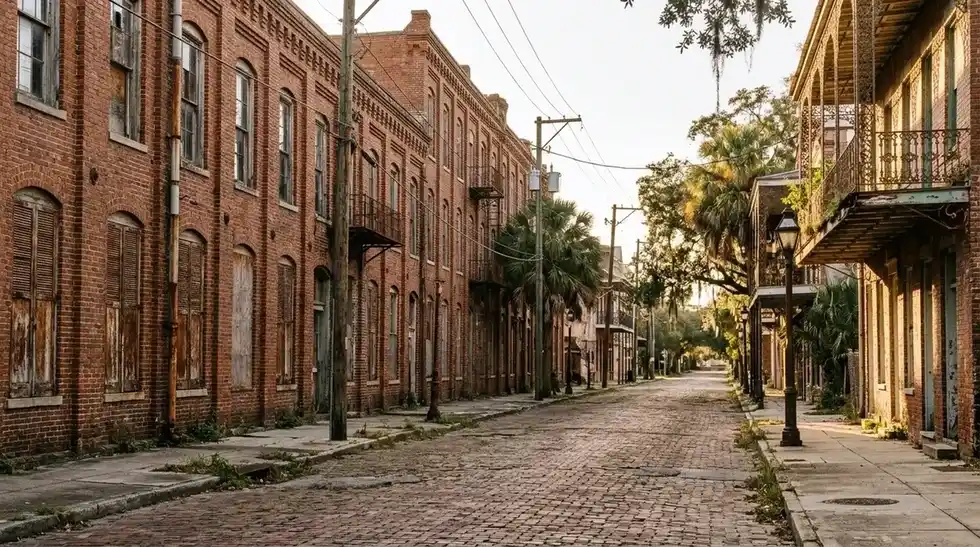
Tampa’s argument rests on timing and on its mix of people. Ybor City housed Cubans, Spaniards, Italians and Germans side by side, and Andrea Gonzmart Williams of the Columbia Restaurant family ties each ingredient to one of them: Cubans for the bread and pork, Spaniards for the ham, Italians for the salami, Germans for the mustard and pickles, per Bay News 9. The Matador history credits the Italian neighbors with the Genoa salami.
The bread has a Tampa address too. La Segunda Central Bakery in Ybor City was bought by Juan More, a Spanish soldier who learned to bake Cuban bread while serving in Cuba, according to the tampahistorical.org entry on the bakery. The page adds that a Cuban sandwich bought around Tampa Bay was most likely made on its loaves, and the bakery’s current owner credits an unchanged baking process, with new mixers as the main difference.
Restaurant tradition backs the neighborhood claim. Richard Gonzmart, a fourth-generation owner of the Columbia Restaurant, says it has served Cuban sandwiches for 120 years, per the USF story. The Matador history dates that restaurant’s recipe to 1915 and says it carries Genoa salami and no mayonnaise, lettuce or tomato.
In April 2012 the Tampa City Council voted unanimously to name the “Historic Tampa Cuban Sandwich” the city’s signature sandwich, and reading the resolution and taking the vote ran about two minutes, WUSF reported. A second WUSF report lists the resolution’s ingredients as sweet ham, mojo-marinated roast pork, Swiss cheese, dill pickles, mustard and Genoa salami. A plan to trademark the name was dropped. The Tampa Bay Times reported the result under the headline Tampa names Ybor City-style Cuban as the city’s signature sandwich.
This search did not turn up the resolution text on a City of Tampa page, so the ingredient list rests on the news reports above.
Miami’s case
Miami objects to the salami, and it said so in public. Mayor Tomas Regalado, a Cuban exile, answered Tampa’s vote by saying, “Tampa certainly has a tradition, but salami is for pizza,” as WUSF quoted him.
Local cooks backed him. NBC Miami spoke to cookbook author Raquel Roque, who said she knew of no salami ever going on a Cuban sandwich, and to Felipe Valles of Versailles Restaurant in Little Havana, who said mayonnaise and salami would not be served there. Roque’s version uses Cuban bread, sweet Virginia ham, roast pork, Swiss cheese, sweet pickles and yellow mustard, grilled and sliced on the diagonal.
Miami’s claim is mostly about people and numbers. Tampa had the nation’s largest Cuban population for over half a century before Miami became the center of Cuban culture in the 1960s, the USF story notes, and the exile wave after 1959 brought the sandwich into Miami’s cafeterias. The Matador history says new arrivals reshaped the recipe in those decades and gives one writer’s theory that Miami’s small Italian population helped drop the salami. The same account mentions a 1937 Miami News advertisement for a Cuban sandwich that included salami, which suggests the Miami version had not always lacked it. It also repeats an unsubstantiated but uncontested story that Raul Galindo of the Latin American Cafeteria was first to serve the salami-free version, in 1974.
A WUSF commentary by then news director Scott Finn, written from Tampa’s side, grants that Miami has more Cubans but argues that Tampa was there first. Tampa Bay Times columnist Sue Carlton, a former Miami resident, made a similar point, WUSF noted: the salami reflects Tampa’s Italian roots, and Tampa was making the sandwich during the cigarmaking era, before Miami existed as a city.
Miami’s best-documented contribution may be mechanical. The USF researchers credit Miami with the iron press that gives the sandwich its thin, crisp shape, per NPR.
Tampa and Miami side by side
| Tampa | Miami | |
|---|---|---|
| Story of origin | Ybor City cigar workers, Cuban and Italian immigrants, late 1800s to early 1900s | Cuban exile community, mid-20th century |
| Salami | Genoa salami included | Left out |
| Bread | Cuban bread from Ybor City bakeries | Cuban bread |
| Official status | City Council resolution, 2012 | None found in the sources used here |
| Core argument | “We were there first” | The salami does not belong |
The comparison of origins follows the Farmers’ Almanac summary, which describes both versions as sharing bread, roast pork, ham, Swiss, dill pickles and mustard, with salami as the dividing line.
Neither side is entirely uniform. Even in Tampa’s Latin community people disagree about whether the sandwich should be pressed or cold and whether turkey belongs, WUSF reported. The USF researchers found that by the 1940s and 1950s Tampa’s version had settled into a form that almost always had salami and often turkey, and that 1950s records of sandwiches in Cuba match that Tampa build, salami included, per NPR. That finding complicates both cities’ stories.
The components
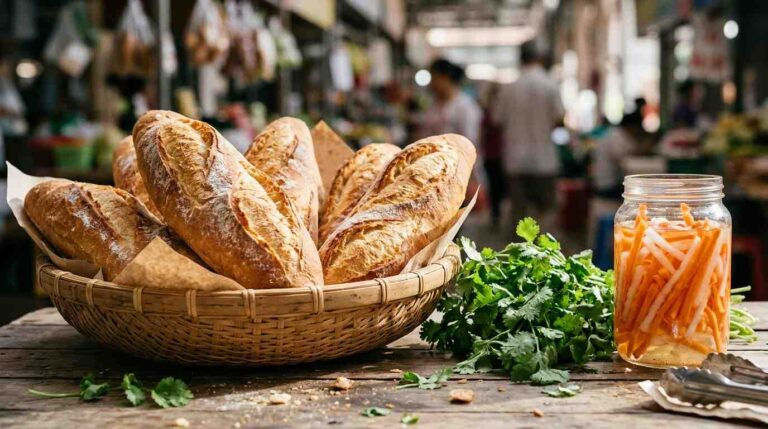
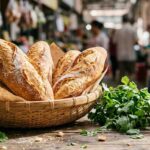
Cuban bread. A long loaf with a thin crisp crust and a soft crumb. La Segunda, according to the tampahistorical.org entry, turns out about 18,000 loaves a day. The Matador account credits Sicilian baker Francisco Ferlita with creating the loaf in Ybor City around 1896, scored down the middle. The Farmers’ Almanac says Italian or French bread can substitute when Cuban bread is not available.
Roast pork. Marinated in garlic and citrus, the style called mojo, according to the Matador history and the WUSF resolution report.
Ham. Sweet or glazed ham, in the descriptions from both cities.
Swiss cheese, pickles and mustard. Swiss goes against the meat, dill pickle slices go over it, and yellow mustard finishes the stack. According to the Farmers’ Almanac, the traditional version has no mayonnaise, lettuce or tomato.
The press
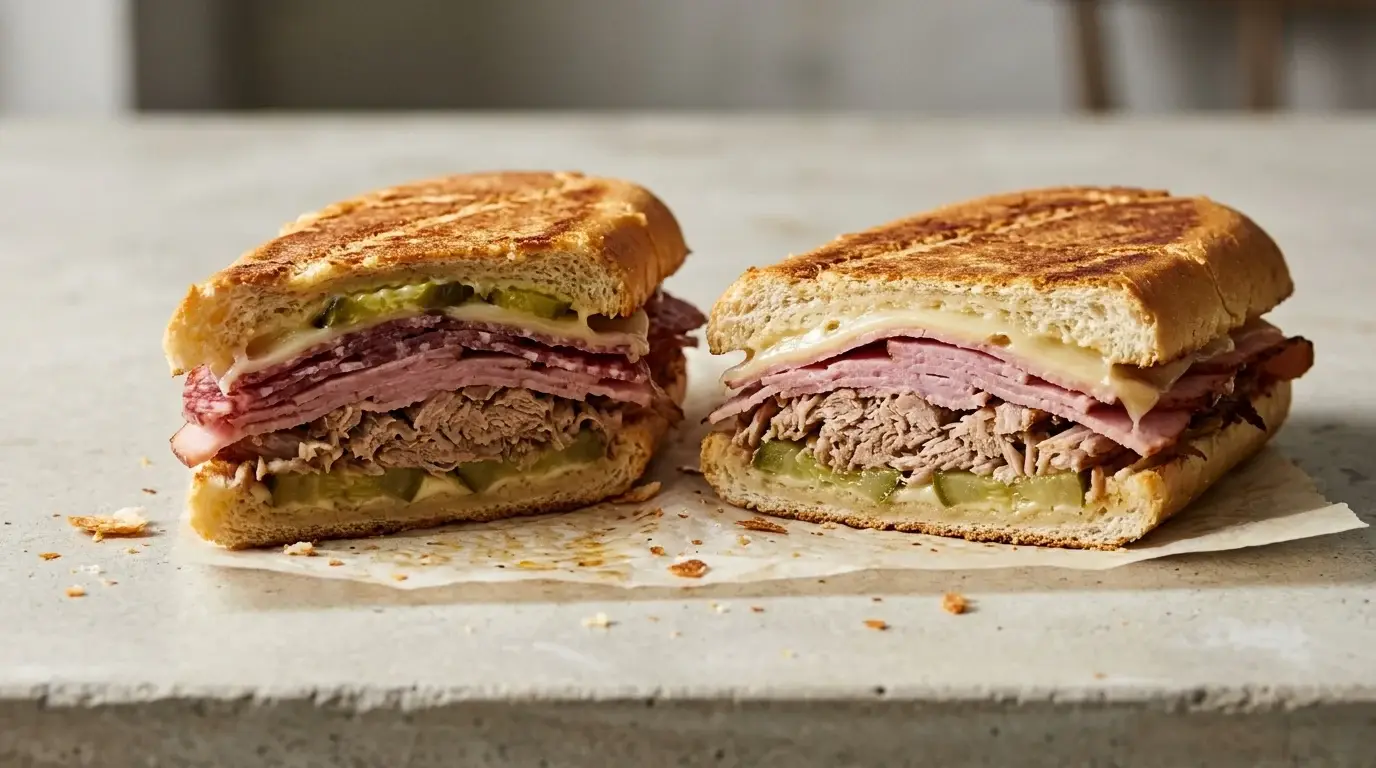
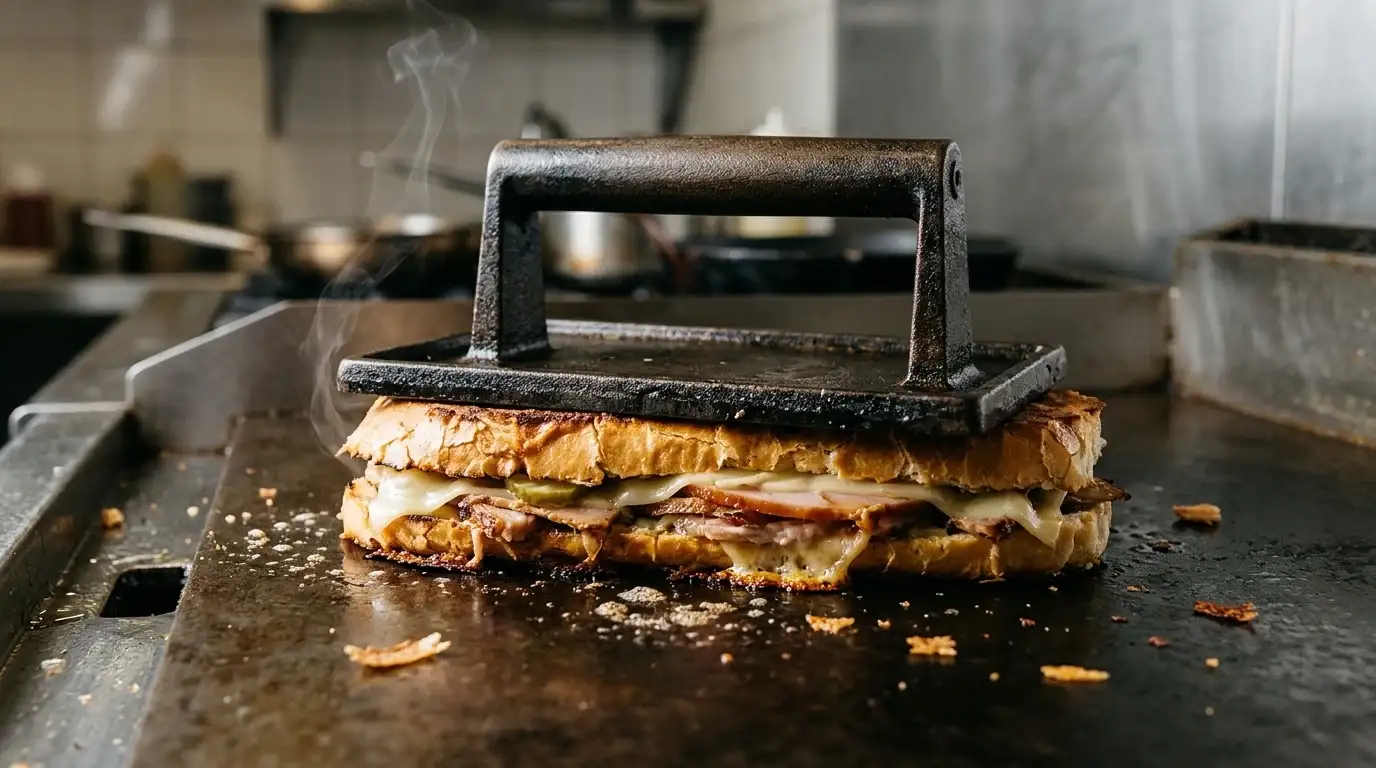
The sandwich is built cold and finished hot. The Farmers’ Almanac describes a plancha, a flat press without grooves, used until the bread is golden and the cheese has melted, with the loaf squeezed to about a quarter of its original height. Butter or olive oil goes on the outside of the bread. Home cooks without a plancha can use a panini press or a skillet weighted by a second heavy pan, the same source says, at two to three minutes per side for the skillet method.
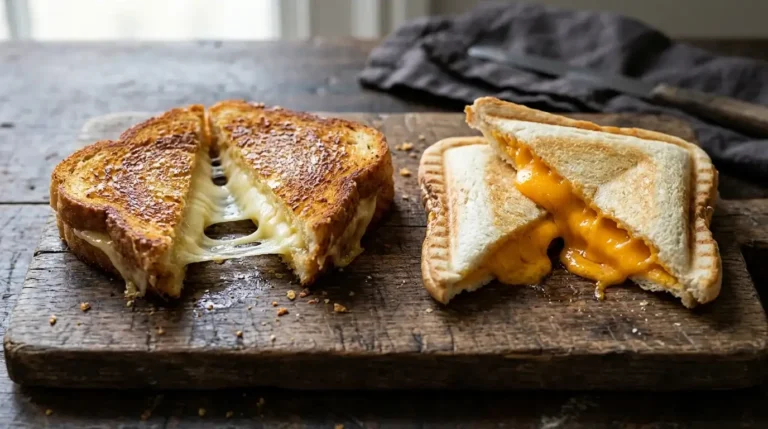
Pressing bread against a hot surface also links the Cuban to another American staple, covered in the history of the grilled cheese.
National Cuban Sandwich Day
The argument gets an annual airing on August 23. Chris Spata, then a Tampa Bay Times reporter and a 2011 USF journalism graduate, wrote a 2016 story on invented food holidays and then started one, sending a press release to 1,200 food writers and picking the date because no major food had claimed it, according to the USF story. Coverage followed, and Spata says the day is now observed in the United States and abroad.
Where the dispute stands
The USF researchers land on a middle position: Havana first, Tampa as the long-time curator, Miami as the place that added the press and spread a salami-free form, as NPR described it. Tampa holds the one official proclamation. Miami holds the larger Cuban population and the louder objection. Whether a salami-free sandwich is the true Cuban or a later variant is still argued city by city, one lunch counter at a time.
Sources:
- Cuban Sandwich History, Tampa vs Miami, Farmers’ Almanac: https://www.farmersalmanac.com/viva-la-cuban-sandwich-20801
- NPR via Connecticut Public, What’s the origin of the Cuban sandwich?: https://www.ctpublic.org/2022-10-22/whats-the-origin-of-the-cuban-sandwich-researchers-set-out-to-settle-the-debate
- University of South Florida, The Cuban sandwich story: https://www.usf.edu/news/2025/the-cuban-sandwich-story-how-usf-played-a-surprising-role-in-its-rise-to-fame.aspx
- Matador Network, Cuban sandwich history: https://matadornetwork.com/read/cuban-sandwich-history/
- Bay News 9, Ybor City stakes claim on original Cuban sandwich: https://baynews9.com/fl/tampa/news/2019/10/15/ybor-city-stakes-claim-on-original-cuban-sandwich
- tampahistorical.org, La Segunda Central Bakery: https://tampahistorical.org/items/show/102
- WUSF, The Cuban is officially Tampa’s signature sandwich: https://www.wusf.org/post/cuban-officially-tampas-signature-sandwich
- WUSF, A historic vote for Tampa’s Cuban sandwich: https://wusf.org/culture/2012-04-19/a-historic-vote-for-tampas-cuban-sandwich-pressed-or-cold
- WUSF, Trademarking the Cuban sandwich: https://www.wusf.org/culture/2012-04-18/trademarking-the-cuban-sandwich
- Tampa Bay Times, Tampa names Ybor City-style Cuban as the city’s signature sandwich: https://www.tampabay.com/news/humaninterest/tampa-names-ybor-city-style-cuban-as-the-citys-signature-sandwich/1225854/
- NBC Miami, Miami Engages Tampa in Cuban Sandwich War: https://www.nbcmiami.com/news/local/miami-engages-tampa-in-cuban-sandwich-war/1920629
- WUSF, The Cuban Sandwich War: https://www.wusf.org/culture/2012-04-16/the-cuban-sandwich-war
- Columbia Restaurant – History of the Cuban Sandwich, 1905 Family Of Restaurants: https://www.youtube.com/watch?v=QRI88Pq1hu8