In this story
Onion rings are slices of onion pushed apart into hoops, coated in batter or flour and dropped into hot fat. The question of who did it first has at least three answers on the record: an English cookbook author in 1802, a Texas drive-in chain in the 1920s, and a long run of American newspaper recipes in between that undercut the Texas claim.
Video: Onion Rings – 18th Century Cooking, from the Townsends YouTube channel
The 1802 recipe
Parmesan, lard and a mustard sauce
The earliest printed version usually cited is English. Joe Hoeffner, writing for The Takeout in November 2024, described a fried onion recipe in John Mollard’s 1802 cookbook The Art of Cookery Made Easy and Refined. The onion was cut into half-inch circles, dredged in a batter of flour, Parmesan, salt and pepper, and cooked in hot lard, with a sauce of mustard and melted butter on the side.
Hoeffner noted there is no sign the dish caught on. It sat in the book. Lincoln was not born until seven years later, a comparison he used to make the point about age.
The Pig Stand claim
A Texas line cook in the 1920s
The best-known American claim belongs to the Pig Stand, a Texas drive-in chain. According to The Takeout, the chain credited a line cook in the 1920s with battering and frying an onion, and it claimed two other inventions as well, Texas toast and the chicken-fried steak sandwich.
The chain is gone. Hoeffner reported that its last remaining location, in San Antonio, closed in 2023.
He also left room for the claim. Recipes were already circulating, he wrote, but information moved slowly, and the Pig Stand’s cook may well have arrived at the idea independently.
The paper trail
French fried onions, 1908
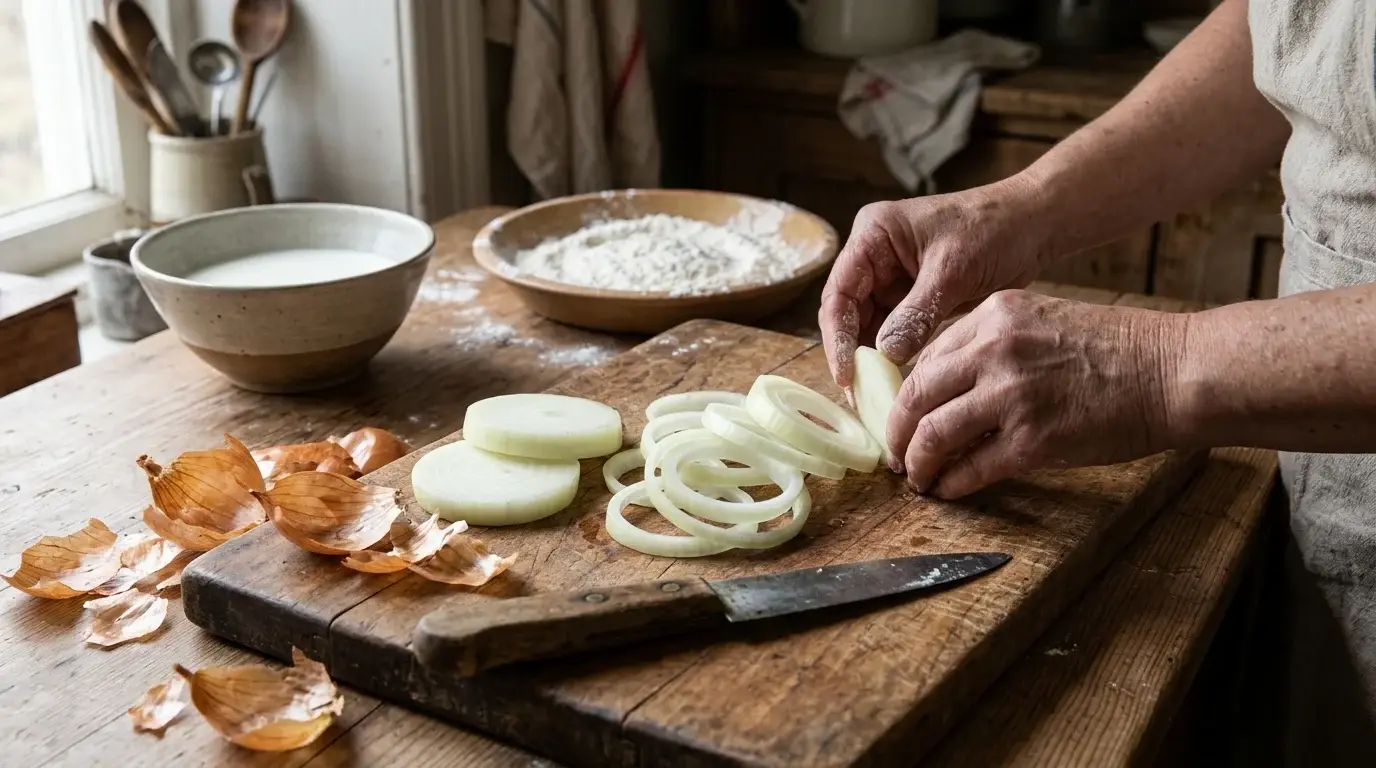
Newspapers say the idea was common long before the Pig Stand. The word researcher Barry Popik has collected dated newspaper citations for “French fried onions.” The earliest on his list is a June 20, 1908, item in the Fort Wayne Sentinel, credited to Fannie M. Farmer: peel the onions, cut them in quarter-inch slices, separate them into rings, dip in milk, then flour, and fry in deep fat.
More followed. Popik lists a January 1910 recipe in the Middletown, New York, Daily Times, a May 1910 item in the New York Sun that called French fried onions a novelty that progressive New York restaurants were introducing, and further recipes through the 1910s and 1920s.
The Oxford English Dictionary’s first citation for “onion ring” in the fried sense, as quoted by Popik, comes from a 1936 issue of Restaurant Management.
A recipe from 1905 and a politician’s memory
Jan Whitaker, the restaurant historian behind Restaurant-ing Through History, pushed the date back further in a July 2021 post. She found a recipe in Woman’s Home Companion in 1905, and wrote that William Jennings Bryan later published his own recipe in a Boston paper, saying the Grove Park Inn in Asheville, North Carolina, opened in 1913, was the first place he had eaten them.
Whitaker was blunt about the Texas story. The 1905 recipe and Bryan’s account, she wrote, settle the question: onion rings were not a 1920s Pig Stand invention.
Rings for the steak crowd
Side dish, bar snack, a man’s meal
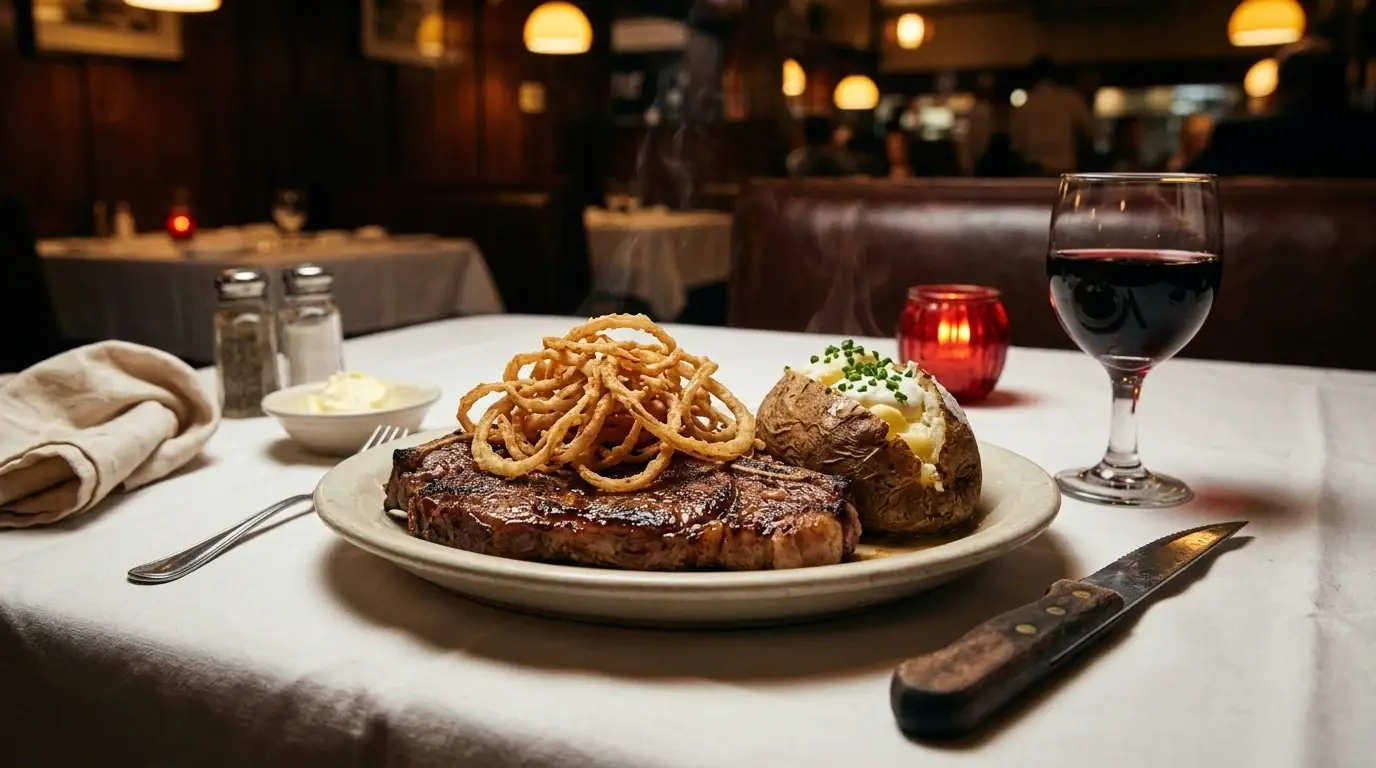
Onion rings spread through restaurants in the 1930s. Whitaker credited better cooking oils and deep fryers, and noted that for decades the rings were served mainly alongside steak and marketed to men, including a restaurant ad she quoted that ended with the tagline “A Man’s Meal.”
They also sold by the bag. Popik quotes a January 1937 New York Herald Tribune note that French fried onion rings were selling in small bags for ten cents as a cocktail snack, or to warm over a broiled steak.
Onions themselves carried a stigma. Whitaker cited a 1966 restaurant handbook that told operators to shun onions on menus, alongside lamb kidneys and pig’s knuckles, and a 1969 Gallup Poll that ranked French fried onions just ahead of broccoli, lima beans and peas.
Fast food and the extruded ring
Pressed onion, uniform size
Frozen, pre-breaded rings changed the side. Whitaker wrote that ready-to-heat rings spread in the 1970s as fast food chains added them, and that some, including Burger King’s, were made from ground onion extruded through tubes in a factory. A Seattle restaurant reviewer in 1977 complained they were all one size and short on onion taste.
McDonald’s tried a different shape. In 1978, Whitaker reported, the chain test-marketed Onion Nuggets, chunks rather than rings, which did not make it past testing, reputedly because they cooled too fast.
By then onion rings had settled in next to the burger. Grill Cheesy has covered that partner in the hamburger’s origin and the smash burger, and the other fried sides in french fries and potato chips. Onions cooked the slow way, in broth, are in French onion soup.
Frying them at home
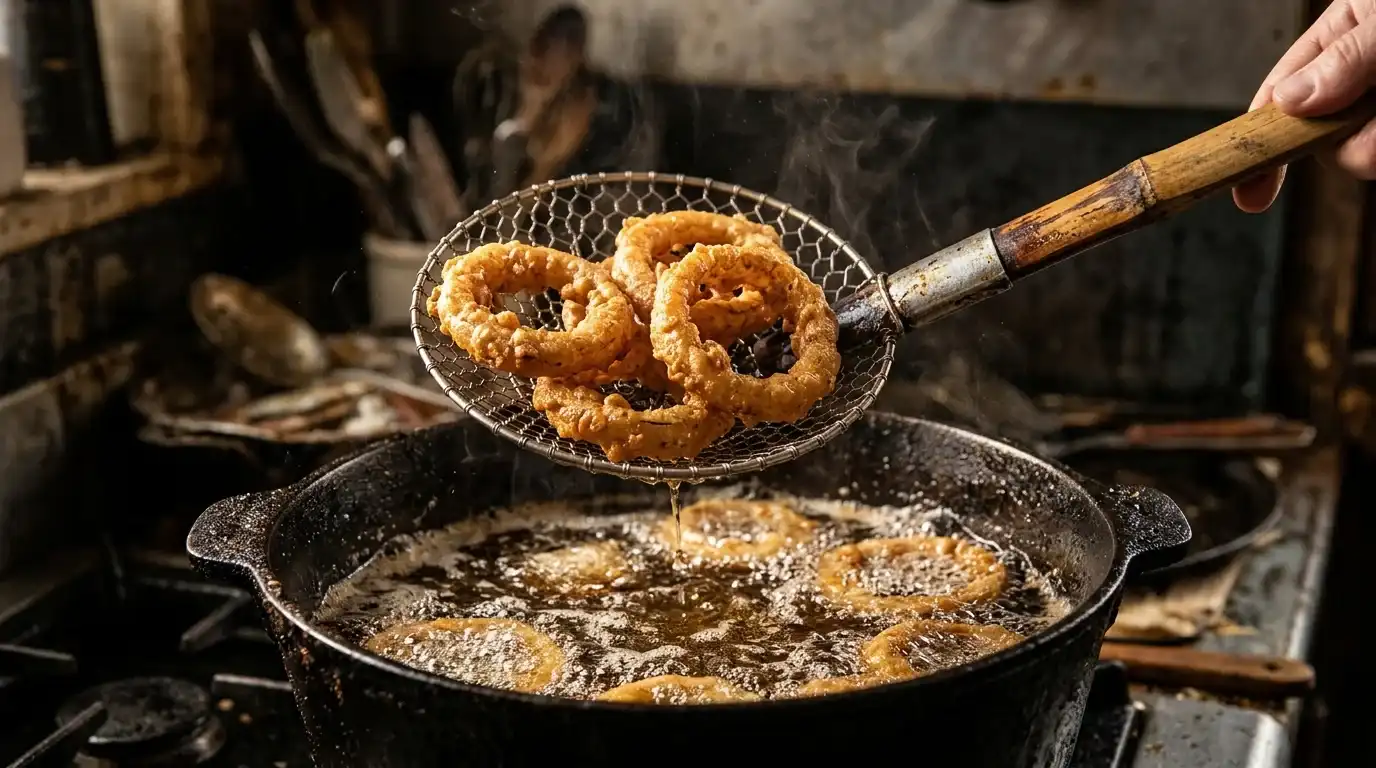
The 1908 method still works: rings, milk, flour, hot fat. A small countertop fryer holds the oil at frying temperature:
- Presto 05411 GranPappy Electric Deep Fryer: a simple countertop deep fryer with no controls to set, sold under the Fry Daddy line. See it on Amazon (affiliate link)
Video: Presto GranPappy Fryer BIG Review!, from the Uncle Scott's Kitchen YouTube channel
As an Amazon Associate I earn from qualifying purchases. A commission may be earned if you buy through this link, at no extra cost to you.
Sources
- Joe Hoeffner, The Takeout, The 19th-Century Origin Of The Onion Ring (Nov. 12, 2024): https://www.thetakeout.com/1704810/origins-onion-rings-explained/
- Barry Popik, The Big Apple, French Fried Onion Rings: https://www.barrypopik.com/blog/french_fried_onion_rings
- Jan Whitaker, Restaurant-ing Through History, French fried onion rings (July 25, 2021): https://restaurant-ingthroughhistory.com/2021/07/25/french-fried-onion-rings/