In this story
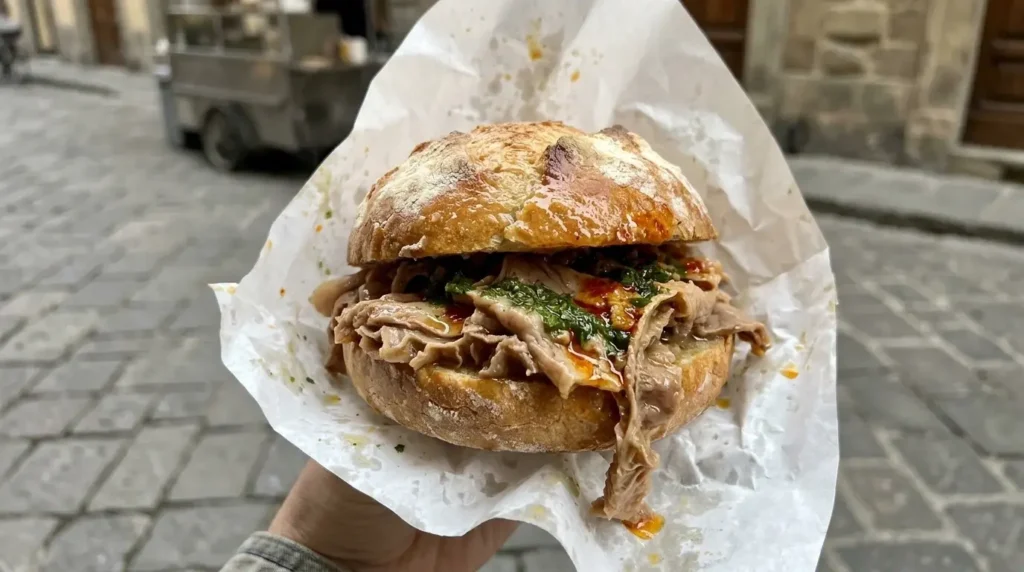
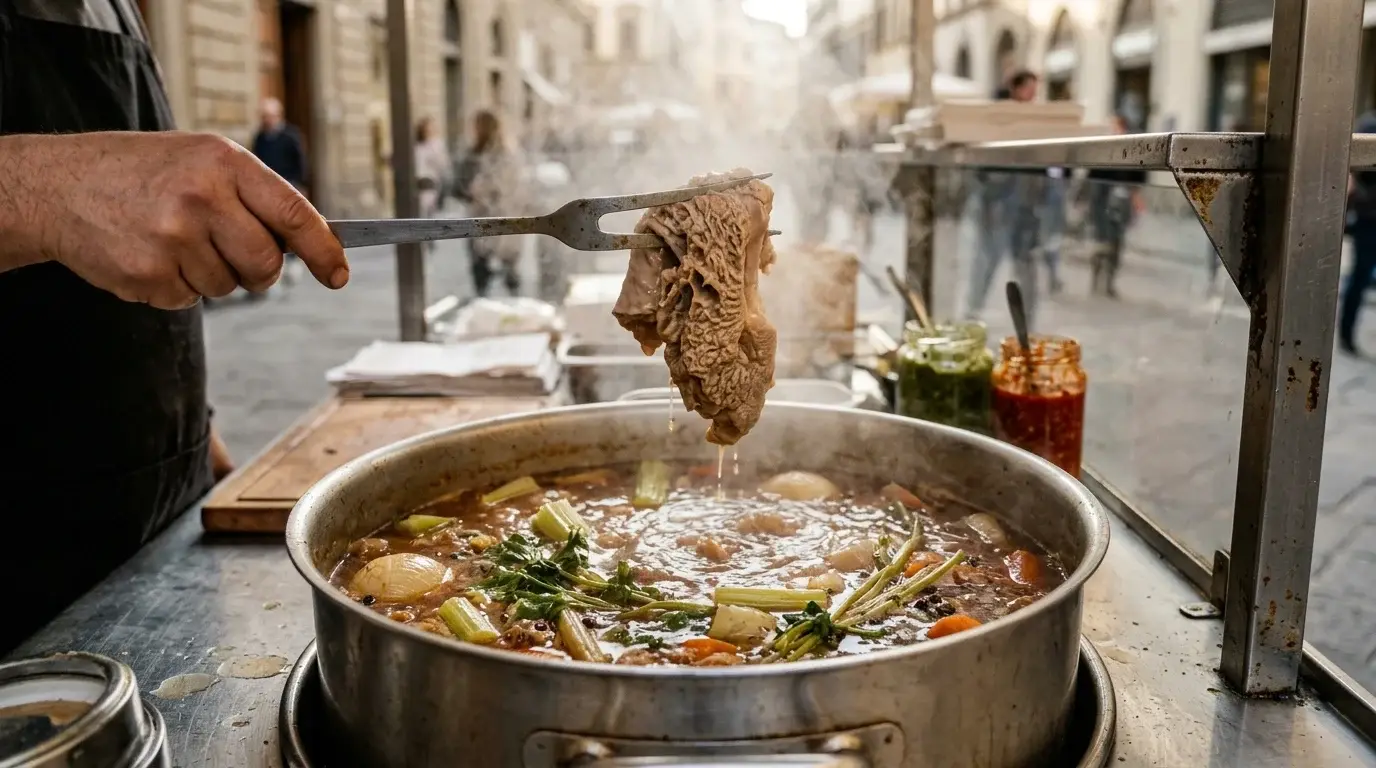
Florence sells Renaissance art by the gallery, and its best-known street lunch is the fourth stomach of a cow. Lampredotto comes out of a steaming pot at a tripe cart, gets sliced on a board, and goes onto a crusty roll with green sauce and a splash of chili oil.
Video: How a Cow's Stomach Becomes one of Italy's Most Popular Sandwiches, from the Eater YouTube channel
The fourth stomach
Abomasum, not honeycomb
A cow has four stomach compartments, and lampredotto comes from the last one. The Michelin Guide’s May 2025 Florence street food guide names it plainly: the abomasum. Atlas Obscura’s Gastro Obscura entry adds that this compartment is lined with glandular tissue, which likely made it the least wanted and cheapest part of the digestive tract.
Cooked long enough, it turns soft. Atlas Obscura described a succulent texture closer to roast beef than to the rubbery tripe most people picture.
Visit Tuscany, the region’s official tourism site, describes lampredotto as the more compact, thinner part of the stomach, cooked in broth. Tripe from the other parts of the stomach goes elsewhere, the site notes, usually braised with tomatoes as a second course, its dense surface holding the sauce.
Named for a fish
Lamprey on a working man’s budget
The name borrows from the lamprey, lampreda in Italian. Visit Italy’s guide, written by Alessandro Zoppo, traces the term to a fish once common in the Arno and prized by the nobility in the Middle Ages and the Renaissance. The lamprey has a round sucker mouth, and Zoppo wrote that its look resembles the ridged, brownish surface of the cooked stomach.
The joke ran one way. People who could not afford the noble fish took the discarded abomasum and gave it the fish’s name, a bit of what Zoppo called typically Florentine irony.
Zoppo credits the derivation to scholars. None of the sources used here cites a first written use of the word.
Old food of necessity
The fifth quarter
Offal cooking in Italy goes back centuries. Zoppo pointed to Venetian documents from the fifteenth and early sixteenth centuries that record recipes for the “fifth quarter,” the organ meats and offal left after the four prime quarters of the animal are sold.
Visit Tuscany frames lampredotto the same way, as a dish from a time when tripe, intestines, udder and hoof were cheap enough for every class. The region’s site adds that in Tuscany the sandwich belongs to Florence and its surroundings.
The class line blurred long ago. Zoppo wrote that doctors and delivery workers, lawyers and bricklayers all eat it, and Michelin still called it the city’s signature blue-collar lunch in 2025.
Grill Cheesy has traced other working lunches built on cheap cuts, from the muffuletta of New Orleans to the pressed Italian panini that spread far from their home bars.
How it is served
Bagnato, salsa verde, piccante
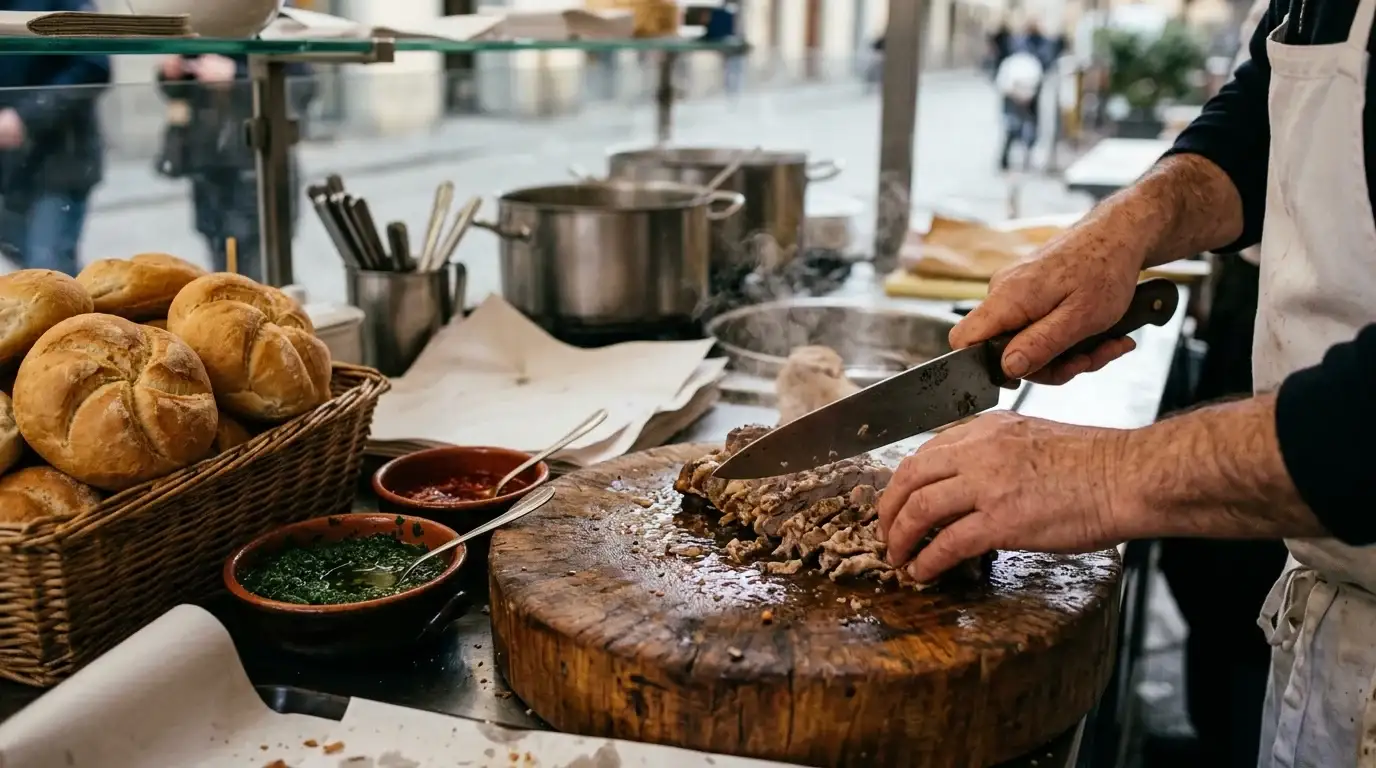
The meat simmers in an herby broth, Michelin reported, then lands on a crusty roll with salt, pepper, a parsley-heavy salsa verde and a dash of piccante, the spicy sauce. Purists skip the heat.
The standard order adds one more step. Atlas Obscura described the preferred presentation as bagnato, “bathed”: the top half of the bun is dipped in the tripe broth so it arrives warm and wet.
Variations run long. Zoppo listed a zimino version stewed with spinach or chard, garlic and parsley, plus tomato and potato, mushroom, leek, artichoke and bean versions. Some modern vendors sell a seafood lampredotto made with octopus or cuttlefish and a vegan one made with seitan.
The tripe carts
Trippai across the city
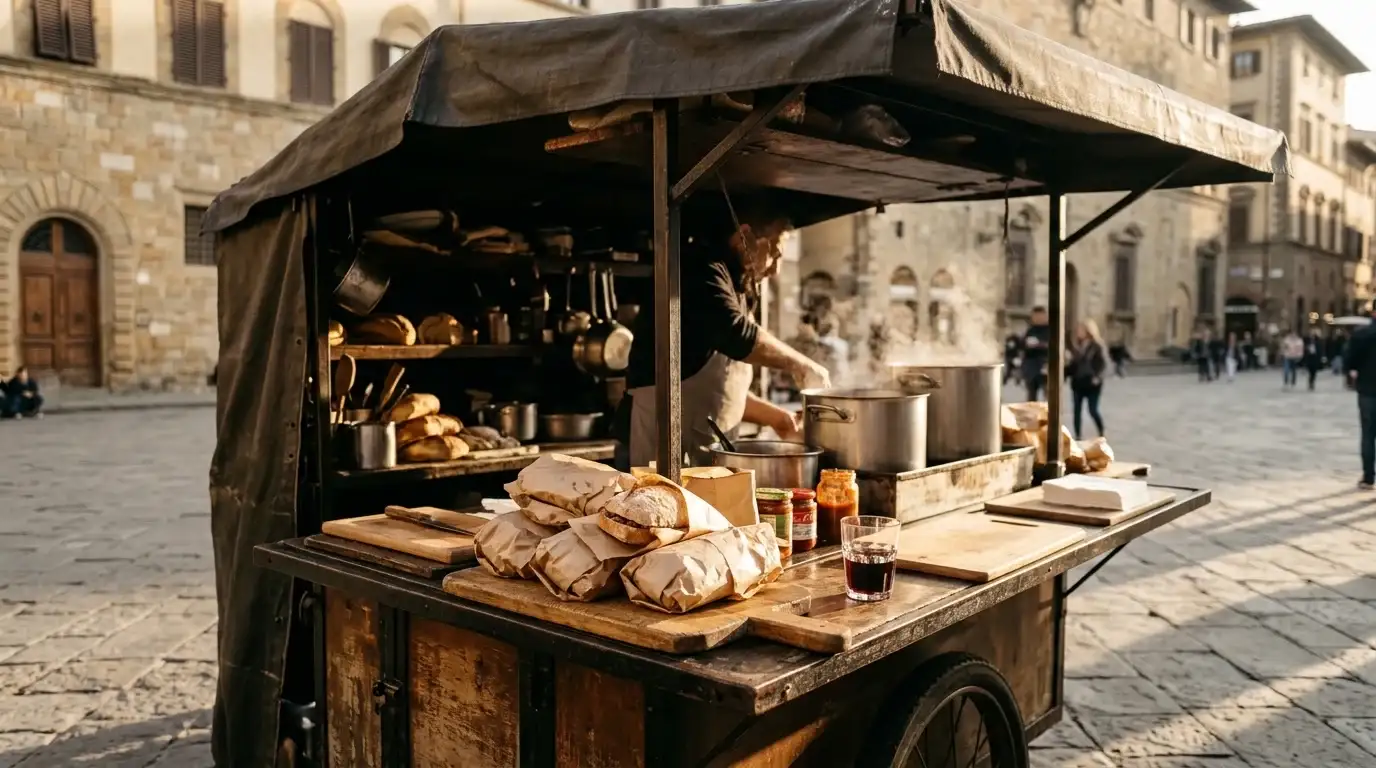
The sellers are called trippai, and their stalls banchini dei trippai. Michelin named three in its guide: the Trippaio del Porcellino near the Ponte Vecchio, Da Nerbone inside the Mercato Centrale, and I’ Trippaio di San Frediano.
Most carts sell more than lampredotto. Michelin noted that many offer twists on the original and other frattaglie, the offal and giblets, alongside milder cuts.
Quality has an official backstop. Zoppo reported that lampredotto is protected by Confartigianato, the Italian artisans’ confederation, to keep vendors to minimum standards.
A Florence cookbook
Emiko Davies wrote a cookbook on the city’s home and trattoria food:
- Florentine: The True Cuisine of Florence: Emiko Davies’s Hardie Grant hardcover on the cooking of Florence. See it on Amazon (affiliate link)
Video: Emiko Davies & Theo Randall in conversation: FLORENTINE & THE ITALIAN DELI COOKBOOK, from the Book Larder YouTube channel
As an Amazon Associate I earn from qualifying purchases. A commission may be earned if you buy through this link, at no extra cost to you.
Sources
- Michelin Guide, Florence Street Food: 4 Must-Try Local Bites (May 14, 2025): https://guide.michelin.com/en/article/travel/florence-street-food-guide-4-must-try-local-bites
- Atlas Obscura, Gastro Obscura: Lampredotto: https://www.atlasobscura.com/foods/lampredotto-sandwich-made-with-cows-fourth-stomach
- Visit Tuscany, Tripe and Lampredotto: https://www.visittuscany.com/en/flavors/lampredotto-sandwich-in-florence/
- Alessandro Zoppo, Visit Italy, Why Lampredotto Is Florence’s Most Unexpected Culinary Tradition: https://www.visititaly.eu/food-and-flavours/lampredotto-sandwich-florence