In this story
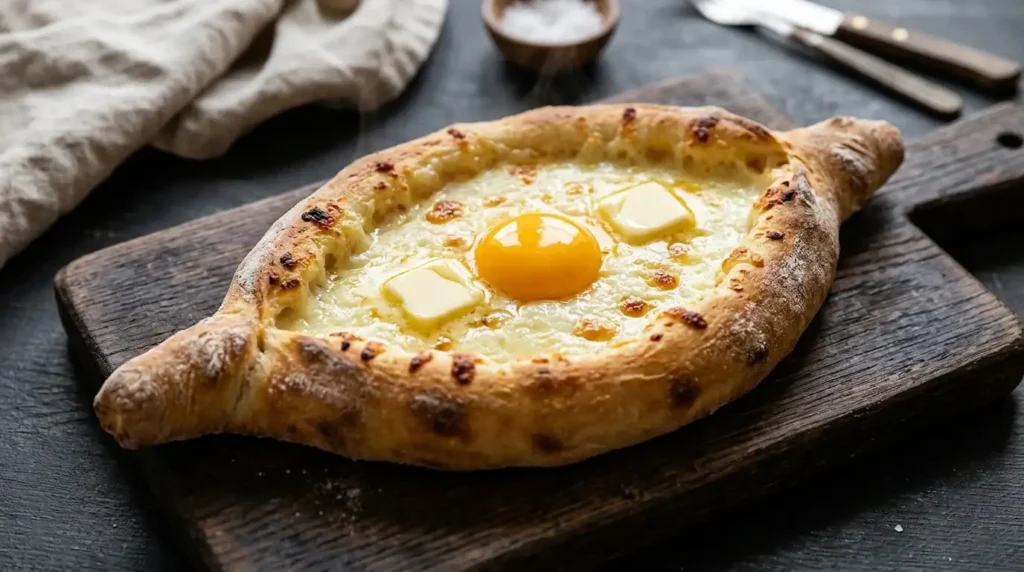
Khachapuri is cheese baked inside or on top of leavened bread, and in the country of Georgia it is everyday food, festival food and an economic yardstick at once. The version most Americans meet is the Adjarian: a long oval of dough pinched at both ends into a boat, filled with molten cheese, then finished with an egg and a pat of butter at the table.
Video: How Georgia's national dish Khachapuri is made, from the DW Food YouTube channel
Cheese bread, many shapes
One name, a map of regions
The word translates to “cheese bread,” Kat Craddock wrote for Saveur in a March 2017 guide. Behind that plain name sits a long list of regional forms. Craddock described doughs made from cornmeal, others rolled into sheets as thin as phyllo, and most built on a yeasted white-flour dough shaped and filled according to the region and the baker.
Georgia itself is small. Saveur put the country at 26,911 square miles, a little larger than Virginia, and credited its mountain terrain and border cultures with the range of its cooking.
The Adjarian boat
Egg, butter and a torn crust
Adjara sits in the southwest of Georgia on the Black Sea, and its khachapuri is the style most popular in the United States, according to Saveur. The bread is shaped like a canoe and heaped with cheese.
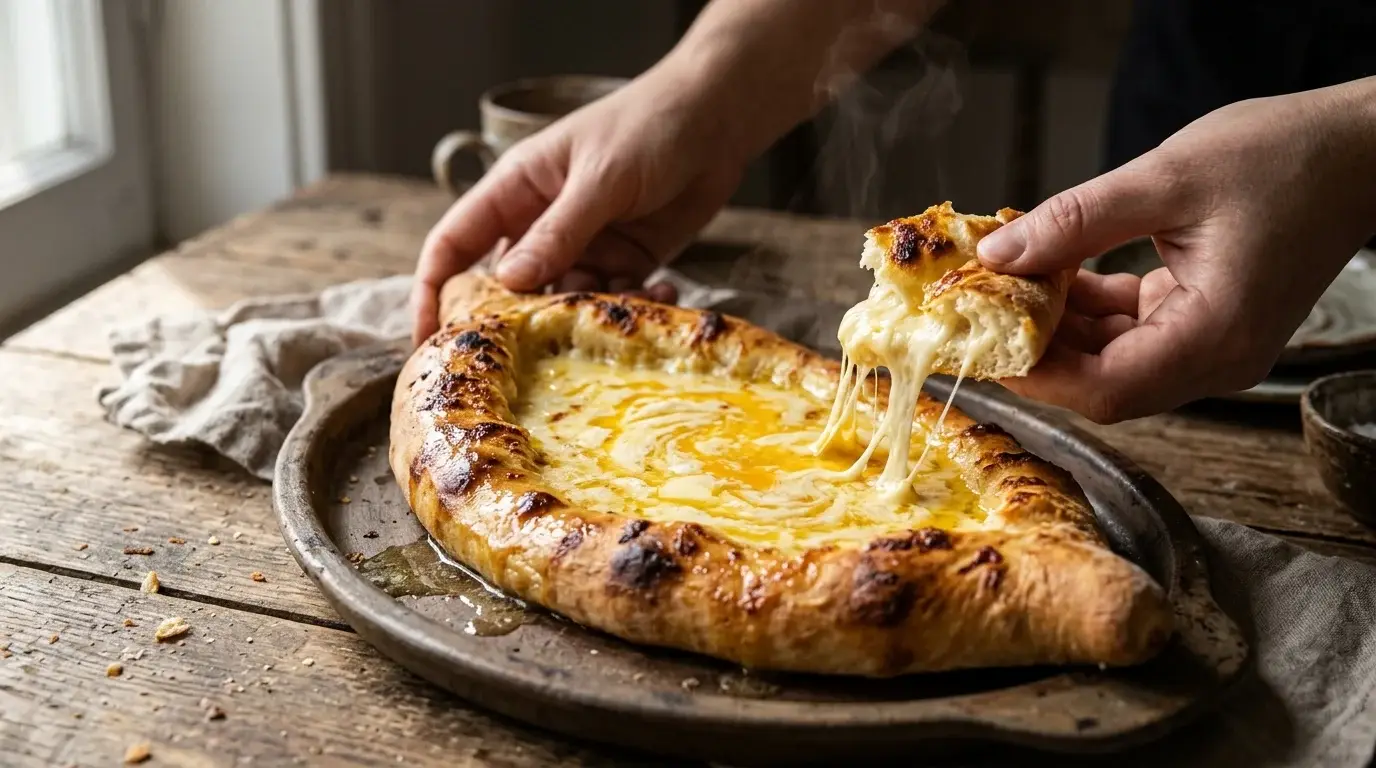
The finish is what sets it apart. In the last minutes of baking a raw egg goes into the basin and cooks until the white just sets. Once out of the oven, a few slices of butter land on top, and diners stir the butter and runny yolk into the cheese. Craddock described the result as “a savory, gooey sauce” for the soft crust.
The crust becomes the utensil. Pieces torn from the ends get dragged through the center until the boat is empty.
The dough is wetter than the closed styles. Saveur’s guide called for a pizza-like Adjarian dough with a bit of oil, easy to roll and tender to pull apart, which holds its raised walls in the oven.
The cheeses
Imeruli and sulguni
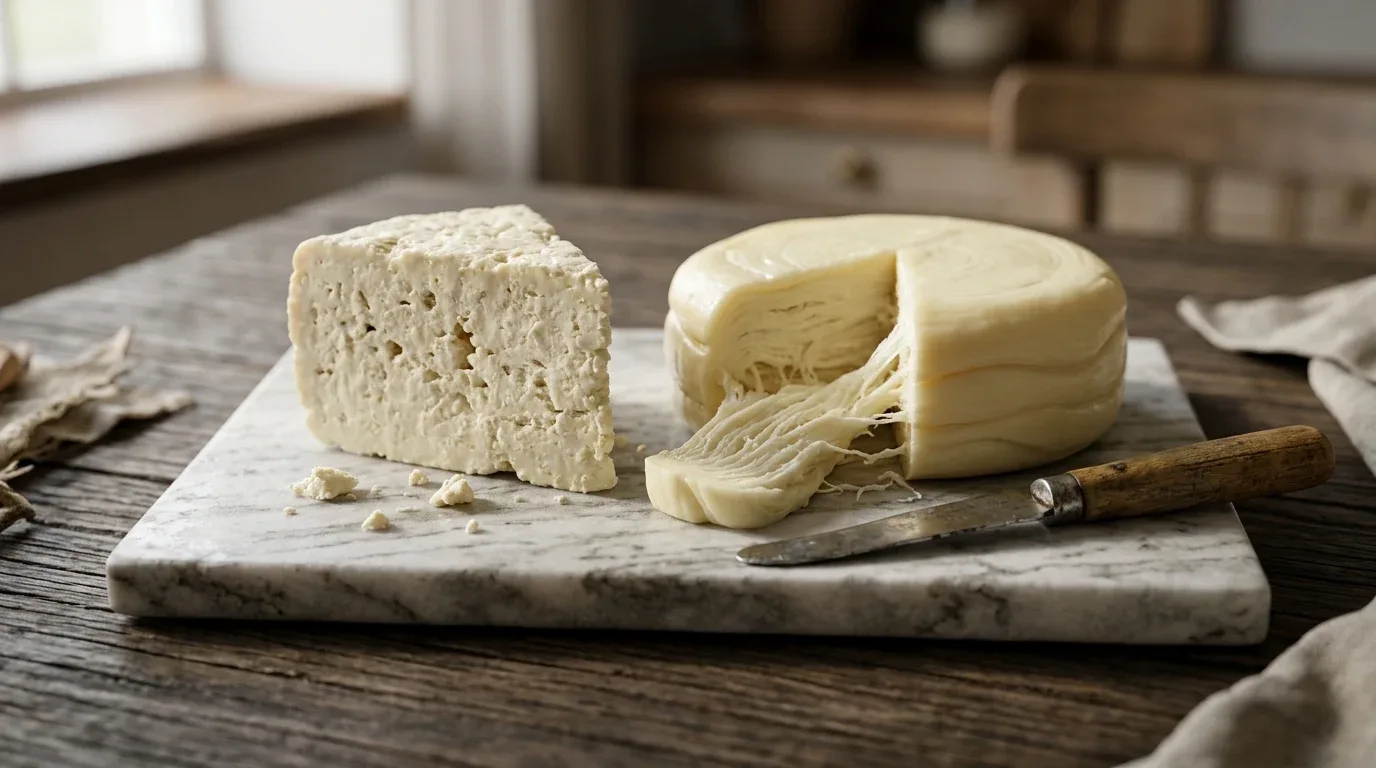
Two cheeses carry most khachapuri. Saveur described imeruli as a fresh, crumbly cheese from the Imereti region, made from cow’s milk and whey left over from firmer cheeses. Sulguni comes from the coastal Samegrelo region and is firmer, elastic and tart. Melted together, Craddock wrote, they turn creamy and stretchy with a feta-like funk.
Finding them abroad has been the hard part. In 2017 Saveur reported that Georgia was not licensed to export its dairy to the United States or the European Union, and that American-made imeruli and sulguni turned up only occasionally in Russian and Ukrainian markets or online.
Grill Cheesy has covered the chemistry behind that stretch in why cheese melts and turns greasy, and other brined cheeses in its post on halloumi.
Imeretian and Megrelian
The round, closed styles
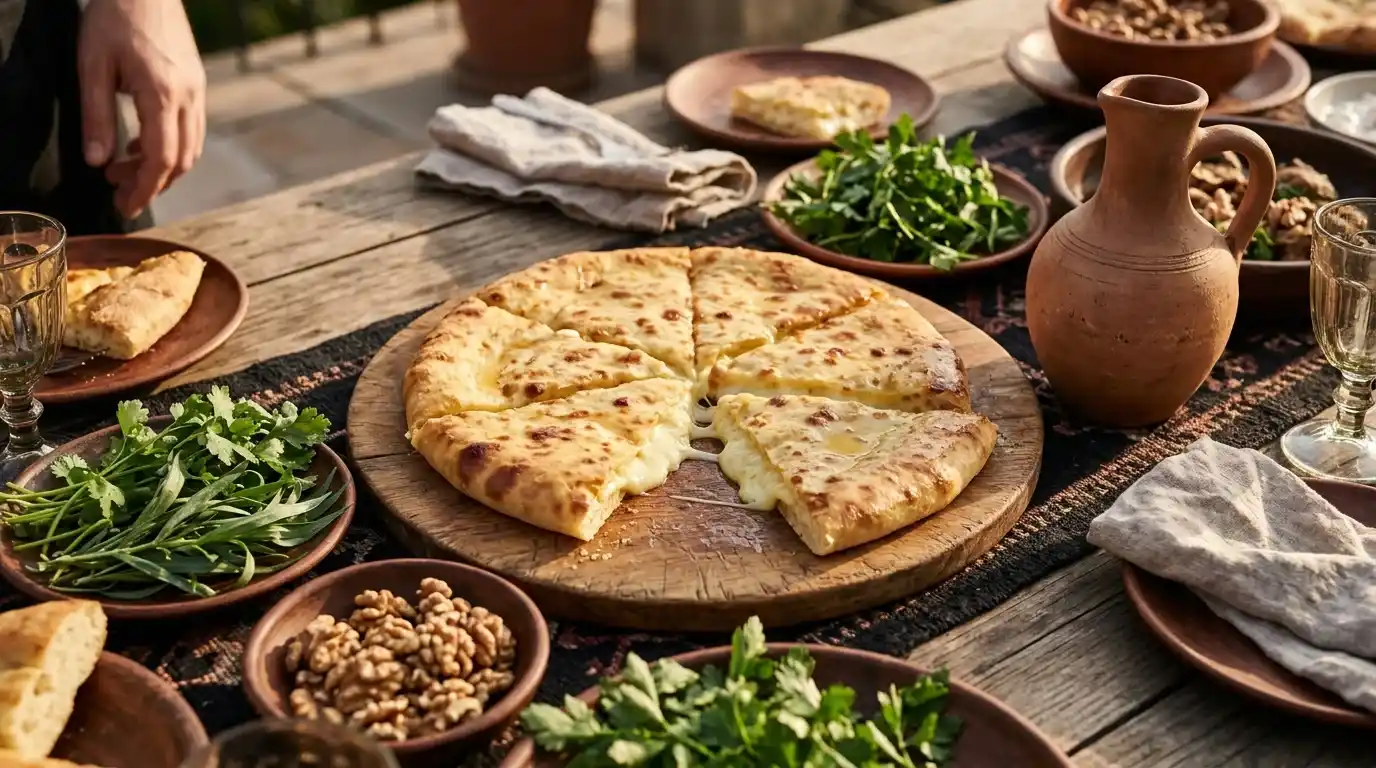
Most khachapuri outside Adjara take their lead from Imereti, in the west-central part of the country. Imeretian khachapuri looks like a simple pita or naan, filled with imeruli alone or an imeruli and sulguni mix, Saveur reported. It belongs to the supra, the Georgian feast table, where it is treated as a side dish or a dinner roll eaten alongside the meal.
These closed breads use a stiffer, lower-hydration dough with no added fat, strong enough to wrap around the filling and roll thin.
Megrelian khachapuri starts the same way. Craddock described it as an Imeretian round with extra crumbled imeruli and sulguni spread over the top in the final minutes of baking, so the cheese sits both inside and out.
A national heritage listing
Recognized in 2019
Georgia’s National Agency for Cultural Heritage Preservation listed the tradition of making khachapuri as Intangible Cultural Heritage of Georgia in January 2019, Georgia Today reported at the time. The paper, read here through an Internet Archive copy, noted that the dish joined two earlier food listings: dambal khacho, a curd dish from the Pshavi highlands, and ajika, a spicy sauce from Megrelia and Abkhazia.
The national listing is not the same as UNESCO’s international list. Georgia Today described a domestic designation.
The khachapuri index
Pricing inflation in cheese bread
Economists in Tbilisi measure prices with it. The ISET Policy Institute’s Khachapuri Index borrows the idea from The Economist’s Big Mac Index and tracks the cost of cooking one standard Imeretian khachapuri. The basket holds only its ingredients, listed as flour, cheese, yeast, milk, eggs and butter, plus the gas and electricity to cook it.
The numbers moved. In September 2014, the institute put the cost of one khachapuri at 3.35 lari, up 13.7 percent from a year earlier. By February 2026 the figure had reached 8.05 lari, a 14.3 percent rise year over year, according to the index page.
The jump of about 140 percent over roughly eleven years tracks what Georgians paid at the market for the same six ingredients and the fuel to bake them.
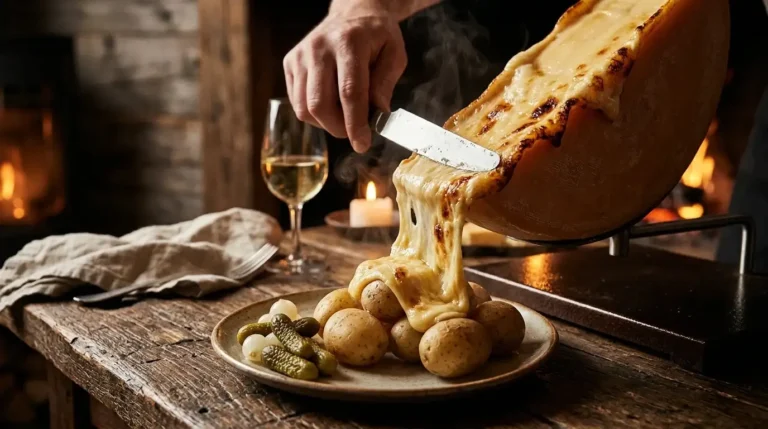
Cheese baked on bread runs through other traditions too, from raclette scraped over potatoes to cheese fondue with bread for dipping.
A Georgian cookbook
For cooks who want the regional styles in one place, Tiko Tuskadze’s cookbook covers the Georgian table:
- Supra: The legendary Georgian cookbook with beautiful recipes and captivating culinary history: the 2018 Pavilion Books hardcover by Tiko Tuskadze. See it on Amazon (affiliate link)
Video: Cookbook Lookthrough: Supra: A Feast of Georgian Cooking, by Tiko Tuskadze (2018), from the Cookbook Divas YouTube channel
As an Amazon Associate I earn from qualifying purchases. A commission may be earned if you buy through this link, at no extra cost to you.
Sources
- Kat Craddock, Saveur, How to Make Super-Cheesy Khachapuri, the Original Personal Pizza (March 14, 2017): https://www.saveur.com/how-to-make-khachapuri-georgian-cheese-bread
- Georgia Today, Khachapuri Granted Cultural Heritage Status (2019, Internet Archive copy): https://web.archive.org/web/20190703205551/http://georgiatoday.ge/news/14205/Khachapuri-Granted-Cultural-Heritage-Status
- ISET Policy Institute, Khachapuri Index: https://iset-pi.ge/en/indexes/1-khachapuri-index
- ISET Policy Institute, Khachapuri Index, September 2014 entry: https://iset-pi.ge/en/indexes/1-khachapuri-index?page=39