In this story
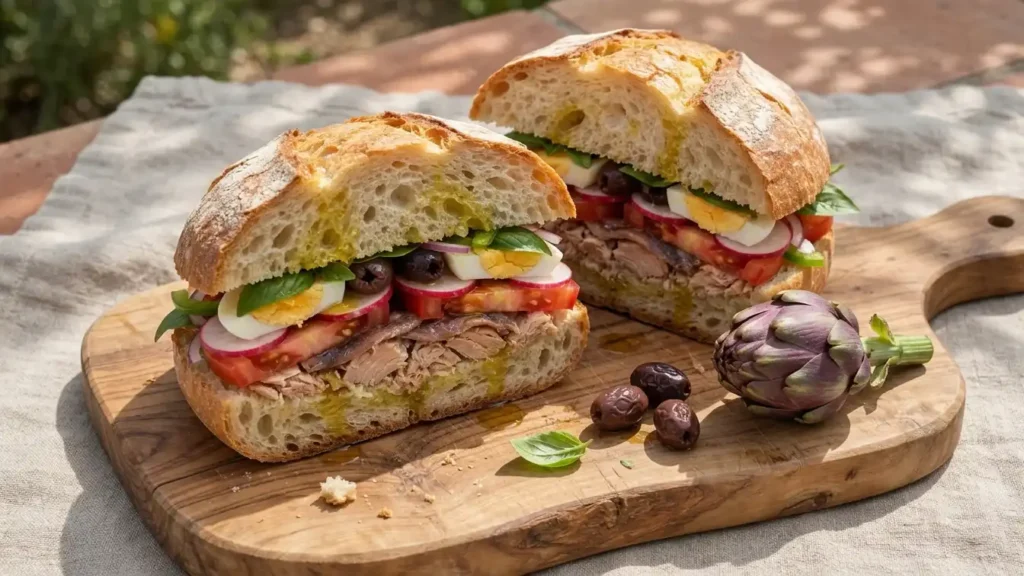
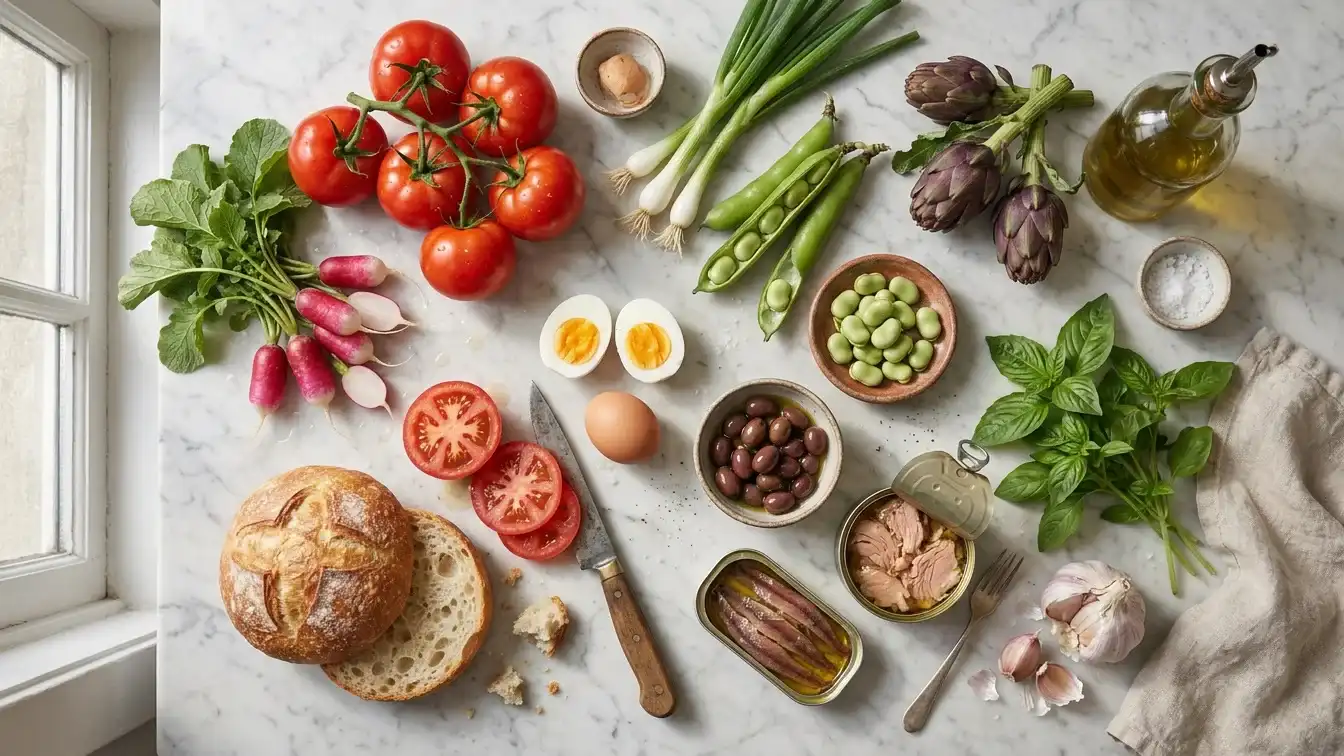
Pan bagnat is a round loaf split open, rubbed with garlic and tomato, soaked in olive oil and vinegar, and packed with the raw ingredients of a Niçoise salad: tomato, radish, young broad beans, artichoke, egg, olives, basil and tuna or anchovy. Then it is pressed and left to rest so the oil and juices run into the crumb. The name means bathed bread. In Nice, it also means a set of rules, and an association formed to enforce them.
Video: The French oldest sandwich that will leave you speechless, from the My Provence Kitchen YouTube channel
A fisherman’s breakfast
Stale bread, water and what was on hand
The sandwich began as thrift. SBS Food, in an August 2022 profile by Madeleine Rothery, traced it to the 19th century, when working-class Niçois, early-rising fishermen among them, ate it as a snack. It was a way to use day-old bread and leftover vegetables, sometimes with anchovies, and the name in the Niçard dialect refers to stale rolls softened by soaking them in water. Today the bread is soaked in olive oil instead.
Le Bonbon Nice added a detail on cost in a May 2025 report: in the original, cheap anchovies usually stood in for tuna, which was the more expensive fish.
The official recipe
Raw, round and never with mayonnaise
The regional tourism board for Provence-Alpes-Côte d’Azur publishes a pan bagnat recipe carrying the “Cuisine Nissarde” label. It calls for a leavened round bun about 15 centimeters across, two tomatoes, a scallion, a hard-boiled egg, young broad beans in season, a small purple artichoke heart, radishes, black olives, tuna in olive oil, a salted anchovy, basil, olive oil, vinegar and garlic.
The method is as specific as the list. The bun is halved with the bottom left slightly thicker, some crumb is pulled out to make room, and the cut faces are rubbed with garlic and then with the halves of the riper tomato. Oil, vinegar, salt and pepper go on next, then the layered vegetables, egg and olives, and finally the top, pressed down to compact the whole thing.
What is not allowed
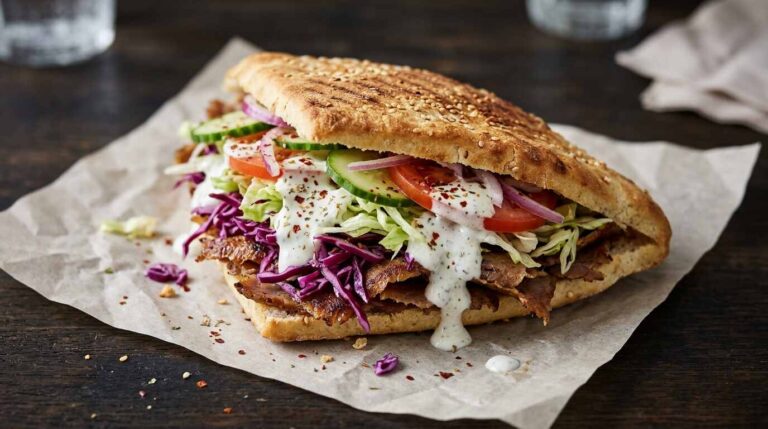
The forbidden list matters as much. Le Bonbon summarized the purist rules as no mayonnaise, no green salad and no chicken: fresh raw vegetables, anchovies or tuna, and a round bread moistened with olive oil. Writer Sue Style, describing the association’s rules for Zester Daily, added cucumber and lettuce, iceberg especially, to the rejected list, and noted that some listed items may be left out if needed but nothing should be added.
La Commune Libre du Pan Bagnat
A free commune for a sandwich
Those rules have a defender. Style reported that in 1991 an association, La Commune Libre du Pan Bagnat, was formed to protect, promote and celebrate the real thing. SBS described it as a group of locals who objected to unorthodox versions and later formalized themselves, seeking legal protection for the traditional recipe similar to France’s appellation d’origine contrôlée system, pursuing UNESCO heritage status for the sandwich, and awarding a label to restaurants and cafés that follow the recipe.
Chefs who crossed the line
The association has had reason to be watchful. SBS cited chef Thierry Marx’s 2018 version made with honey-glazed chicken, which locals rejected as a departure from tradition. Fabien Gerot, owner of Chez Les Garçons in Nice, told SBS that there are almost as many recipes as there are families in the city, but that “the most important thing is to stick as closely as possible to the original recipe.”
Toward a European label
A guaranteed traditional specialty
The push for legal protection moved forward in 2025. Le Bonbon reported in May that year that Christian Estrosi had started an application during the Fête des Mai for the pan bagnat to become a Guaranteed Traditional Specialty (STG) at the European level. At the time of that report, the label had not been granted, and the stated aim was to protect the dish from imitations.
Pressed, wrapped and rested
Time does the work
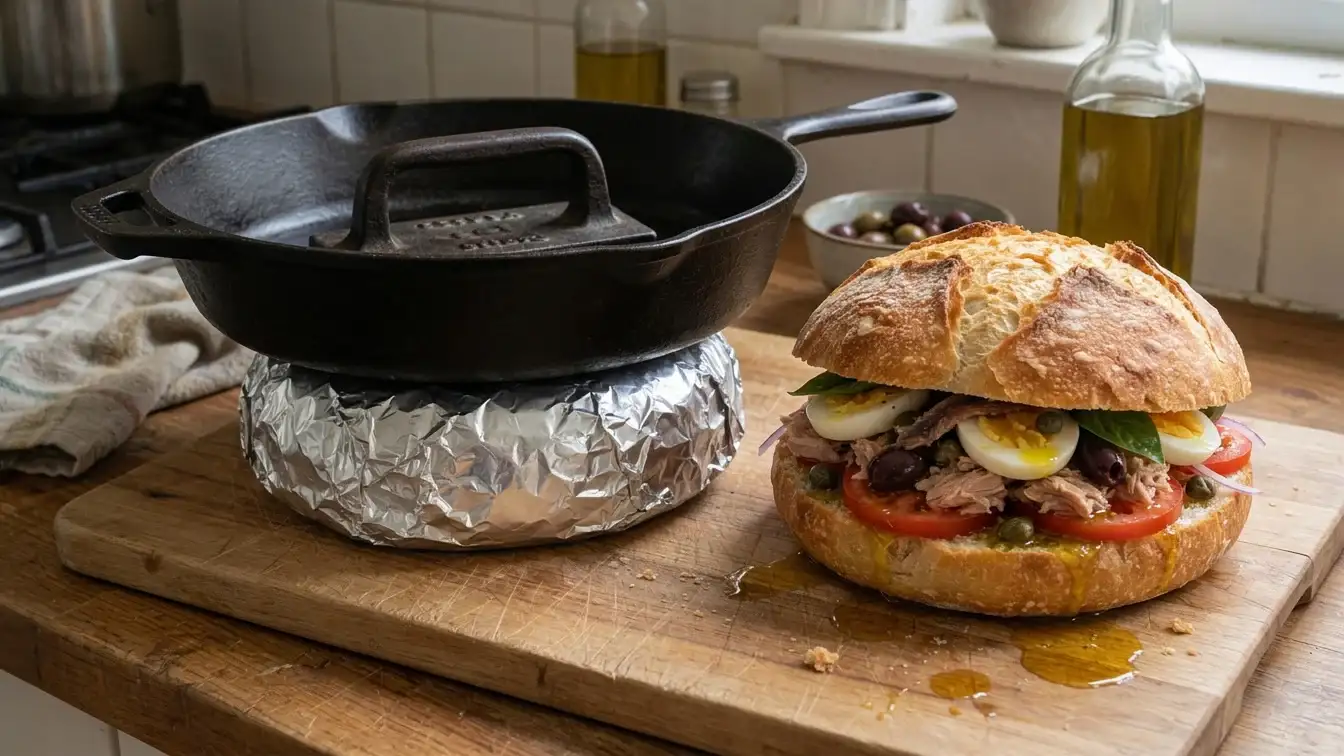
What separates a pan bagnat from a tuna sandwich is the wait. Style’s recipe wraps the finished sandwich in foil, sets a flat weight on top, such as a two-pound bag of beans or rice, and refrigerates it for several hours or overnight, about six hours in her version. The rest lets the ingredients meld and makes the sandwich easier to cut and eat. The oil and tomato juice soak into the crumb, which is the whole point of the name.
Cousins on other coasts
The idea of a loaf built to be soaked has relatives. New Orleans’s muffuletta is also a round loaf whose olive salad oils the bread as it sits, and Italy’s panini are another family of bread built around what goes inside. For another sandwich defined by a coastline, see the lobster roll, and for a cold, assembled bread tradition from the north of Europe, smørrebrød.
Good tinned tuna in olive oil is the ingredient most worth spending on for a pan bagnat:
- Ortiz White Tuna in Olive Oil, Wild Caught in Spain, 3.95 oz (Pack of 12): bonito del norte albacore packed in olive oil, suited to a Niçoise-style filling. See it on Amazon (affiliate link)
Video: Ortiz Tinned Bonito Tuna, from The Fish Society Products YouTube channel
As an Amazon Associate I earn from qualifying purchases. A commission may be earned if you buy through this link, at no extra cost to you.
Sources
- SBS Food, Pan bagnat is the crowning jewel of Nice (2022, updated 2024): https://www.sbs.com.au/food/article/pan-bagnat-is-the-crowning-jewel-of-nice/h6v2821fd
- Le Bonbon Nice, pan bagnat European label report (2025): https://en.lebonbon.fr/nice/news/spannice-label-for-europespan-spanpan
- Provence-Alpes-Côte d’Azur Tourism, Recipe: pan bagnat: https://provence-alpes-cotedazur.com/en/things-to-do/wine-and-gastronomy/cooking-recipes/recipe-pan-bagnat/
- Zester Daily, Save Pan Bagnat! (Sue Style): https://zesterdaily.com/?p=555