In this story
By 1901 a roast beef sandwich on a roll crusted with coarse salt and caraway was popular enough to be served at the Pan American Exposition in Buffalo. That sandwich, beef on weck, is one of three American city sandwiches built on thin-sliced roast beef and beef juice. Chicago’s Italian beef soaks the meat in gravy and tops it with peppers, while Los Angeles’s French dip keeps the jus on the side and Buffalo’s version brings horseradish. Each city has a competing origin story, and the earliest dates in them differ by decades.
Video: French dip and Italian beef: wet or dry, roasted peppers, cheese and giardiniera, the differences, from the Chef Karl Food Whisperer YouTube channel
Italian beef and French dip
Same liquid, different seasoning and bread
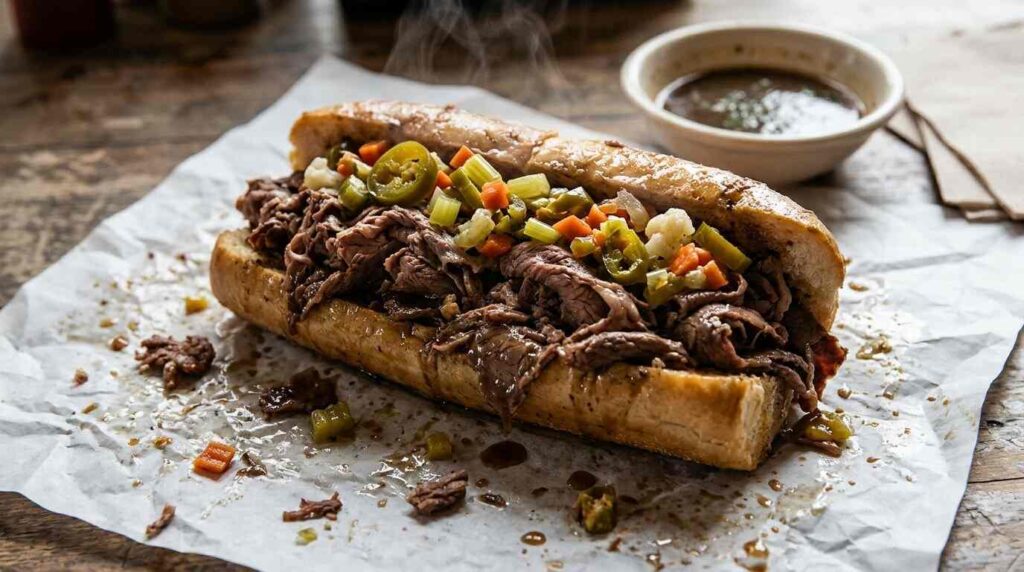
Cut and seasoning split the first two before the bread arrives. French dip uses thinly sliced roast beef, usually bottom round, though chuck or prime rib also work, seasoned with salt, pepper, oregano, thyme, garlic and onion, according to The Daily Meal. Italian beef uses top round or sirloin tip, cooked in beef stock and sliced very thin, with black and red pepper, cloves, garlic, basil and oregano.
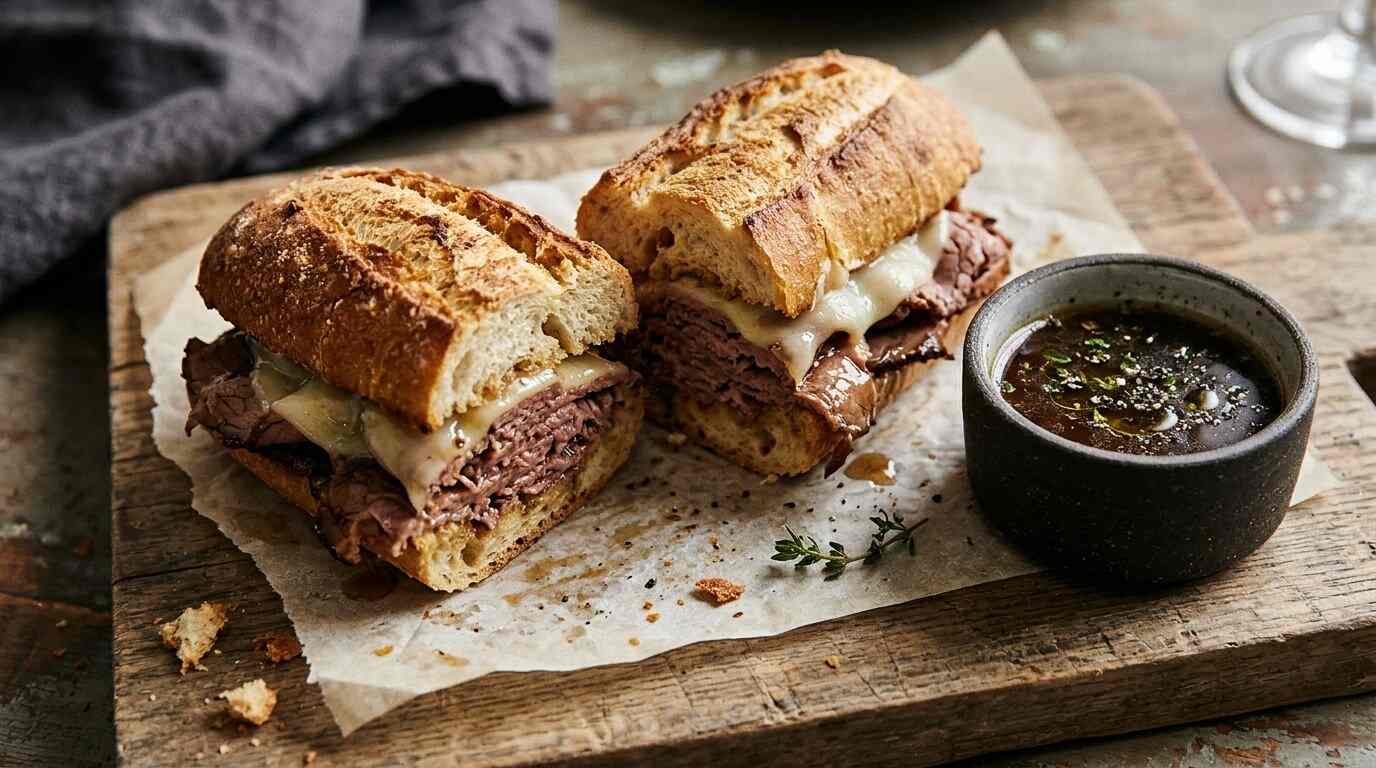
The bread follows the same split. French dip takes a crusty French roll or baguette that holds up when dipped, and Italian beef takes Chicago-style “French bread” with a thinner crust and softer crumb. French dip is served with jus on the side or used for dipping, in single, double or wet versions. Italian beef meat is soaked in the jus and ordered dry, dipped or wet.
Toppings are the clearest line. The Daily Meal lists Swiss or provolone and spicy mustard for French dip, and hot giardiniera or sweet peppers for Italian beef, with cheese not traditional. The Sandwich Tribunal scores condiments for Italian beef, saying giardiniera wins easily, though the author also likes horseradish and mustard. The author prefers asking for “gravy,” since both sandwiches use essentially the same liquid.
The site’s own pages on Italian beef and the French dip cover each in more depth.
Beef on weck
Salt, caraway and horseradish
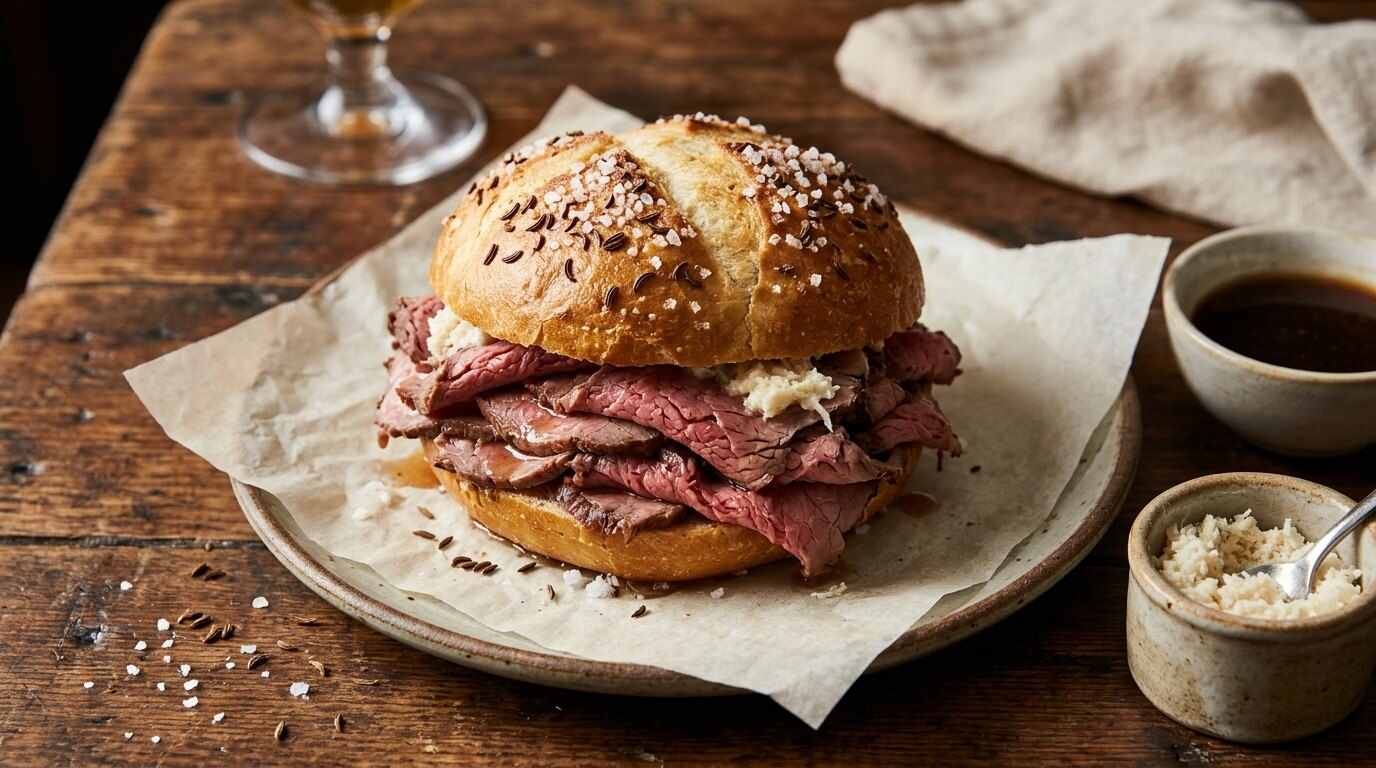
Beef on weck shares the French dip’s thinly sliced, medium-rare roast beef and beef jus, according to Tasting Table, but its bun is a kummelweck roll, topped with coarse salt and caraway seeds and described as a German-derived variation of the kaiser roll. The French dip uses a crusty French roll with an airy crumb.
Beef on weck is served with horseradish, often in a sauce with mayonnaise or sour cream, and a classic French dip has none. Only the cut side of the beef on weck’s top bun is dipped, to avoid washing off the horseradish and salt, while a French dip comes with a cup of jus for diners to dunk as much as they like. The same article calls beef on weck a Buffalo, New York staple shaped by German immigrants.
The name is German: kummel for caraway and weck for roll, per Food Republic, with locals shortening the whole thing to “weck.”
Who claims the French dip
Philippe’s in 1918 or Cole’s in 1908
Two Los Angeles restaurants claim the French dip. Britannica says Philippe The Original credits its founder, Philippe Mathieu, with creating it in 1918. In that story he accidentally dropped a French roll into a pan of roasting juices, and a customer chose to eat the dipped sandwich anyway. Cole’s dates its sandwich to 1908 and says it may have been made for a customer with sore gums who asked for the crusty bread to be softened with meat juice.
No winner is named in Britannica’s entry. The Sandwich Tribunal splits the difference, placing the French dip in Los Angeles around 1908, and The Daily Meal offers two sources for the name itself: the French immigrant Philippe Mathieu, or the French roll.
Who claims Italian beef
Peanut weddings, a catering firm and a bookmaker’s front
Turn-of-the-century Italian weddings in Chicago, which a WTTW history calls “peanut weddings,” are where one account starts Italian beef: cheap, thinly sliced beef on bread stretched a small budget. Many believe, the piece says, that Pasquale Scala’s catering service served these sandwiches, and Scala’s later became the main beef supplier for Italian beef stands.
Two more claims sit in the same piece. Chris Pacelli says his uncle Al started a beef stand at Laflin and Harrison as a front for a bookmaking operation, first called “Al’s Barbecue.” And the Ferraro family says the sandwich was first sold around 1934 or 1935 from a Little Italy grocery store, according to Mario Ferraro, while another family member, Ciccio, says it was “commercialized” in 1938, with the Ferraros starting about three years earlier.
The Sandwich Tribunal looks instead to Chicago’s Italian-American community and the stockyard workers of the 1920s and 1930s, and calls the history of the two sandwiches a tie. Weddings, a bookmaker’s front and the stockyards can all be true at once.
Beef on weck’s origins
A German baker, a thirsty bar crowd and a 1901 fair
The beef on weck history is murky, Food Republic says, and the most widely accepted lore credits William Wahr, a German immigrant baker who brought the kummelweck recipe to Buffalo in the 1800s. A popular account holds that a bar owner paired roast beef sandwiches with salt-topped rolls to make patrons thirsty and encourage beer drinking. The salt, in that telling, was doing the bartender’s job.
Schwabl’s, a restaurant, claims to have the original and says it has served the sandwich for more than 100 years. The Pan American Exposition date gives beef on weck something the other two origin stories lack: a documented year.
Gravy, jus or horseradish
Wet, dipped or horseradish-sharp
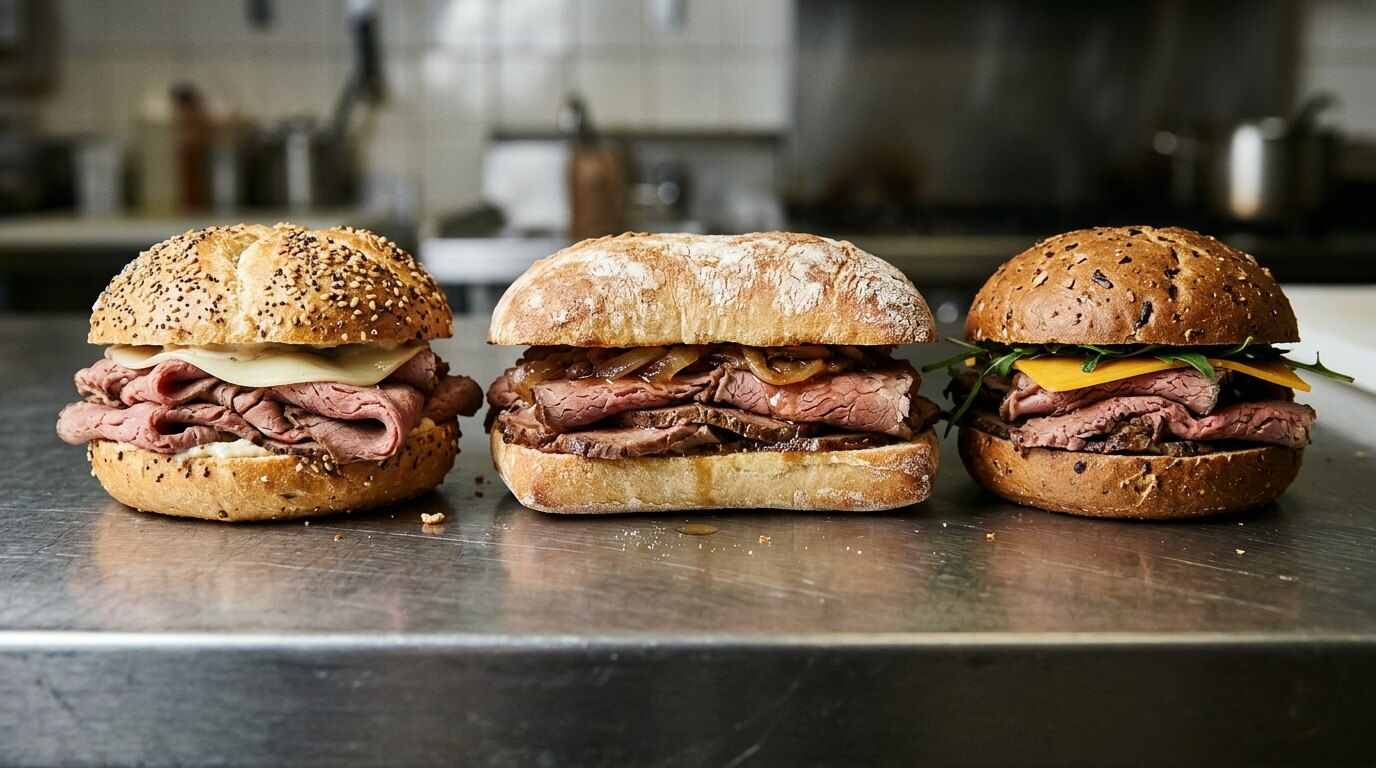
The practical differences come down to condiment and bread. Italian beef carries the sweet-pepper or giardiniera heat and the soaked roll. The French dip keeps its jus separate and leans on cheese and mustard, while beef on weck relies on the roll’s salt and the horseradish bite, with a light dip. All three ride on the kind of long roll covered in the site’s post on hoagie, sub, hero and grinder.
The Sandwich Tribunal gives French dip an edge on serving options and meat variety, noting variants with lamb, pork, turkey or chicken, and an edge to Italian beef on condiments. Its author “far prefers” Italian beef, partly because giardiniera rescues even a mediocre one. Chicago’s soaked roll, Los Angeles’s side cup or Buffalo’s salted bun: which one is worth the extra napkins?
Common questions
What separates Italian beef, French dip and beef on weck?
Italian beef is simmered in seasoned jus and often topped with giardiniera, French dip is served with a cup of jus for dipping, and beef on weck uses a kummelweck roll with caraway and salt, per the sources cited in the post.
What is a kummelweck roll?
A roll topped with caraway seeds and coarse salt, used for beef on weck in Buffalo, New York, as the post’s sources describe.
Where did the French dip begin?
Two Los Angeles restaurants claim it, and the post reports both claims and where sources disagree.
Sources
- French dip and Italian beef, wet or dry, the differences (Chef Karl Food Whisperer, YouTube) — https://www.youtube.com/watch?v=lOhoGSmY1Q0
- Italian Beef Vs French Dip: How These Sandwiches Differ (The Daily Meal) — https://www.thedailymeal.com/1943583/italian-beef-vs-french-dip/
- The Difference Between Beef On Weck And A French Dip Sandwich (Tasting Table) — https://www.tastingtable.com/1472321/beef-on-weck-versus-french-dip-difference
- How Beef On Weck Became Buffalo’s Juicier, Saltier Take On The French Dip (Food Republic) — https://www.foodrepublic.com/1764911/beef-on-weck-buffalo-history/
- French Dip vs. Italian Beef (Sandwich Tribunal) — https://sandwichtribunal.com/2016/04/french-dip-vs-italian-beef
- French dip (Britannica) — https://www.britannica.com/topic/French-dip
- Chicago Italian beef history (WTTW) — https://www.wttw.com/node/35968
Keep reading
- Italian Beef: The Chicago Sandwich of Thin-Sliced Roast Beef and Gravy
- French Dip Sandwich: Origin, Au Jus and How It Differs From Italian Beef
- Hoagie, Sub, Hero, Grinder: Why One Sandwich Has So Many Names
More in this section: Sandwich Debates guide.