
In this story
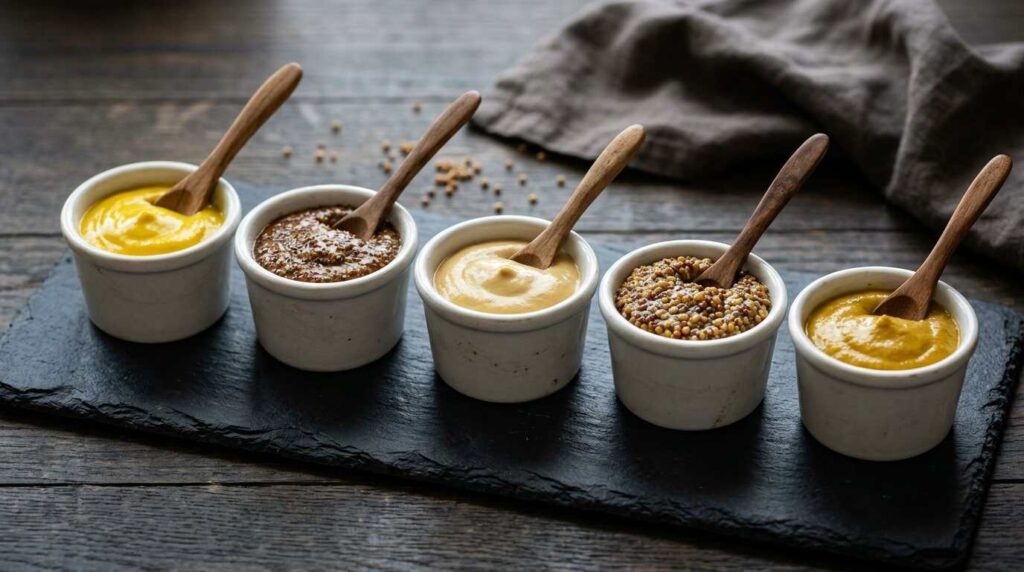
A jar labeled Dijon mustard does not have to come from Dijon: after a legal dispute in 1937, moutarde de Dijon was ruled a variety, not a geographical appellation. The seed in the jar is another matter: most manufacturers use Canadian seed. What goes into the jar is simpler than the label. Every mustard comes from one of three seeds, and the differences between ballpark yellow, deli brown, Dijon and English mustard mostly trace back to which seed was ground, what liquid went in and how much of the hull stayed. McCormick Science Institute lists the three species as white or yellow, brown and black, ranked from mildest to most intense.
Video: Mustard Expert describes 4 Different Types of Mustard from Maille! — from the Maille US YouTube channel
The three seeds behind every jar
White, brown and black seeds differ in size, color and bite
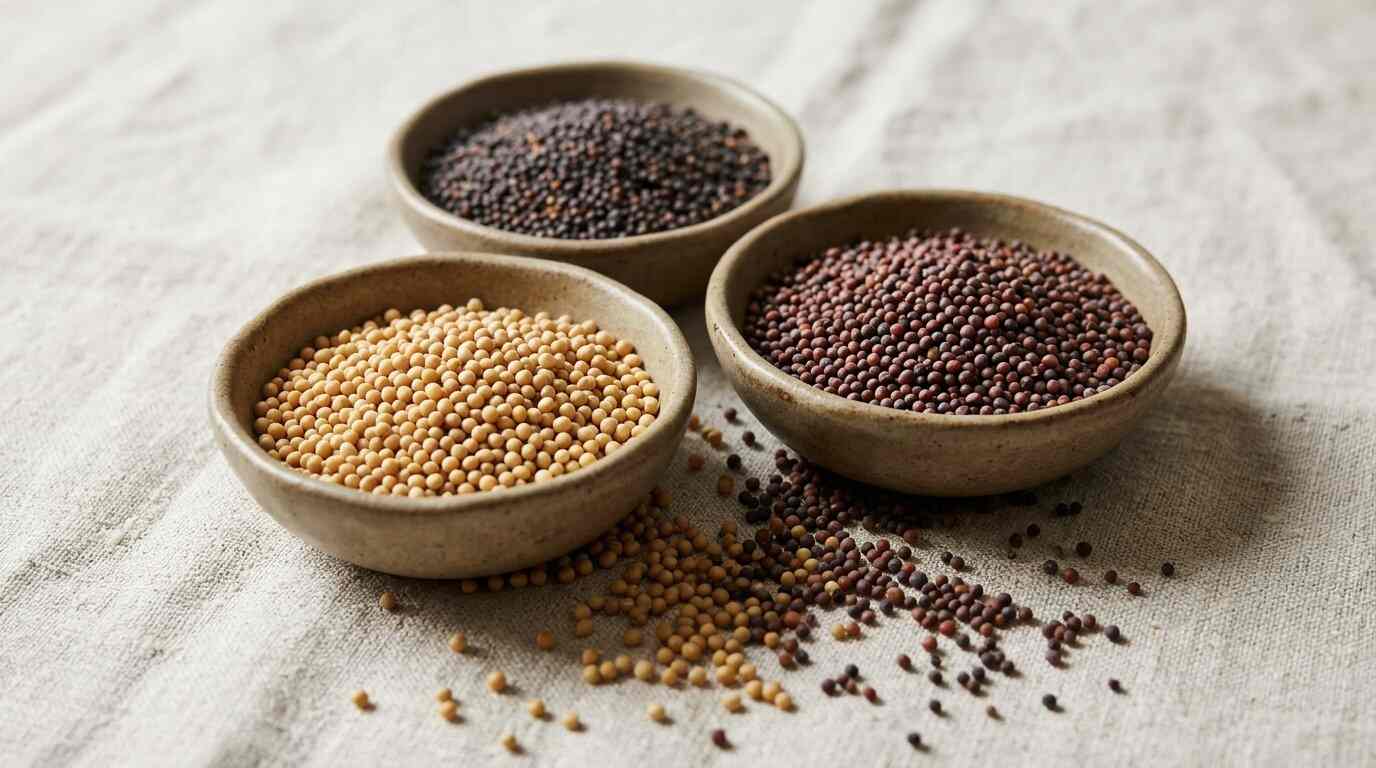
McCormick Science Institute describes white mustard, Sinapis alba, as the mildest of the three, with light yellow, nearly round seeds and a mucilaginous coating. Brown mustard, Brassica juncea, has seeds of similar size but darker, and its pungency is sharp and long-lasting. Black mustard, Brassica nigra, has the smallest, oblong, dark brown to black seeds and is the most intense. A history article in Hektoen International calls the white species Brassica hirta instead.
The Nibble, a specialty-food publication, places the origins of the three in different regions: white in the Mediterranean basin, brown in the Himalayas, and black in the Middle East and Asia Minor. It adds that black mustard is hand-harvested, so it is rarely used in the West, and that white seed largely becomes bright yellow hot dog mustard.
Geography of supply has shifted too. Encyclopedia.com states that about 85 percent of the world’s mustard seed comes from Canada, Montana and North Dakota. America’s Test Kitchen likewise notes that Canada is the world’s largest producer, so most manufacturers use Canadian seed.
Why mustard is hot
Heat appears only after the seed meets liquid
Dry or ground mustard seed is essentially odorless. McCormick Science Institute explains that flavor develops when the seeds are chewed or mixed with water: the liquid activates the enzyme myrosinase, which converts glucosinolates such as sinigrin and sinalbin into isothiocyanates. Species and varieties carry different glucosinolate levels, so they produce different intensities. The Nibble puts the same idea in a sentence, noting that whole mustard seeds have no heat until they are cracked and mixed with a liquid.
The liquid chosen shapes the result. According to McCormick Science Institute, vinegar produces a milder mustard than cold water does. Where the heat lands is different from chili. The same source says that black mustard’s heat starts at the back of the mouth and moves into the sinuses, similar to wasabi and horseradish. Smaller, darker seeds tend to be hotter. Older writing was less specific: MadeHow, describing industrial production, says only that crushing seeds releases two compounds that create a “fiery tasting essence”.
Yellow mustard and the 1904 hot dog
A mild white-seed mustard with a World’s Fair debut
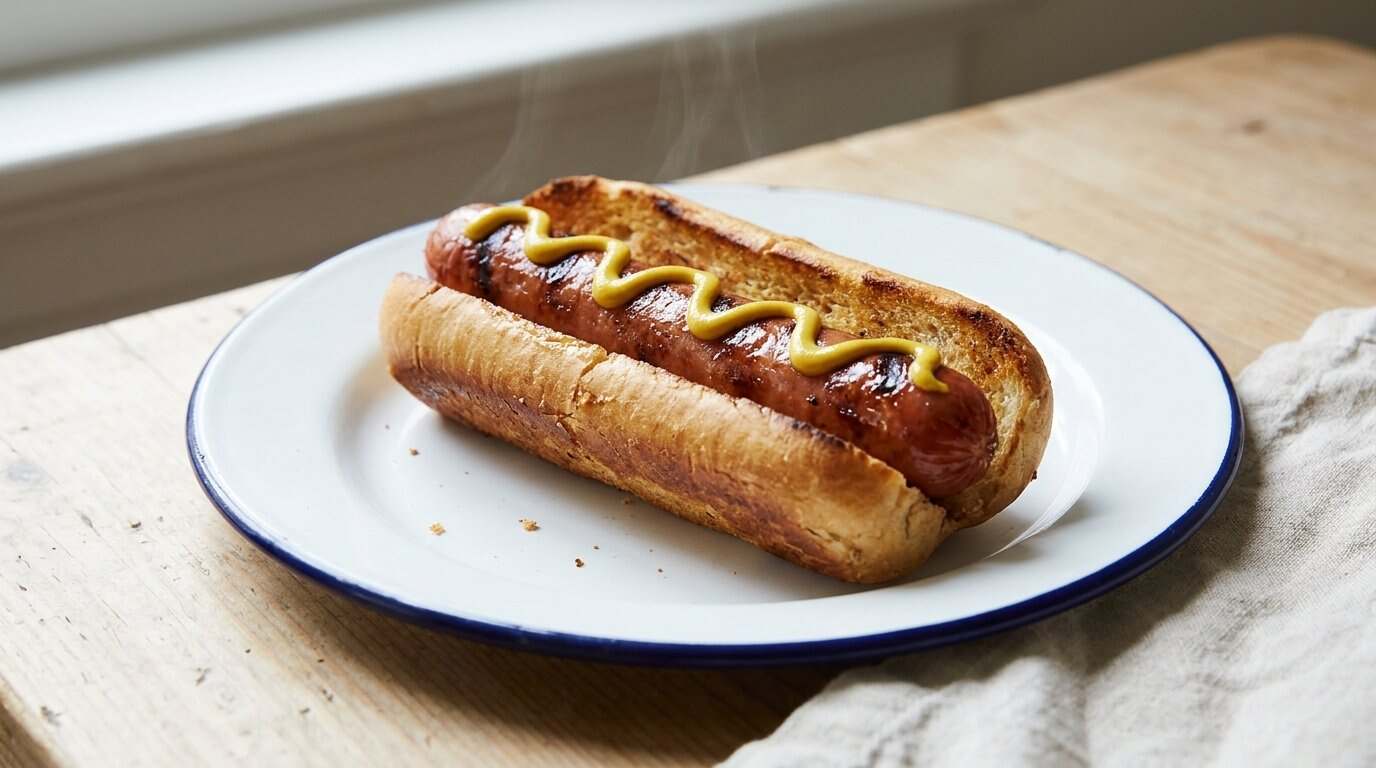
Yellow mustard uses white seed, water, vinegar and salt, and its bright color comes from turmeric rather than the seed. America’s Test Kitchen says the seeds themselves are a more muted beige, and The Takeout reaches the same conclusion about turmeric. MadeHow credits Francis French with a milder mustard made only with white seeds, colored with turmeric and tartened with vinegar by the turn of the twentieth century.
The company’s own account dates the debut to 1904. McCormick, which now owns the brand, says that George and Francis French, sons of R.T. French, introduced the mustard, which was “served over hot dogs at the St. Louis World’s Fair.” The company’s page does not describe the original recipe. The Nibble records the original name as French’s Cream Salad Brand Mustard, bright yellow and creamy and meant as an ingredient in potato and egg salad. Its pairing with ballpark hot dogs made it popular, and by the 1920s it outsold other mustards five to one, according to the same page.
The hot dog remains the mustard’s natural setting, and the question of whether that makes the hot dog a sandwich has its own treatment in the hot dog post. Plochman’s, the Chicago maker, introduced yellow mustard in a squeeze barrel in 1957.
Brown and deli-style mustards
Spicier, coarser and older in American kitchens
Before yellow took over, American mustard was strong. The Nibble says that in the 1700s it was “strong, spicy and brown” and used sparingly, and it cites Gulden’s, founded in New York City in 1862, and Plochman’s of Chicago as early brands. Plochman’s says its predecessor, Premium Mustard Mills, was founded in Chicago in 1852, and that the chemist Moritz Plochman bought the company in 1883 after emigrating in 1881.
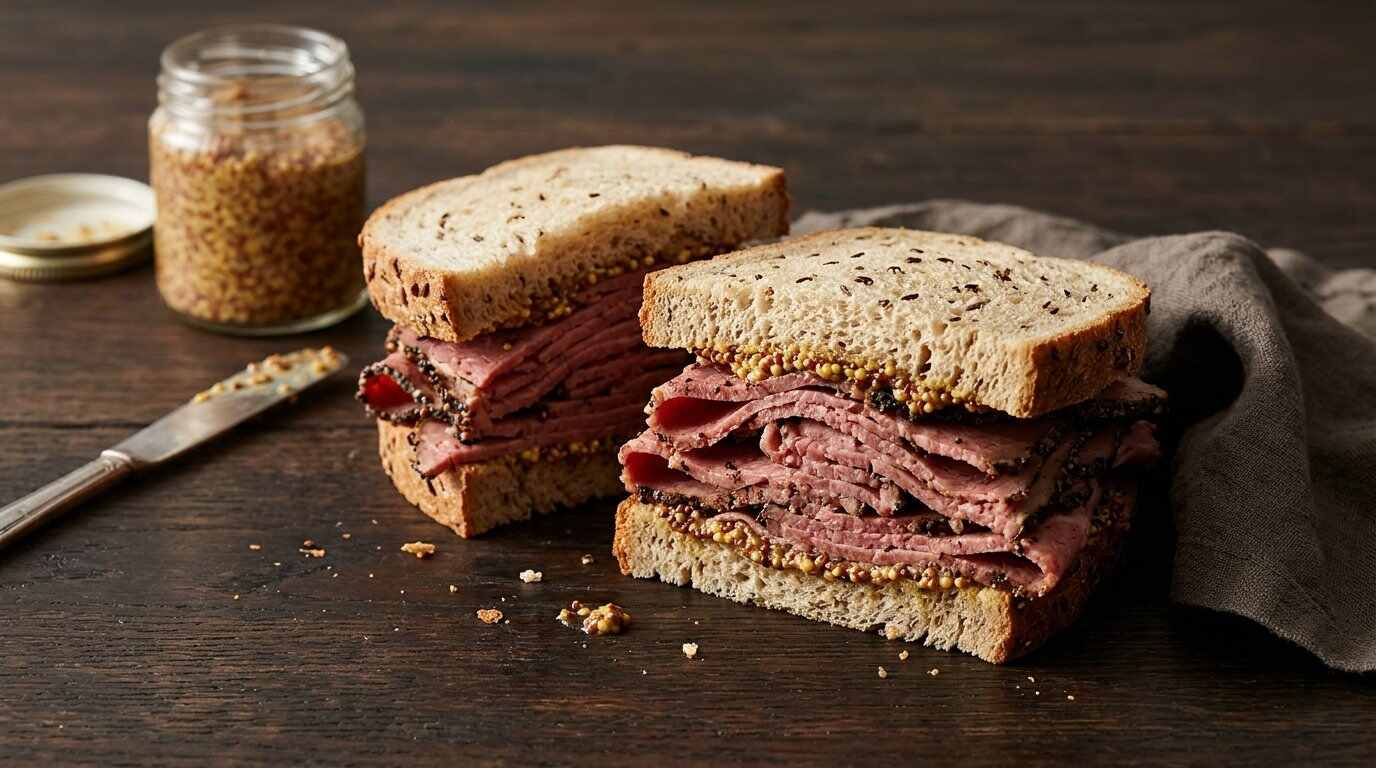
McCormick Science Institute says American cooks use mostly white seed for mild styles like yellow and ballpark mustard, while deli brown mustards are spicier. Safeway’s shopping guide describes spicy brown as hot brown seed with a coarser grind, so visible seed specks show, and a slightly vinegary taste. The same guide recommends it for sandwiches and grilled meats and says it can substitute for Dijon in those uses.
German mustard is mainly brown seed too, and McCormick Science Institute names mittelscharf, a medium-hot style, as an example. French cooks use pungent brown seed, sometimes with black, in sauces such as sauce Robert, a brown mustard sauce with onions and white wine.
Dijon, whole-grain and the name that left the city
Brown seed, white wine and a 1937 ruling
Dijon mustard starts with brown or black seed. Safeway’s guide says its liquid can be vinegar, grape must or wine, which affects the tang, and that its acidity cuts cleanly through rich meats. Maille’s mustard sommelier, per the video description, walks through a Dijon Originale and an Old Style Wholegrain, among four products, in the video above.
The history of the name is told with conflicting dates. Mental Floss says Dijon was a major mustard center by the 13th century and that Jean Naigeon created “Dijon mustard” in 1856 by using verjuice, the juice of unripe grapes, instead of vinegar. MadeHow instead places the maker Naigeon, spelled Niageon in that article, earlier, in the 18th century, and notes an 1390 French regulation allowing only “good seed and suitable vinegar.” The Grey Poupon partnership is dated 1777 by MadeHow and by the brand’s own site, while Hektoen International gives the 1770s.
The word stopped meaning the place. Connexion France reports that after the 1937 dispute it was decided that moutarde de Dijon was a variety, not a geographical appellation, so much of it is made outside the city under set ingredient and method rules. The Beaune tourism office states the point as “Dijon mustard is not an appellation d’origine contrôlée”, and the German magazine Tellerrand Stories puts it more bluntly: “Dijon is now only on the label.”
A regional counterweight exists. Beaune’s tourism office says Moutarde de Bourgogne holds a Protected Geographical Indication, which requires locally grown seed, AOC white Burgundy wine and production in Beaune; the Connexion article, written in 2017, describes the designation as a project still under way. Fallot, a Beaune firm that Connexion lists among the backers, makes its mustard with Aligoté white wine in place of vinegar, which the Tellerrand piece says makes it creamier and more delicate but less durable.
Whole-grain mustard leaves seeds intact, so they pop when chewed, says Safeway’s guide, and it suggests coarse-ground and whole-grain styles for charcuterie boards, sharp cheeses and thick sandwiches.
In the United States, Dijon’s profile owes a lot to advertising. Mental Floss reports that a 1984 Rolls-Royce television commercial boosted Grey Poupon’s sales, at a time when the brand trailed French’s.
English mustard
Ground, sifted and sold as a powder
English mustard follows a different route: dry powder first, liquid at the table. McCormick Science Institute says Colman’s original English mustard blends white and brown seeds. MadeHow reports that flour miller Jeremiah Colman began milling mustard seed in 1804, that brown seed has since replaced black in his dry mustard, and that brown and white seeds are ground separately, sifted through silk and blended before tinning. An earlier seller named Clements, the same source adds, sold a powder mixed with water and kept the recipe secret.
Hektoen International says Colman was appointed mustard-maker to Queen Victoria in 1866. Norfolk’s museum service places the firm in Norwich, where the Carrow Works employed tens of thousands of workers over generations, and says the Norwich factory closed in 2020. Its bull’s head logo on a mustard-yellow background became recognizable on many continents.
Mixed with water, the powder starts the myrosinase reaction described earlier at the moment of stirring.
How mustard works in sandwiches
Acid and spice cut through fat
America’s Test Kitchen says yellow mustard is often a supporting condiment on hot dogs and burgers, and that its acidity helps cut through rich, fatty meats. Safeway’s guide places spicy brown with sandwiches and grilled meats, and whole-grain mustard with sharp cheeses and thick sandwiches, while Dijon moves into vinaigrettes and pan sauces. Mustard also turns up inside some sandwich meats rather than on them; the pastrami on rye post covers the spice rub and curing brine, where mustard seed is one of the ingredients.
The Cuban sandwich is where mustard stops being optional. Farmers’ Almanac lists yellow mustard and Swiss cheese as standard parts, with a thin layer spread on both bread halves, and notes that mayonnaise competes with the mustard. Tampa’s 2012 council resolution lists mustard among the ingredients of an authentic Tampa Cuban, and the Cuban sandwich post has the rest of the build. In Miami, cookbook author Raquel Roque’s recipe calls for “yellow mustard to taste”, and she draws the line at the competition: “no mayonnaise on a Cuban sandwich.”
Common questions
What seeds are mustards made from?
McCormick Science Institute lists three species, white or yellow, brown and black, ranked from mildest to most intense.
Why is yellow mustard yellow?
Its bright color comes from turmeric rather than the seed. America’s Test Kitchen says the seeds themselves are a more muted beige, and The Takeout reaches the same conclusion.
Why is mustard hot?
Dry or ground mustard seed is essentially odorless. McCormick Science Institute explains that flavor develops when the seeds are chewed or mixed with water, which activates the enzyme myrosinase and converts glucosinolates into isothiocyanates.
Sources
- McCormick Science Institute, “Mustard”: https://www.mccormickscienceinstitute.com/resources/culinary-spices/herbs-spices/mustard
- The Nibble, “History of mustard”: https://thenibble.com/reviewS/main/condiments/history-of-mustard.asp
- The Nibble, “Mustard glossary”: https://thenibble.com/REVIEWS/MAIN/condiments/mustard/mustard-glossary.asp
- Hektoen International, “Mustard: history of the yellow seed”: https://hekint.org/2020/02/18/mustard-history-of-the-yellow-seed/
- MadeHow, “Mustard”: https://madehow.com/Volume-5/Mustard.html
- Encyclopedia.com, “Mustard”: https://www.encyclopedia.com/manufacturing/news-wires-white-papers-and-books/mustard
- Mental Floss, “13 things you probably didn’t know about mustard”: https://www.mentalfloss.com/article/62747/13-things-you-probably-didnt-know-about-mustard
- McCormick, “The French’s story”: https://mccormick.com/frenchs/story
- Plochman’s, “About”: https://plochman.com/about
- America’s Test Kitchen, yellow mustard taste test: https://www.americastestkitchen.com/taste_tests/1951-yellow-mustard
- The Takeout, “Why exactly is mustard so yellow?”: https://thetakeout.com:443/1784855/why-is-mustard-yellow
- Safeway, “Yellow, Dijon, spicy brown, whole grain and honey mustard explained”: https://www.safeway.com/shopping-guides/condiments-spice-and-bake/jams-spreads-and-condiments/yellow-dijon-spicy-brown-whole-grain-and-honey-mustard-explained-04ofix
- Grey Poupon, “About us”: https://greypouponmustard.com/pages/about-us
- Connexion France, “Just don’t call it French mustard” (17 February 2017): https://www.connexionfrance.com/article/Archive/Just-don-t-call-it-French-mustard
- Beaune Tourism, “Mustard”: https://www.beaune-tourism.com/explore/gastronomy/specialities-local-products/mustard/
- Tellerrand Stories, “Dijon mustard in dilemma”: https://en.tellerrandstories.de/dijon-senf-im-dilemma/
- Norfolk Museums Service, “The Colman’s story”: https://www.museumscollections.norfolk.gov.uk/article/62522/The-Colmans-story
- Farmers’ Almanac, “Viva la Cuban sandwich”: https://www.farmersalmanac.com/viva-la-cuban-sandwich-20801
- NBC Miami, “Miami engages Tampa in Cuban sandwich war”: https://www.nbcmiami.com/news/local/miami-engages-tampa-in-cuban-sandwich-war/1920629
- WUSF, “A historic vote for Tampa’s Cuban sandwich” (19 April 2012): https://wusf.org/culture/2012-04-19/a-historic-vote-for-tampas-cuban-sandwich-pressed-or-cold
- Maille US video, “Mustard Expert describes 4 Different Types of Mustard from Maille!”: https://www.youtube.com/watch?v=lu109KAsPK4
Keep reading
- Filet-O-Fish History: Lou Groen, Lent and the Hula Burger
- Dagwood Sandwich: How a Comic Strip Snack Became a Dictionary Word
- Egg Salad Sandwich: Origins, the Mayonnaise Question and Food Safety
More in this section: Ingredients guide.