In this story
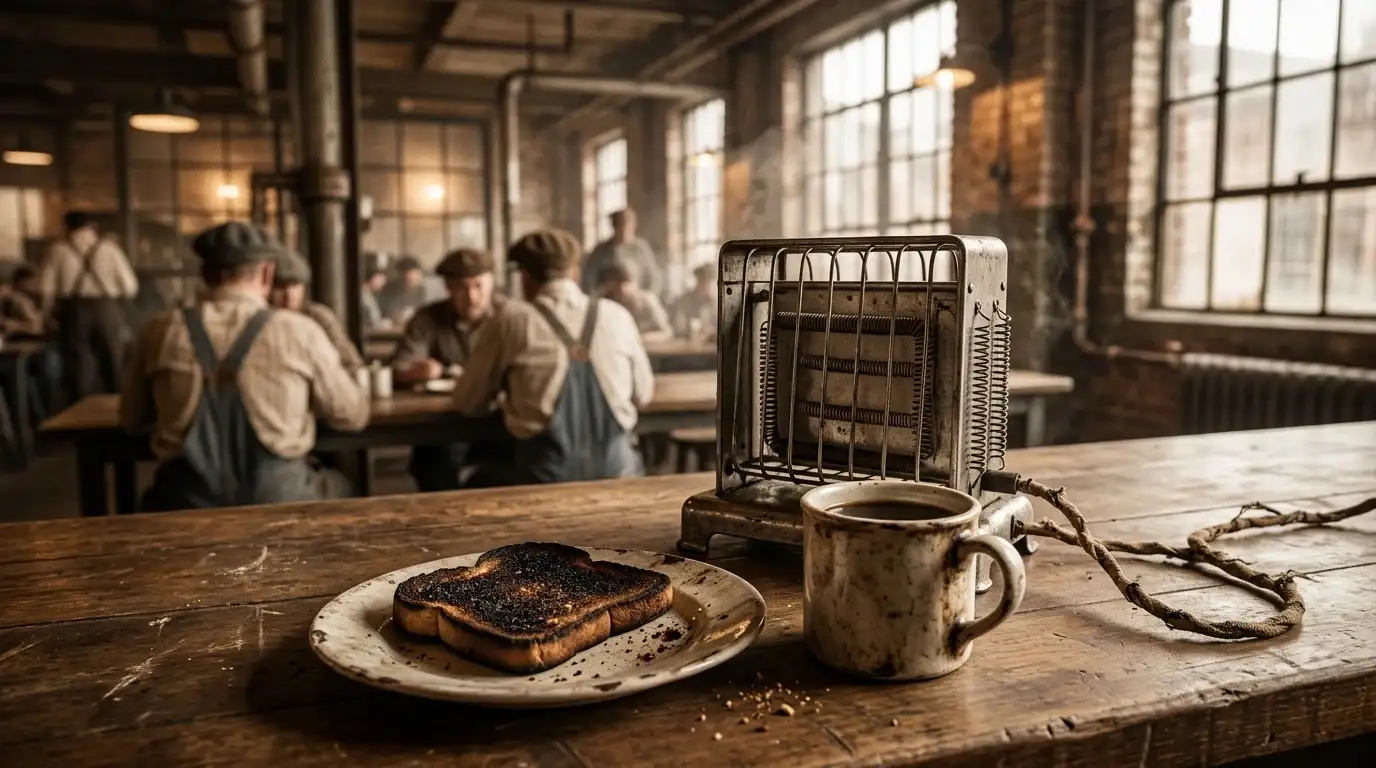
The automatic pop-up toaster began with a complaint about breakfast. Charles P. Strite, working at a factory in Stillwater, Minnesota, during World War I, kept getting burnt toast in the company cafeteria, so he built a machine that would toast both sides of the bread at once, shut itself off, and push the slices up when they were done.
Video: The First Automatic Pop-Up Toaster, from The Vintage Company YouTube channel
Toast before the timer
Forks, frames and one-sided toasters
Electric toasting was already a few decades old when Strite started. The Hagley Museum and Library’s June 2017 history of toast traces the hardware back to the long forks and metal frames held over a fire or a gas flame.
The heating element was the hard part. Hagley credited Albert Marsh with creating Nichrome in 1905, a nickel-chromium wire that could survive repeated high heat. The first U.S. patent application for an electric toaster followed in 1906, filed by George Schneider of the American Electrical Heater Company of Detroit, and General Electric brought out its first electric toaster in 1909.
Those machines still needed a person standing over them. The Cedar Rapids Gazette, in an October 2020 history column, described early models that browned only one side, leaving the cook to turn the bread by hand.
The Stillwater cafeteria
A machine that did not depend on the cook
The Minnesota Historical Society’s encyclopedia, MNopedia, puts the problem plainly. Busy cafeteria cooks forgot to turn the toast in time, so it came out burnt. Strite designed his answer in 1919.
His design improved on existing toasters in three ways, MNopedia reported. Heating elements toasted both sides of the bread at once. A timer turned the heat off automatically. Springs pushed the finished slices up.
Where he came from
Accounts of his origins disagree. The Gazette reported that Strite was born in Springville, in Linn County, Iowa, on Feb. 27, 1878, and later moved to Minneapolis to work as an engineer. Other summaries of his life give different birthplaces, and none of them settles the question with a birth record.
Patents and the first hundred
Childs Restaurants sent them back
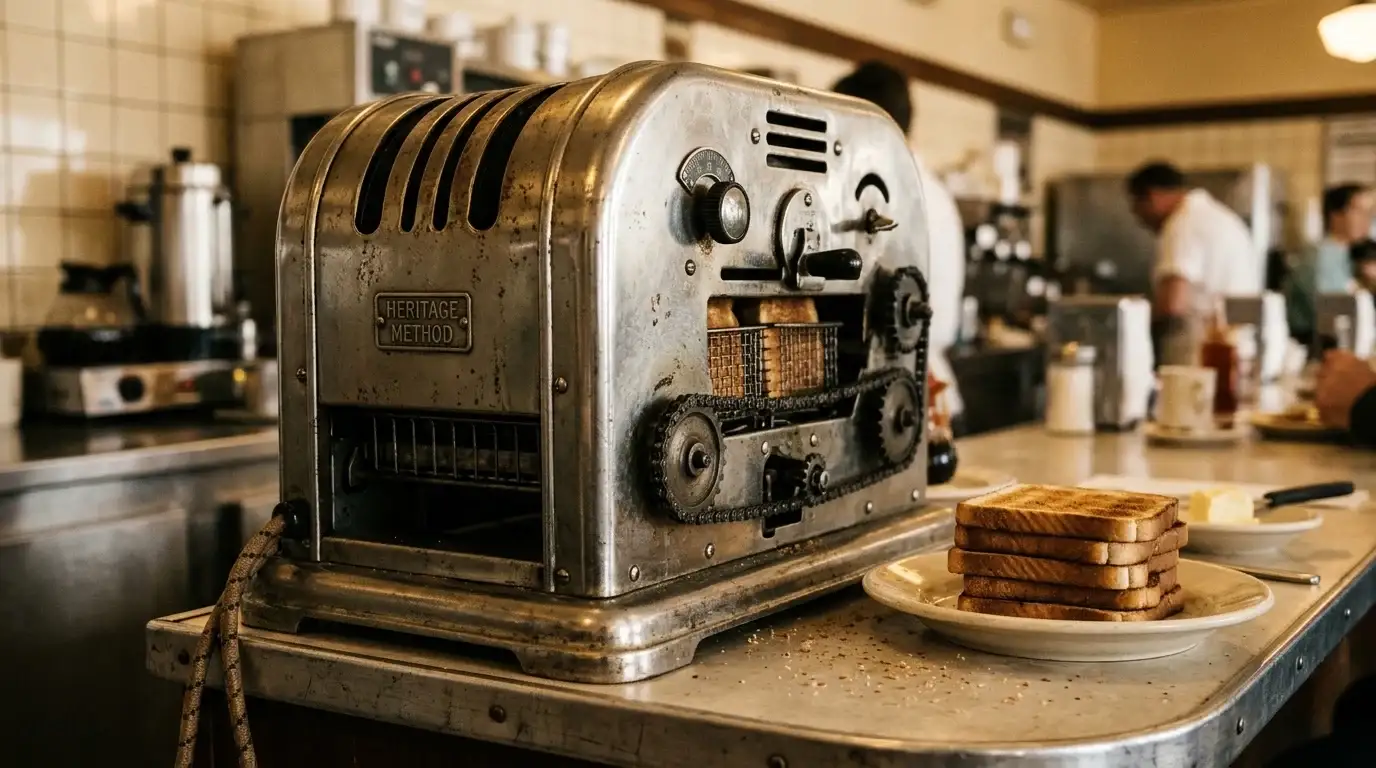
Strite applied for a patent and, according to MNopedia, raised money from a local investor, Glen Waters, in 1920 to build the first batch. He shipped 100 hand-made toasters to Childs Restaurant locations around the country. Every one came back for repairs.
The buyers still wanted them. Strite fixed the faults, Harold Genter added more backing, and the new Waters-Genter Company began production in Minneapolis.
The patent paperwork came in 1921. The Smithsonian’s National Museum of American History lists two Strite patents on a later Toastmaster in its collection: No. 1,387,670, issued Aug. 16, 1921, and No. 1,394,450, issued Oct. 18, 1921, both titled “Bread-toaster.”
Restaurants ordered fast. MNopedia wrote that the Strite Automatic Toaster browned each slice evenly in half the usual time.
The Toastmaster comes home
1926 and the one-slice model
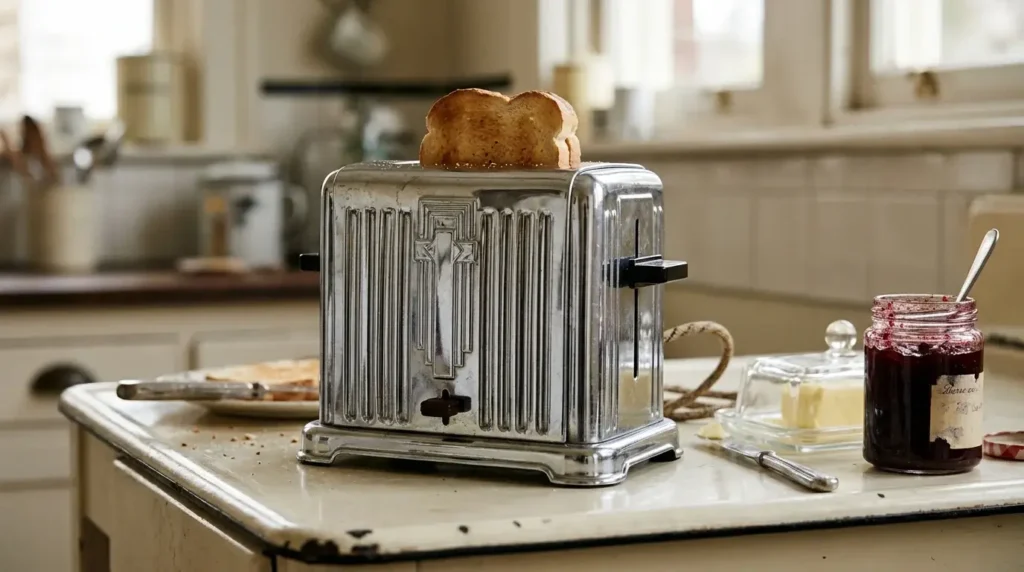
Strite then shrank the machine. MNopedia described a smaller, one-slice home version with Art Deco styling, heat-proof Bakelite handles and a brass Toastmaster label, covered by a second patent application.
The Henry Ford museum, in its catalog entry for a 1929–1930 Toastmaster Model 1A1, dates the first home model to 1926. Hagley gives the same year and calls it the first automatic pop-up household toaster that browned both sides at once, ran on a timer and ejected the toast.
Growth followed. Iowan Max McGraw invested in 1927, the company moved to a larger plant at 213–217 North 2nd Street in Minneapolis, and by 1933 that factory was running shifts around the clock, MNopedia reported.
Sliced bread arrives
Two inventions, two years apart
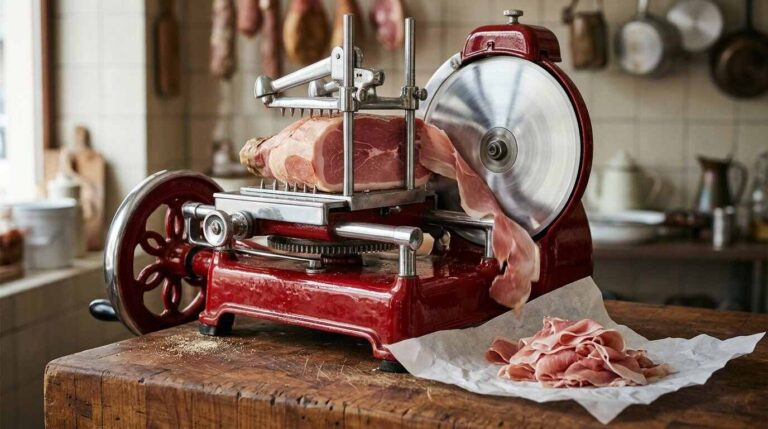
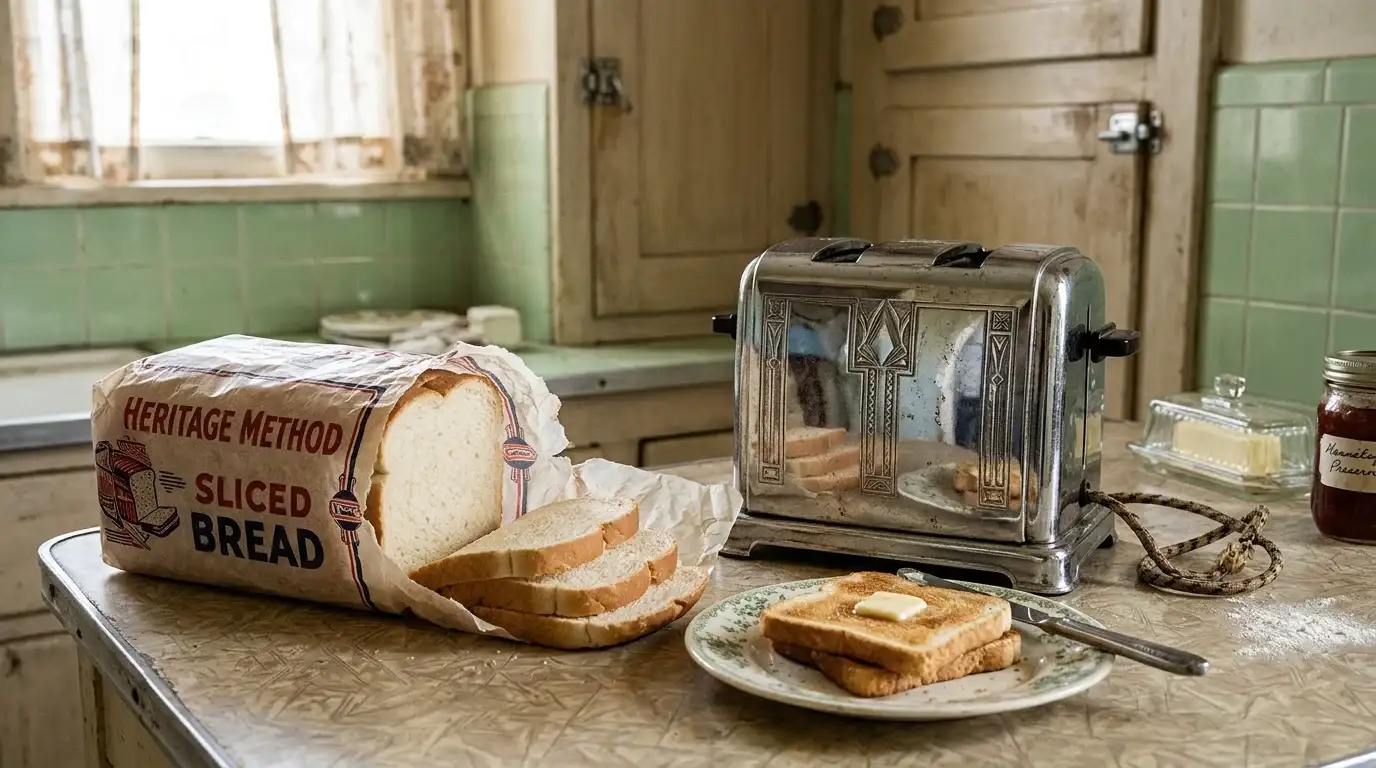
The toaster had a partner on the way. Hagley reported that Otto Frederick Rohwedder’s commercial bread-slicing machine went into the Chillicothe Baking Company in Chillicothe, Missouri, where the first loaf of commercially sliced bread was sold on July 7, 1928. Pre-sliced loaves, Hagley noted, pushed toaster demand higher still.
Grill Cheesy has covered that side of the story in the post on the invention of sliced bread, and the chemistry of the browning itself in the Maillard reaction and bread browning. The reason a slice dries out before it ever reaches the slot is in why bread goes stale.
Prices, ads and a move to Illinois
Sixteen dollars for two slices
The brand went national in the 1930s. In 1935, MNopedia reported, the Minneapolis agency MacMartin built a national campaign selling toast as a food for any hour, and hardware stores sold serving trays built around the toaster. A two-slice model cost $16.00 that year and a one-slice model $11.50.
The Smithsonian’s own example is a later single-slice Model 1A4, produced from August 1934 to August 1939 by McGraw Electric’s Toastmaster division, with a chrome body and fluted sides in the skyscraper style of the period. In 1938 McGraw Electric moved all production to Illinois.
The Toastmaster name is still on toasters sold today:
- Toastmaster 4-Slice Digital Toaster – Stainless Steel with Reheat, Frozen, Bagel & Cancel Buttons: a four-slot stainless toaster with a digital display and bagel and frozen settings. See it on Amazon (affiliate link)
Video: Farberware & Toastmaster 4 Slice Digital Toaster | Which One Is Better???, from the georgiahome YouTube channel
As an Amazon Associate I earn from qualifying purchases. A commission may be earned if you buy through this link, at no extra cost to you.
Sources
- Hagley Museum and Library, The History of Making Toast (June 19, 2017): https://www.hagley.org/librarynews/history-making-toast
- The Gazette (Cedar Rapids), Time Machine: An Iowan invented the pop-up toaster (Oct. 27, 2020): https://www.thegazette.com/news/history/time-machine-an-iowan-invented-the-pop-up-toaster/article_48029956-7a71-5dc5-a53f-48b5debccd46.html
- Minnesota Historical Society, MNopedia, Toastmaster (bread toaster): https://www.mnhs.org/mnopedia/search/index/thing/toastmaster-bread-toaster
- Smithsonian National Museum of American History, Toastmaster Toaster (nmah_324284): https://www.si.edu/object/nmah_324284
- The Henry Ford, Waters-Genter Company Toastmaster Model 1A1 Toaster, 1929-1930: https://www.thehenryford.org/collections/explore/artifact/359813