In this story
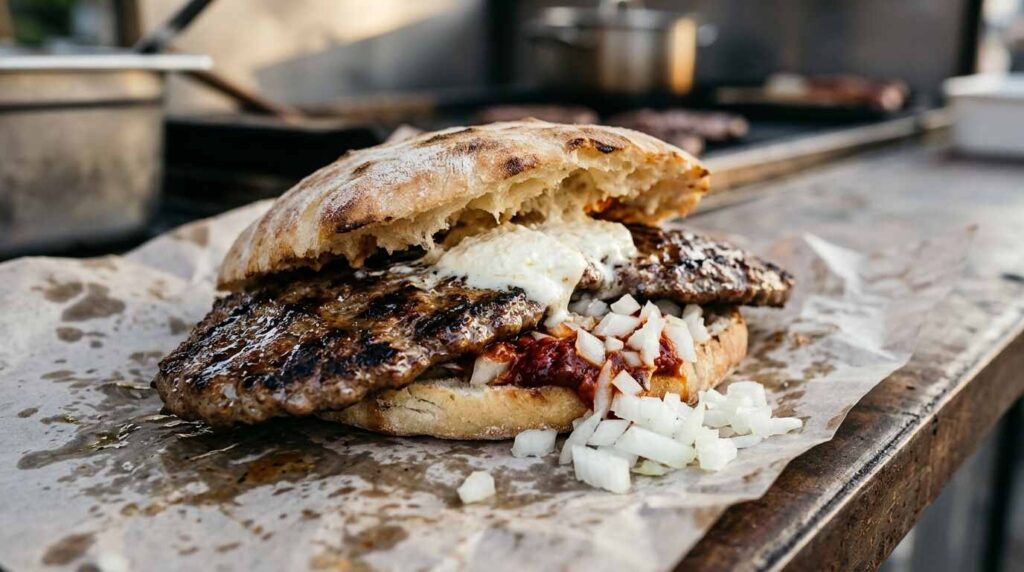
Pljeskavica is a wide, flat patty of seasoned minced meat, grilled over coals and, in its street form, stuffed into a puffy flatbread called lepinja. English-language writers have called it the Serbian hamburger, the Yugoslav hamburger and the Balkan burger for more than half a century. The bun, though, is newer than the name.
Video: Biggest Street Food Fest of Serbia. 'Rostiljijada' Grilled Meat Festival in Leskovac, Srbija, from the settime2588 YouTube channel
What goes in the patty
The meat is usually a mix. Olivera Tolimir of the Belgrade Language School, in a 2023 guide to Serbian street food, describes pljeskavica as usually pork, lamb and beef together and says it has little in common with a fast-food burger beyond meat between bread.
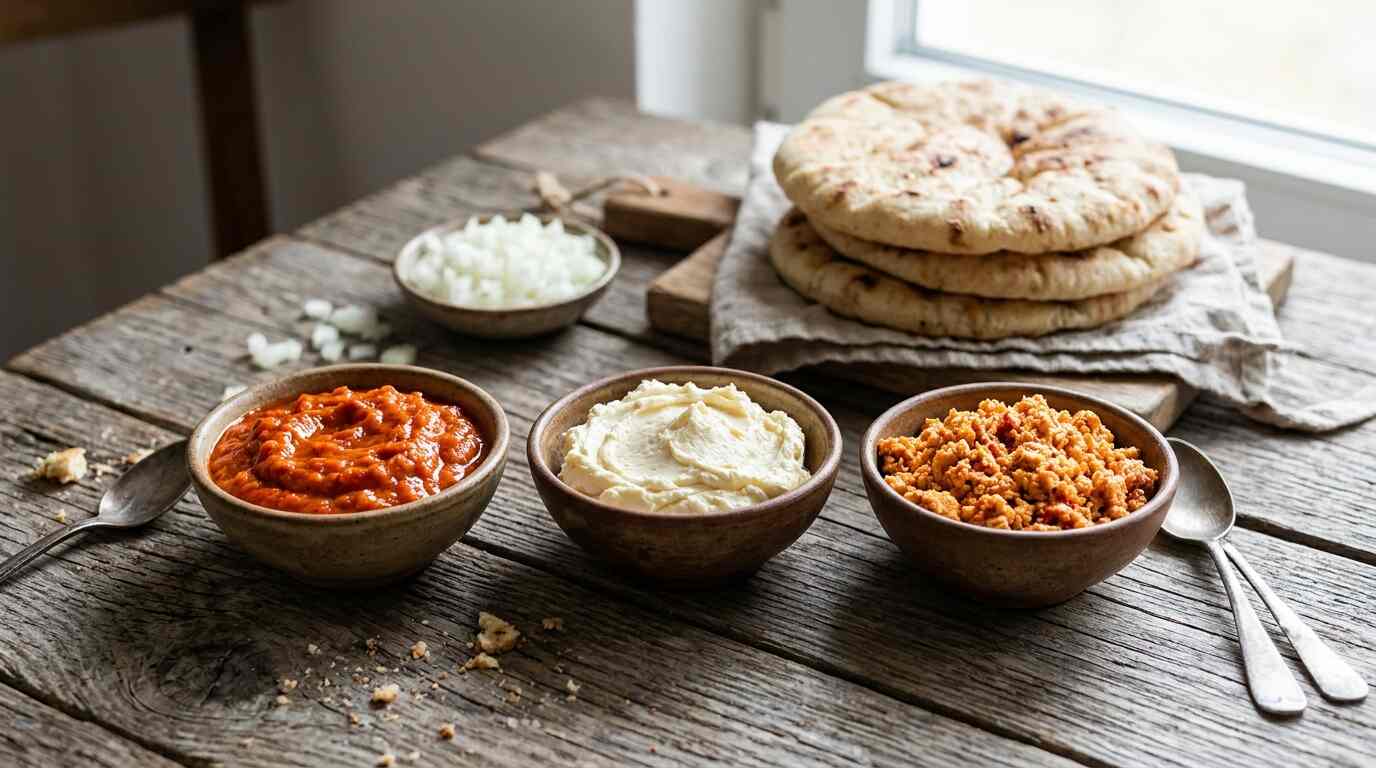
The ordering is different too. Tolimir points out that there are no named versions built around toppings, the way a cheeseburger is named for its cheese. A customer picks the sides each time: ajvar, the roasted red pepper relish; kajmak, a rich dairy spread; urnebes, a spicy spread of white cheese, garlic, kajmak, peppers and chili; plus onions, pickles, cabbage, lettuce, sour cream, mustard or ketchup.
Leskovac and the protected name
One city owns the most famous version. Tolimir writes that the Leskovac pljeskavica, Leskovačka pljeskavica, is the best-known type and has been a legally protected brand since 2008, so selling a patty under that name requires a license.
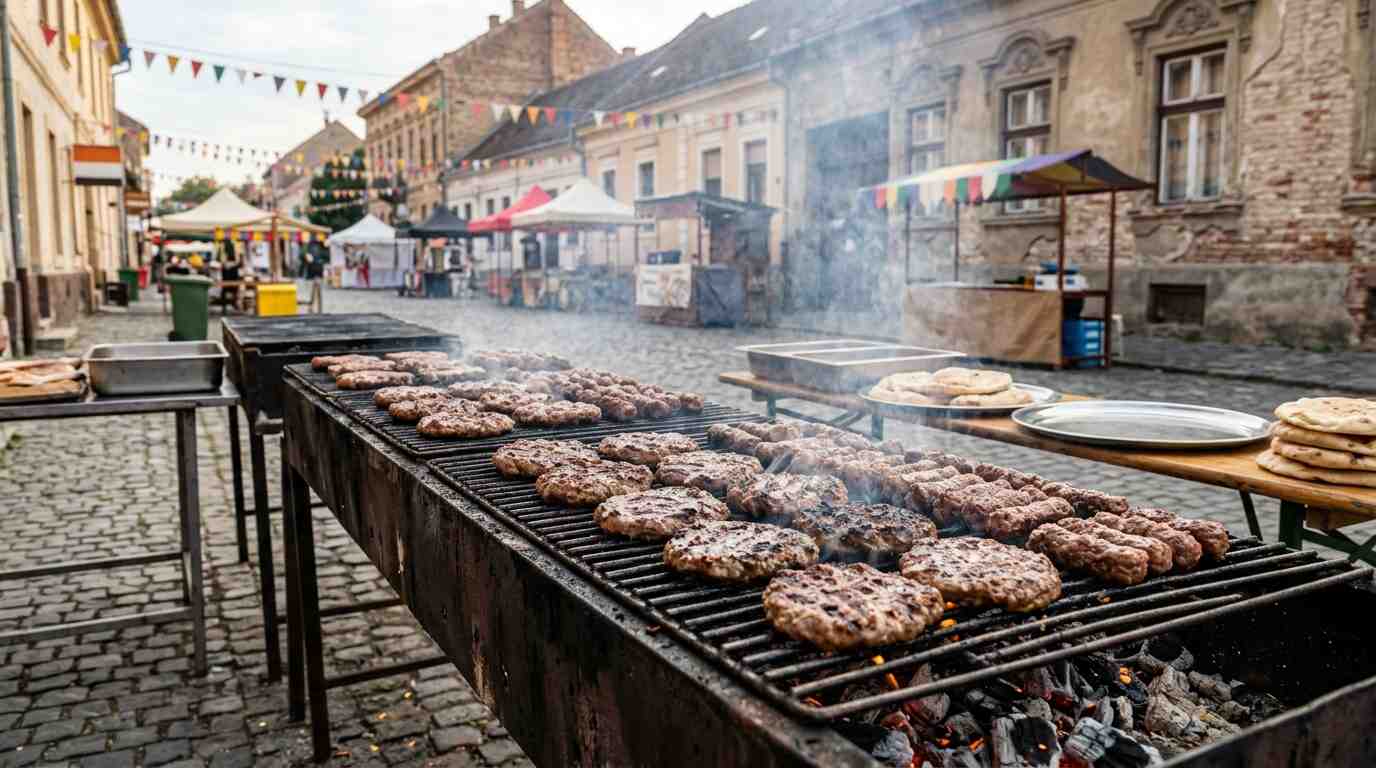
The grill itself matters as much as the recipe. Air Serbia’s in-flight magazine Elevate, in its May 2023 issue, describes pljeskavica as a large round patty of minced meat, with ćevapi as its small sausage-shaped counterpart, both cooked over charcoal from beech or oak, with the griller’s job being to cook the meat evenly without leaving it raw or drying it out. Leskovac’s barbecue festival, the Roštiljijada, is the subject of the video above.
From plate to bun
Older descriptions leave out the bread. Food etymologist Barry Popik, in an entry dated January 2010, gathers the early English-language references. A 1965 British touring guide described pljeskavica simply as “minced steak.” A 1969 Indiana newspaper column called it a kind of East European hamburger “minus the bun.” Lila Perl’s 1974 The Hamburger Book said it is “never sandwiched into a bun.” A 1979 Serbo-Croatian textbook defined it as “Yugoslav hamburger.”
The bun arrived later. Popik quotes Julia Moskin’s January 2010 New York Times article on the dish as saying pljeskavica was originally served flopped onto a plate and that sandwiching it in lepinja, a fluffy, spongy pita-style bread, later became standard. The early sources and the street version today are both accurate; they describe different decades.
Pljeskavica in Queens
New York found it through Ridgewood. Popik’s citations follow Bosna Express, Mirza Huskic’s Bosnian restaurant on Forest Avenue in Ridgewood, Queens. The Village Voice’s Robert Sietsema called its pljeskavica “deliriously good” in 2001; Gothamist in 2007 described patties as thin and wide as a dinner plate; and Time Out New York put it on a 2007 list of the city’s top 100 foods.
Sietsema’s 2008 Village Voice piece on two competing Bosnian cafés on the same Queens corner gave the most memorable description of the bread. He compared lepinja to a pocketless pita inflated with a bicycle pump.
Manhattan bar food took it up as well. Popik cites a December 2008 item from The Feedbag on Julia Jaksic’s Balkan burger on the late-night menu at Employees Only, then a year old.
How it compares with a hamburger
The family resemblance is real, and so are the differences. The American hamburger, traced on Grill Cheesy in hamburger origin, is usually all beef on a soft bun with toppings that name the sandwich. Pljeskavica uses mixed meats, is pressed much wider, and comes in lepinja with spreads chosen at the counter. The thin, wide patty has something in common with the smash burger.
Build-it-at-home kit
Ajvar is the easiest piece of the counter to bring home, and a ridged pan stands in for the coals when there is no grill.
- Ajvar Hot (podravka) 350g: jarred hot ajvar, the roasted red pepper relish Tolimir lists among the standard sides. See it on Amazon (affiliate link)
- Lodge Square Cast Iron Grill Pan, PFAS-Free, 10.5 Inches: a ridged cast iron grill pan, an indoor option for a wide, flat patty. See it on Amazon (affiliate link)
As an Amazon Associate I earn from qualifying purchases. A commission may be earned if you buy through this link, at no extra cost to you.
Questions people ask
What is pljeskavica? A grilled patty of minced meat, usually a mix of pork, lamb and beef, popular across the Balkans.
What is pljeskavica served with? Lepinja flatbread and sides chosen at the counter, such as ajvar, kajmak, urnebes and onions.
Is pljeskavica a hamburger? It is often called one, but it uses mixed meats, is much wider, and was originally served on a plate rather than in bread.
What is Leskovac pljeskavica? The best-known regional version; the name has been a protected brand since 2008.
Where has it been reviewed in New York? Bosna Express in Ridgewood, Queens, drew Village Voice, Gothamist and Time Out coverage in the 2000s.
Sources
- Belgrade Language School, Olivera Tolimir, “The 6 Famous Examples of Serbia Street Food” (July 29, 2023): https://belgradelanguageschool.com/?p=20405
- Barry Popik, “Balkan Burger (pljeskavica)” (January 20, 2010): https://barrypopik.com/blog/balkan_burger_pljeskavica
- Air Serbia Elevate magazine (May 2023): https://online.flippingbook.com/view/617134390/99