In this story
Pepperidge Farm began with one loaf that failed. Margaret Rudkin, a Fairfield, Connecticut, mother of three, set out in 1937 to bake bread without additives for her youngest son, and the first try came out about an inch high. The company that grew from the second, third and hundredth tries now sells Goldfish crackers and Milano cookies, but the bread came first, and it cost two and a half times what other bread did.
Video: This Month in CT History: Pepperidge Farm in Norwalk!, from the NBC Connecticut YouTube channel
A farm named for a tree
The name came with the house. Pepperidge Farm’s own company story says Margaret Fogarty was born in New York City in 1897, married Wall Street broker Henry Rudkin in 1923, and moved in 1929 to a Fairfield property called Pepperidge Farm, named for an ancient pepperidge tree. The Fairfield Museum, in its Wonder Women exhibit, gives the same 1929 move and describes the estate as 125 acres; Connecticut History puts it at 123.
The son’s asthma
The reason for the bread is consistent; the son’s name is not. Connecticut History, in a 2018 article by Alex Donovan, says that during the Great Depression Rudkin learned that additives in processed food might be worsening her son’s asthma, and with her husband temporarily out of work, taught herself to bake from old recipe books, grinding wheat from a feed store in her kitchen coffee grinder. Another Connecticut History entry names the son Mark. Mental Floss, in a 2016 piece by Ethan Trex, names him John. The company’s own story does not name him.

Hard as a rock, then 25 cents
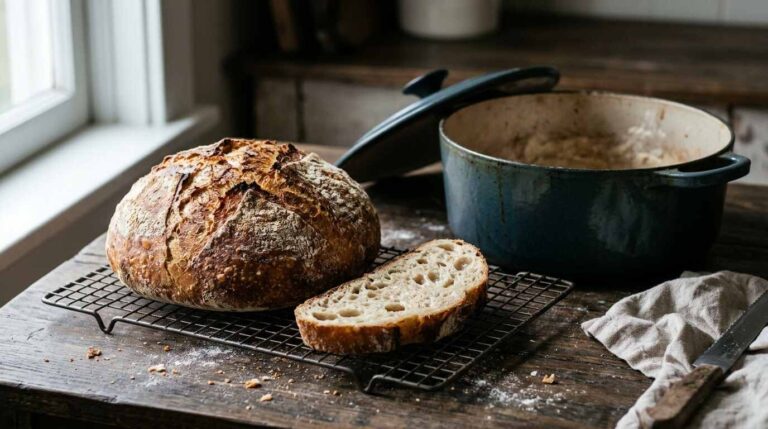
The first loaf was a failure by Rudkin’s own account. The company story says she called it a “Stone Age” loaf, about an inch high, and kept experimenting; Mental Floss quotes her joking that it was “hard as a rock.”
The later loaves were stone-ground whole wheat, according to the company, and priced high. Pepperidge Farm says she charged 25 cents when the going rate was 10 cents, and Mental Floss gives the same comparison. The company says the son’s doctor, at first a skeptic, ended up prescribing the bread to patients; the Fairfield Museum describes him as a New York doctor who recommended it to some of his other patients.
The New York market came by commuter train. The company says Henry carried loaves to Grand Central Terminal for specialty shops, and Mental Floss says he turned the family garage into a bakery and delivered 24 loaves on his commute. The Fairfield Museum says that within a year she was selling 4,000 loaves a week.
Norwalk, rationing, cookies
The business outgrew the farm. Connecticut History dates the opening of a modern commercial bakery in Norwalk to July 4, 1947, and notes that production had been cut back during World War II because of rationing. The company says Rudkin refused to substitute ingredients during the war, even when 100 percent stone-ground whole wheat was scarce.
Cookies followed a trip abroad. The company says that after a 1950s visit to Belgium, Rudkin bought the rights to European-style cookies made by a Brussels supplier to the Belgian royal household, and launched the Distinctive line in 1955 with names like Bordeaux, Geneva and Brussels. Mental Floss names the Belgian bakery as Delacre, and says the Milano grew out of a 1950s cookie called the Naples, with a top added so the chocolate would not melt into a single brick in shipping.

Campbell and Goldfish
The sale came in 1961. Connecticut History says Rudkin sold the brand to the Campbell Soup Company that year for $28 million, and the company story and the Fairfield Museum both say she became the first woman on Campbell’s board. Goldfish arrived a year later: Pepperidge Farm says Rudkin found the fish-shaped cracker in Switzerland and that America first tasted it in 1962.
Rudkin also wrote a book. Connecticut History and the Fairfield Museum both describe The Margaret Rudkin Pepperidge Farm Cookbook, published in 1963, as the first cookbook to appear on The New York Times Best Sellers list. Mental Floss adds that the gristmill in the company logo is the Wayside Inn Grist Mill in Sudbury, Massachusetts, which Pepperidge Farm leased from 1952 to 1967.

On the table
The brand started with a sandwich loaf. Grill Cheesy’s guides to the best bread for grilled cheese and the pain de mie or Pullman loaf cover the sliced loaf on the counter, and why bread goes stale covers what happens after.
- The Margaret Rudkin Pepperidge Farm Cookbook: Rudkin’s 1963 cookbook. See it on Amazon (affiliate link)
- Pepperidge Farm Brussels Distinctive Cookies 5.25 oz (Pack of 6): one of the original 1955 Distinctive names. See it on Amazon (affiliate link)
- Pepperidge Farm Milano Cookies, Dark Chocolate, 2 Cookies/Pack (20 Pack): the Milano, descended from the Naples cookie. See it on Amazon (affiliate link)
- Goldfish Cheddar Cheese Crackers, 27.3 Oz Carton: the cracker introduced in 1962. See it on Amazon (affiliate link)
- Pepperidge Farm Herb Seasoned Classic Stuffing, 12 oz. Bag: the brand’s bread-based stuffing. See it on Amazon (affiliate link)
As an Amazon Associate I earn from qualifying purchases. A commission may be earned if you buy through this link, at no extra cost to you.
Questions people ask
Who founded Pepperidge Farm? Margaret Rudkin, in Fairfield, Connecticut, in 1937.
Why was Pepperidge Farm started? Rudkin baked additive-free bread for her youngest son, who had asthma and allergies.
Where does the name Pepperidge Farm come from? The family’s Fairfield property, named for a pepperidge tree.
When did Campbell buy Pepperidge Farm? 1961, for $28 million, per Connecticut History.
When did Goldfish crackers come out? 1962, according to Pepperidge Farm.
Sources
- Pepperidge Farm, “Our Story”: https://pepperidgefarm.com/our-story/
- Fairfield Museum and History Center, “Margaret Rudkin: Business Executive 1897-1967” (undated exhibit): https://fairfieldmuseum.omeka.net/exhibits/show/wonder-women/margaret-rudkin–business-exec
- Connecticut History, Alex Donovan, “Pepperidge Farm: Healthful Bread Builds a Business” (July 3, 2018): https://connecticuthistory.org/pepperidge-farm-healthful-bread-builds-a-business
- Connecticut History, “Pepperidge Farm Opens Bakery – Today in History: July 4”: https://connecticuthistory.org/pepperidge-farm-opens-bakery/
- Mental Floss, Ethan Trex, “11 Freshly Baked Facts About Pepperidge Farm” (March 30, 2016): https://www.mentalfloss.com/article/68317/11-freshly-baked-facts-about-pepperidge-farm