In this story
Ketchup is a sweet, vinegary tomato sauce now, poured on burgers and fries by the bottle. For most of its history it was none of those things. The word comes from a fermented fish sauce in southern China, and the sauce went through mushrooms, walnuts, oysters and anchovies in English kitchens before anyone put a tomato in it.
Video: The Fishy Origins of Ketchup, from the Great Big Story YouTube channel
A fish brine called kê-tsiap
The name is Hokkien. NPR’s Code Switch gives the forerunner as ke-tchup, kôechiap or kê-tsiap, depending on the transliteration, and describes it as a pickled fish brine or sauce from Fujian province and Southeast Asia. The linguist Dan Jurafsky, quoted there, put the background simply: “Fermented food products have a long tradition in Asia.”
Where the fish sauce itself came from is less settled. Jasmine Wiggins of National Geographic, writing in April 2014, reports that traders are believed to have carried fish sauce from Vietnam to southeastern China. Stephanie Butler of History.com goes further back, writing that texts from as early as 300 B.C. describe pastes in imperial China made from fish entrails, meat byproducts and soybeans.
Those are two different claims: one about the sauce’s route into Fujian, one about how old similar pastes are. Neither source claims the modern word or sauce dates to 300 B.C.
English kitchens
Europeans picked it up through trade. NPR says Dutch and English sailors brought the sauce back to Europe in the 1600s, where it became ketchup or catsup. Butler writes that British traders had developed a taste for it by the early 1700s and adapted it at home.
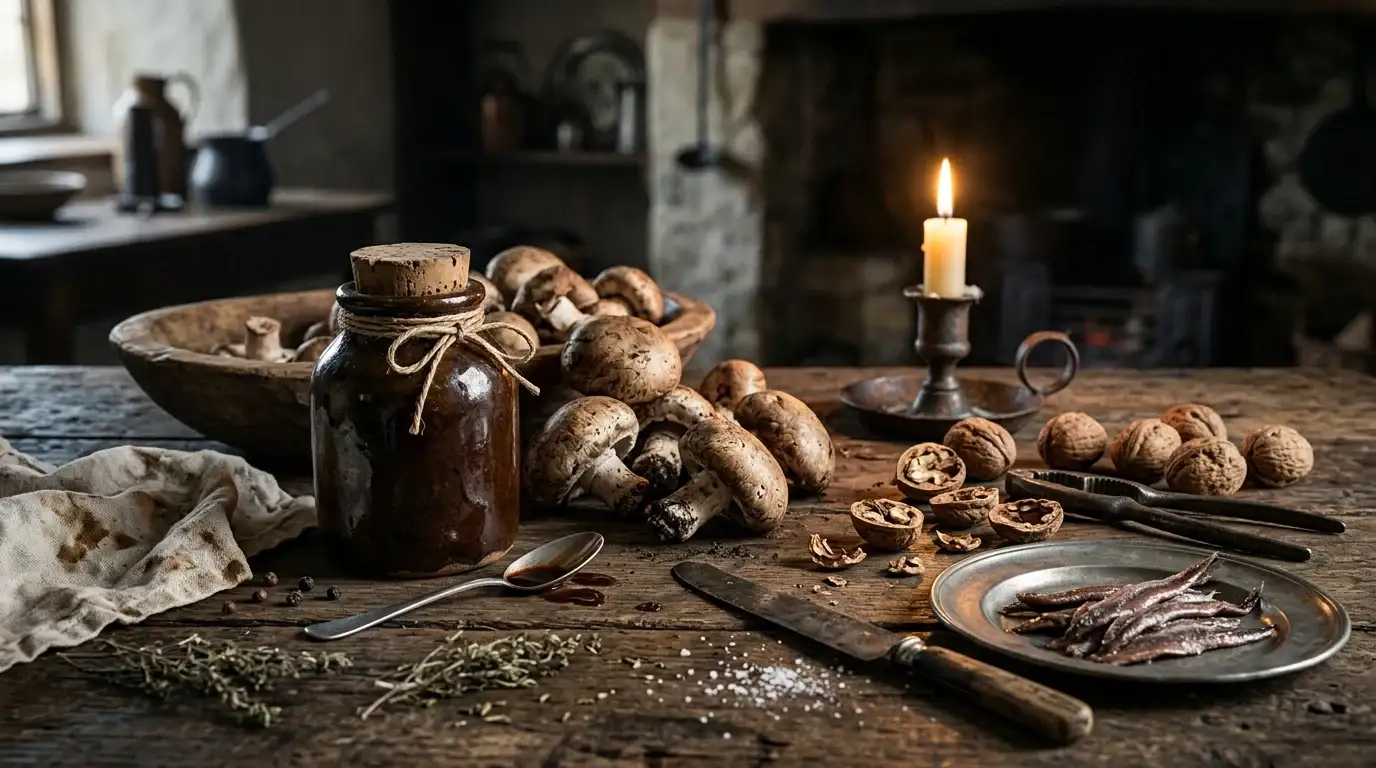
The English could not get the original ingredients, so they substituted. Wiggins records a 1732 recipe by Richard Bradley called “Ketchup in Paste” that refers to the East Indies, and says early British versions used mushrooms, walnuts, oysters or anchovies. NPR cites an “English Katchup” recipe by Eliza Smith, which it dates to 1758, made from anchovies, cloves, ginger and pepper.
Mushroom ketchup became the long-lived English form. Both National Geographic and History.com report it was a favorite of Jane Austen, while NPR says walnut ketchup was the Austen family’s favorite and that Mrs. Beeton’s 1861 book of household management included a mushroom version. The sources do not agree on which one Austen preferred, and none of them quotes her.
The first tomato
The tomato arrived in print in Philadelphia. All three sources credit the scientist and horticulturalist James Mease with the first known tomato ketchup recipe, in 1812. Wiggins adds that Mease called tomatoes “love apples” and that his recipe had no vinegar or sugar, which means it would have tasted little like the modern bottle.
Tomatoes had a reputation to overcome. Butler writes that many people then considered them poisonous,: she writes that acid from tomatoes leached lead from the pewter plates of wealthy English diners, causing lead poisoning that was blamed on the fruit.
Recipes multiplied after Mease. NPR notes an 1817 tomato ketchup that still included anchovies, a holdover from the sauce’s fish-brine past, and says the early 1800s were the heyday of homemade ketchups.
Heinz and the preservative fight
The modern product is largely the work of one Pittsburgh company. Wiggins and Butler both date H.J. Heinz’s ketchup to 1876. Butler gives the formula as tomatoes, distilled vinegar, brown sugar, salt and spices. NPR, which does not mention 1876, records that Henry J. Heinz began patenting the company’s ketchup bottles in 1882, and that Heinz chose the spelling “ketchup” to stand apart from competitors selling “catsup.”
The bigger change came from a fight over chemicals. Wiggins explains that sodium benzoate was widely used to slow spoilage in commercial ketchup, but by the end of the 19th century it was considered harmful. Dr. Harvey Washington Wiley led the campaign against benzoates, arguing that good ingredients handled properly made them unnecessary.
Heinz sided with Wiley. According to Wiggins, the company developed a preservative-free recipe built on ripe tomatoes and more vinegar, and by 1905 it had sold five million bottles.

Ketchup and the sandwich
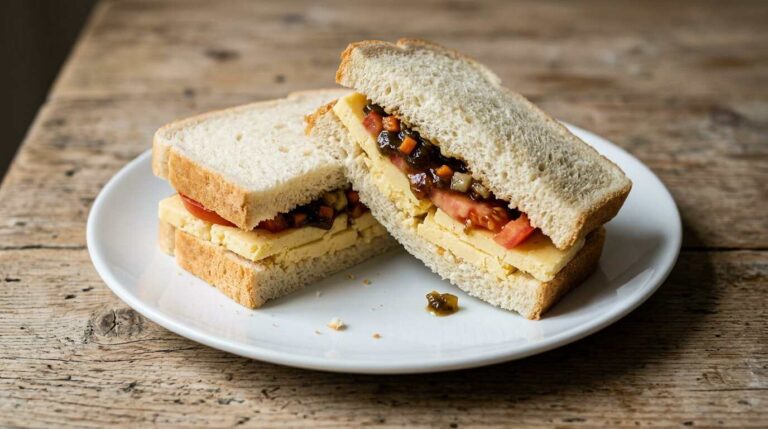
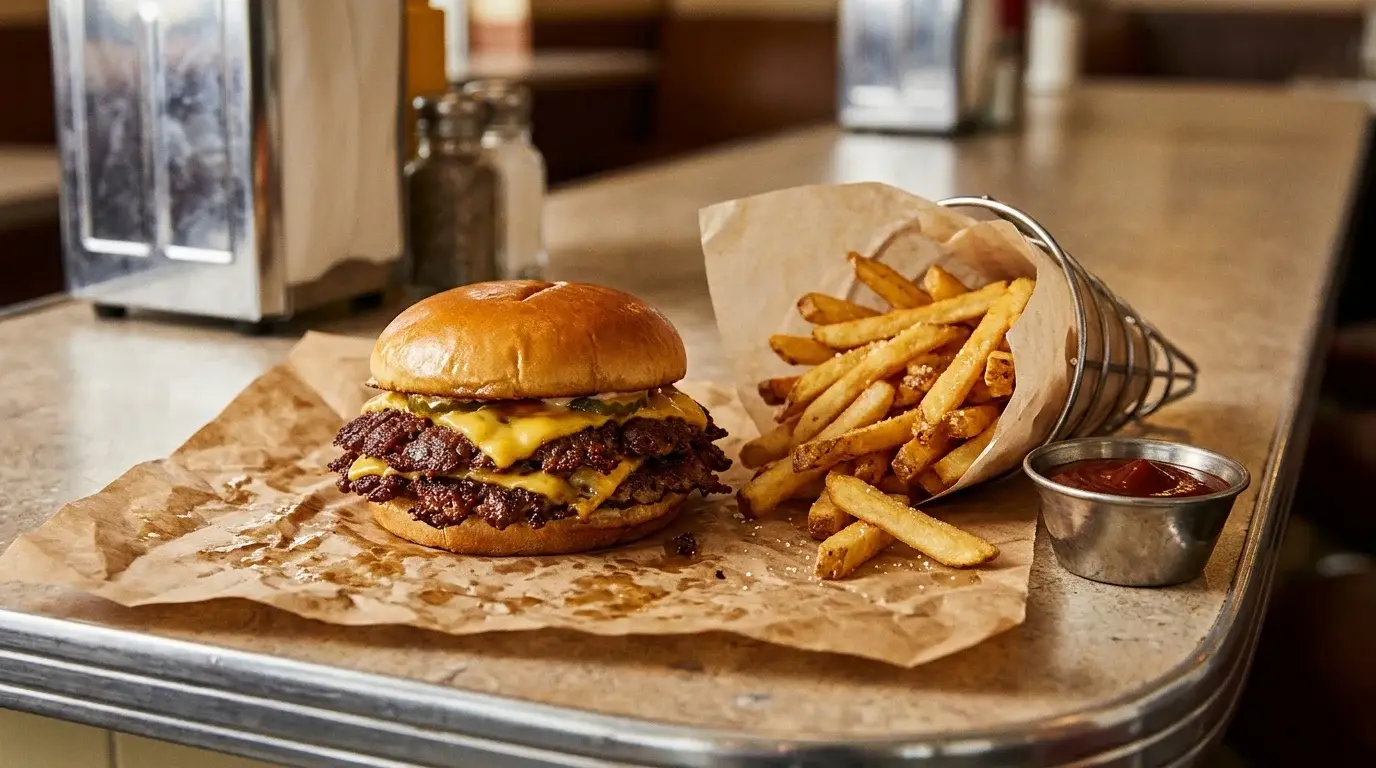
Ketchup’s two most familiar partners, the hamburger and French fries, each have their own contested histories on Grill Cheesy, as does the bottled sauce aisle’s other sandwich staple, Thousand Island dressing.
The older English form is still made and sold. Mushroom ketchup, the style that History.com and National Geographic connect to Jane Austen, is bottled today by at least one British brand, listed below.
The bottles
- Heinz Tomato Ketchup, 32 oz Bottle: the Pittsburgh company’s standard tomato ketchup in a large bottle. See it on Amazon (affiliate link)
- Geo Watkins Mushroom Ketchup – 190ml: a British mushroom ketchup, the older tomato-free style. See it on Amazon (affiliate link)
As an Amazon Associate I earn from qualifying purchases. A commission may be earned if you buy through this link, at no extra cost to you.
Questions people ask
Where does the word ketchup come from? From Hokkien Chinese kê-tsiap or similar forms, meaning a pickled fish brine, according to NPR and National Geographic.
When was tomato ketchup invented? James Mease published the first known tomato ketchup recipe in 1812.
When did Heinz start making ketchup? In 1876, per National Geographic and History.com. NPR records Heinz patenting its bottles in 1882.
Ketchup or catsup? Both spellings were used. NPR says Heinz picked “ketchup” to stand out from catsup-selling competitors.
What was in early Heinz ketchup? Tomatoes, distilled vinegar, brown sugar, salt and spices, per History.com.
Sources
- NPR Code Switch, Ketchup: The All-American Condiment That Comes From Asia (Dec. 2, 2013): https://www.npr.org/sections/codeswitch/2013/12/02/248195661/ketchup-the-all-american-condiment-that-comes-from-asia
- Jasmine Wiggins, National Geographic, How was ketchup invented? (Apr. 21, 2014): https://www.nationalgeographic.com/culture/article/how-was-ketchup-invented
- Stephanie Butler, History.com, The Surprisingly Ancient History of Ketchup (July 20, 2012): https://www.history.com/articles/ketchup-surprising-ancient-history