In this story
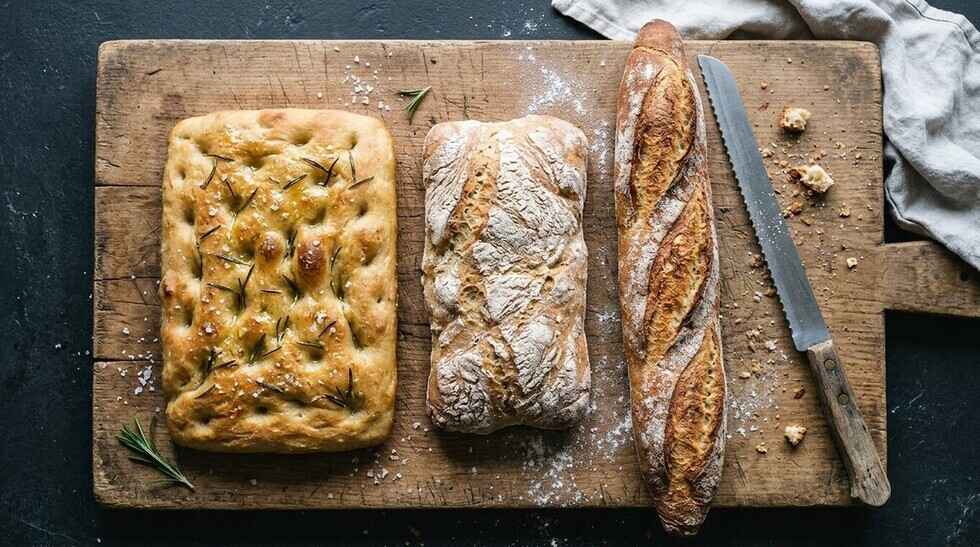
Ciabatta was invented in 1982 by Arnaldo Cavallari, who wanted a durable bread that could compete with the French baguettes then popular in Italy, by Mashed’s account citing The Guardian. Focaccia, its neighbor in the bread basket, traces back to the Etruscans. The three loaves hold a filling differently: a baguette is long and lean with a thin, crackling crust, ciabatta is wetter and airier, and focaccia is an oiled flatbread baked in a pan. Comparisons agree on those broad lines and split on dates, hydration and which bread belongs in a sandwich.
Video: Ciabatta: Born to battle the baguette, from the BBC World Service YouTube channel
Ciabatta against focaccia
Same ingredients, different dough
Ciabatta is flour, water, yeast and salt, sometimes with olive oil, and its dough can reach about 80 percent moisture, according to Tasting Table, which makes it sticky and harder for beginners. It needs lengthy kneading and a long fermentation. Focaccia is simpler and needs only a couple of hours to proof. Olive oil goes on top and into the pan, giving it a richer taste and moister texture, while ciabatta gets a dusting of flour.

The crumb differs. Ciabatta has a light, airy, irregular crumb with some chew, per Tasting Table, and focaccia is soft and spongy with a denser crumb and a crunchy exterior. US Foods describes ciabatta as a crisp crust with a chewy, airy inside and focaccia as soft and spongy throughout with a crispy, oily crust.
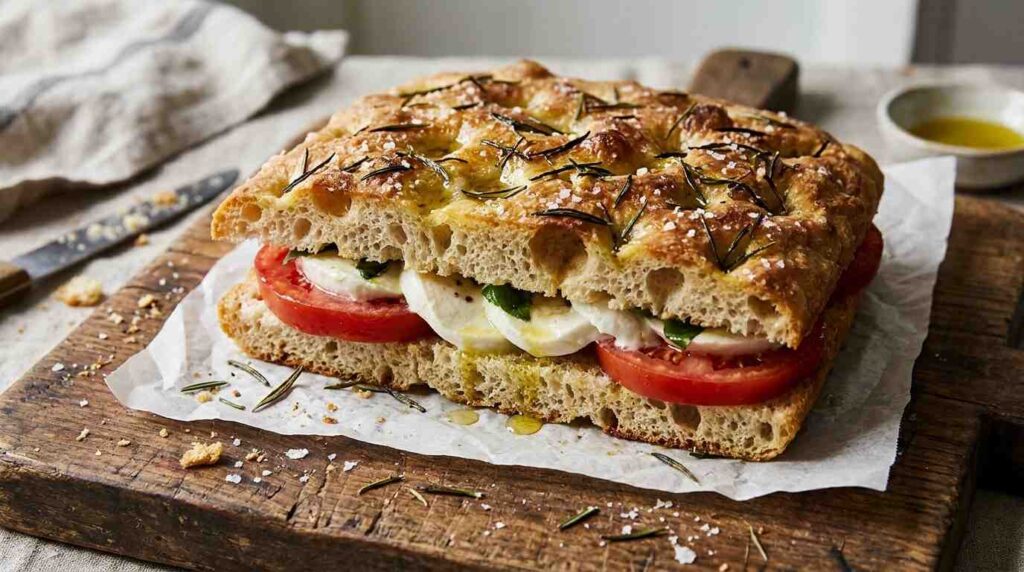
Shape separates them physically. Ciabatta is baked as rustic loaves, though it can be made into small buns, and its name is the Italian word for “slipper.” Focaccia is pressed into pans about half an inch to an inch thick, dimpled and baked as flat slabs that are then sliced.
Which bread is older
Ancient hearth bread against a 1980s invention
The two breads are far apart in age. Tasting Table says focaccia traces back to the ancient Romans and the Etruscans of central Italy. Mashed says some scholars trace it to the Etruscans of northern central Italy, before the Roman Empire, and says its name likely comes from the Latin panis focacius, “hearth bread.”
Ciabatta is much newer. US Foods says it was developed in Italy in the 1980s by Arnaldo Cavallari, and Mashed narrows that to 1982 and the rivalry with the baguette.
French bread and Italian bread
Lean dough or enriched dough
French bread is “a lean dough of just flour, water, yeast, and salt,” as Reluctant Gourmet puts it, while Italian bread usually adds olive oil or milk. French bread has a thin, crisp, crackly crust, mainly because of steam during baking, and a light, open crumb. Italian bread has a softer, chewier crust and a denser crumb.

The same article gives hydration ranges, roughly 60 to 75 percent water for French bread and 75 to 80 percent for Italian, and says the wetter dough produces the more open, softer texture. That fits Tasting Table’s figure of about 80 percent for ciabatta at the top of the range.
The crumb picture changes at WebstaurantStore, which gives French bread a thin, crunchy crust and a soft, airy interior, and Italian bread a thicker, chewier crust and a denser crumb that tears more easily. It also says French bread bakes at high heat for a short time with steam, and Italian bread at a lower temperature for longer, often in stone ovens.
Supermarket labels muddy all of this. Many “French” and “Italian” breads are the same base dough, shaped and labeled differently, Reluctant Gourmet warns, so shape alone does not tell which bread is in the bag, and French bread is not always a baguette.
Matching bread to sandwich
Where each loaf earns its place
Jambon-beurre is the French bread sandwich at WebstaurantStore, and ciabatta the strong Italian choice because its porous interior holds fillings without becoming soggy. Reluctant Gourmet lists baguette sandwiches, crostini, soup and bread pudding for French bread, and garlic bread, subs, panini and dipping in oil for Italian.
Loaf by loaf, Fine Dining Lovers matches baguette with rustic fillings, caprese among them. Ciabatta has an open crumb and chewy texture that hold up to hearty fillings such as grilled vegetables, mozzarella or cured meats, and it is a good choice for panini, where the crust crisps under heat. Focaccia, infused with olive oil and herbs, pairs well with sun-dried tomatoes, burrata or roasted peppers.
Ciabatta is a common choice for sandwiches and paninis, especially hearty ones and toasted preparations, says US Foods, while focaccia also works as sandwich bread but is often served as a side, appetizer or pizza base. Tasting Table agrees that ciabatta is primarily a sandwich bread and focaccia more often an appetizer. Mashed goes a step further and says focaccia works in many dishes, such as pizza crust, flatbread or with charcuterie, with ciabatta typically used for sandwiches.
The site’s panini post covers pressed ciabatta sandwiches, banh mi uses a baguette-style roll, and the best bread for grilled cheese discusses what survives a griddle.
Thick and chewy or soft and spongy
Texture, dates and the word “Italian”
Focaccia is thick and chewy in Mashed and soft and spongy in Tasting Table, and US Foods adds an oily crust to the soft and spongy version. Mashed also compares ciabatta to pizza dough, which no other source does.
The dates move too: Romans in one source and Etruscans in another for focaccia, “the 1980s” or 1982 for Cavallari. All of them are secondary summaries, and none cites a primary record.
Reluctant Gourmet’s warning about supermarket labels is the one to carry into a bakery. The same dough can leave the oven as “French” or “Italian” depending on its shape and its sticker, and the sandwich only finds out which it got at the first bite.
Common questions
Which bread suits a sandwich best, focaccia, ciabatta or baguette?
The post reports what each source says: focaccia is soft and oily, ciabatta is chewy with an open crumb, and baguette has a crisp crust, with each suited to different fillings.
Is ciabatta good for panini?
The post links to a Grill Cheesy article on pressed ciabatta sandwiches and notes that bread crisps under heat in a panini.
Why does baguette work for banh mi?
The post notes that banh mi uses a baguette-style roll.
Sources
- Ciabatta: Born to battle the baguette (BBC World Service, YouTube) — https://www.youtube.com/watch?v=T1wfQjyekdc
- What Makes Ciabatta Different From Focaccia? (Tasting Table) — https://www.tastingtable.com/1897106/ciabatta-vs-focaccia-differences
- Ciabatta vs. Focaccia: What’s the Difference? (US Foods) — https://www.usfoods.com/great-food/food-trends/differences-between-ciabatta-focaccia.html
- How Are Focaccia And Ciabatta Different? (Mashed) — https://mashed.com/358625/how-are-focaccia-and-ciabatta-different
- The Many Differences Between French Bread and Italian Bread (Reluctant Gourmet) — https://reluctantgourmet.com/?p=9878
- What’s the Difference Between French and Italian Bread? (WebstaurantStore) — https://www.webstaurantstore.com/blog/5430/french-vs-italian-bread.html
- Types of bread for sandwiches (Fine Dining Lovers) — https://www.finedininglovers.com/explore/articles/types-bread-sandwiches
Keep reading
- Panini vs Panino: Meaning, History and How to Press One
- Banh Mi History: How the Baguette Became Vietnam’s Sandwich
- Best Bread for Grilled Cheese
More in this section: Ingredients guide.