In this story
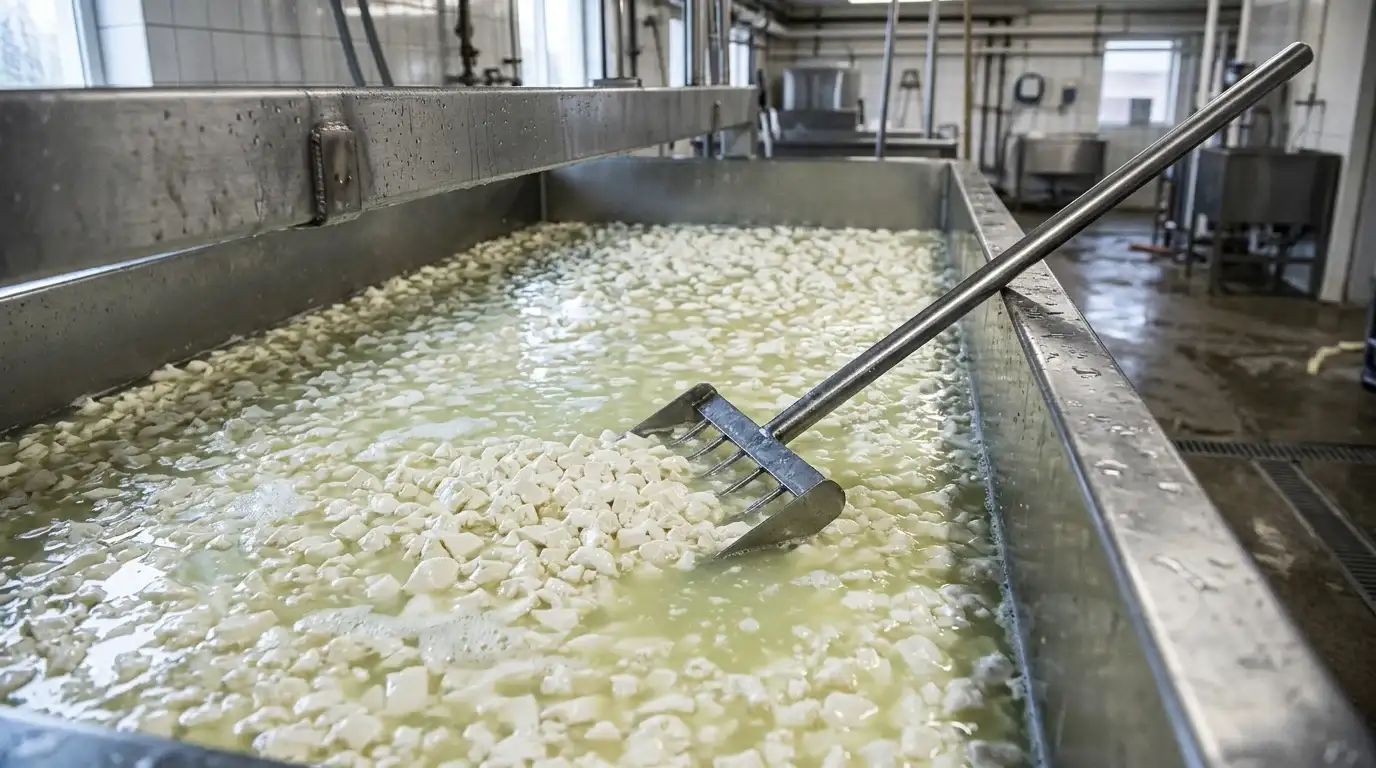
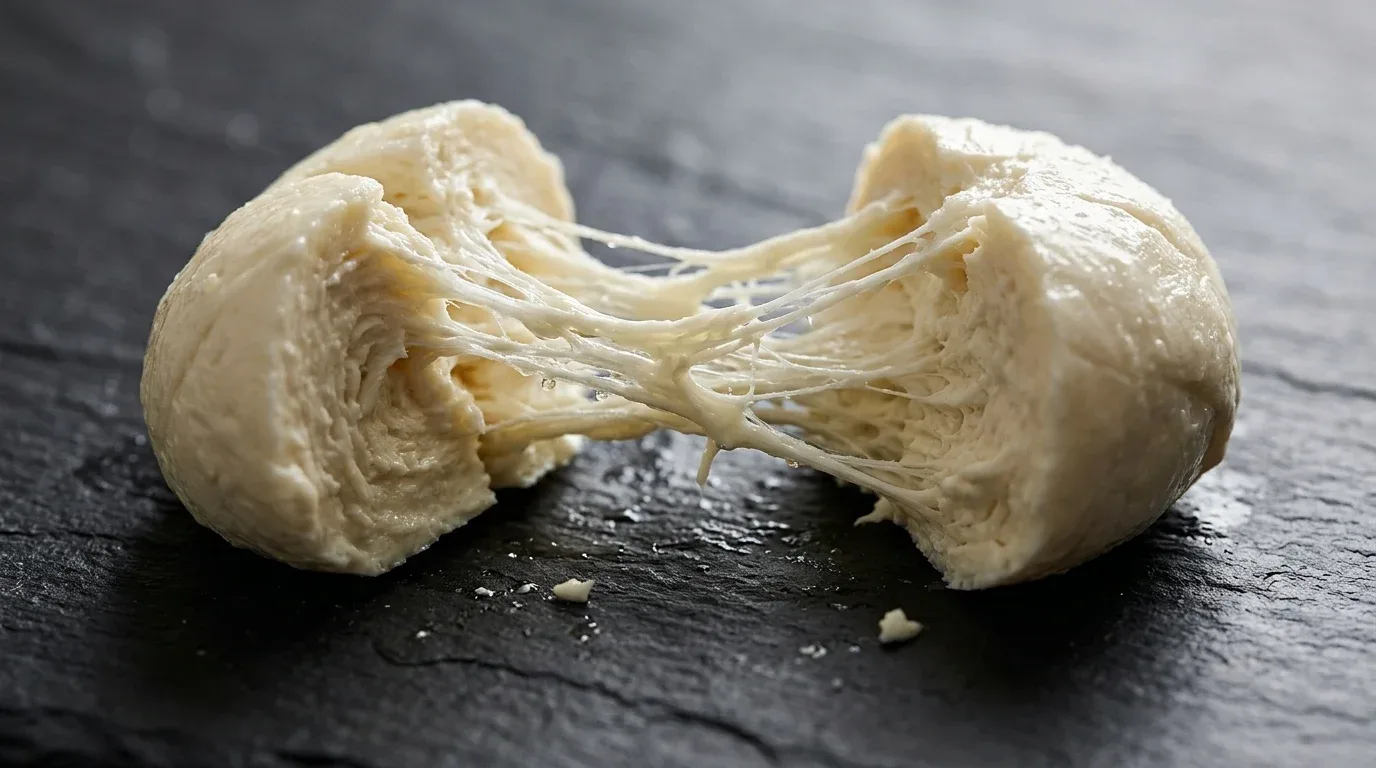
Cheese curds are cheddar that never finished becoming cheddar. They are the solid pieces that form early in cheesemaking, sold before they are pressed into blocks and aged, and when they are fresh they squeak against the teeth. The squeak lasts only a few days.
Video: How 2,000 Pounds Of Cheese Curds Are Made In Wisconsin, from the Insider Food YouTube channel
Cheddar, stopped early
The trade group Wisconsin Cheese describes curds as essentially young cheddar. In an October 2022 explainer, it explains that milk separates into solids and whey early in the process, and that curd makers stop there rather than pressing and aging the solids into a block.
What remains is a lumpy, rubbery, mildly salty piece of cheese. John Lucey, director of the Center for Dairy Research at the University of Wisconsin-Madison, wrote in Dairy Foods in October 2022 that plain fresh curds do not have a lot of flavor. They taste salty because they have just been salted, with some acidity and fresh milky notes. The texture is the point.
Lucey put national sales of natural cheese curds at about $52 million in 2021, and noted that fresh curds are still bought mainly in the Midwest, where local cheese plants make them easy to get the same day.
Why the squeak happens
Lucey’s explanation is mechanical. Young curds hold a tightly bonded protein network that feels springy. When teeth compress a curd, that structure resists, then gives way once the force is high enough, and the stored energy is released as sound. He calls this stick-slip. Some of the noise, he adds, may also come from how teeth, saliva and cheese interact.
Wisconsin Cheese gives a plainer version: the protein and calcium structure of a fresh curd rubbing against tooth enamel.
Why it goes quiet
The squeak fades because the curd starts to mature the moment it is made. Lucey attributes the loss mainly to changes in calcium and protein, with help from proteolysis (enzymes breaking proteins down), shifting moisture and partial loss of minerals. All of it softens the curd. That softening is normal; it is how cheese ages. It just takes the sound with it.
The two sources differ on how long the window stays open. Wisconsin Cheese says curds usually stay squeaky for three to five days after they are made. Lucey writes that some squeakiness can last up to 10 days, depending on the cheese, though it is strongest in the first few.
Losing the squeak does not mean the curds have gone bad, Wisconsin Cheese says, and it does not change the flavor. An airtight container in the refrigerator keeps them fresh for about a week, and unopened packages can be frozen for up to four months.
Bringing it back
Both sources describe the same trick. Wisconsin Cheese recommends three to five seconds in the microwave to restore the squeak, and warns that longer melts the curd. Lucey reported that researchers at the Center for Dairy Research found curds up to two weeks old could regain their squeak when warmed.
He described the center’s work on extending squeak as preliminary. The ideas under test included rennets that break down protein more slowly, freezing fresh curds, and a texture analyzer that measures the force needed to cut a curd while recording the sound it makes.
Past those few seconds, curds behave like any other cheese under heat, a subject covered in why cheese melts and turns greasy.
Ellsworth, and a disputed year
The town most associated with curds is Ellsworth, in western Wisconsin, home of the Ellsworth Cooperative Creamery. Anna Boisseau of Dairy Foods reported in August 2020 that the cooperative began in 1910 as a cream separating plant, when a group of farmers bought a small cheese factory, and that it originally produced butter and eggs. Cheese came in the 1960s, and in the 1970s the cooperative dropped its other businesses to concentrate on it.
Curds were at first sold locally and were not a focus, Boisseau wrote. CEO Paul Bauer told her the cooperative later used its title as the Cheese Curd Capital of Wisconsin to win a USDA grant for value-added products, which paid for packaging with a longer shelf life.
That title has two dates. Dairy Foods says Governor Anthony S. Earl named Ellsworth the Cheese Curd Capital in 1984. Wisconsin Cheese’s company profile of the cooperative says Earl proclaimed it in 1983. Neither source quotes the proclamation itself.
The fried curd
Fresh curds are eaten from the bag. Fried ones are a fair food, and their best-documented early home is Minnesota rather than Wisconsin.
The Original Deep Fried Cheese Curds booth at the Minnesota State Fair, run by the Mueller and Skarda families, opened in 1975, according to a 2017 report by WCCO. The families went through a stretch of trial and error first. “It never worked right away. It was a mess,” Dick Mueller told the station.
Joy Summers of the Minnesota Star Tribune wrote in August 2025 that the booth is often credited with inventing the fried curd. The wording is careful, and it should be: neither report shows that nobody fried a curd anywhere before 1975, only that this booth made them a fixture. The stand closed in 2017 after Mueller retired and the license did not pass to his family.
The fair’s best-known curd stand now is the Mouth Trap, which Dave Cavallaro opened in 2002 in the renovated Food Building, per the Star Tribune. It fries Ellsworth curds, battered. In 2025 Cavallaro took over the neighboring stand’s space and added 17 fryers and four cashier stations.

Questions people ask
What are cheese curds? Young cheddar: the solid pieces that form early in cheesemaking, sold before pressing and aging.
Why do cheese curds squeak? Their fresh protein network resists the bite, then gives way, releasing energy as sound, according to John Lucey of the Center for Dairy Research.
How long do curds stay squeaky? Three to five days, per Wisconsin Cheese. Lucey writes that some squeak can last up to 10 days, strongest at the start.
Can the squeak be restored? Three to five seconds in a microwave, per Wisconsin Cheese. Longer melts them.
Where did fried cheese curds start? The Minnesota State Fair booth opened by the Mueller and Skarda families in 1975 is often credited, though that is a credit, not a proven first.
Sources
- Wisconsin Cheese, Why Do Cheese Curds Squeak? (Oct. 12, 2022): https://www.wisconsincheese.com/the-cheese-life/article/147/why-do-cheese-curds-squeak
- John A. Lucey, Dairy Foods, Can the dairy industry extend the squeakiness of fresh cheese curds? (Oct. 21, 2022): https://www.dairyfoods.com/articles/95938-can-the-dairy-industry-extend-the-squeakiness-of-fresh-cheese-curds
- Anna Boisseau, Dairy Foods, Ellsworth Cooperative Creamery focuses on its community (Aug. 24, 2020): https://dairyfoods.com/articles/94525-ellsworth-cooperative-creamery-focuses-on-its-community
- Wisconsin Cheese, Ellsworth Cooperative Creamery (May 4, 2022): https://www.wisconsincheese.com/wi-cheese-companies/15/ellsworth-cooperative-creamery
- WCCO / CBS News Minnesota, Minnesota State Fair’s 1st Cheese Curd Stand To Close (Apr. 14, 2017): https://www.cbsnews.com/amp/minnesota/news/cheese-curd-stand-closing
- Joy Summers, Minnesota Star Tribune, What’s the name of that State Fair cheese curd stand again? (Aug. 23, 2025): https://www.startribune.com/whats-the-name-of-that-cheese-curd-stand-again/601445377