In this story
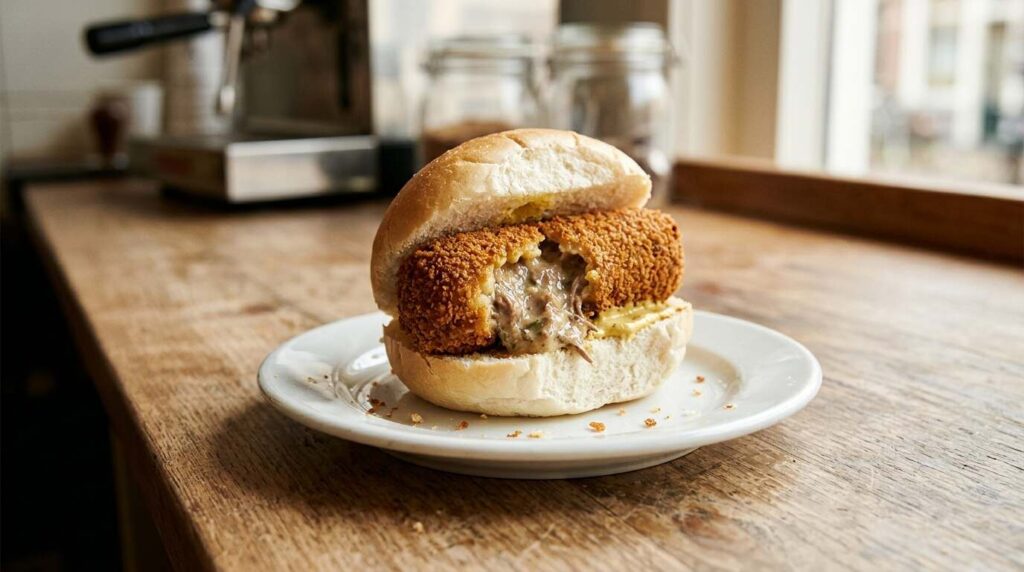
A broodje kroket is a Dutch croquette, a breaded log of thick beef ragout fried until the crust shatters, laid on a soft white roll with mustard. The country’s most famous source for one is not a sandwich shop but a wall of small heated windows.
Video: We Went Inside the FEBO Factory, from the buncharted YouTube channel
A French idea
The kroket is not Dutch by birth. KHN, the Dutch hospitality trade association, wrote in October 2021, ahead of the Netherlands’ National Kroket Day on October 9, that the kroket probably comes from France, and that its first mention appears in 1705 in a book by the cook of Louis XIV. The KHN article adds that a kroket was originally something one bought at the butcher.
The same piece quotes Eke Bosman, who reviews snacks under the name Snackspert, on what separates a good one: it should taste handmade, not like it came from a factory.
Butcher against patissier
Two Amsterdam names dominate the Dutch kroket, and they started from different kitchens. Food writer Karin Luiten, on her blog Koken met Karin in June 2013, wrote that butcher Aat van Dobben created his croquette in Amsterdam in 1945, and that the patissier Kwekkeboom, from nearby, developed his around the same time. The two brands competed for decades and are now owned by the same company, Royaan.
The two firms are described differently elsewhere. Dani van Rooij of ThingstodoinAmsterdam, in December 2025, writes that Van Dobben began as a simple sandwich bar that started making its own croquettes to serve on bread, and that Kwekkeboom grew out of a confectioner whose first shop opened in 1900. Luiten’s 1945 date is for Kwekkeboom’s croquette; van Rooij’s 1900 is for the shop.
The difference in the filling follows the trade. Luiten explains that Van Dobben’s croquette is built on beef bouillon, the butcher’s base, and Kwekkeboom’s on cream, the pastry kitchen’s.
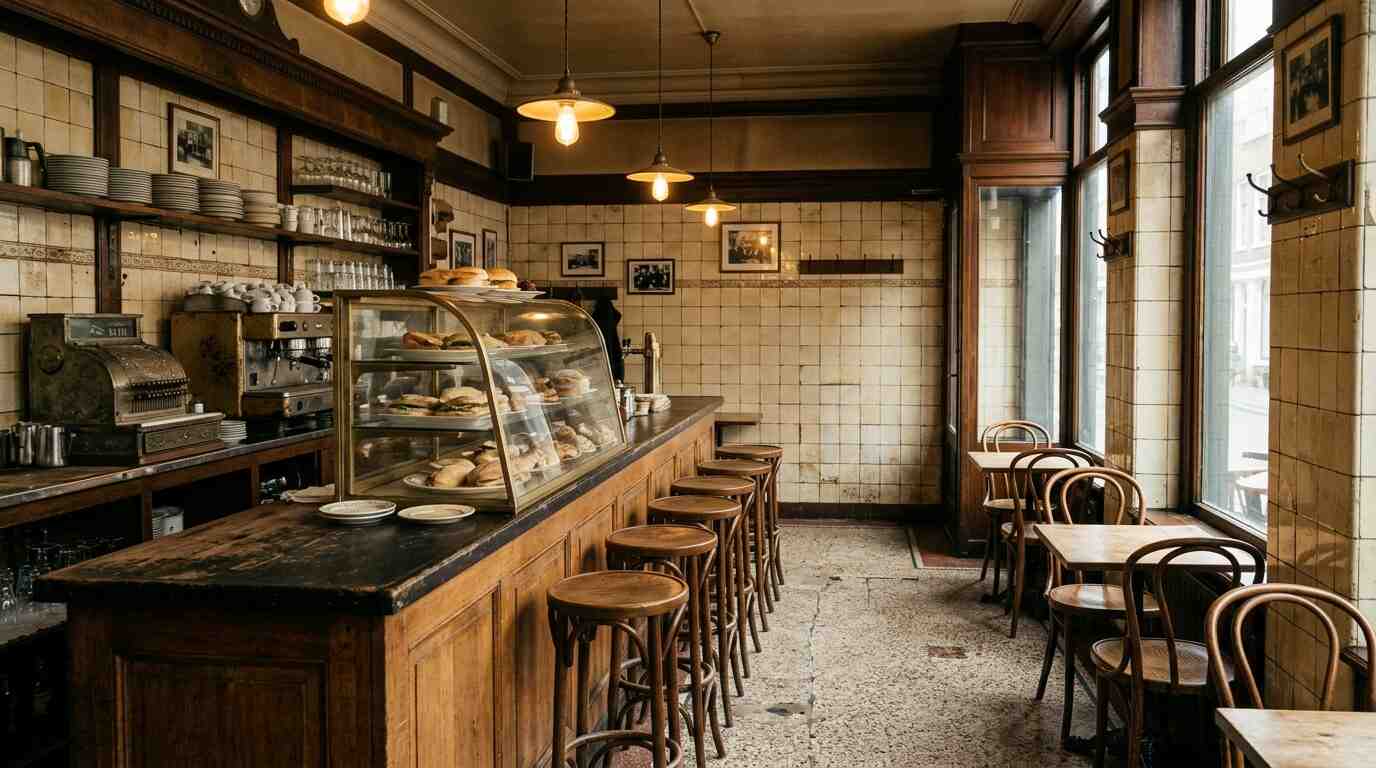
Her account of a Van Dobben test kitchen session, led by master croquette maker Piet Brink, gives the method: beef simmered with vegetables for at least three hours, a roux whisked with the cold stock and reduced to a thick ragout with chopped meat, parsley and nutmeg, chilled firm, shaped, rolled in fine crumbs, egg and coarse crumbs, chilled again, and fried at 180°C for about four minutes, no more than three at a time.
FEBO and the name that isn’t
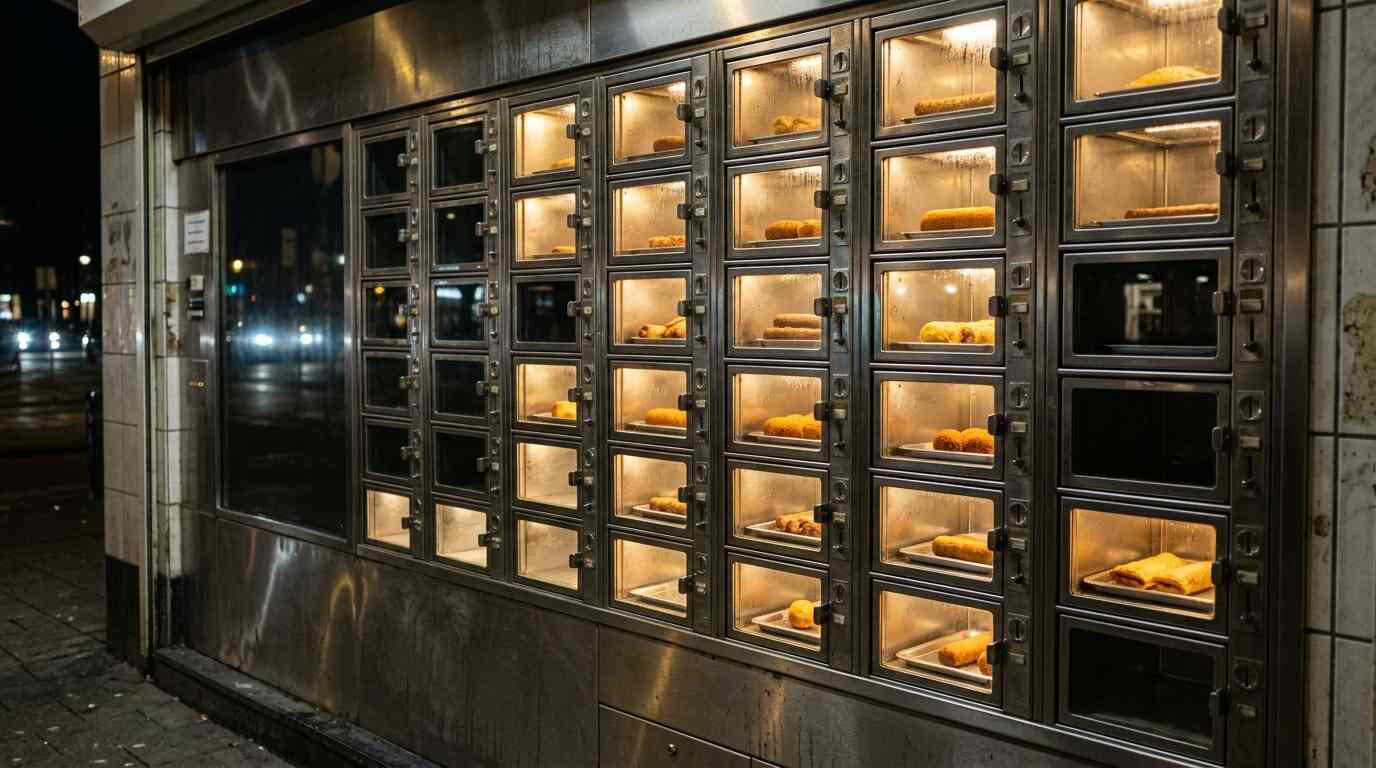
The chain behind the snack wall has a myth attached to its name. Dutch broadcaster NOS, marking FEBO’s 75th anniversary in September 2016, reported the common story that FEBO is named after Amsterdam’s Ferdinand Bolstraat, where the first branch supposedly opened, and said it is not true. The De Borst family was going to take over a bakery on that street, the deal fell through, and Johan de Borst opened his bread and pastry bakery in 1941 on the corner of the Amstelveenseweg and the Karperweg instead. The name was already in the company’s articles, so he kept it.
A University of Amsterdam public history blog post by Marit Kroodsma, from September 2023, tells it slightly differently: De Borst had learned his trade on the Ferdinand Bolstraat and planned to open his first business there. Both accounts agree the first FEBO was on the Amstelveenseweg and that the street name stuck anyway.
The kroket came after the war. NOS says De Borst began selling kroketten after World War II, and demand grew until he closed the bakery in 1960 to concentrate on snacks. Kroodsma writes that he started making his own after eating his first kroket at Heck’s, an Amsterdam fast-food spot.
Saving the automat
The wall is older than FEBO. Horeca expert Ubel Zuiderveld told NOS that FEBO’s first automatiek in 1960 was not the country’s first: Dutch automats existed from the 1930s because shop-closing laws pushed retailers to sell after hours through machines. By the 1980s, he said, only about 100 of an original 1,500 remained, most of them FEBO’s, and NOS headlined his view that without FEBO the automat would have disappeared from Dutch streets.
Kroodsma notes that the automat concept began in Germany in 1896 and faded elsewhere, including New York, while it survived in the Netherlands. New York’s version has its own story on Grill Cheesy in Horn & Hardart automat. She counts 74 FEBO snack bars in 2023, 27 of them in Amsterdam, with the founder’s grandson Dennis de Borst running the business.
On the roll
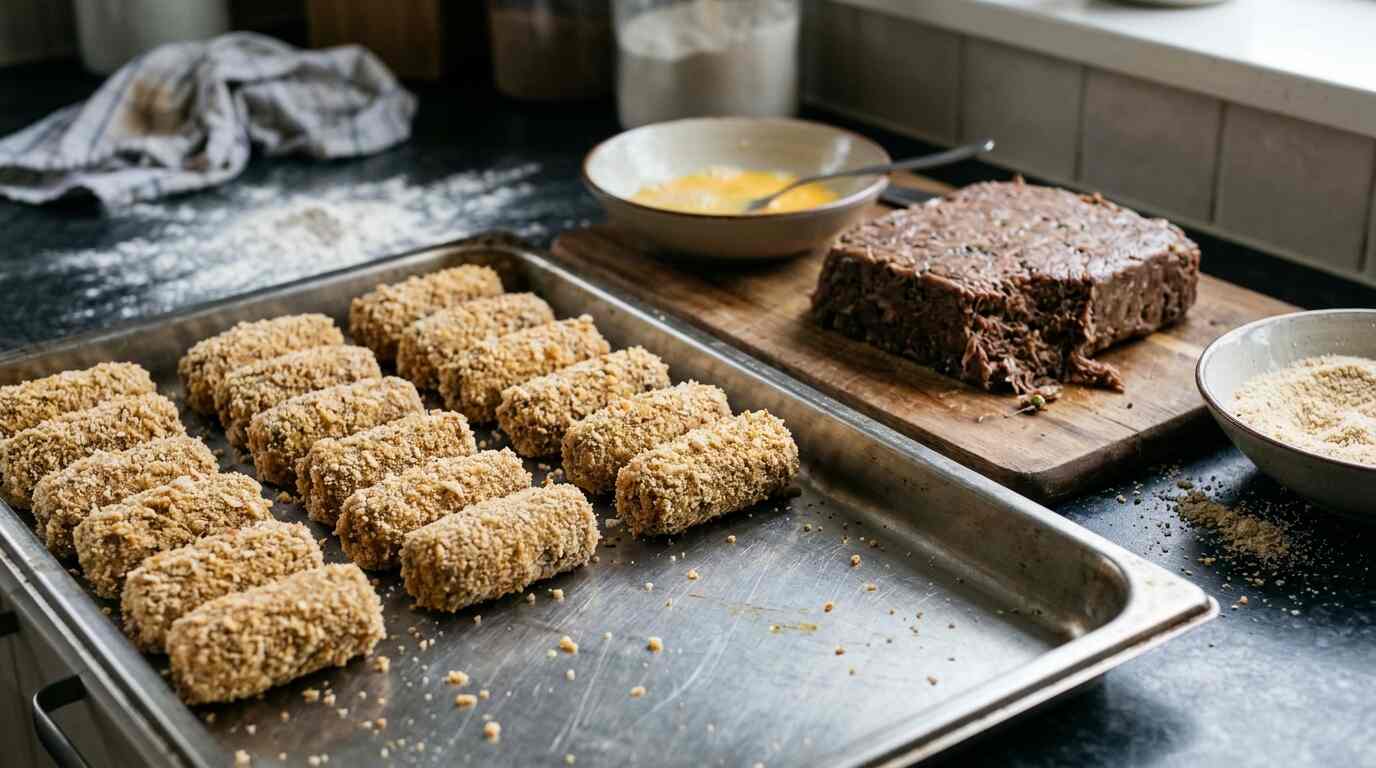
The sandwich is the simplest part. Van Rooij describes the kroket as a deep-fried breaded roll of smooth meat ragout, usually eaten with mustard, either as a quick bite or with fries for a fuller meal; the fries have their own history in french fries origin. Van Dobben’s croquettes went into soft white rolls, and the original Eetsalon Van Dobben is still open in Amsterdam. McDonald’s even sells its own version, the McKroket.
Build-it-at-home kit
Luiten’s method turns on two things: a double coat of crumbs and oil held at 180°C.
- Kikkoman PANKO BREAD CRUMBS Japanese Style 8oz (2 pack) Home Grocery Product: coarse Japanese-style crumbs, an option for the outer coat in Luiten’s fine-then-coarse breading. See it on Amazon (affiliate link)
- Taylor Classic Line Candy/Deep Fry Thermometer: a clip-on deep-fry thermometer for holding the oil at the 180°C her recipe calls for. See it on Amazon (affiliate link)
As an Amazon Associate I earn from qualifying purchases. A commission may be earned if you buy through this link, at no extra cost to you.
Questions people ask
What is a broodje kroket? A Dutch beef croquette served on a soft white roll, usually with mustard.
Where does the kroket come from? France, according to KHN, with a first mention in 1705 in a book by Louis XIV’s cook.
What is the difference between Van Dobben and Kwekkeboom? Van Dobben’s ragout uses beef bouillon; Kwekkeboom’s uses cream.
Is FEBO named after the Ferdinand Bolstraat? Indirectly at most. The first FEBO opened on the Amstelveenseweg; the name came from a planned location on the Ferdinand Bolstraat.
Why does the Netherlands still have automats? Shop-closing laws created them in the 1930s, and FEBO kept them going after most others closed.
Sources
- KHN, “9 oktober is Nationale Krokettendag” (October 8, 2021): https://khn.nl/nieuws/9-oktober-is-nationale-krokettendag-dit-is-alles-wat-je-wil-weten-over-deze-snack
- Koken met Karin, Karin Luiten (June 13, 2013): https://www.kokenmetkarin.nl/?p=16127
- NOS, “Zonder de Febo hadden we geen automatiek meer gehad” (September 15, 2016): https://nos.nl/artikel/2132328-zonder-de-febo-hadden-we-geen-automatiek-meer-gehad
- ThingstodoinAmsterdam, Dani van Rooij, “Dutch croquettes” (December 9, 2025): https://thingstodoinamsterdam.com/blog/dutch-croquettes/
- University of Amsterdam Public History, Marit Kroodsma, “FEBO: From Family Kitchen to Amsterdam Icon” (September 29, 2023): https://publichistory.humanities.uva.nl/blog/febo-from-family-kitchen-to-amsterdam-icon/