In this story
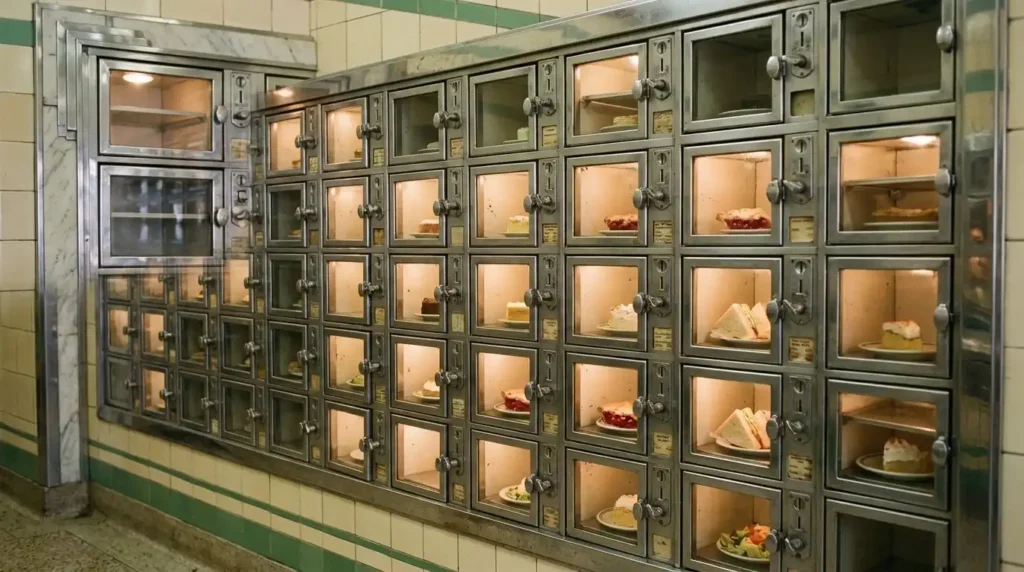
A wall of small glass doors, each with a plate behind it. A slot beside each door, a chrome knob below. Drop in the coins, turn the knob, open the door and take out a ham sandwich, a slice of pie or a dish of macaroni and cheese. Behind the wall, unseen, a worker slides a fresh plate into the empty box. That was the Automat, the coin-operated restaurant that Horn & Hardart ran in Philadelphia and New York for most of the 20th century, and for a time it was one of the biggest restaurant businesses in the world.
Video: How an Automat Works, from the Horn & Hardart YouTube channel
From a lunchroom to Chestnut Street
Equipment from Berlin
The partners started small. According to Britannica, Joseph V. Horn and Frank Hardart opened their first Philadelphia lunchroom in 1888. In 1902 they opened their first Automat at 818 Chestnut Street, using “waiterless restaurant” equipment imported from Berlin, where a local automat had already succeeded.
History.com’s Christopher Klein, in a July 2012 history, described the concept as an imported idea that ushered in the country’s fast food era. A decade after Philadelphia, Horn & Hardart opened its first Manhattan Automat in Times Square, announced in the July 2, 1912, New York Times with an ad promising a “New Method of Lunching.”
How it worked
Nickel throwers and knobs
The mechanics were simple and theatrical. Smithsonian magazine described cashiers called nickel throwers sitting in glass booths, changing bills and larger coins into nickels. Diners dropped nickels into slots and turned chrome knobs to open small glass doors on food compartments. Hot dishes were also served at buffet-style steam tables. Behind the wall, workers refilled each compartment as soon as it emptied.
The coffee
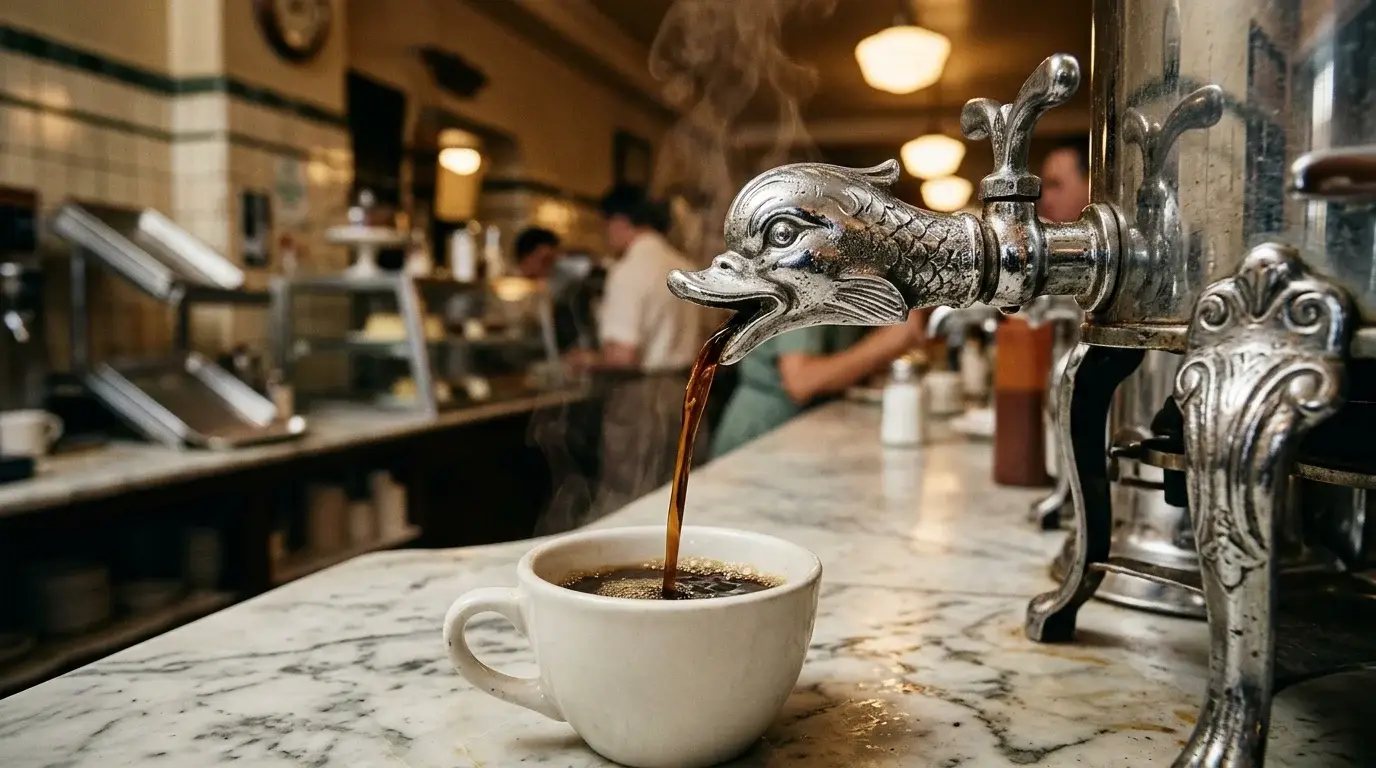
Coffee was the signature. It flowed from a chrome spigot shaped like a dolphin’s head, in a measured amount at a set temperature, and it cost a nickel from 1912 to 1950. Smithsonian reported that the Automats sold more than 90 million cups a year in the 1950s, and that brewed coffee was thrown out after 20 minutes.
What was behind the doors
Sandwiches, pie and nearly 400 dishes
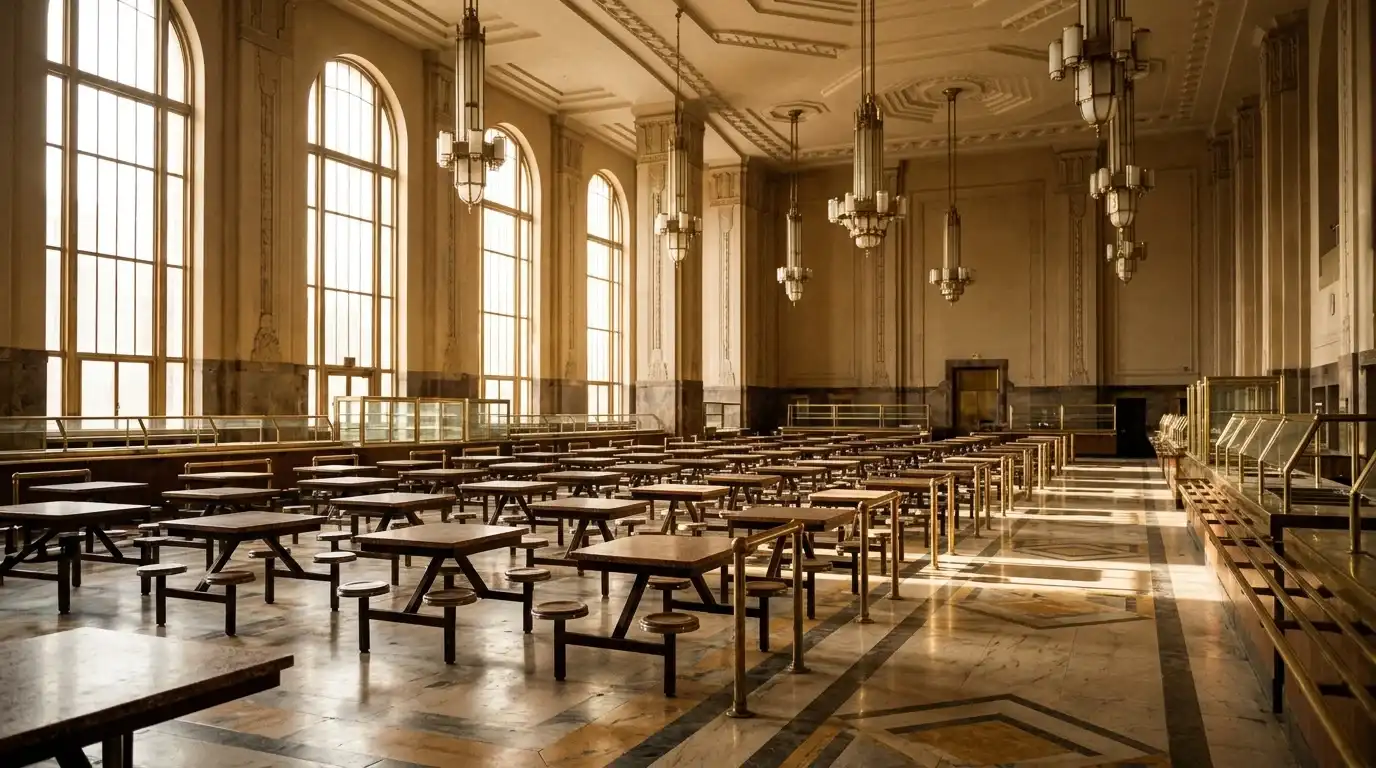
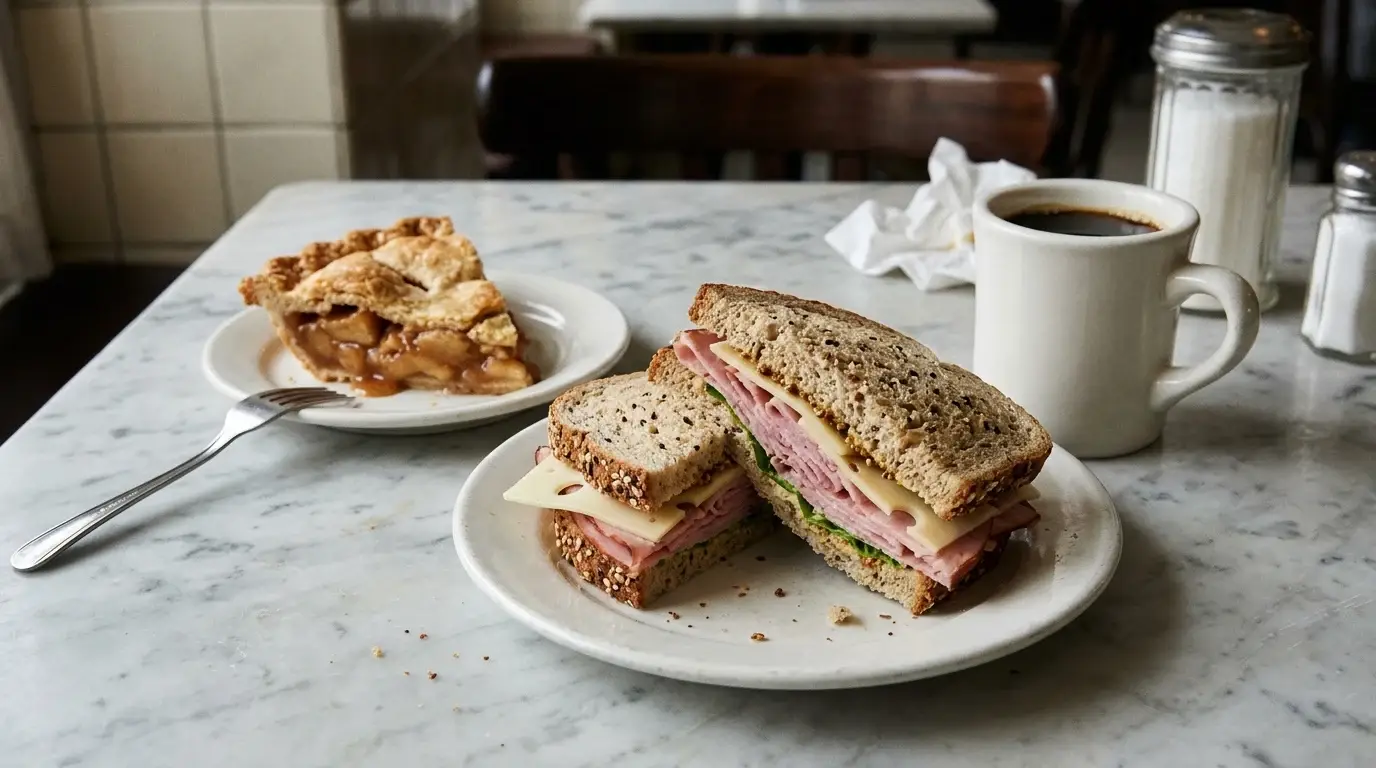
The menu ran far beyond sandwiches, but sandwiches were part of the core. Smithsonian listed sandwiches, salads, pie and coffee cake among nearly 400 menu items. Reviews of Lisa Hurwitz’s 2021 documentary The Automat recalled the plates behind the glass. One review syndicated on AOL listed ham sandwiches, pot pies, macaroni and cheese, Salisbury steak, creamed spinach and baked beans, and Hyperallergic’s review described roast beef sandwiches and slices of pie in rooms with high ceilings and marble floors.
A commissary and a rule book
Consistency was the business. Smithsonian described a centralized commissary that supplied the restaurants with uniform recipes, a rule book that governed everything from food handling to how often tables were wiped, and a “Sample Table” where executives tasted the food daily. No food could be held overnight; surplus went to day-old shops in low-income neighborhoods. In 1924, Britannica notes, the company began opening take-out stores selling prepackaged Automat food.
The peak
800,000 people a day
At its height, the chain fed a remarkable share of two cities. Smithsonian called Horn & Hardart once the world’s largest restaurant chain, “serving 800,000 people a day,” and described it as America’s first major fast-food chain. The Automats became an American icon, the magazine noted, celebrated in song and humor.
Decline and the last door
Lunch changed
The Automat lost to the forces it had helped create. Smithsonian listed changing tastes, the decline of the full sit-down lunch, suburban living that thinned downtown crowds and cheaper fast-food chains such as McDonald’s and White Castle. In the 1970s, the company began replacing Automats with Burger King franchises.
April 9, 1991
The last one went quietly. Britannica records that the final Automat, at 200 East 42nd Street in New York City, closed on April 9, 1991. The company’s business records, from 1895 to 2002, are held by the Archives Center of the Smithsonian’s National Museum of American History, donated by Paul and Tom Hardart in 2006, and a 35-foot section of the original 1902 Philadelphia Automat is in the museum’s collection.
The Automat and the American sandwich
Fast food before the drive-through
The Automat sold sandwiches the way later chains would: made in a central kitchen to a fixed recipe and handed over without a server. Speed and standardization also shaped the club sandwich on lunch counters, the sliced bread that made assembly fast, and the burger chains that eventually replaced the Automat itself, a story that starts with the hamburger. For New York’s other great sandwich institution of the era, see Katz’s Delicatessen.
The Automat’s recipes survive in print:
- The Automat: The History, Recipes, and Allure of Horn & Hardart’s Masterpiece: a history and recipe book by Marianne Hardart and Lorraine Diehl. See it on Amazon (affiliate link)
Video: "The Automat" Q&A with Co-Author Marianne Hardart and David Arena, from the Horn & Hardart YouTube channel
As an Amazon Associate I earn from qualifying purchases. A commission may be earned if you buy through this link, at no extra cost to you.
Sources
- Britannica, Horn & Hardart Automat: https://www.britannica.com/topic/Automat
- History.com, The Automat: Birth of a Fast Food Nation (Christopher Klein, 2012): https://www.history.com/news/the-automat-birth-of-a-fast-food-nation
- Smithsonian magazine, Meet Me at the Automat: https://www.smithsonianmag.com/arts-culture/meet-me-at-the-automat-47804151/
- Smithsonian Institution Archives Center, Horn and Hardart Records: https://si.edu/object/archives/sova-nmah-ac-0922
- AOL (syndicated review), ‘The Automat’ Review: https://www.aol.com/automat-review-documentary-serves-tasty-055041201.html
- Hyperallergic, When You Could Get a Three-Course Meal and Coffee for 25 Cents in New York: https://hyperallergic.com/713782/the-automat-documentary-new-york/