
In this story
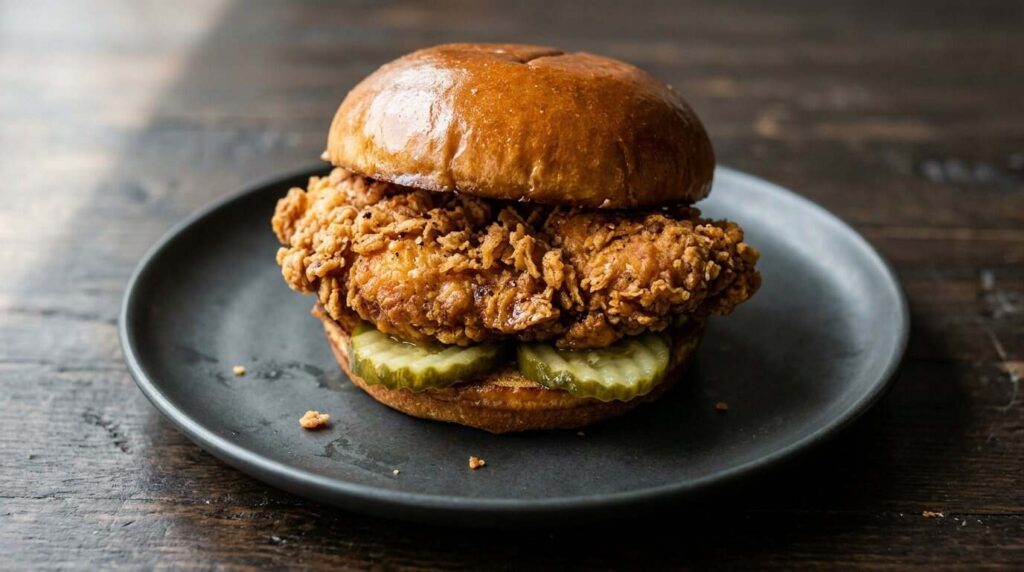
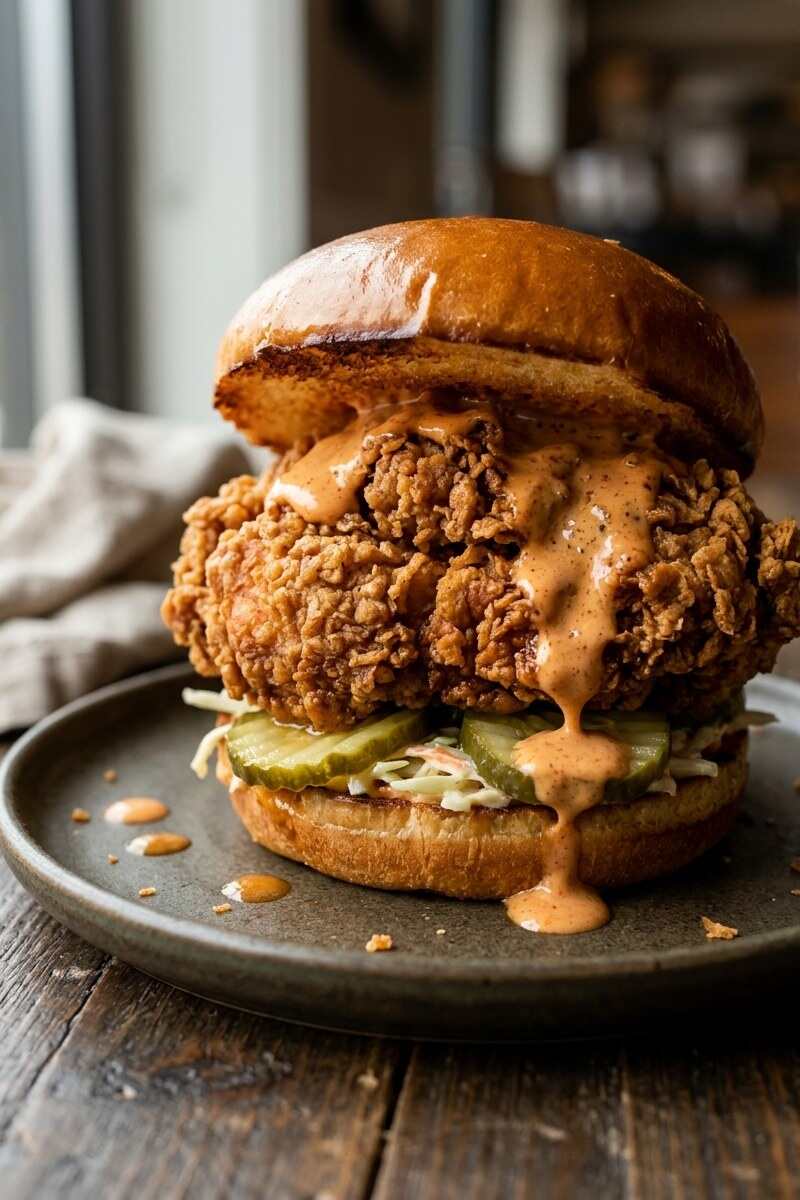
A fried chicken sandwich is a breaded, fried piece of chicken on a bun, usually with pickles, and nearly everything else about it is argued over: which cut of chicken, which marinade, which oil temperature, which company got there first. The documented record is more tangled than the marketing, with a diner in Georgia, a pressure cooker, a Nashville legend from the Depression and a social media exchange in August 2019 that emptied restaurants of an entire product.
Video: Buttermilk-Fried Chicken Sandwich — from the Tasty YouTube channel
Chick-fil-A and the Boneless Breast
A small Georgia diner, a poultry supplier’s leftovers and a pressure cooker
Chick-fil-A’s own account begins in 1946, when S. Truett Cathy opened the Dwarf Grill in Hapeville, Georgia, now known as the Dwarf House. According to the company’s history, a local poultry supplier had boneless, skinless breasts that were too small for an airline’s in-flight meal trays, Cathy took them, and the sandwich grew out of that supply. The breast was cut by hand, dipped in an egg-and-milk wash and breaded in a seasoned coating. Cathy adapted his mother’s habit of covering a pan to trap steam, then bought a commercial pressure cooker that finishes a breast in about four minutes, with refined peanut oil chosen because it does not overpower the chicken.
The date is where sources part. The company says only that the work happened in the early 1960s. A Georgia Historical Society profile describes about four years of testing and a settled recipe in 1964, built on more than 20 seasonings. A Takeout essay puts the first sale in 1961. All of them agree on the presentation, which the company states plainly: “Truett decided to serve the filet on a toasted, buttery bun with two pickle chips.”
The first Chick-fil-A restaurant opened in November 1967 at the Greenbriar Shopping Center in Atlanta, according to the Georgia Historical Society. Chowhound credits the chain as the first fast food restaurant to put a fried chicken sandwich on its menu, a claim the Takeout essay qualifies by pointing to older chicken sandwiches: schnitzel, katsu, milanesa and a 1936 advertisement in a Topeka newspaper.
Brines and Marinades
Salt, sugar, pickle juice and buttermilk each do a different job
Recipes from major test kitchens disagree on what the soak before frying should contain. Food Network Kitchen marinates boneless thighs for at least two hours in pickle juice, hot sauce and salt, then discards the liquid and saves the buttermilk for a later dip. America’s Test Kitchen works the other way around in its buttermilk fried chicken: a salt-and-sugar brine with garlic powder and cayenne for 2 to 24 hours, with the buttermilk reserved for the batter. A Food Republic recipe for Nashville-style chicken brines in water, dark brown sugar, cayenne hot sauce and kosher salt for at least an hour.
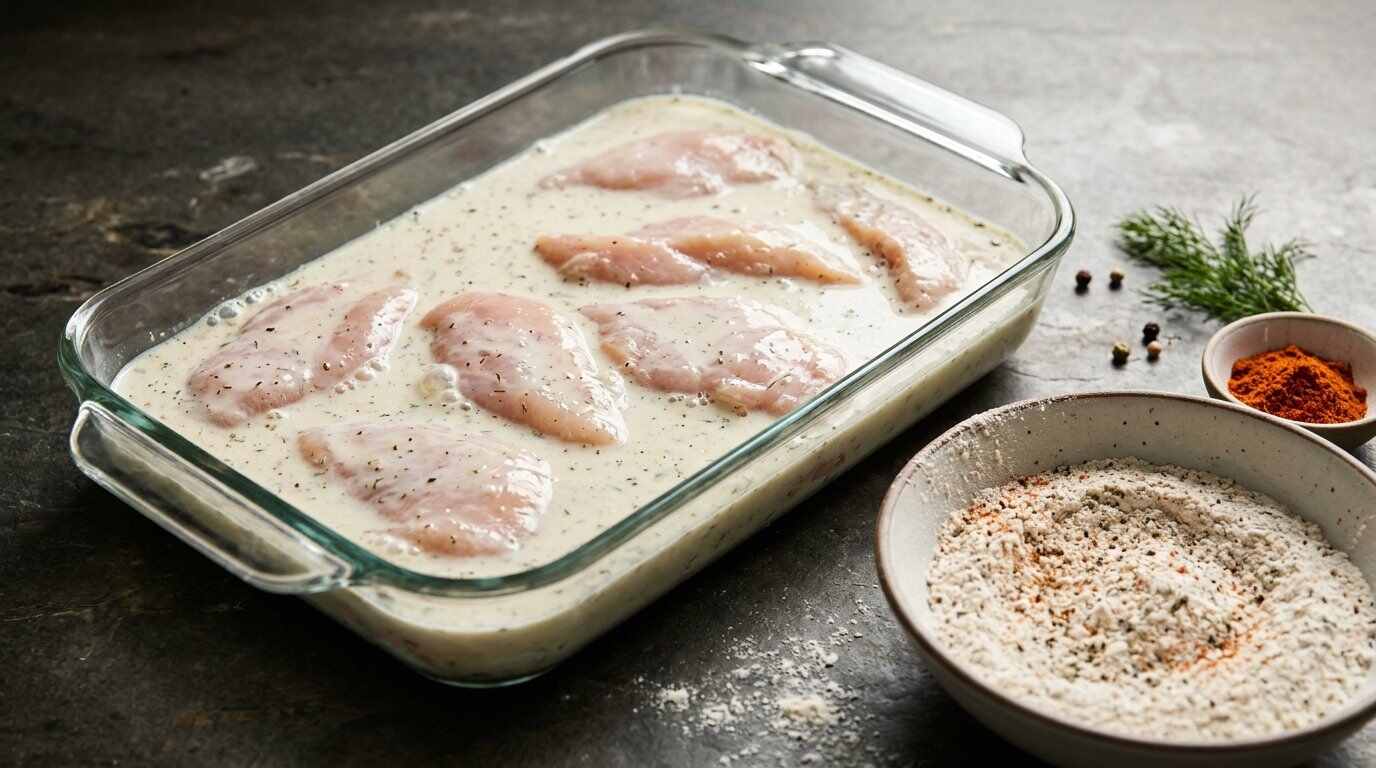
The America’s Test Kitchen notes credit the brine with seasoning the meat through, and salt appears in all three soaks, whatever else is added.
Buttermilk shows up in these recipes only as a dip or a batter liquid, never as the soak, and Chick-fil-A’s own coating starts from an egg-and-milk wash instead.
Dredge and Crust
Flour, cornstarch and a little moisture build the craggy surface
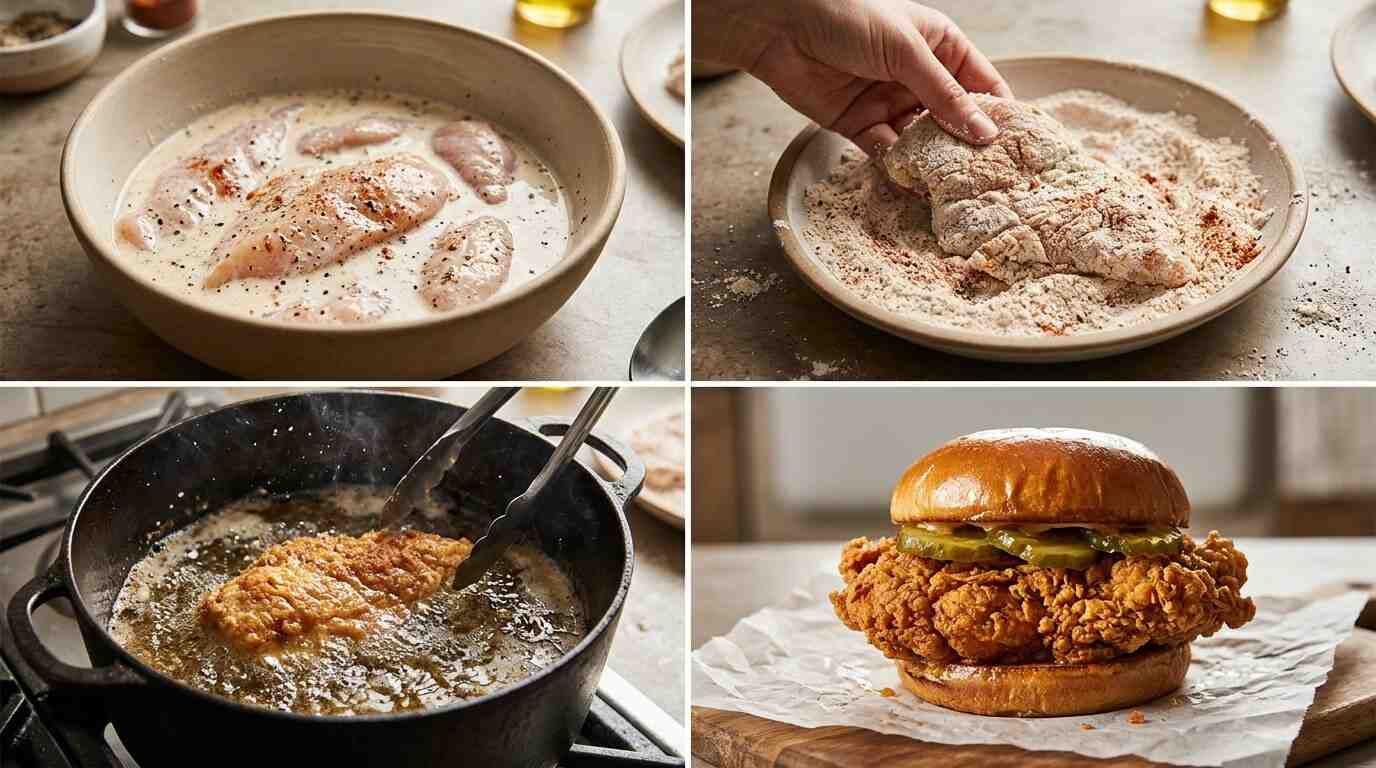
The coating is where recipes diverge most. The Food Network version works a quarter cup of buttermilk into seasoned self-rising flour with paprika, dry mustard and cayenne until the mixture turns shaggy, so that the chicken picks up clumps rather than a smooth film. Pieces go through the buttermilk-and-hot-sauce dip first, then into the flour, and any spot that turns soggy during resting is dredged again.
America’s Test Kitchen goes further with a double coating. A cornstarch-and-flour mix is divided, part of it thinned with buttermilk into a batter about as thick as extra-thick pancake batter, and each piece passes through batter and then dry mix. The recipe’s notes explain that flour helps the coating cling while cornstarch keeps it crisp rather than greasy.
Chick-fil-A takes a different route. Its sandwich is hand-breaded in the original seasoning, then cooked under pressure. The company keeps the formula in a safe at its Atlanta support center. One piece of customer feedback is part of the company’s own lore: “We like it. Don’t change it again.”
Frying Temperature
Starting near 350°F, then holding lower as the chicken cools the oil
Published recipes cluster around a pattern. Oil goes in hot, the chicken drops the temperature sharply, and the cook then holds the oil in a lower band for the rest of the fry. The Food Network recipe heats oil and shortening to 350°F, adds the chicken, shuts off the heat and lets the oil fall to 300°F, then holds it near 300°F until the thighs reach an internal temperature of about 170°F, roughly five minutes. For later batches the oil returns to 350°F first.
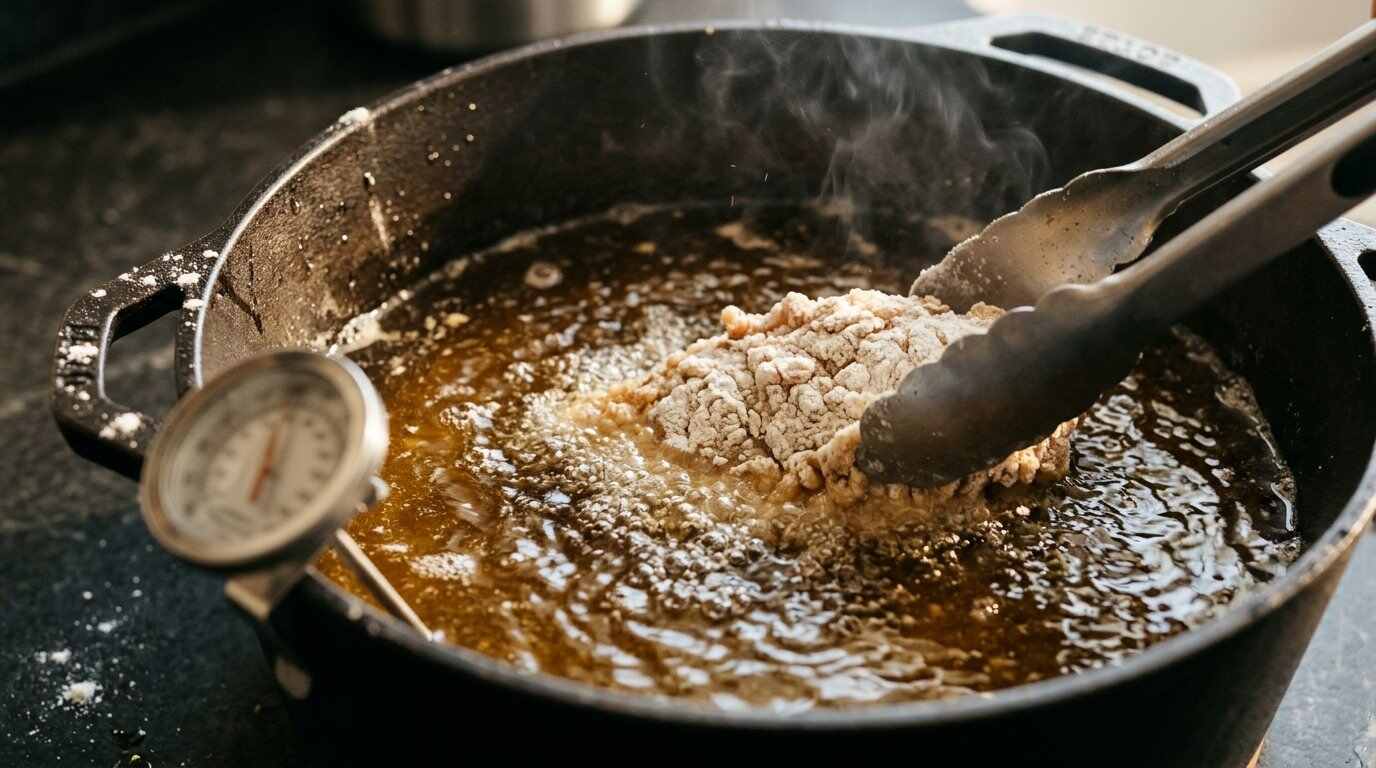
America’s Test Kitchen heats to 340°F and holds the oil between 305°F and 315°F, pulling breasts at 145°F and thighs at 160°F and resting the pieces for 20 minutes so carryover heat finishes the job. The Food Republic recipe starts a bone-in chicken at 350°F in a cast-iron skillet, expects a drop to about 300°F and holds near 325°F, leaving the lid off for a crisper skin.
The recipes also work with different pieces of chicken: boneless thighs at Food Network, split breasts and bone-in pieces at America’s Test Kitchen, a whole cut-up chicken at Food Republic. Chick-fil-A’s pressure cooker, by contrast, finishes a boneless breast in about four minutes.
Pickles, Buns and Sauce
The conventions are narrower than the menus suggest
The standard fast food chicken sandwich is a fried breast on a brioche bun with mayonnaise and pickles, according to the Takeout essay, and variations usually change one element only: a potato bun, a special sauce, lettuce and tomato. Breast meat is nearly universal in chains, even when supply of breasts runs short, while the Food Network recipe uses thigh meat and pairs it with brioche or pretzel buns toasted cut-side up.
Chick-fil-A specifies two dill pickle chips made from cucumber slices soaked for three days before ripening. The Food Network recipe stacks four slices on each bottom bun and marinates the meat in pickle juice as well. In Nashville, the hot chicken tradition substitutes sliced white bread, which the dish soaks through with grease and spice.
Toasting appears in both the Chick-fil-A and Food Network builds. Related background sits in the posts on why sandwiches get soggy and the browning chemistry in bread toasting, and mayonnaise-based sauces are covered in the histories of Duke’s mayonnaise and comeback sauce.
Popeyes in August 2019
A launch that went largely unnoticed until a tweet changed it
Popeyes planned a nationwide launch of its chicken sandwich for Monday, August 12, 2019, according to Restaurant Dive, which quoted the company calling it its biggest product launch in about 30 years. Restaurant Business reports that the debut went largely unnoticed until Chick-fil-A promoted its own sandwich on Twitter as the original. The Takeout essay quotes the tweet: “Bun + Chicken + Pickles = all the ❤️ for the original.” Popeyes answered with a one-line reply, “… y’all good?”, and the exchange became known as #TheChickening.
Within a week, Popeyes locations had long lines and many sold out for the day. On Tuesday, August 27, 2019, the company announced it had sold through its inventory, which had been forecast to last through the end of September, and said it was working with suppliers to bring the sandwich back. Time reported that the sandwich “launched 1,000 memes,” that a Boston location hung a sold-out sign on August 26, and that police in Houston said a man pulled a gun after being told a restaurant had run out.
The commercial effect was measurable. Restaurant Business reports a 38 percent jump in same-store sales for Popeyes in the fourth quarter of 2019, largely credited to the sandwich, and at least 20 new chain entries over the following 18 months, often with thicker fillets, better buns and crunchier pickles. The Takeout essay estimates Popeyes received about $23 million in free advertising, and notes that the chain was not the first to try the idea: McDonald’s, it says, sold a Southern-Style Chicken Sandwich from 2005 until 2015.
Nashville Hot Chicken
A Depression-era legend, a skillet and a slice of white bread
Hot chicken in Nashville is a separate lineage with its own sandwich logic. The story most often repeated, and called local mythology by the Bitter Southerner, involves Thornton Prince, a Nashville man with a taste for nightlife, and a woman angry about his cheating who served him chicken loaded with pepper. He asked for seconds. Family accounts place this in the 1930s; the Prince’s Hot Chicken website says some details are uncertain, and Nashville Sites dates the BBQ Chicken Shack at 28th and Jefferson to 1945.
Claims overlap. The Bitter Southerner notes a rival account in which a place called Bo’s came before Prince’s, and traces a second lineage through Bolton Polk, a former Prince family cook, whose nephew Bolton Matthews opened Bolton’s Spicy Chicken and Fish with his wife in 1997. Andre Prince Jeffries, Thornton’s great-niece, took over in 1980; she told the Nashville Scene, “It wasn’t a BBQ chicken shack. It was a hot chicken shack.”
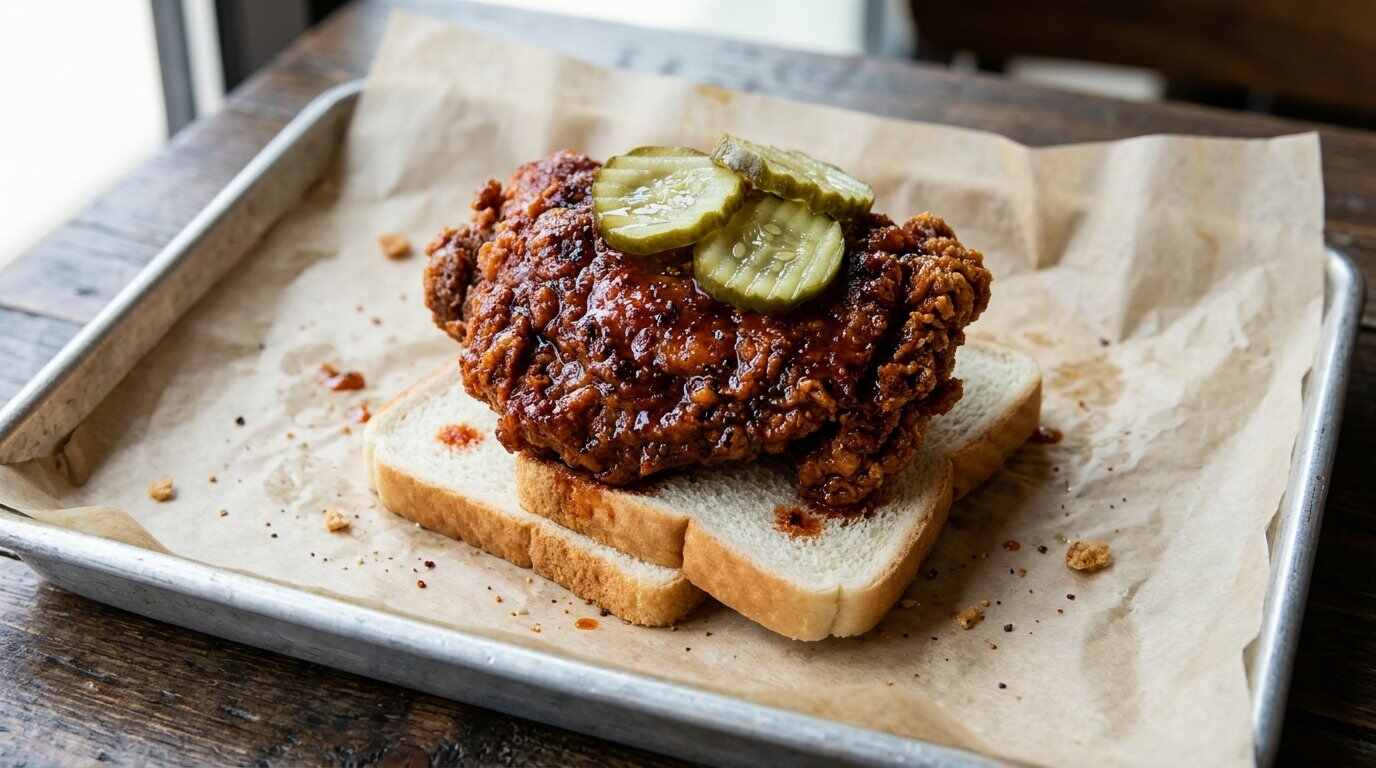
After frying, the chicken receives a spiced fat: an Edible Nashville recipe combines lard, cayenne, sugar, salt and garlic powder into a paste brushed on both sides, while the Food Republic version heats vegetable oil with cayenne, brown sugar, crushed red pepper, garlic powder and cumin. The chicken is then set on slices of white bread and topped with pickle rounds. Prince’s serves it that way, mild, medium or hot, with the bread soaking up the grease.
The Southern Foodways Alliance made a ten-minute film about Prince’s, directed by Joe York. Newer shops followed the original, with Pepperfire Chicken opening in 2010 and Hattie B’s in Midtown in 2012.
Common questions
Who invented the fried chicken sandwich?
Chick-fil-A’s own account begins in 1946, when S. Truett Cathy opened the Dwarf Grill in Hapeville, Georgia. According to the company’s history, a local poultry supplier had boneless breasts too small for an airline’s meal trays, and the sandwich grew out of that supply. The wider record is more tangled than the marketing.
What oil temperature do published recipes use?
Recipes cluster around one pattern: the oil goes in hot, the chicken drops the temperature sharply, and the cook holds the oil in a lower band for the rest of the fry. The Food Network recipe heats oil and shortening to 350°F, adds the chicken, shuts off the heat and lets the oil fall to 300°F.
What happened with the Popeyes chicken sandwich in 2019?
Restaurant Dive reports that Popeyes planned a nationwide launch for Monday, August 12, 2019, and quoted the company calling it its biggest product launch in about 30 years. Restaurant Business reports that the debut went largely unnoticed until Chick-fil-A promoted its own sandwich on Twitter as the original.
Sources
- Chick-fil-A, “How Chick-fil-A Came to Be”: https://www.chick-fil-a.com/stories/this-is-how-it-started-how-the-original-chicken-sandwich-came-to-be
- Chick-fil-A, “The birth of the Chick-fil-A Chicken Sandwich”: https://www.chick-fil-a.com/stories/original-chick-fil-a-chicken-sandwich
- Georgia Historical Society, Chick-fil-A profile (PDF): https://georgiahistory.com/wp-content/uploads/2020/05/Chick-fil-A.pdf
- Chowhound, “The First Fast Food Fried Chicken Sandwich Launched In 1967”: https://www.chowhound.com/2290821/chick-fil-a-first-fast-food-chicken-sandwich-not-kfc-popeyes/
- The Takeout, “Toward A Unified Theory Of Chicken Sandwiches”: https://thetakeout.com/why-are-fast-food-chicken-sandwiches-so-popular-1846991105
- Food Network Kitchen, “Fried Chicken Sandwiches”: https://www.foodnetwork.com/recipes/food-network-kitchen/fried-chicken-sandwiches-3364485
- America’s Test Kitchen, “Supercrunchy Buttermilk Fried Chicken”: https://www.americastestkitchen.com/recipes/16851-supercrunchy-buttermilk-fried-chicken
- Food Republic, Nashville-style hot chicken recipe: https://www.foodrepublic.com/recipes/nashville-necessity-fried-hot-chicken/friedhotchicken
- Edible Nashville, “A Winning Hot Chicken Recipe”: https://ediblenashville.ediblecommunities.com/recipes/winning-hot-chicken-recipe
- Restaurant Dive, Popeyes nationwide rollout: https://www.restaurantdive.com/news/popeyes-to-roll-out-chicken-sandwich-across-us-stores/560473
- CNBC, “Popeyes has sold out of its chicken sandwich in less than a month”: https://www.cnbc.com/2019/08/27/popeyes-has-sold-out-of-its-chicken-sandwich-in-less-than-a-month.html
- Restaurant Business, “A brief history of the chicken sandwich wars”: https://www.restaurantbusinessonline.com/food/brief-history-chicken-sandwich-wars
- Time, Popeyes chicken sandwich: https://time.com/5671463/popeyes-chicken-sandwich/
- The Bitter Southerner, “How Hot Chicken Really Happened”: https://bittersoutherner.com/how-hot-chicken-really-happened/
- The Bitter Southerner, “Hot Chicken” film page (Southern Foodways Alliance, Joe York): https://bittersoutherner.com/video/hot-chicken-joe-york
- Prince’s Hot Chicken, About: https://princeshotchicken.com/about
- Nashville Sites, Prince’s Hot Chicken Shack: https://nashvillesites.org/tours/food-and-social-justice/princes-hot-chicken-shack
- Southern Foodways Alliance page on Prince’s Hot Chicken: https://www.southernfoodways.org/?p=15754
Keep reading
- BLT Sandwich
- Filet-O-Fish History: Lou Groen, Lent and the Hula Burger
- Dagwood Sandwich: How a Comic Strip Snack Became a Dictionary Word
More in this section: Recipes and Techniques guide.