In this story
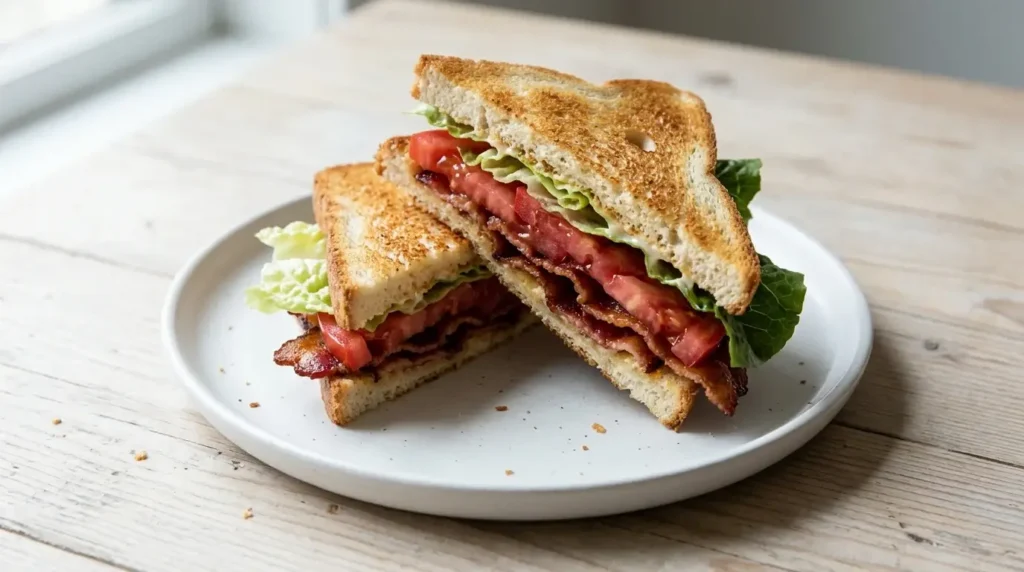
The BLT is bacon, lettuce and tomato between toasted bread, usually with mayonnaise. Its initials turn up in American print in 1941, in a waitress’s order, and the sandwich itself is older than the abbreviation. Its relatives include the bacon-and-tomato sandwich of 1930s soda fountains and the club sandwich, which carries a BLT inside it.
Food writers and test kitchens agree on the ingredients and argue about almost everything else: how to cook the bacon, whether tomatoes need salt in advance, how thick the slices should be, and which bread holds up.
Video: A BLT is Not a Bacon Sandwich. It is a Tomato Sandwich | Kenji’s Cooking Show, J. Kenji López-Alt
When the name first appears in print
The earliest BLT citation on etymologist Barry Popik’s research page is from the Boston-based Christian Science Monitor of 21 July 1941, where a waitress relays an order as “B. L. T. on T.”. A few weeks later, on 13 August 1941, the Delta Democrat-Times of Greenville, Mississippi, used the same shorthand and spelled it out as bacon, lettuce and tomato on white toast.
Both citations are diner talk. That matches the general account that the abbreviation came from the American lunch counter, where waitstaff shortened orders during the 1940s. Popik’s page is a running list of citations, so an earlier one may still surface.
Other writers date it later. The Nibble, citing Merriam-Webster, gives 1950 as the first known print appearance of the acronym, and the same page names a 1903 Ladies Home Journal as the first mention of the sandwich without citing the issue. That 1903 claim could not be traced to a fetched primary source and is left aside here. The 1941 newspaper citations are the earliest dated ones found for this post.
The sandwich took longer to reach ordinary cooking prose. A 1951 Saturday Evening Post article, as reported by The Daily Meal and Wikipedia, described a toasted sandwich of bacon, lettuce and tomato without using the initials at all.

Bacon and tomato before the initials
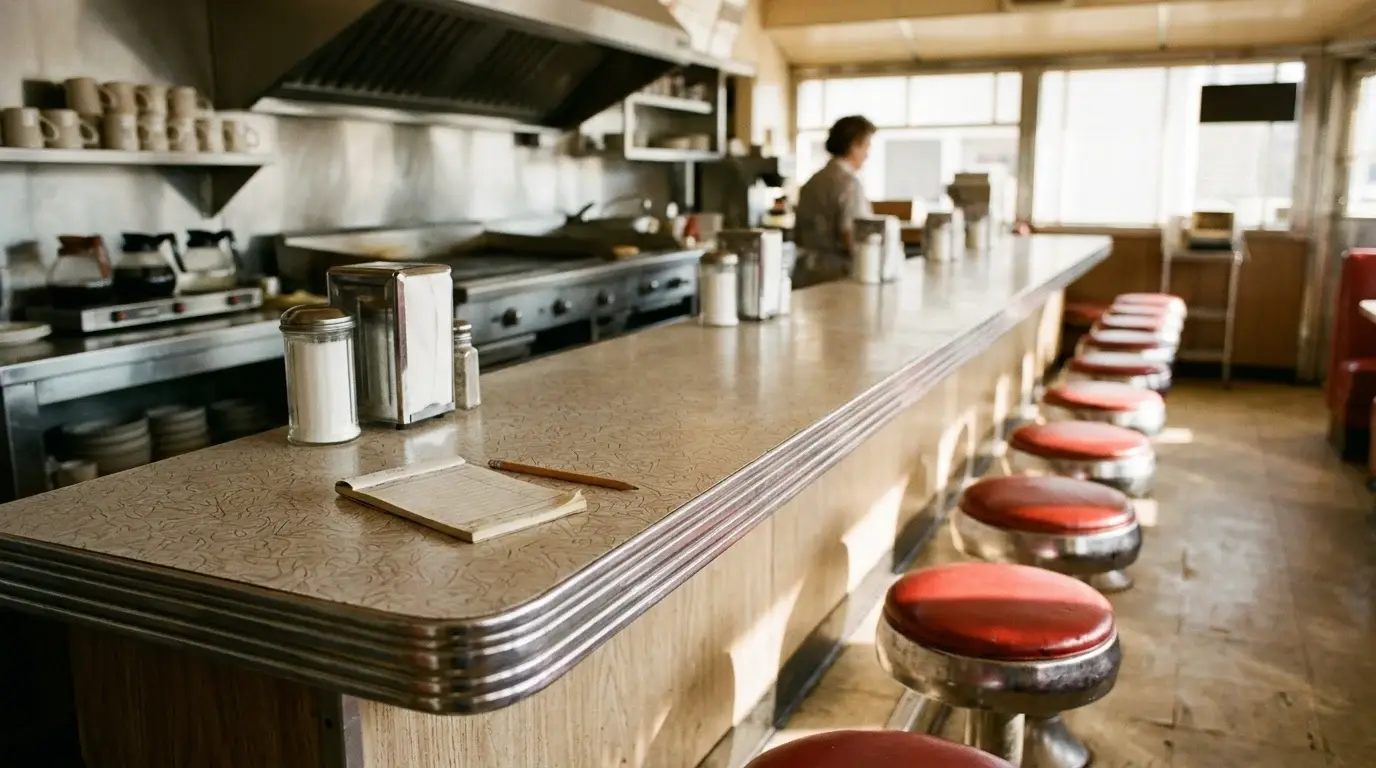
Counter slang for a bacon-and-tomato sandwich predates the BLT. A New York Times piece of 1 March 1936, “Lexicon of the Soda Jerker” by Helen Dallis, records that the bacon and tomato sandwich had become the “BMT”, a nickname the piece ties to the subway family. The book 10,000 Snacks, copyrighted in 1937 and published in 1948, lists both B.T. and B.M.T. as the counterman’s calls for that sandwich, and a soda fountain glossary in the Chicago Daily Tribune of 31 January 1942 gives B.T. for bacon and tomato.
Lettuce appears in a neighboring citation. The Tampa Sunday Tribune of 9 February 1930 lists a lettuce and tomato sandwich under the code “L. and T.”, with no bacon.
So three separate pieces existed in American lunchrooms by the early 1940s: bacon with tomato, lettuce with tomato, and a habit of reducing orders to letters. The three-letter version joined them.
The club sandwich connection
A club sandwich is a stack with a BLT somewhere in it, and the history of one overlaps the other. The Sandwich Tribunal’s survey of the club’s record shows the ingredients arriving one at a time. A “Union Club” sandwich of toasted graham bread with chicken or turkey and ham was in New York newspapers in 1889. Sarah Tyson Rorer’s 1894 book Sandwiches gave a Club-House sandwich with ham or bacon, lettuce and mayonnaise, but no tomato. Tomato showed up in the 1903 Good Housekeeping cookbook alongside bacon, poultry, lettuce and mayonnaise, and by 1916 and 1928 cookbooks were treating it as optional.
The origin of the club is itself disputed. The Saratoga Club in Saratoga Springs, New York, claimed to have invented it in 1894, while the Sandwich Tribunal points to the 1889 Union Club mentions, railway club cars and several anecdotes it regards as almost certainly apocryphal. A popular explanation that “club” abbreviates “chicken and lettuce under bacon” was checked by Snopes, which found the sandwich in print in the 1890s and no published version of the phrase before 2018. The full history of the layered original has its own page on the club sandwich.
Not every account agrees on the club’s paper trail. The Nibble says no printed record has been found for its exact origin, which sits awkwardly beside the 1889 newspaper mentions the Sandwich Tribunal lists. Which came first, the club or the BLT, is not settled. The Daily Meal, summarizing the question secondhand and without dates, reports that cookbook author Michele Anna Jordan suggests the BLT grew out of the club, and lists other theories: that the letters echo a Chicago columnist’s initials, and that the sandwich descends from a Delmonico’s dish with a fried egg. None of those is backed there by a dated citation.
Cooking the bacon
Oven and skillet both have defenders. America’s Test Kitchen heats the oven to 400°F, sets the rack six inches from the broiler, lays slices on a foil-lined rimmed baking sheet and bakes them 25 to 30 minutes, rotating the sheet halfway, until deeply browned. The recipe says to avoid thick-cut bacon. Joy the Baker bakes at 375°F for about 15 minutes, then drains the slices on paper towels.
Tasting Table’s recipe by Abby Reisner takes a shorter oven route: a foil-lined sheet at 400°F for 10 to 15 minutes, with thick-cut bacon and the rendered fat saved for spreading on toast. Spend With Pennies bakes at the same temperature on parchment for 18 to 20 minutes. Those four oven recipes land between 10 and 30 minutes, which shows how much the number depends on the bacon’s thickness and the oven.
A frying pan on the stovetop is the other route. Mallory Davis, writing for Honest Cooking, cooks three to five strips over medium heat and turns them often until they reach the preferred crispness. Food52, in advice republished by The Week, argues for the oven because baked bacon cooks evenly and avoids stovetop splatter.
Thickness is where the sources split. In a Kitchn experiment, writer Andrea Rivera Wawrzyn rated a build with three thin slices at 5 out of 10, thick-cut bacon at 7, and six thick slices at 3, calling that last version too much bacon. The America’s Test Kitchen recipe reaches the opposite conclusion about thick-cut, which suggests the answer depends on how many slices go into a single sandwich and how much chew is wanted.
Tomatoes and salt
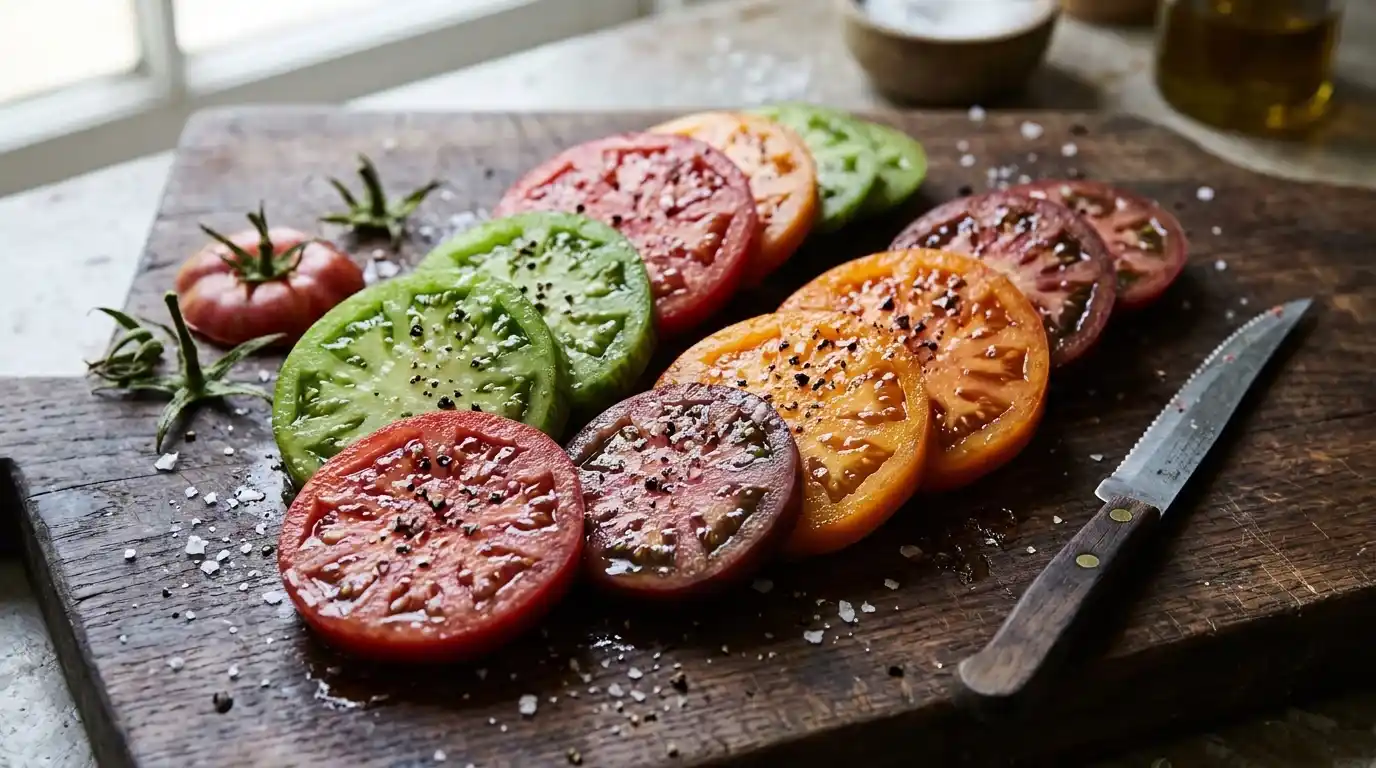
Tomato selection gets less argument than technique. America’s Test Kitchen calls for vine-ripened tomatoes about two inches across, cut into quarter-inch slices. Honest Cooking suggests a ripe beefsteak cut to the same thickness, and Joy the Baker uses heirloom tomatoes with sea salt and cracked pepper.
Spend With Pennies prefers beefsteak or heirloom tomatoes, sliced thick, though the recipe says any ripe tomato works. Tasting Table asks for tomatoes “at their bursting point” and salts and peppers the slices before assembly.
Seasoning is the more interesting question. The America’s Test Kitchen recipe soaks the slices in a dressing of two tablespoons of olive oil, one tablespoon of red wine vinegar, a quarter teaspoon each of salt and pepper, and turns them gently to coat. The Kitchn tested the opposite approach, salting the slices and letting them sit on paper towels for 15 minutes, and saw no noticeable difference from salting just before assembly. Its author reserved the longer rest for tomato-forward dishes such as tomato toast.
Bread, mayonnaise and assembly
Toast is close to universal. The Kitchn rated an untoasted version 4 out of 10, calling it squishy, and Food52 advises toasting only one side of each slice and keeping those sides facing inward so the crumb is protected from the crust’s rough edge. America’s Test Kitchen does the same, broiling potato sandwich bread 1 to 2 minutes on one side and spreading mayonnaise on the untoasted faces. Its mayonnaise is stirred with basil, lemon juice and a pinch of cayenne. Joy the Baker takes a different route, dipping the bread in hot bacon fat and browning it in a cast iron skillet.
Sourdough and artisan loaves also have a case. Spend With Pennies lists sourdough or artisan bread first, with plain sandwich bread as an alternative, and spreads about a tablespoon of mayonnaise on each slice. Honest Cooking uses thick white bread buttered on one side.
Lettuce does structural work. Food52 describes it as “nature’s barrier against soggy sandwiches”, placed between the wet tomato and the bread. The America’s Test Kitchen order is bacon halves shingled on the bread, two leaves of Bibb lettuce, four tomato slices, two more leaves, another layer of bacon, and a cut corner to corner. In the Kitchn tests, a single finely shredded romaine leaf scored 10 out of 10, the highest of any change, because it avoids pulling a whole leaf out with the first bite. Spend With Pennies likewise allows the leaves to be thinly shredded, and names iceberg, Bibb or romaine as options.
Timing matters for every version. Joy the Baker notes that a BLT cannot be assembled ahead of time, since tomato juice softens both the toast and the lettuce.
Sources:
- Barry Popik, “BLT (BMT) Sandwich (bacon, lettuce and tomato)”: https://barrypopik.com/blog/blt_bmt_sandwich
- Saveur, “The Complete(ish) History of the BLT”: https://www.saveur.com/culture/ultimate-blt-history/
- The Daily Meal, “The Mysterious Origins Of The BLT”: https://www.thedailymeal.com/1185054/the-mysterious-origins-of-the-blt
- Wikipedia, “BLT” (pointer to the 1951 citation): https://en.wikipedia.org/wiki/BLT
- The Sandwich Tribunal, “An Edible History of the Club Sandwich”: https://www.sandwichtribunal.com/2015/08/an-edible-history-of-the-club-sandwich
- Snopes, “Chicken Lettuce Under Bacon” fact check: https://www.snopes.com/fact-check/chicken-lettuce-under-bacon/
- America’s Test Kitchen, “Ultimate BLT Sandwich”: https://www.americastestkitchen.com/recipes/8985-ultimate-blt-sandwich
- Joy the Baker, “How To Make The Best BLT Sandwich”: https://joythebaker.com/2015/08/how-to-make-the-best-blt-sandwich/
- Honest Cooking, “How to Build the Perfect BLT”: https://honestcooking.com/build-perfect-blt/
- Spend With Pennies, “How to Make the Perfect BLT”: https://www.spendwithpennies.com/how-to-make-the-perfect-blt/
- Tasting Table, “How To Make A BLT Sandwich”: https://tastingtable.com/693032/best-blt-sandwich-recipe-turkey-bacon-how-to-cook-bacon
- The Nibble, “Food 101 For National BLT Month: The History Of The BLT”: https://blog.thenibble.com/2017/04/04/food-101-for-national-blt-month-the-history-of-the-blt/
- The Week (from Food52), “5 tips for a better BLT”: https://theweek.com/articles/444414/5-tips-better-blt
- The Kitchn via AOL, “After Trying Every Possible Method of Making a BLT”: https://www.aol.com/obsessed-over-perfect-blt-finally-200000993.html
- YouTube, J. Kenji López-Alt, “A BLT is Not a Bacon Sandwich. It is a Tomato Sandwich”: https://www.youtube.com/watch?v=5BfZn9HHKI0