
In this story
The club sandwich has no agreed inventor. At least four origin stories compete for it: a New York social club in the 1880s, a gambling house in Saratoga Springs, the dining cars of American railroads, and a hungry man raiding a pantry at night. Each has a source behind it, and none has settled the question.
Video: 1889’s Union Club sandwich, Sandwich Tribunal
Most of what is certain comes from old newspapers and cookbooks, which show a sandwich that changed shape considerably between its first appearance and the toasted, toothpick-pinned stack now served in hotels and diners. The earliest versions were smaller, warmer and plainer than the modern one.
The Union Club in 1889
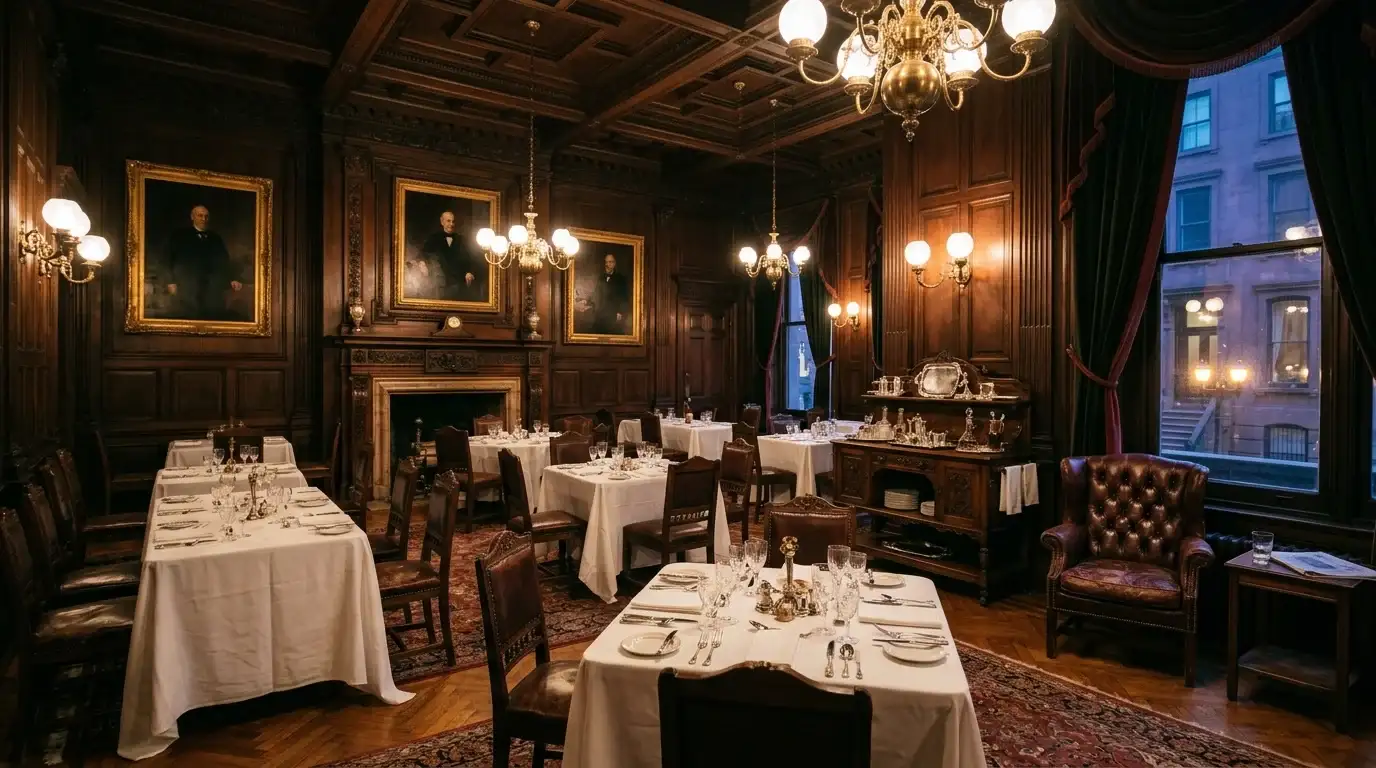
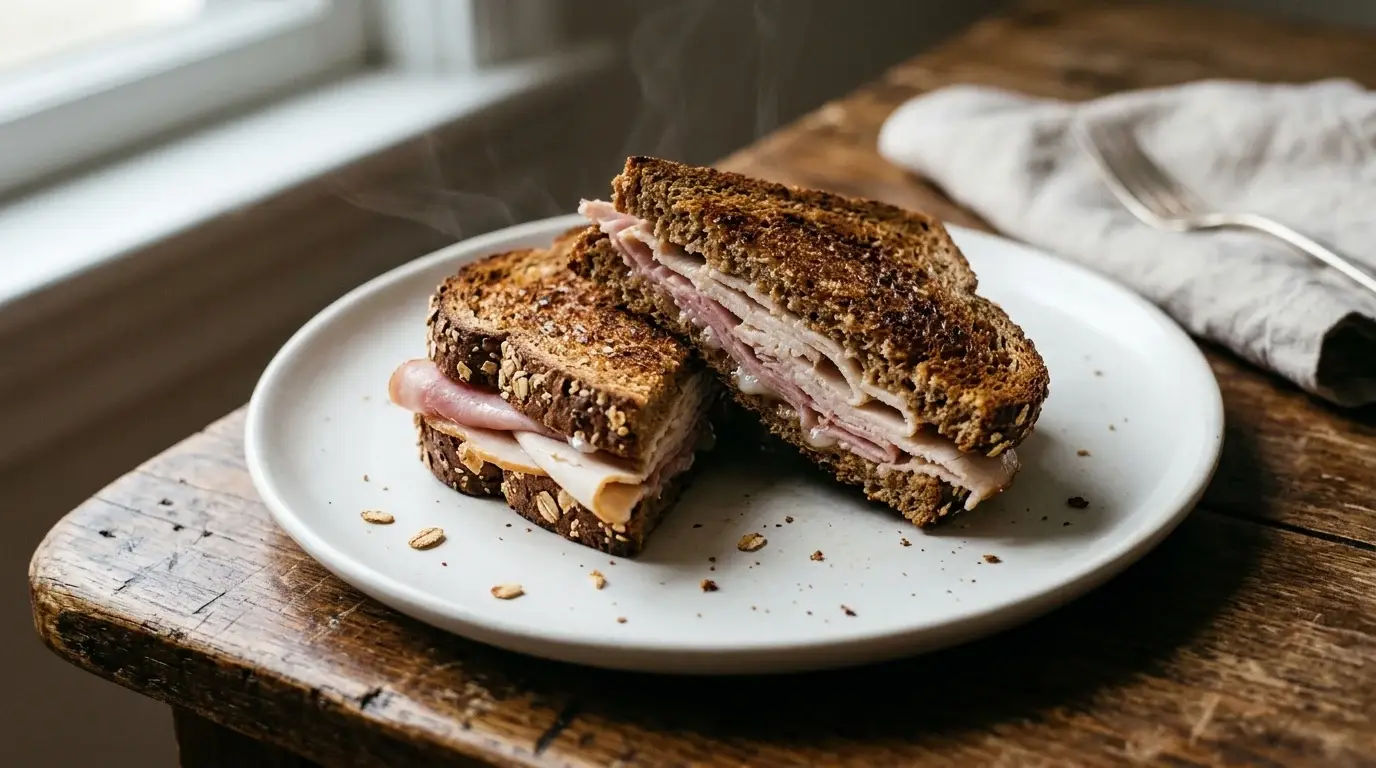
The earliest detailed description of a club-named sandwich dates to November 18, 1889. That day The Evening World asked readers, “Have you tried a Union Club sandwich yet?” The same day, The Sun of New York described the sandwich served at the Union Club, on Fifth Avenue at 21st Street. The recipe called for two slices of toasted Graham bread with turkey or chicken and ham between them, served warm. Lettuce, tomato and mayonnaise were absent, and so was bacon.
A month later, on December 10, 1889, the Omaha World-Herald printed a recipe that had previously been known only to the club’s members. The sandwich was no longer a house secret.
Who made it at the Union Club is less clear. The Sun credited an unnamed club chef, according to Chowhound’s account of the sources. A name arrived two years later: the New York Herald of July 9, 1891 called a member, E. Ely Goddard, the sandwich’s “formulator”. An 1893 Herald piece went further and said he invented it as a Union Club member. Goddard’s 1910 New York Times obituary does not mention the sandwich at all, and the same newspaper survey concludes that the evidence for him is thin.
Food-history writer Barry Popik, who compiled the early citations, judges the Union Club the likeliest birthplace and allows that a club chef, rather than a member, may have been the creator. Whether a warm Graham-bread sandwich counts as the same dish as the later club sandwich is itself debated, since it shares the double layer of meat but little else.
Earlier clubs and the Saratoga claim
The Union Club was not the first club to have a sandwich named for it in print. A “Bohemian Club sandwich” turns up in the San Francisco Daily Examiner of July 29, 1888, and the Chicago Daily Tribune mentioned an “Owl Club sandwich” in 1879. Neither item says what was in it. Wordorigins.org notes that an 1890 Pittsburg Press reference to a “Press club sandwich” probably means only a sandwich eaten at a club, not a particular recipe.
The Saratoga story places the sandwich in 1894 at the Saratoga Club House, the gambling establishment in Saratoga Springs, New York that is now the Canfield Casino. A tourism page for the city calls this “the most popular theory”, cites The Encyclopedia of American Food and Drink, and says it is still disputed whether the chef or the owner, Richard Canfield, came up with it.
The documentary trail is short. The Food Timeline reports that a 1983 letter in The New York Times cited the 1940 guide New York: A Guide to the Empire State, which states that after Canfield bought the club in 1894 and made it a casino, the sandwich originated in its kitchens. A survey of newspaper citations finds the first claim naming Canfield in the Press & Sun-Bulletin of March 29, 1951, decades after the fact. Another history of the sandwich adds that no written description of the Saratoga sandwich survives.
Critics point to the calendar. The Kitchn’s Jelisa Castrodale, as summarized by the Irish Times, argues that the Saratoga claim ignores club-sandwich references printed before 1894. The Union Club sandwich predates it by about five years.
The railroad club car
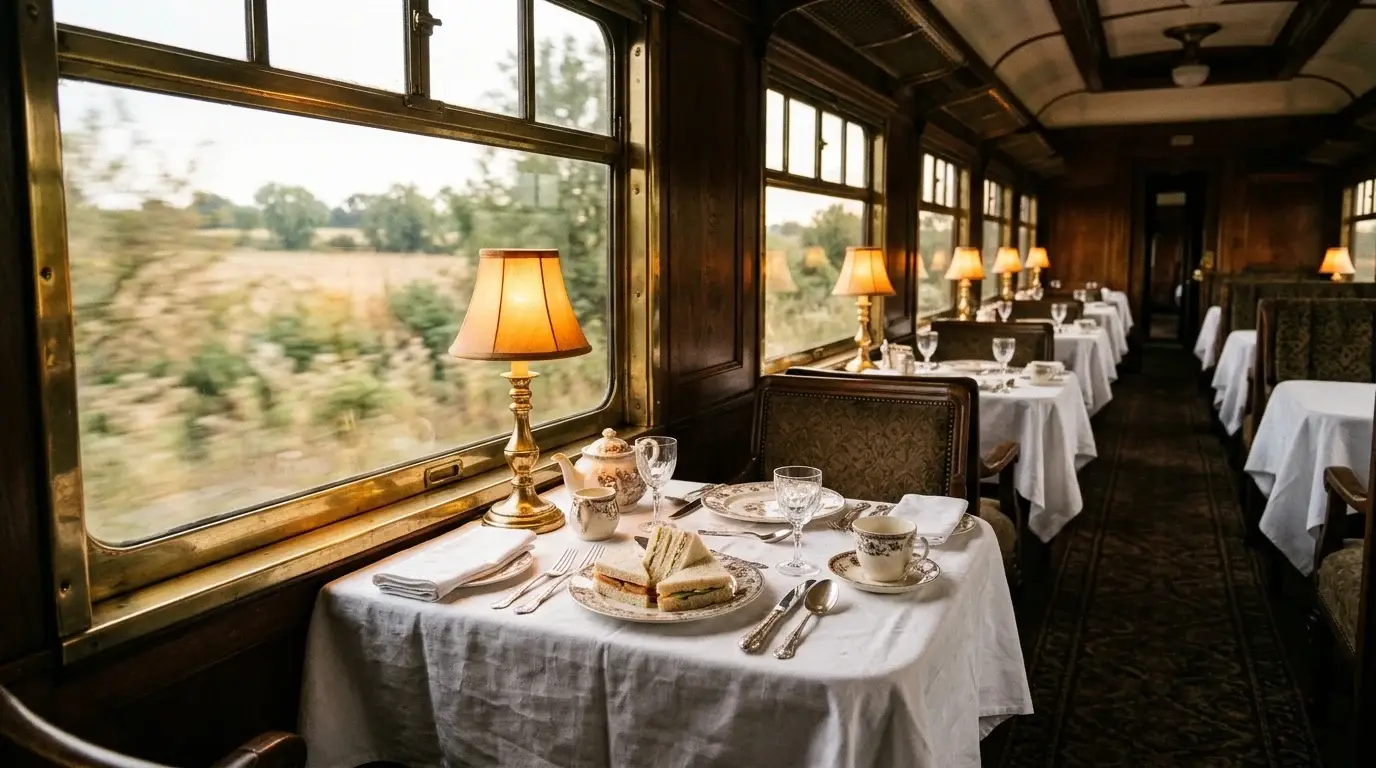
A third theory ties the name to railway travel. The Oxford Companion to Food, as quoted by The Food Timeline, says some believe the sandwich was first a two-decker, perhaps matching the two-decker club cars on American railroads from 1895. Food writer James Villas made a related argument, tracing the name to “the elegant old club cars on the steamliner trains”, and Popik notes that the sandwich was served on trains leaving Pennsylvania Station.
Doubters have a simple objection. CulinaryLore points out that the earliest club sandwich recipes were not multi-layered, so a name drawn from a stacked railcar would not fit. Another source dates the double-decker trains running between New York and Chicago to the 1930s and 1940s, without naming evidence, which would put them long after the sandwich was already in print.
Stories of a late-night raid
Several tales describe an accident. Marion Harris Neil, in her 1916 book on salads, sandwiches and chafing-dish recipes, told of a man who came home hungry, toasted bread and assembled what he found; club friends later copied it and the name stuck, according to the account on What’s Cooking America. Florence Cowles repeated versions of the story in 1929, including one about a famous club chef, and added that “No authoritative answers to these questions are available.”
A named version appeared earlier. The New York Times of December 27, 1908, reprinting the Washington Herald, said Alan Johnstone, a British minister to Copenhagen, was reported to have originated the sandwich after raiding a club larder at night. The author of that survey of old newspapers finds no evidence for it, and the claim was rarely repeated. The Sandwich Tribunal calls it almost certainly apocryphal.
How the name has been explained
The dictionary evidence is modest. Etymonline dates “club sandwich” to by 1894, tracing the name to a sandwich apparently served in the social and professional clubs of the day. Its earliest reference is a dish of chicken or veal and lettuce at the Musicians’ Club in New York, reported in Brooklyn Life on October 13, 1894. In the same year Sarah Tyson Rorer’s book Sandwiches gave a “Club-House Sandwich” of ham or bacon, pickle and fowl.
James Beard argued in 1972 that the alternate name “clubhouse sandwich” points to the kitchens of men’s clubs, as The Food Timeline summarizes. A 1897 article in The World offered a different reading, that the many ingredients stood for the many members of a club, but the earliest sandwich had only two fillings.
One explanation is almost certainly wrong. The claim that “club” stands for “Chicken and Lettuce Under Bacon” is described by the Irish Times as an anticlimactic acronym, and Tasting Table reports that Snopes found no pre-internet source for it. The sandwich predates the idea by well over a century.
From two slices to three
Early recipes show the sandwich assembling its parts one at a time. The Brooklyn Daily Eagle printed a “Club House Sandwich” in 1897 with a poached egg in place of mayonnaise. Good Housekeeping ran a recipe the same year with chicken, ham, lettuce and salad dressing between two slices of bread. Etymonline puts the addition of bacon around 1898, and the Birmingham Age Herald mentioned a slice of tomato on August 20, 1899.
Janet McKenzie Hill’s 1899 cookbook is probably the first to give a recipe, and it called for four triangles of toast with chicken, bacon and lettuce. Fiction caught up in 1903, when Ray McCardell’s Conversations of a Chorus Girl became the first print appearance cited by Mariani, the same year Isabel Gordon Curtis published a recipe in the Good Housekeeping cookbook with a single layer between two slices of toast.
The third slice has several candidate dates, depending on the source consulted:
| Earliest three-layer reference | Source |
|---|---|
| 1901, Daily Times (Iowa), a recipe with a third slice of toast | Newspaper survey |
| May 18, 1904, Blue Valley Blade, “a three-story club house sandwich” | Wordorigins.org |
| 1909, Eva Greene Fuller, The Up-to-date Sandwich Book | Sandwich Tribunal |
| 1924, Flora Rose, The New Butterick Cook Book | Food Timeline |
The Washington Post of August 12, 1905 held that a club sandwich should always be three stories high, yet other sources kept the third slice optional for decades. Beard called the three-decker inauthentic, and Cowles counted from one to five layers, describing the original as a toppling tower, per What’s Cooking America.
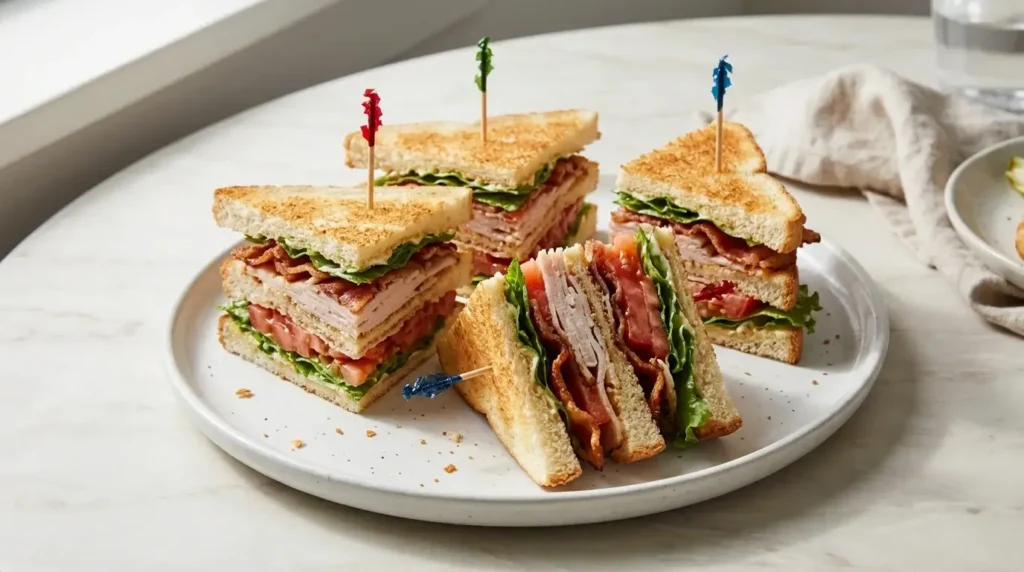
Wikipedia now describes the standard form as three slices of bread with two layers of filling, cut diagonally into quarters or halves and held with cocktail sticks. The Sword and the Sandwich newsletter likewise notes the sandwich is often held together with fancy toothpicks. None of the sources consulted says when or why the toothpick became standard, though the Sandwich Tribunal describes the traditional sandwich as skewered and cut into four triangles.
In July 1910, the Norfolk Daily News of Nebraska reprinted a Kansas City Star piece under the headline “The Club Sandwich—Why? Historians Say Mystery of the Three-Decker Can’t Be Solved.”
Sources:
- Chowhound, “The Club Sandwich Was Created In An Exclusive Club, But Nobody’s Sure Which One”: https://www.chowhound.com/1606707/origin-story-of-club-sandwich/
- Passionate Foodie, “A History of Club Sandwich, Part 1”: https://passionatefoodie.blogspot.com/2022/02/a-history-of-club-sandwich-part-1.html
- Passionate Foodie, “A History of Club Sandwich, Part 2”: https://passionatefoodie.blogspot.com/2022/02/a-history-of-club-sandwich-part-2.html
- Barry Popik, “Club Sandwich (Club House Sandwich; Clubhouse Sandwich)”: https://barrypopik.com/blog/club_sandwich
- Wordorigins.org, “club sandwich”: https://wordorigins.org/big-list-entries/club-sandwich
- Saratoga.com, “The Club Sandwich’s Beginnings in Saratoga Springs”: https://saratoga.com/restaurants/club-sandwich
- The Food Timeline, sandwiches: https://www.foodtimeline.org/foodsandwiches.html
- Sandwich Tribunal, “An Edible History of the Club Sandwich”: https://www.sandwichtribunal.com/2015/08/an-edible-history-of-the-club-sandwich
- Irish Times, “Where did the club sandwich come from?”: https://www.irishtimes.com/life-and-style/food-and-drink/where-did-the-club-sandwich-come-from-1.3776040
- CulinaryLore, “How Did the Club Sandwich Get Its Name?”: https://culinarylore.com/food-history:how-did-the-club-sandwich-get-its-name/
- What’s Cooking America, “Club Sandwich History”: https://whatscookingamerica.net/history/sandwiches/clubsandwich.htm
- Online Etymology Dictionary, “club sandwich”: https://www.etymonline.com/word/club%20sandwich
- Tasting Table, “What Does The ‘Club’ In Club Sandwich Really Mean?”: https://www.tastingtable.com/996202/what-does-the-club-in-club-sandwich-really-mean
- Wikipedia, “Club sandwich” (pointer only, not the sole source for any claim): https://en.wikipedia.org/wiki/Club_sandwich
- The Sword and the Sandwich, “Notable Sandwich 47: The Club Sandwich”: https://buttondown.com/theswordandthesandwich/archive/notable-sandwich-47-the-club-sandwich/
- YouTube, Sandwich Tribunal, “1889’s Union Club sandwich”: https://www.youtube.com/watch?v=fxd2Mhx5sGY