In this story
Skippy and Jif are two of the best-known peanut butter jars in America, and their rivalry goes back to the 1950s. Skippy came out of California in 1932 with a chemist’s fix for oil separation. Jif arrived from Procter & Gamble in 1958 with a different fix, and that difference pushed the federal government into a 12-year argument over how many peanuts make peanut butter.
Video: How Skippy Peanut Butter Is Made | Unwrapped | Food Network, from the Food Network YouTube channel
The oil problem
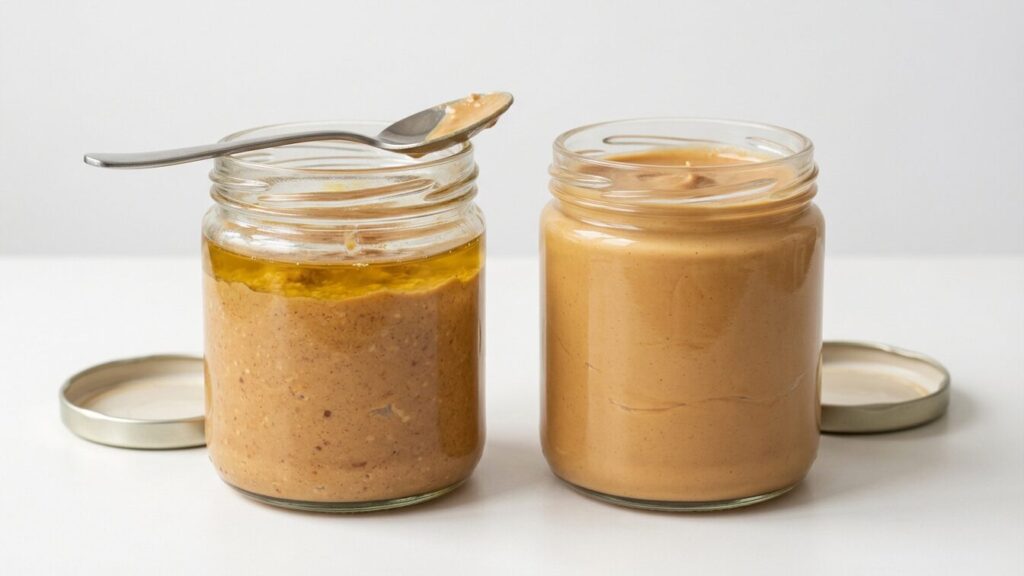
Natural peanut butter separates. The oil rises, the solids settle, and the jar has to be stirred. The answer that shaped both brands was partial hydrogenation. Smithsonian, in a history updated in January 2021, says that in 1921 Joseph Rosefield patented applying partial hydrogenation to peanut butter, which kept the oil blended so the spread could be shipped and kept on shelves.
The patent date varies by account. The OU Kosher blog, in a 2004 post on the history of the peanut butter standard, describes the method the same way, extracting some peanut oil, hydrogenating it and adding it back, but dates the patent to 1932 and calls him James rather than Joseph, two details the other sources do not share.
Skippy, 1932
Rosefield then put his own name behind a brand. Skippy’s official timeline says Joseph L. Rosefield began selling Skippy in Alameda, California, in 1932, produced the first crunchy-style peanut butter in 1934, and in 1935 made Skippy the first peanut butter in a wide-mouth jar. He obtained a U.S. trademark registration for the name in 1948. The Smithsonian adds that during World War II, tins of hydrogenated Skippy went overseas with service members.
Later dates on the brand’s timeline include Reduced Fat Creamy and Super Chunk in 1994, a no-stir natural spread in 2005, and the brand’s sale to Hormel Foods in 2013.

Jif, 1958
Procter & Gamble came in with a different oil. OU Kosher says P&G introduced Jif in 1958, about 30 years after Skippy was developed, using a blend of vegetable oils that, once hydrogenated, kept the peanut butter from separating and spreadable across temperatures. That choice, rather than hydrogenated peanut oil, put Jif on a collision course with regulators.
The 12-year peanut butter case
The government wanted a definition. The FDA’s own history of the standard says the agency had held since 1940 that “peanut butter” was generally understood to mean a product made solely of ground roasted peanuts, with or without a little salt. In 1959 it proposed a standard of 95 percent peanuts and 5 percent optional ingredients, among them salt, sugar, honey and hydrogenated or partially hydrogenated peanut oil. In 1961 it proposed 90 percent peanuts plus some additional sweeteners.
That 1961 version was a problem for Jif. OU Kosher writes that it would have allowed only hydrogenated peanut oil, meaning Jif could not have kept the name; P&G’s lawyers argued that other hydrogenated vegetable oils worked the same way, and the FDA’s final standard allowed them. OU Kosher also says the final rule left Skippy with too much hydrogenated peanut oil and too few peanuts, and presumes it changed its formula.
The hearing itself was epic. The FDA describes a public evidentiary hearing that ran 20 weeks and produced nearly 8,000 pages of transcript. Mental Floss, in a 2016 retelling, says the FDA’s 1959 survey had found some products labeled peanut butter were only about 75 percent peanuts, that the hearings began in November 1965, that the industry held out for 87 percent against the FDA’s 90, and that after an appeals court upheld the agency the 90 percent standard took effect on May 3, 1971. Its most-quoted line comes from an FDA historian: the standard “put many lawyers’ children through college.”

What the rule actually says
The regulation reads differently from the slogan. The current standard, 21 CFR 164.150, says seasoning and stabilizing ingredients together cannot exceed 10 percent of the finished food’s weight, that fat cannot exceed 55 percent, that any oil used as a stabilizer must be hydrogenated vegetable oil, and that artificial flavorings, artificial sweeteners, chemical preservatives and color additives are not allowed. The “90 percent peanuts” figure is the other side of that 10 percent cap.
The FDA history adds a later twist. In 1994, when Skippy, Jif and Peter Pan developed lower-fat products, the agency told them they could sell them as “spreads” compared with regular peanut butter on the label.
On bread
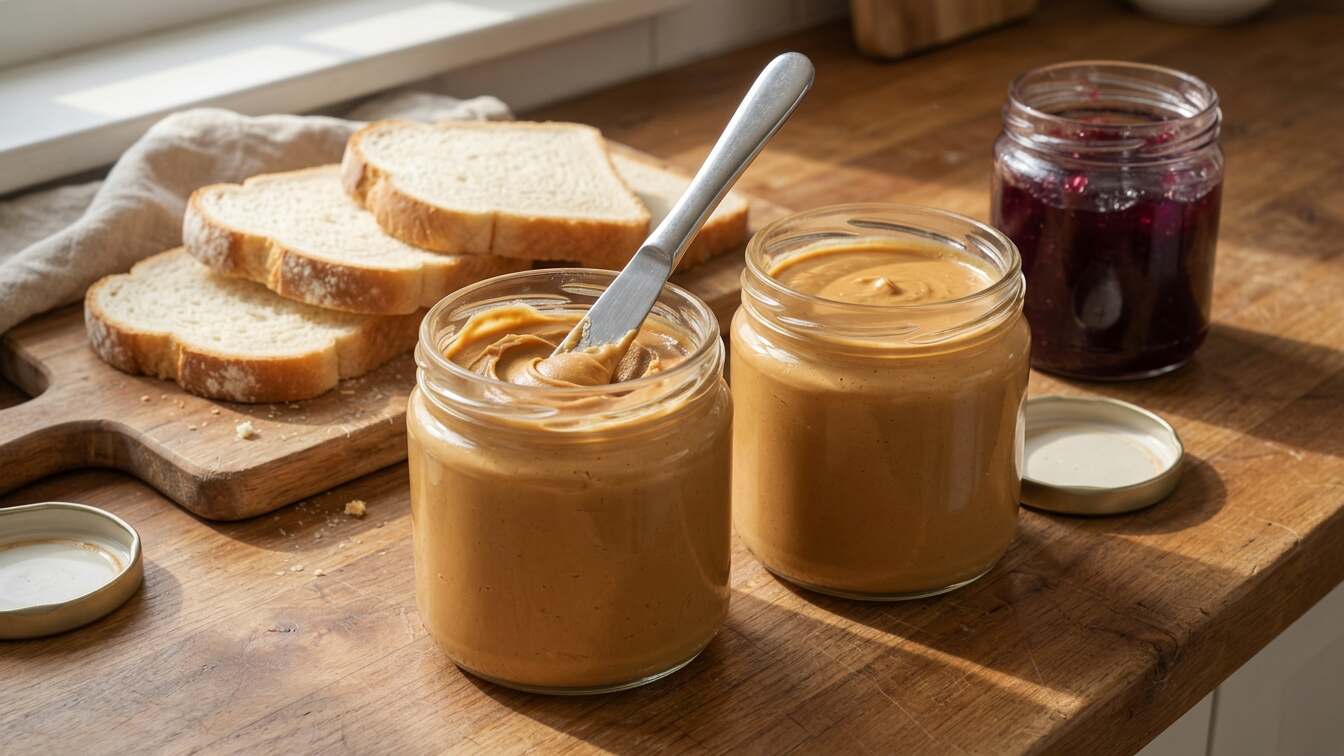
The jar choice ends up between two slices, usually with something sweet. Grill Cheesy covers the bread side of that sandwich in sliced bread invention and peanut butter’s marshmallow partner in the fluffernutter.
The two jars
- SKIPPY Creamy Peanut Butter, Plant Based Protein, 16.3oz x8: Skippy’s creamy peanut butter in standard jars. See it on Amazon (affiliate link)
- SKIPPY SUPER CHUNK Peanut Butter, Plant Based Protein, 40oz x1: Skippy’s Super Chunk, introduced in 1994 per the brand timeline. See it on Amazon (affiliate link)
- Jif Creamy Peanut Butter, 16-Ounce Jar, 6 Count: Jif’s creamy peanut butter in a six-jar pack. See it on Amazon (affiliate link)
As an Amazon Associate I earn from qualifying purchases. A commission may be earned if you buy through this link, at no extra cost to you.
Questions people ask
Which came first, Skippy or Jif? Skippy, in 1932; Jif launched in 1958.
Who invented Skippy? Joseph L. Rosefield of Alameda, California, who had patented a partial hydrogenation method for peanut butter.
How much peanut does peanut butter have to contain? Federal rules cap seasoning and stabilizers at 10 percent of the weight, which is where the 90 percent figure comes from.
Why is some peanut butter labeled “spread”? Products outside the standard, including lower-fat versions, have to use a different name such as spread.
What were the peanut butter hearings? An FDA proceeding from the late 1950s to 1971 over how many peanuts peanut butter must contain.
Sources
- Smithsonian Magazine, “A Brief History of Peanut Butter” (updated January 6, 2021): https://www.smithsonianmag.com/innovation/brief-history-peanut-butter-180976525/
- OU Kosher, “Peanut Butter II: Standard of Identity” (November 4, 2004): https://oukosher.org/blog/industrial-kosher/peanut-butter-ii-standard-of-identity/
- Skippy, “Our History”: https://www.peanutbutter.com/our-history/
- U.S. Food and Drug Administration, “Food Standard Innovations: Peanut Butter’s Sticky Standard” (April 14, 2021): https://www.fda.gov/about-fda/histories-product-regulation/food-standard-innovations-peanut-butters-sticky-standard
- Mental Floss, “Why Midcentury Lawyers Spent 12 Years Arguing About Peanut Butter” (February 9, 2016): https://www.mentalfloss.com/article/71698/why-midcentury-lawyers-spent-12-years-arguing-about-peanut-butter
- 21 CFR § 164.150, Peanut butter (via Cornell Legal Information Institute): https://www.law.cornell.edu/cfr/text/21/164.150