In this story
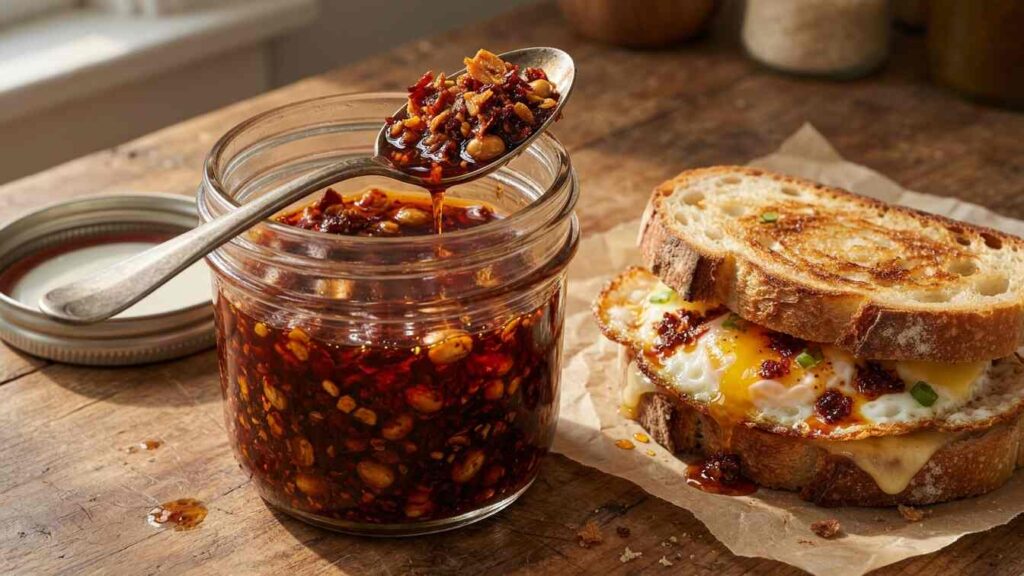
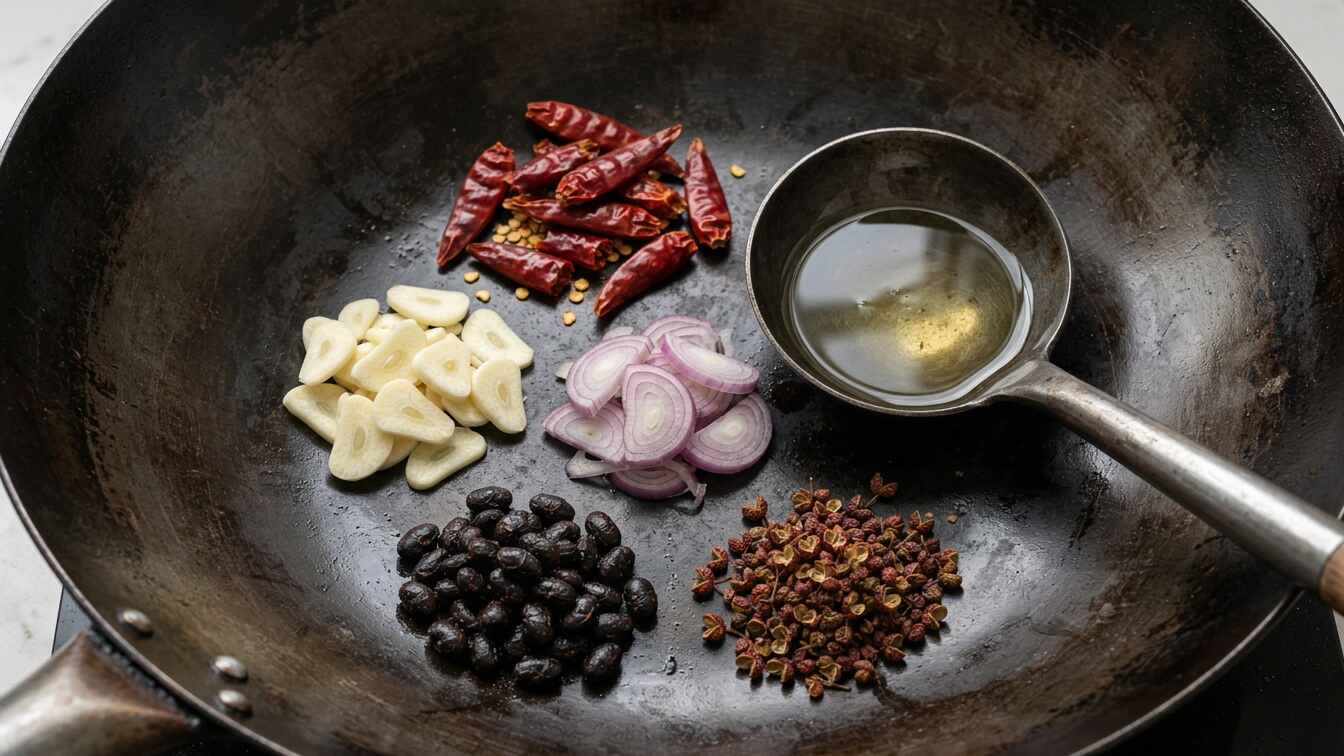
Chili crisp is chili pepper fried in oil, often with garlic, onion, peppercorns and fermented soybeans, sold in a jar and spooned over nearly anything. The jar most people met first has a stern portrait of an older woman on the label. She is Tao Huabi, and her company, Lao Gan Ma, turned a noodle-shop condiment into a jar sold in 130 countries and regions.
Video: Every Lao Gan Ma, explained., from the Chinese Cooking Demystified YouTube channel
Chilis reach China
The pepper is a newcomer to Chinese cooking. Erin Blakemore, writing for National Geographic in April 2024, explains that chili plants, native to Central and South America, reached China around the 16th century through exploration and trade. The first written record, from 1591, comes from the playwright Gao Lian, who grew them near present-day Shanghai as a decorative plant.
The kitchen took them up later. By 1765, local historians in Hunan noted chilis flavoring sauces, vinegar, oils and preserved vegetables, Blakemore writes, and The Harmonious Cauldron, written around 1790 and the earliest Chinese culinary book to include chilis, contains a condiment resembling chili crisp.
Tao Huabi
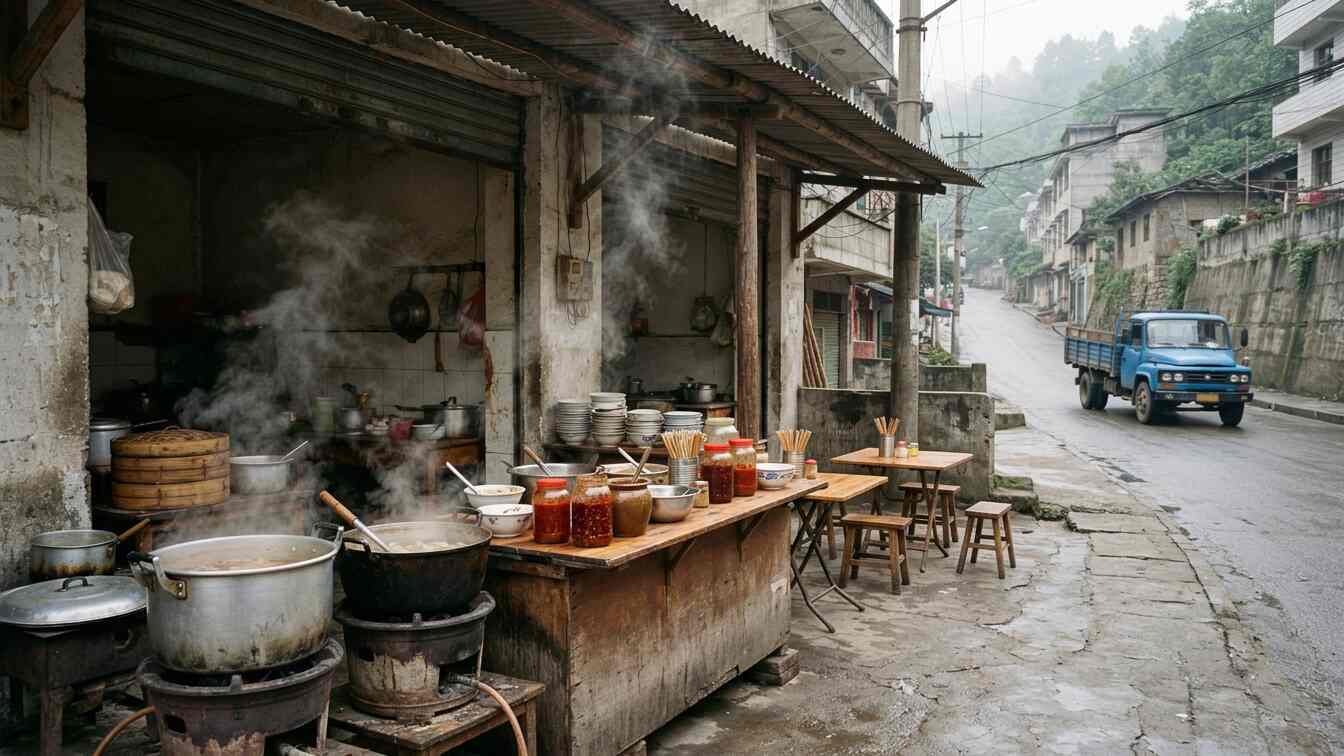
Tao Huabi’s story has several versions of its dates. The Guardian’s profile, republished by The Irish Times in November 2022, says she was born in 1947, the eighth daughter of a poor family in mountainous Guizhou, never attended school, and after her husband died moved to Guiyang and sold noodles with a sauce she made herself. In the 1990s, the profile says, she opened a restaurant and handed free jars of sauce to truck drivers on a new highway, who spread the word.
Chinese state media date the restaurant earlier. A March 2023 Xinhua report, carried by People’s Daily, says she opened a small restaurant in Guiyang in 1989, converted it into a condiment shop in 1994, and two years later ran a factory under her nickname, Lao Gan Ma. She used her own portrait as the logo, the report says, as a reminder to control quality, because she “cannot lose face.”
The factory and company dates mostly agree. The Guardian piece puts the factory in a Guiyang house in 1996 and the founding of the Laoganma Special Flavour Foodstuffs Company in 1997. National Geographic dates the commercial sale of Lao Gan Ma Spicy Chili Crisp, and of chili crisp at commercial scale generally, to 1997.
A jar at global scale
The numbers are large. The 2022 Guardian profile reports that the company was said to produce 1.3 million bottles a day, compared with 1.8 million bottles of Heinz ketchup and 55,000 of Huy Fong Sriracha, and that Forbes China estimated Tao’s fortune at about €1.05 billion. Xinhua says the products reach 130 countries and regions and that the company has 110 raw-material suppliers.
The portrait itself has drawn study. The Guardian piece cites academics at Guangdong University of Foreign Studies who argue that the image deliberately draws foreign shoppers’ curiosity.
The chili crunch fight
The category became valuable enough to fight over. Fortune, carrying an Associated Press report from April 2024, explains that David Chang’s Momofuku began selling its Chili Crunch in 2020, acquired the trademark for “chile crunch,” with an “e,” from Chile Colonial in 2023, and filed for the “chili” spelling. In March 2024 it sent seven cease-and-desist letters to companies using the term, most of them small brands founded by Asian Americans, among them Michelle Tew’s Malaysian brand Homiah, which was given 90 days to stop selling its Sambal Chili Crunch.
The backlash was fast. By April 12, 2024, Momofuku said it would no longer enforce the trademark, acknowledging that the term “carries broader meaning for many,” Fortune reports. Tew called the decision “a step in the right direction.”
On a sandwich
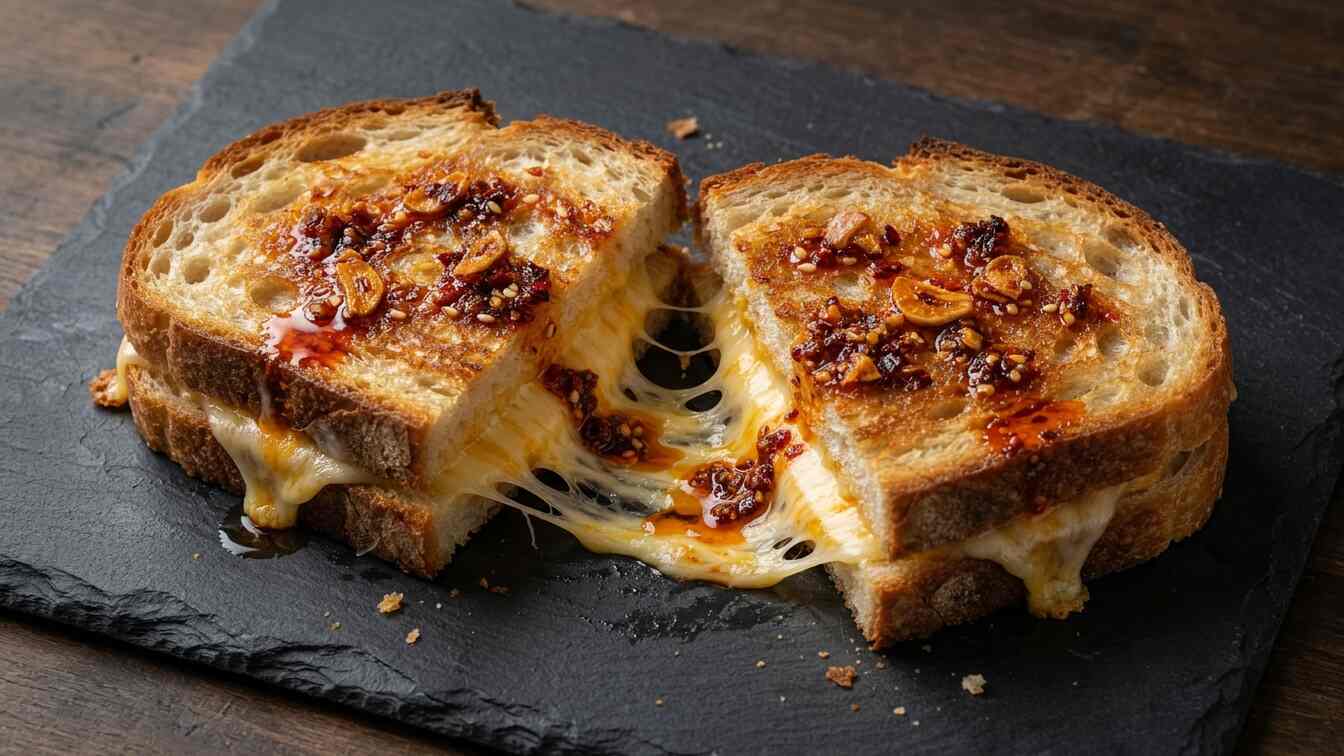
Chili crisp is a topping rather than a sandwich of its own, spooned on at the end. For sandwiches to try it on, Grill Cheesy’s posts on the bacon, egg and cheese and the grilled cheese sandwich are a start, and another sweet-hot jar that took over sandwich menus is covered in hot honey.
Three jars
The list covers the original, a Sichuan-style newcomer and the jar at the center of the trademark fight. It is not a ranking.
- Lao Gan Ma Spicy Chili Crisp Hot Sauce Family/Restaurant Size 23.63 Oz (670g) Pack of 2: Lao Gan Ma’s Spicy Chili Crisp in large jars. See it on Amazon (affiliate link)
- FLYBYJING Original Sichuan Chili Crisp: Premium Chili Oil w/Crunchy Garlic and Shallots – Spicy, Savory, Vegan, Sugar Free Hot Sauce – Good on Noodles, Proteins, Veggies & Everything, 6oz (Pack of 1): a Sichuan-style chili crisp with garlic and shallots. See it on Amazon (affiliate link)
- Momofuku Chili Crunch by David Chang, (5.5 Ounces), Chili Oil with Crunchy Garlic and Shallots, Spicy Chili Crisp: Momofuku’s chili crunch, the product behind the 2024 trademark dispute. See it on Amazon (affiliate link)
As an Amazon Associate I earn from qualifying purchases. A commission may be earned if you buy through this link, at no extra cost to you.
Questions people ask
What is chili crisp? Chili peppers fried in oil, often with garlic, onion, peppercorns and fermented soybeans, per National Geographic.
Who is the woman on the Lao Gan Ma jar? Founder Tao Huabi; Lao Gan Ma was her nickname.
When was Lao Gan Ma founded? Accounts date her restaurant to 1989 or the 1990s; the factory to 1996 and the company to 1997.
Did Momofuku trademark chili crunch? It held “chile crunch” and applied for “chili crunch,” then said in April 2024 it would not enforce the mark.
When did chilis arrive in China? Around the 16th century; the first written record is from 1591.
Sources
- National Geographic, Erin Blakemore, “The surprising story of how chili crisp took over the world” (April 12, 2024): https://www.nationalgeographic.com/history/article/chili-crisp-condiment-pepper-china
- The Irish Times (from The Guardian), “The ketchup-rivalling Chinese condiment that has made its creator a billionaire” (November 9, 2022): https://www.irishtimes.com/food/2022/11/09/the-ketchup-rivalling-chinese-condiment-that-has-made-its-creator-a-billionaire
- People’s Daily / Xinhua, “Chinese village woman committed to making renowned chili sauce” (March 9, 2023): https://en.people.cn/n3/2023/0309/c90000-10219294.html
- Fortune / Associated Press, Mae Anderson, “Momofuku backs down from ‘chile crunch’ trademark” (April 15, 2024): https://fortune.com/2024/04/15/momofuku-chile-crunch-trademark-pushback-small-brands-asian-americans/