In this story
A grilled cheese sandwich asks very little: bread, cheese, fat, a pan. The published advice on how to put those four things together is another matter. Test kitchens and food writers agree on a handful of points and split sharply on others on butter or mayonnaise, how hot the pan should be, and whether the lid belongs on it.
Video: The Science of the Perfect Grilled Cheese Sandwich, Reactions
Common search phrasings for this sandwich include how to make the best grilled cheese, butter or mayo, how long each side takes, and what heat to use. The sections below follow those questions in order, set the sources next to one another, and then give a working method taken from a published test-kitchen recipe.
Where the sources agree
Four points come up again and again, whichever publication is speaking.
First, the fat goes on the outside of the bread. America’s Test Kitchen advises buttering the bread rather than the pan, and its cooks found that this browned the sandwich most evenly. Bon Appétit’s rules, reprinted by Yahoo, add that the spread should reach all the way to the edges.
Second, the cheese has to be one that melts. Bon Appétit names American for creaminess and sharp cheddar for flavor, and says to avoid Parmesan, Manchego and feta as the main cheese. The piece gives no reason for that exclusion.
Third, gentle heat beats hot heat. America’s Test Kitchen says high heat scorches the outside before the cheese melts, and Tasting Table’s heat guide, written by Autumn Swiers, warns that the cooking temperature may be too high for many cooks.
Fourth, light mayonnaise is out. Cook’s Country test cooks found that the reduced-fat kind has about one-third the fat of regular mayonnaise, with water listed first, and that it browned in patches.
Past those four, the sources part ways.
Butter or mayonnaise
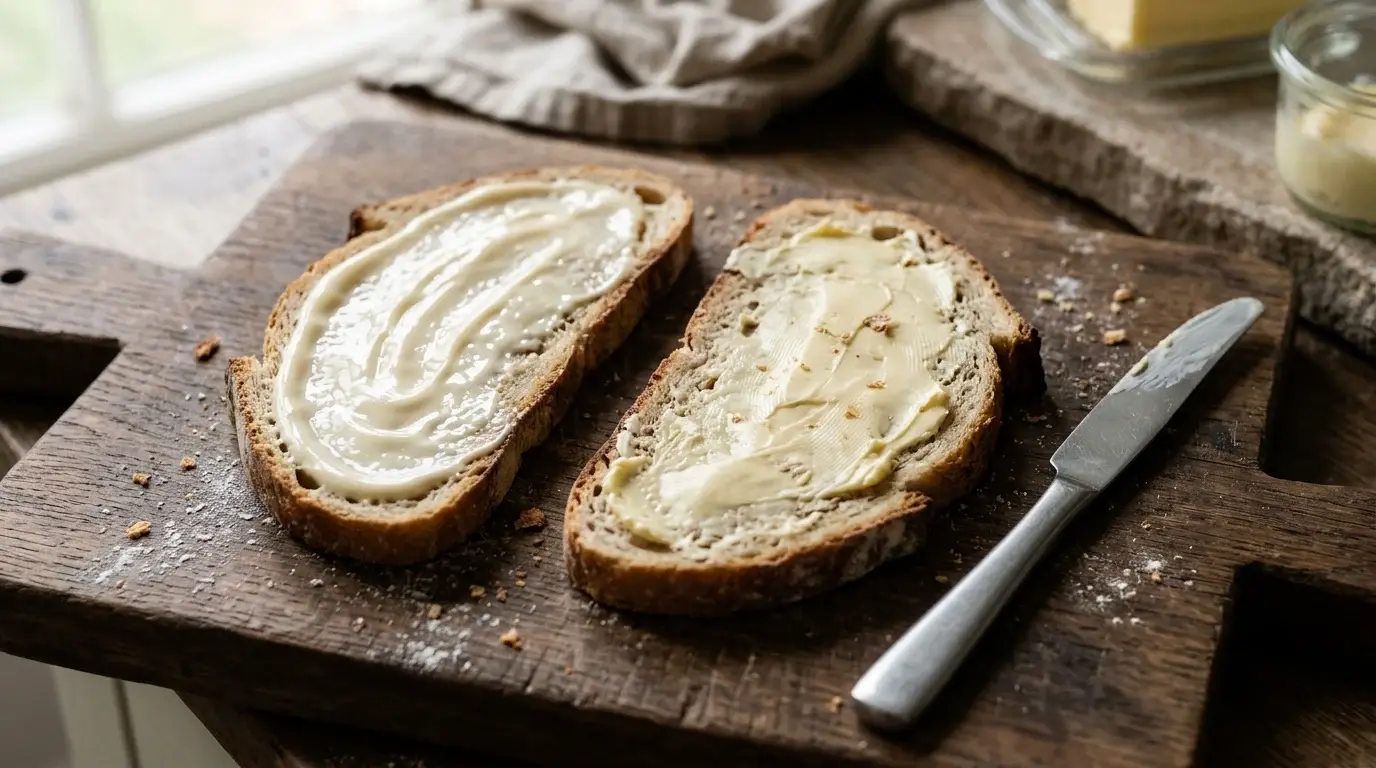
America’s Test Kitchen declines to pick a winner. In a randomized tasting, Cook’s Country cooks found that butter and mayonnaise both browned and crisped the bread well. Butter tasted buttery; mayonnaise carried a slight tang, probably from the lemon juice or other acid in jarred mayonnaise. The page’s verdict: “If you like the tang and convenience of readily spreadable mayo, go for it!” Extra-virgin olive oil also browned well but tasted too strongly of itself, so the same article advises against it.
Other publications lean harder. Tasting Table ran a head-to-head, written by Lindsay D. Mattison, with a milk bread and American cheese in a nonstick skillet over medium-low heat. The mayonnaise sandwich won overall on even browning and no advance prep, although the tasters preferred the flavor of the butter version, which they described as richer and nuttier. In that test the butter began to smoke at about the two-minute mark and needed a second flip. The mayonnaise gave off no smoke, but it bubbled at the edges and left more grease on fingers.
The same article cites smoke points of roughly 302 to 350 degrees Fahrenheit for butter and about 450 degrees for full-fat mayonnaise, the latter attributed to a cooking site called Firefighter Inside. That gap is the explanation Tasting Table offers for mayonnaise’s tolerance of a longer cook. Bon Appétit’s rules say the same thing in fewer words: mayonnaise spreads smoothly and has a higher smoke point than butter, and butter, if chosen, should be softened to room temperature first.
Butter keeps its defenders in the test kitchens. The ATK recipe in the method section below uses melted butter and nothing else, and the Cook’s Illustrated page on the subject reports that the butter sandwiches tasted more buttery while the mayonnaise ones had a slight but discernible tang, with both judged acceptable.
A smaller disagreement sits underneath. A roundup from Culture magazine reports that J. Kenji López-Alt of Serious Eats advises buttering the pan thoroughly, while America’s Test Kitchen says to butter the bread and not the pan. The Culture piece is a secondhand summary, so the original Serious Eats page, which could not be fetched for this article, would be the place to check the detail.
Pan heat and time
The advice on heat is consistent in direction and wildly different in clock time.
America’s Test Kitchen’s grilled cheese recipe calls for a heavy 12-inch skillet over low to medium-low heat and a cook of 5 to 10 minutes per side. The recipe notes say the slower cook produces a more developed, crispier exterior. Bon Appétit’s rules, by contrast, tell the cook to start in a cold pan and expect about 5 to 7 minutes, apparently for the whole sandwich, so that heat builds slowly and the cheese melts before the bread burns. Tasting Table’s heat guide gives the same cold-pan idea and the same 5 to 7 minutes once the pan is hot.
Tasting Table’s skillet instructions add a second wrinkle: start on medium, then drop to medium-low when the sandwich is flipped. The same piece lists settings for other equipment: an electric griddle held at 275 degrees Fahrenheit, a panini press on medium, and an air fryer at 375 degrees for 7 minutes with a flip halfway.
The numbers cannot all be right for the same sandwich, and the sources do not say why they differ. Pan thickness, bread, filling and stove all change the result, and none of the pages tested those variables against one another. What the pages do share is the warning that a too-hot pan browns the bread well ahead of the middle.
Lid or no lid
This is the cleanest disagreement of the lot.
Tasting Table’s heat guide says flatly not to cover the pan, because a lid traps moisture and makes the bread soggy. Another Tasting Table piece, by Angela Gervasi, takes the opposite line. It has the cook toast the sandwich uncovered, 3 to 4 minutes per side with mayonnaise on both outsides, and then cover the pan once both sides are golden, turn the heat down, and cook another minute or two. The reasoning given is that the lid holds in heat and steam, so the cheese melts without the bread burning.
The Takeout offers a third version, credited to the culinary creator Danny Huynh: low heat, toast one side uncovered until golden, flip, then cover. The covered time is about 1 minute for a thin sandwich, 2 for a medium one and 3 for a thick one. The piece also says the lid shields the toasted side from steam, that leaving it on too long can make the cheese clumpy as fats and proteins separate, and that bread which has gone soft can be flipped uncovered at the end to crisp again.
Chowhound’s article, by Hanan Z. Naqeeb, describes the covered pan as a small oven that warms the top and sides of the sandwich while the bottom toasts. It gives no times. It mentions that some cooks add a few drops of water just before covering to make steam, a move it recommends mainly for thick sandwiches and firm cheeses such as aged cheddar or gouda. The Takeout’s cheese-thickness article also mentions the water-and-lid trick, for the last few seconds, as a way to improve the cheese pull.
Put side by side, the pages split into two camps. One treats steam as the enemy of a crisp crust. The other treats it as a short, controlled finish that fixes cheese which would otherwise stay solid. The two timed covered-pan methods, Gervasi’s and Huynh’s, both brown the bread first and keep the lid on only for the last minute or few.
Slicing, shredding and bread thickness
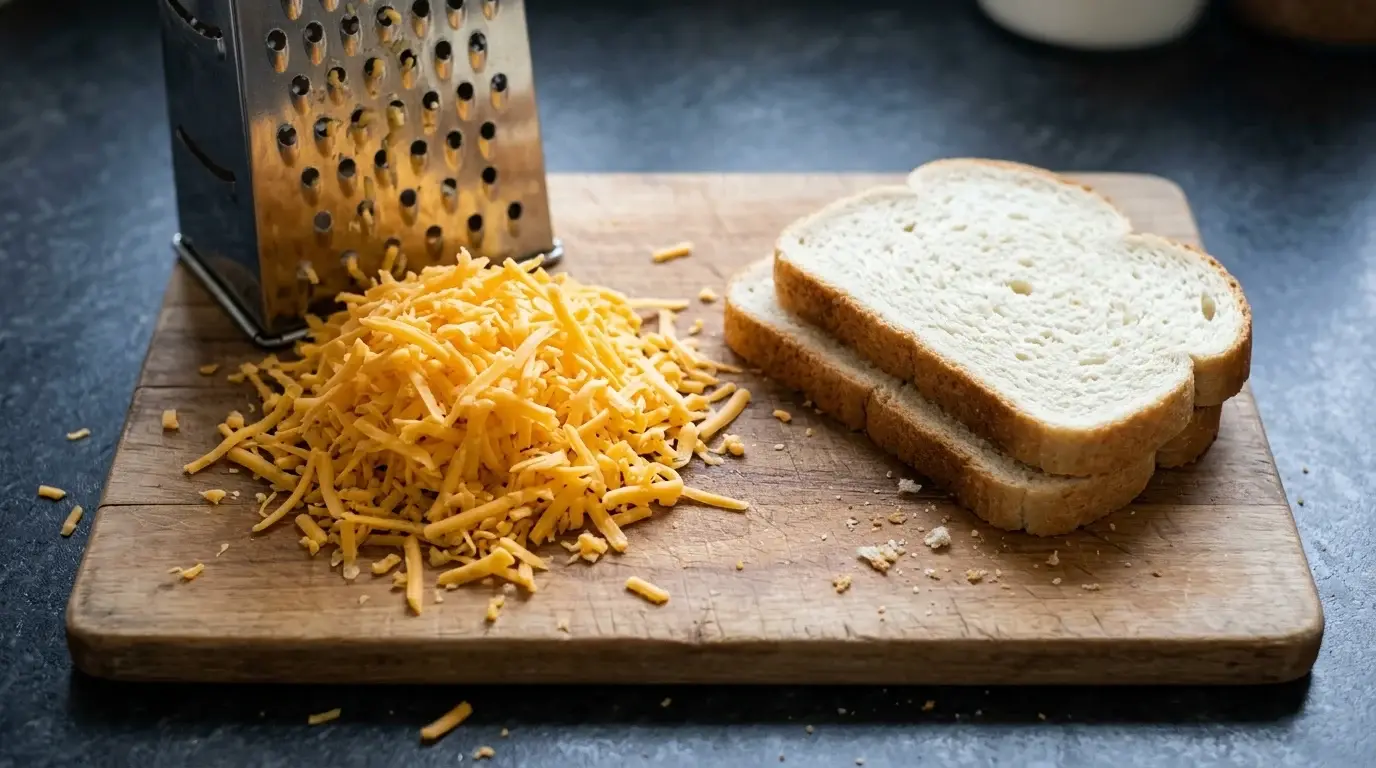
On cheese, America’s Test Kitchen sides with grating. Its recipe says to grate the cheese on the large holes of a box grater rather than slice it thinly, since grating gives an even layer that melts evenly. For aged cheeses like cheddar and gouda, the test kitchen also describes making a cheese paste first to help them melt, with a video linked from its list of grilled cheese ideas.
Slices have their own advocates, with a condition attached. Erin Goldsby of The Takeout calls thick slices “one small mistake that could negate all of your efforts” and recommends layering thin slices less than half an inch thick, because thick cheese melts unevenly and the bread can burn first. Tasting Table’s article on thick slices relays The Kitchn’s figure of about one-third to one-quarter cup of cheese per sandwich and notes that Food Network uses two slices between two pieces of bread. So the real split is less about slices versus shreds than about thin versus thick, with grating as one route to thin.
Bread thickness draws a narrower range of opinion. The ATK recipe specifies white sandwich bread cut one-half inch thick. The Tasting Table piece on cheese slices says HuffPost suggests bread about half an inch thick and warns that thick artisanal loaves can burn before the heat reaches the cheese. The Culture roundup, summarizing López-Alt, says to use bread that is not too thick and has no air bubbles, and Bon Appétit’s fifth rule is to choose a tight crumb, with white bread preferred, though it gives no thickness. None of the pages fetched for this article recommends a thick, open-crumbed artisanal loaf for the classic version.
A method from a published recipe
Because the sources disagree on so many details, the quantities and steps below come from a single recipe rather than a blend. America’s Test Kitchen’s Classic Grilled Cheese Sandwiches for Two lists:
- 3 ounces of cheese, mild cheddar preferred or a combination, grated on the large holes of a box grater (about 1 cup, lightly packed)
- 4 slices of white sandwich bread, one-half inch thick
- 2 tablespoons of salted butter, melted
The steps, as the recipe gives them:
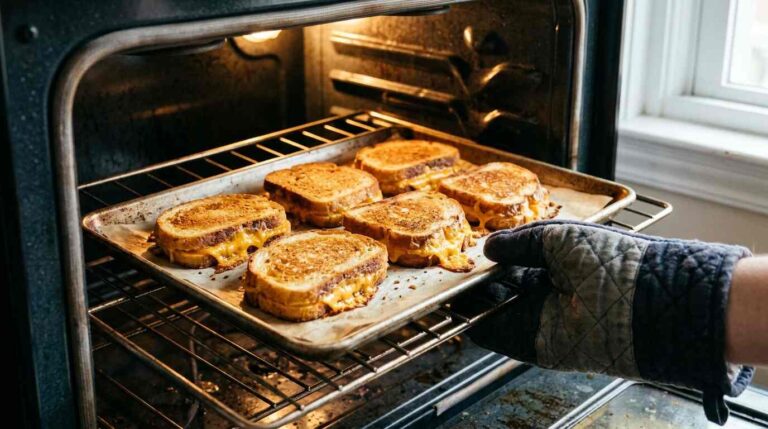
- Heat a heavy 12-inch skillet over low to medium-low heat. While it warms, sprinkle a portion of the cheese over two slices of bread, top each with another slice, and press down gently to set the sandwich.
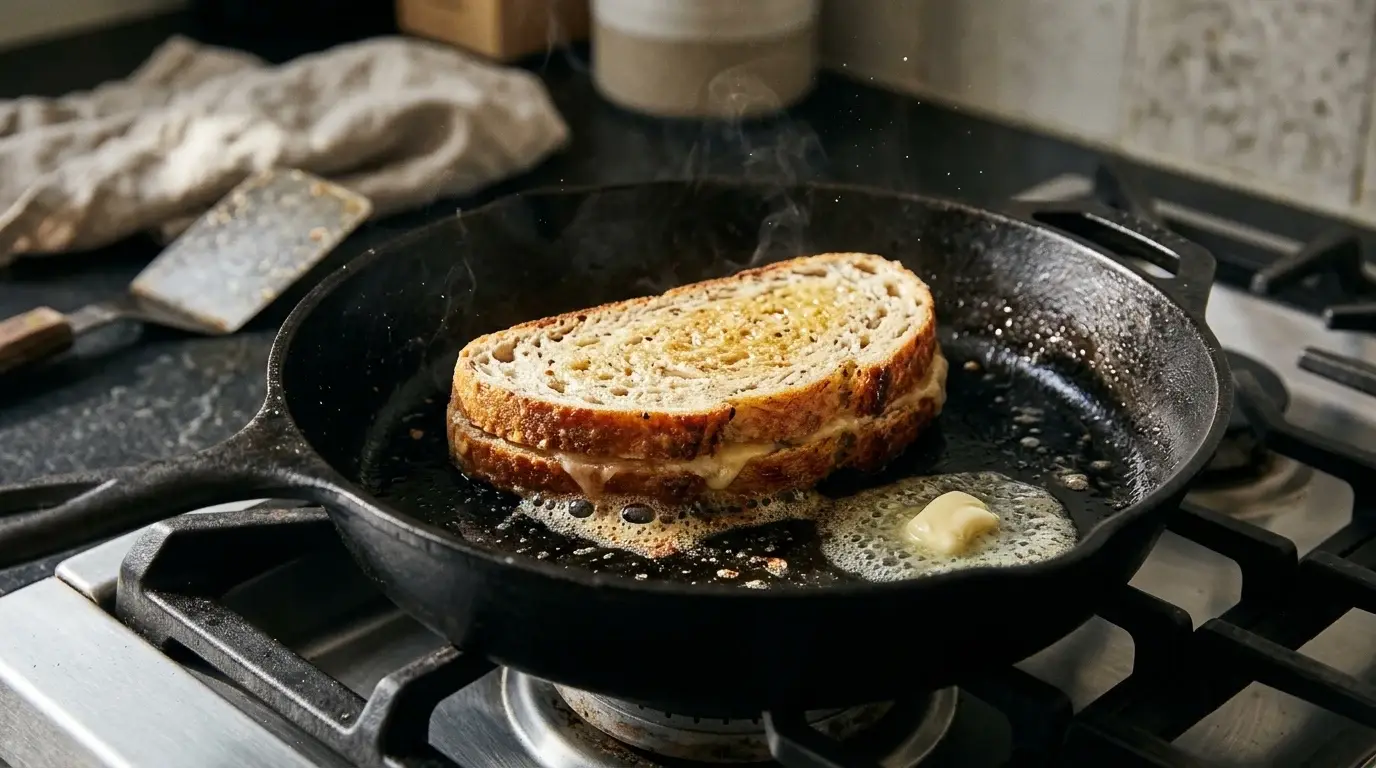
- Brush the tops of both sandwiches completely with half the melted butter. Lay each sandwich in the skillet, buttered side down, and brush the exposed side with the remaining butter.
- Cook until the crust is crisp and deep golden brown, 5 to 10 minutes per side. Turn the sandwich back to the first side for about 15 seconds to heat it again and crisp it, then serve.
The recipe’s notes repeat its main rules: butter the bread and not the skillet, use low to medium-low heat, grate rather than thinly slice, and press the sandwich gently once assembled. Elsewhere, America’s Test Kitchen suggests pressing with a cake pan set on top of the sandwich in the skillet, which mimics a panini press and gives an extra-crisp crust. The Culture roundup credits Adam Kuban of Serious Eats with a different approach, pressing with a spatula and sliding the sandwich around the pan for even color.
Cooks who prefer mayonnaise can follow the same steps with a thin coat of it in place of the butter, though no source gave a tested quantity, and the longer cook times above were set with butter. The Tasting Table lid method is the only fully timed mayonnaise version in these pages: 3 to 4 minutes per side uncovered, then a covered minute or two on reduced heat.
Fillings and the cut
Add-ins change the cooking. Bon Appétit’s rules say to avoid watery fillings and to cook mushrooms, onions or bacon beforehand, then balance the richness with something sharp, such as the pickled jalapeños and charred scallions in its featured recipe. Tasting Table’s heat guide makes the same point about pre-cooking onions, peppers and bacon, since they will not finish inside the sandwich. Chowhound adds that dense fillings like pickles, tomato, ham or jam need more heat, which is its argument for covering the pan.
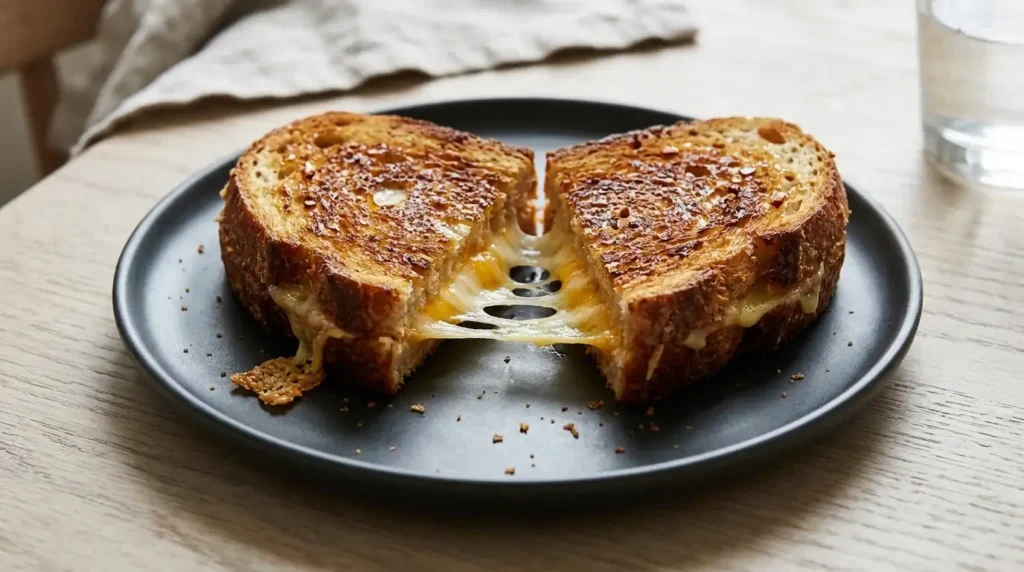
The Culture roundup also relays Bon Appétit’s advice to cut the finished sandwich diagonally, and notes that Buzzfeed explained the reasons, including variation in bite and a longer stretch of cheese when the halves are pulled apart. For the sandwich’s own backstory, see the history of the grilled cheese.
The question none of these pages settle is whether the lid or the cold-pan start does more for the cheese, because no source tested the two against each other with the same bread, cheese and pan.
Sources:
- America’s Test Kitchen, Should I Use Butter or Mayo on the Outside of My Grilled Cheese: https://www.americastestkitchen.com/articles/7184-should-i-use-butter-or-mayo-on-the-outside-of-my-grilled-cheese
- America’s Test Kitchen, Is Mayonnaise Better Than Butter on Grilled Cheese: https://www.americastestkitchen.com/how_tos/13705-is-mayonnaise-better-than-butter-on-grilled-cheese
- America’s Test Kitchen, 5 Ideas to Improve Your Grilled Cheese Game: https://www.americastestkitchen.com/articles/3068-5-ideas-to-improve-your-grilled-cheese-game
- Cook’s Illustrated, The Mayo Advantage for Grilled Cheese: https://www.americastestkitchen.com/cooksillustrated/how_tos/9570-the-mayo-advantage-for-grilled-cheese
- America’s Test Kitchen, Classic Grilled Cheese Sandwiches for Two: https://www.americastestkitchen.com/recipes/3782-classic-grilled-cheese-sandwiches-for-two
- Tasting Table, Butter vs. Mayo: https://www.tastingtable.com/1161681/butter-vs-mayo-we-resolve-the-debate-over-which-makes-a-better-grilled-cheese
- Tasting Table, The Heat Mistake You Could Be Making When Cooking a Grilled Cheese: https://www.tastingtable.com/1439075/heat-mistake-cooking-grilled-cheese
- Tasting Table, The Frying Pan Mistake That’s Giving You Lackluster Grilled Cheese: https://www.tastingtable.com/1683463/best-grilled-cheese-cover-with-pan-lid
- Tasting Table, Why It’s a Bad Idea to Use Thick Cheese Slices for Grilled Cheese: https://www.tastingtable.com/859154/why-its-a-bad-idea-to-use-thick-cheese-slices-for-grilled-cheese
- The Takeout, The Grilled Cheese Shortcut for a Satisfyingly Smooth Melt Every Time: https://www.thetakeout.com/2142591/grilled-cheese-shortcut-perfect-melt-pan-lid/
- The Takeout, One Little Mistake Could Be Ruining Your Grilled Cheese Sandwich: https://www.thetakeout.com/1855327/grilled-cheese-mistake-thick-slices-cheese/
- Chowhound, This One Simple Move Will Make Your Grilled Cheese Melt Like a Dream: https://chowhound.com/1929889/grilled-cheese-melt-perfectly-cover-pan-with-lid
- Bon Appétit via Yahoo, 6 Rules for a Perfect Grilled Cheese, Every Time: https://www.yahoo.com/lifestyle/6-rules-perfect-grilled-cheese-100000176.html
- culture: the word on cheese, The Scientific Solution to the Perfect Grilled Cheese: https://culturecheesemag.com/cheese-bites/scientific-solution-perfect-grilled-cheese/
- Reactions (video), The Science of the Perfect Grilled Cheese Sandwich: https://www.youtube.com/watch?v=rttkpPFNkmY