

In this story
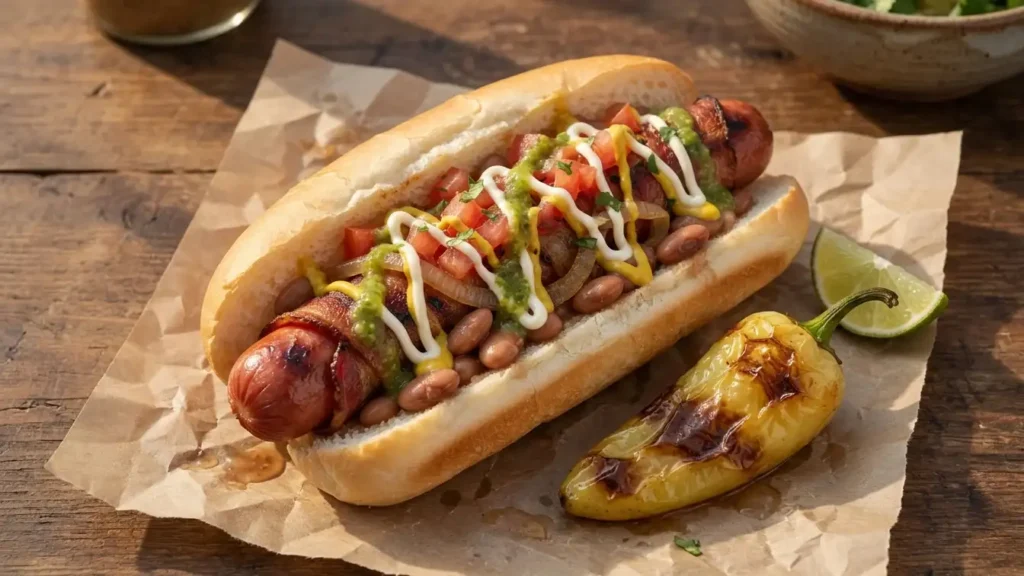
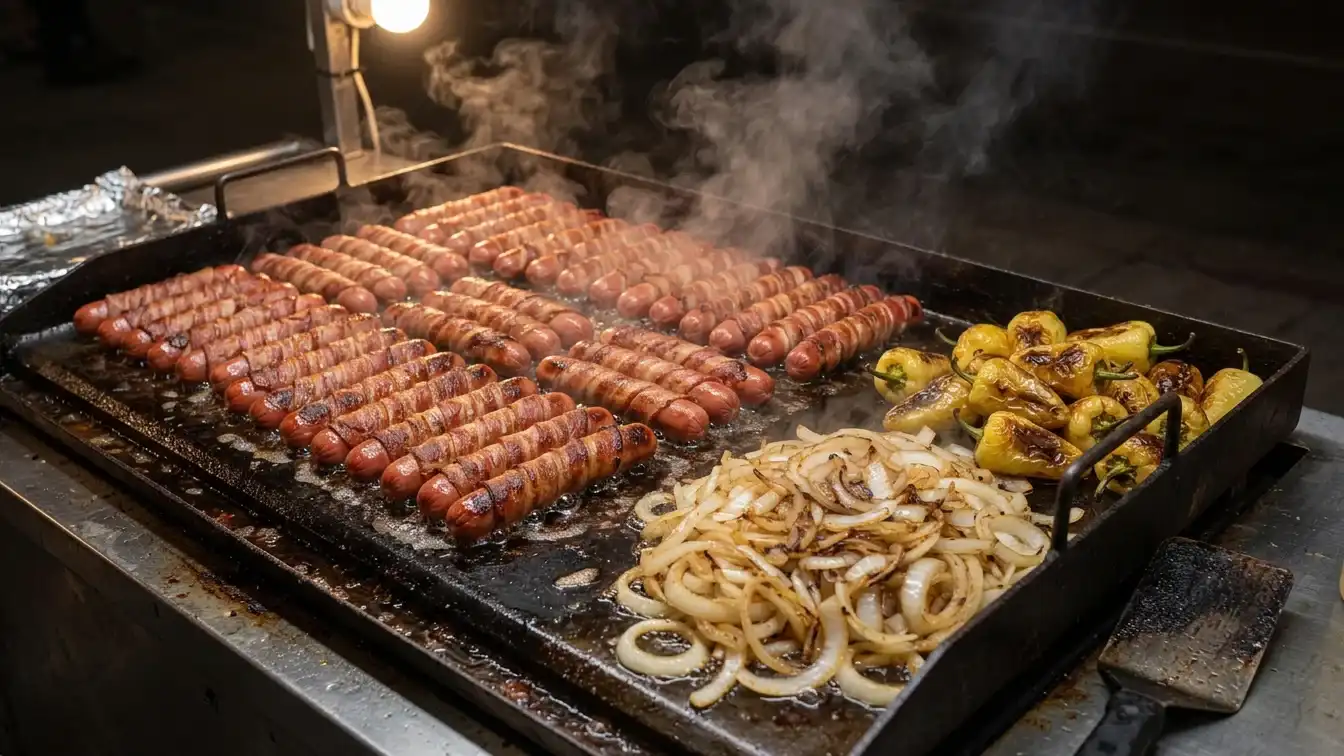
The Sonoran hot dog starts with a frank wrapped tight in bacon and cooked on a griddle until the bacon crisps and seals. It goes into a soft, split bolillo roll, not a standard bun, and then the toppings pile on: pinto beans, griddled onions, chopped tomatoes, mayonnaise, mustard and jalapeño salsa, with a roasted yellow chile on the side. It is a Mexican street food built on an American sausage, and it now belongs as much to Tucson as to the Sonoran capital where it took shape.
Video: Love and Hot Dogs, learn about the man that put the Sonoran Hot Dog on the map, from the AZPM YouTube channel
What goes on it
The standard build
Visit Tucson, the city’s tourism office, laid out the formula in a January 2025 guide: an all-beef hot dog wrapped in bacon and grilled until crisp, set in a warm bolillo, then topped with chopped tomatoes, griddled onions, pinto beans, mayo, yellow mustard and jalapeño salsa. A grilled yellow chile pepper comes on the side.
A soft roll, not a bun
The bread is part of the definition. The James Beard Foundation’s 2018 America’s Classics announcement described fans converging on Tucson’s El Güero Canelo for bacon-wrapped franks stuffed into short bolillos, and noted that owner Daniel Contreras runs a bakery that makes his own buns.
Where it came from
Three origin stories
The early history is unsettled, and the sources say so. Visit Tucson gives two theories, one that the dog appeared at baseball games in Sonora in the 1940s, and another that it arrived in Sonora with a traveling circus. A Munchies essay by a writer from Hermosillo repeated the circus claim, attributing it to unnamed scholars who say a circus introduced the hot dog to Sonorans in the early 20th century, and also credited the invention to a man known as Don Vicente, while admitting that no one knows what really happened.
Hermosillo and the university gates
The more solid ground is Hermosillo in the second half of the century. The Munchies essay places bacon-wrapped franks on the city’s streets by the early 1950s, and describes vendors two decades later gathering at the entrance of the University of Sonora and shouting out their toppings. Visit Tucson puts the dog’s rise in Hermosillo in the 1980s, when University of Sonora students bought them from carts across campus. The Beard Foundation framed the dog as a case of influences moving from the U.S. to Mexico and back, with elaborately dressed hot dogs first appearing as novelty imports on Hermosillo’s streets.
How Tucson made it its own
El Güero Canelo and the 12th Avenue stands
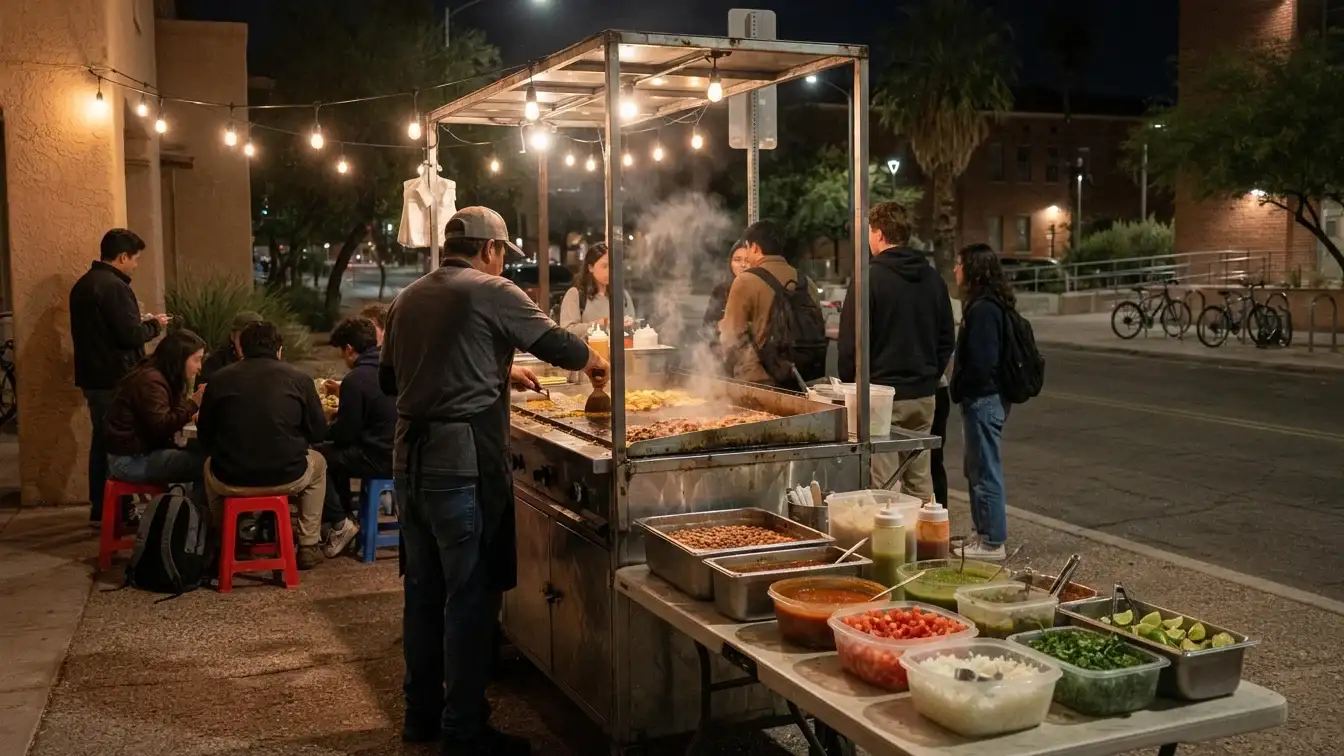
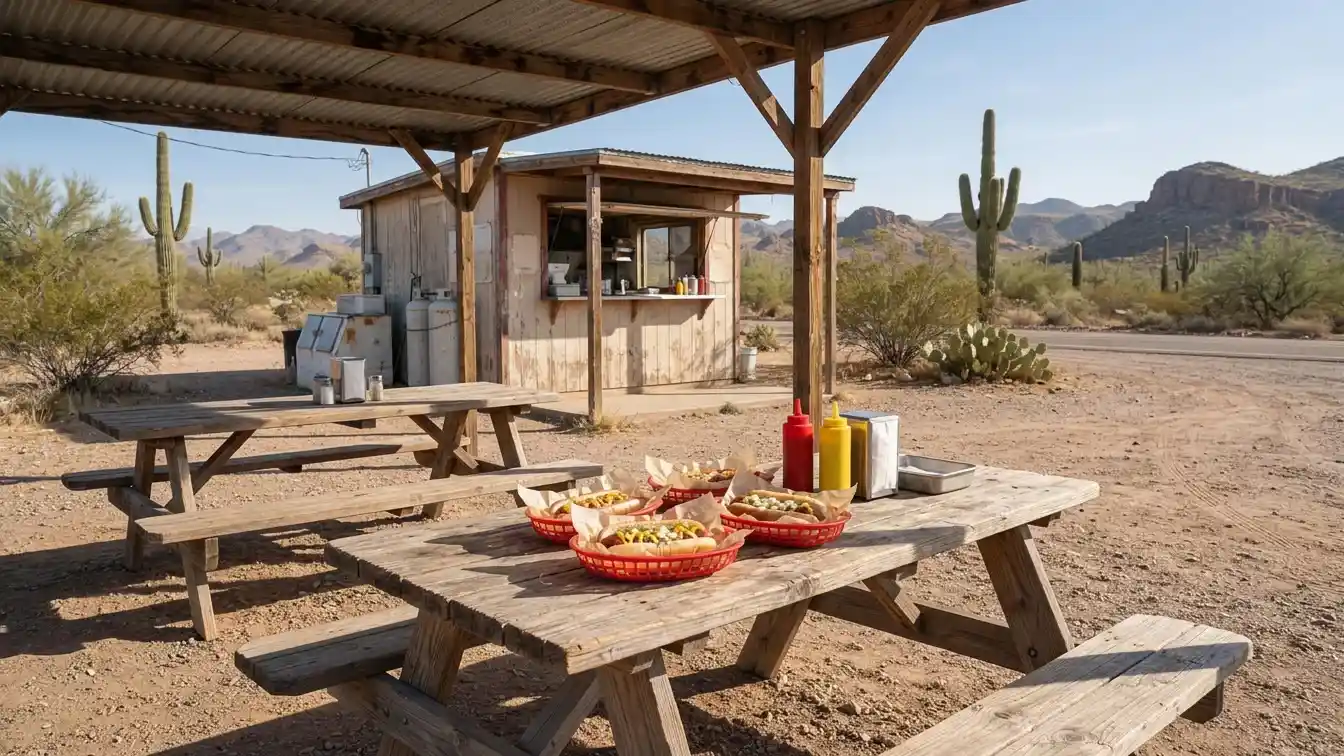
The dog crossed the border with the people who loved it. Munchies reported that in 1993 Daniel Contreras was selling carne asada tacos from a four-foot cart he called El Güero Canelo, after his childhood nickname, and that a friend suggested adding bacon-wrapped hot dogs after customers kept asking for the Sonoran version. The Beard Foundation recorded that Contreras, who grew up in Sonora, opened the original stand in 1993 at age 33 and built it into a destination with picnic tables and a pickup window, three Tucson locations and one in Phoenix.
A Beard award for a hot dog
In January 2018 the foundation named El Güero Canelo one of five America’s Classics, its honor for regional, often family-owned restaurants with lasting local appeal. The citation’s verdict on the city was direct: “Today, Tucson is the American epicenter, and Daniel Contreras is the leading hotdoguero.”
A city of dogueros
Many stands, one style
El Güero Canelo has plenty of company. Visit Tucson’s guide lists BK Carne Asada & Hot Dogs, with locations on 12th Avenue and 1st Avenue, the El Sinaloense Hot Dog Cart on North Alvernon Way, Ruiz Hot Dogs Los Chipilones on South 6th Avenue and Aqui Con El Nene among the city’s go-to stops.
A gastronomy city
The dog sits inside a larger claim about Tucson’s food. The organization that manages the city’s designation calls Tucson the first U.S. Creative City of Gastronomy in UNESCO’s network.
The Los Angeles cousin
Danger dogs
The bacon-wrapped hot dog also traveled west, and changed on the way. The Munchies essay compared Hermosillo’s dog to the version sold by street vendors in Los Angeles, which uses a regular soft hot dog bun instead of a bolillo and usually comes with only grilled onions and bell peppers, without beans, tomato or salsa. They have been dubbed danger dogs rather than Sonoran dogs, and the essay’s headline makes its author’s view plain: Los Angeles, it argues, ruined the original.
Where it fits among regional dogs
Regional hot dogs tend to come with rules. Chicago’s has its own fixed toppings and a poppy seed bun, Coney Island has Nathan’s, and the Sonoran dog belongs to the borderlands. Whether any of them counts as a sandwich is a separate argument, covered in GrillCheesy’s hot dog debate. For another Mexican street sandwich built on a soft roll, see the torta.
A wide cast-iron griddle handles the bacon-wrapped dogs, the onions and the rolls at the same time:
- Lodge Pro-Grid Reversible Grill/Griddle, PFAS-Free, 20 x 10.5 Inches: a two-burner cast-iron plate with a flat griddle side for bacon-wrapped franks and onions. See it on Amazon (affiliate link)
Video: Reviewing the Lodge Cast Iron Reversible Grill Griddle, from the Mr. Cast Iron YouTube channel
As an Amazon Associate I earn from qualifying purchases. A commission may be earned if you buy through this link, at no extra cost to you.
Sources
- Visit Tucson, Where to Find the Best Sonoran Hot Dogs in Tucson (2025): https://visittucson.org/blog/post/where-to-find-the-best-sonoran-hot-dogs-in-tucson
- James Beard Foundation, Introducing the 2018 America’s Classics Winners: https://jamesbeard.org/blog/introducing-the-2018-americas-classics-winners
- Munchies, How LA Destroyed Northern Mexico’s Bacon-Wrapped Hot Dogs: https://munchies.vice.com/articles/how-la-destroyed-mexicos-bacon-wrapped-hot-dogs
- Tucson City of Gastronomy: https://tucson.cityofgastronomy.org/


