In this story
A dry mustard seed is not hot. Neither is a spoonful of mustard powder straight from the tin. The burn that runs up the nose from a strong English or Chinese mustard is manufactured on the spot, in the minutes after the seed is broken and wet, by a reaction the plant evolved to punish anything that chews it. Cooks control that reaction with two simple tools, the temperature of the water and the timing of the vinegar.
Video: The Science of Mustard with Dan Kohler, from the Hallmark Channel YouTube channel
Two compounds kept apart
Sinigrin and myrosinase
The seed stores the ingredients for its weapon separately. Simon Cotton of the University of Birmingham, writing for the University of Bristol’s Molecule of the Month in January 2024, explained that mustard seed holds sinigrin, a glucosinolate the plant keeps as a defense against being eaten by herbivores. Sinigrin on its own is harmless.
The second part is an enzyme, myrosinase. When chewing or grinding breaks open the plant’s cells, the enzyme meets the sinigrin and breaks it down. One of the products is allyl isothiocyanate, an oily, pungent compound that does the actual work of repelling animals.
Water starts it
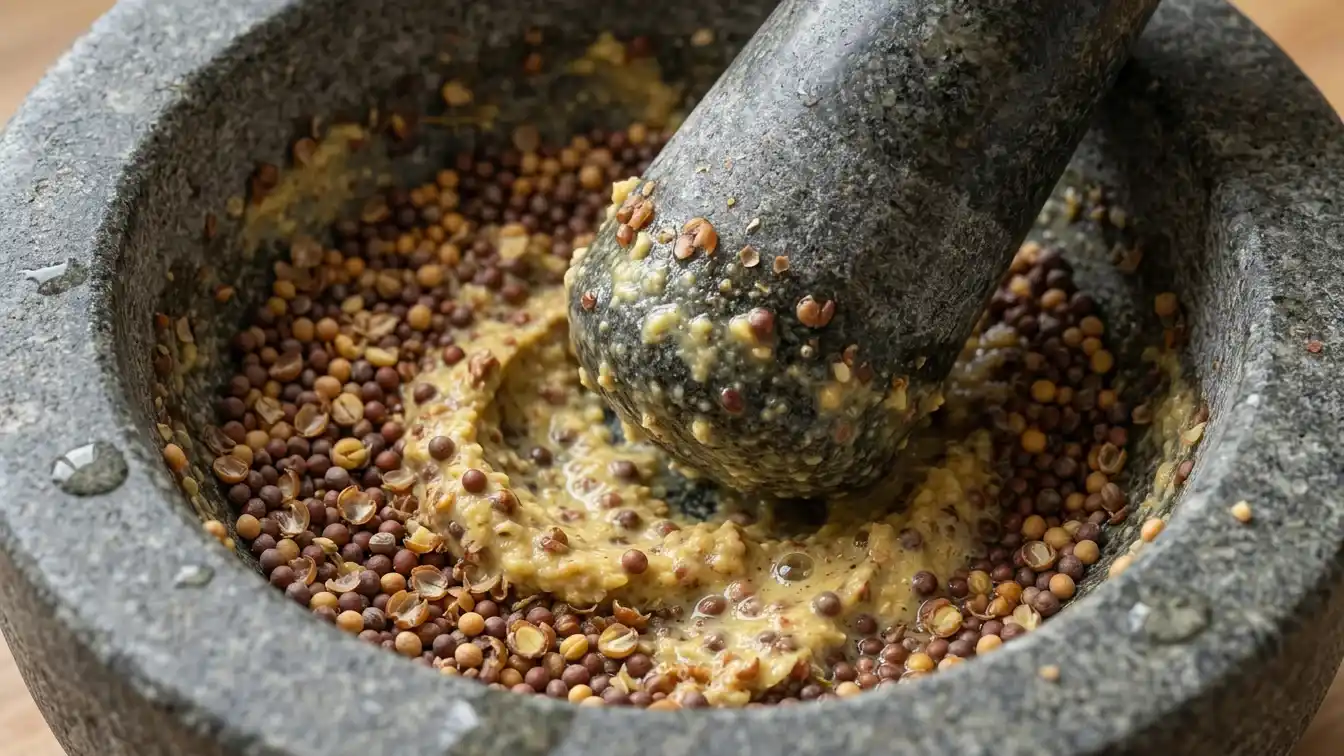
The reaction needs moisture. Popular Science, in a July 2022 guide by Sandra Gutierrez G., described it as an interaction that happens when the seed is crushed in a wet environment, a mouth or a mortar with a little water, producing the volatile compound responsible for mustard’s sharp heat and its sting in the nasal passages.
What the burn actually is
Pain, not heat
The sensation is a trick played on the nervous system. Cotton’s Bristol profile explains that allyl isothiocyanate binds to the TRPA1 receptor, a channel that senses cool temperatures and pain, and sets off a pain signal. It also activates TRPV1, the receptor triggered by capsaicin and by temperatures above 42 degrees Celsius, so the brain receives both a hot signal and a pain signal at once.
The same molecule in other roots
That is why mustard, horseradish and wasabi feel related. Cotton notes that both horseradish and wasabi release allyl isothiocyanate as well.
Black, brown and yellow seeds
Two different glucosinolates
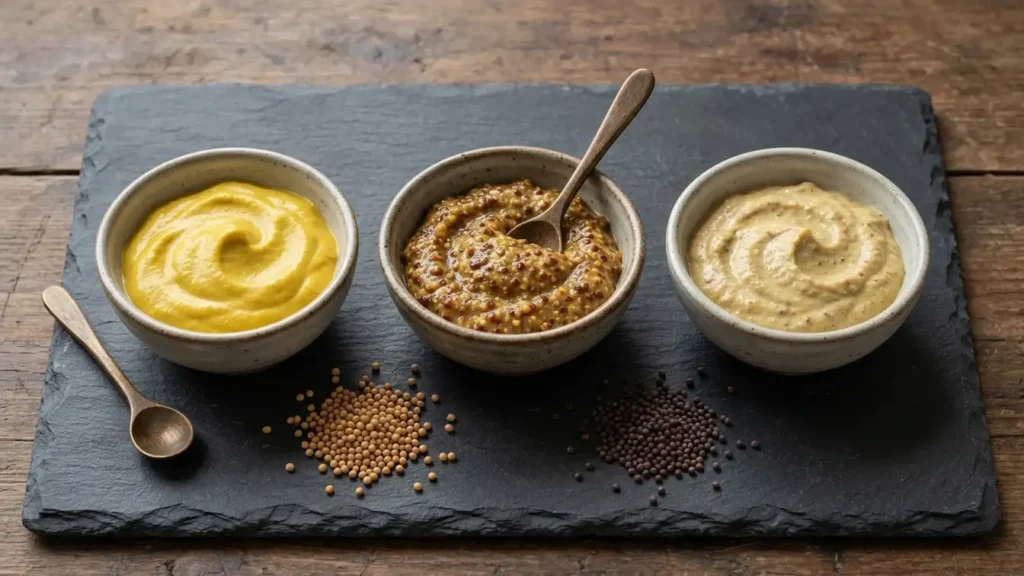
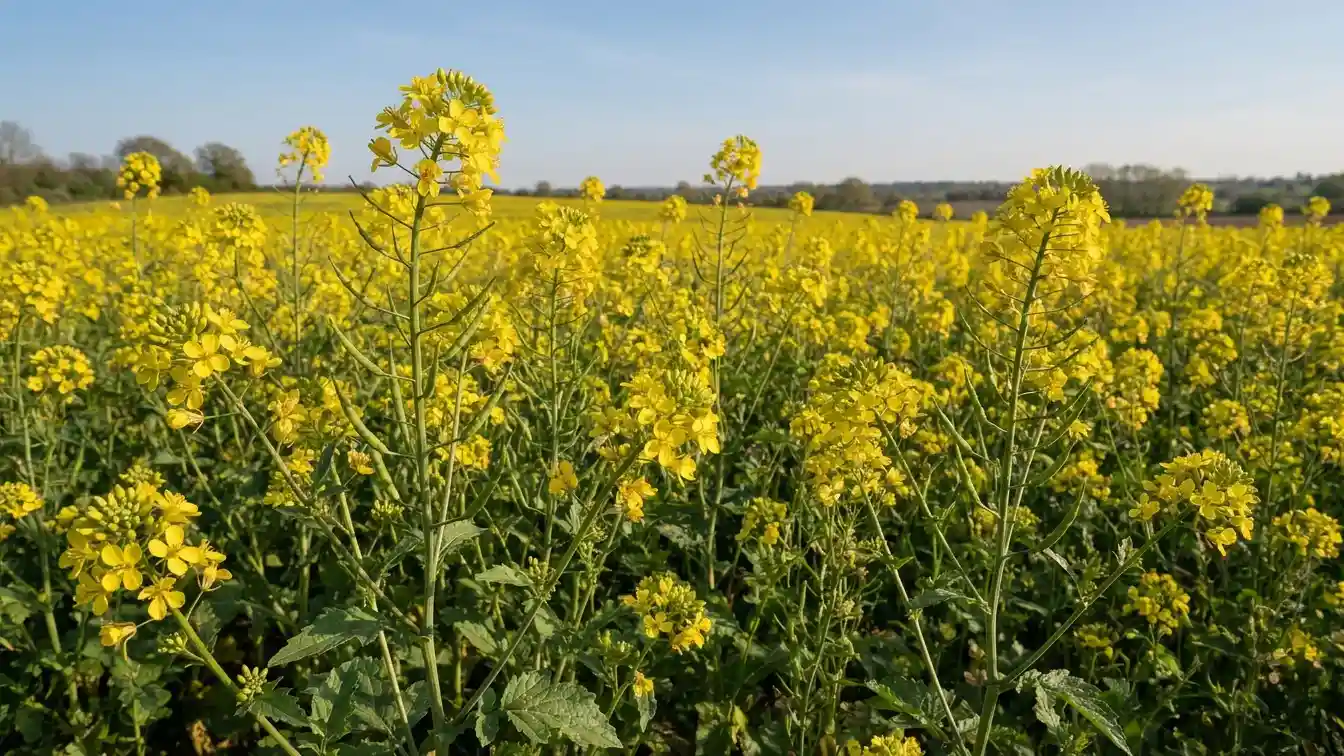
Not all mustard seed carries the same chemistry. A scientific review of mustard species archived in PubMed Central describes white or yellow mustard, Sinapis alba, as the most used mustard species in Europe. Its characteristic glucosinolate is sinalbin, which myrosinase converts to 4-hydroxybenzyl isothiocyanate. The review notes that white mustard is milder in taste than the brown and black species.
Cotton’s profile likewise names sinalbin as the glucosinolate of white mustard and sinigrin, the source of allyl isothiocyanate, as the compound behind the sharp bite. A yellow mustard and a brown one can therefore differ in heat before anyone adds a drop of vinegar.
Cold water, hot water
Temperature sets the speed and the ceiling
Water temperature changes the result. Popular Science reported that cooler water slows the myrosinase reaction, so the mustard takes longer to turn spicy, while water that is too hot deactivates the enzyme and halts the reaction altogether. Food scientist Loong-Tak Lim, quoted in the article, put the ideal range between room temperature and slightly warmer. The article’s rule for home cooks was blunt: “the higher it is, the milder your mustard will be.”
Ten minutes of patience
The reaction also needs time. America’s Test Kitchen tested the advice printed by Colman’s and McCormick to mix dry mustard with water and let it sit for 10 minutes. In its blooming test, tasters compared the just-mixed paste to cardboard and rancid walnuts, but after 10 minutes it had developed heat and a well-balanced mustard flavor. Colman’s own instructions on its powder, as printed on retail listings, say to mix with cold water and let the paste stand for 10 minutes to develop full flavor.
Vinegar locks the level
Stopping the enzyme on purpose
Acid ends the reaction. Popular Science explained that vinegar, being highly acidic, essentially stops the enzyme, so once it is added the mustard’s heat is fixed at whatever level it had reached. That turns timing into a control. Vinegar stirred in right away gives a milder mustard; vinegar added after the paste has bloomed captures more of the burn.
When blooming does not matter
The Test Kitchen also found a limit. When it bloomed mustard powder in cold water before adding it to macaroni and cheese, blind tasters noticed no difference, and the test concluded that blooming is unnecessary when the powder goes into a rub or barbecue sauce with other ingredients. It is worth the wait only when the mustard stands alone, spread on a sandwich or dabbed on ham.
Mustard on the sandwich
Why the deli jar bites
The chemistry shows up at the counter. The mustard on a Nathan’s hot dog, the yellow stripe on a Chicago-style dog and the smear on a Black Forest ham sandwich each reflect a producer’s choice of seed and acid. A fresh batch made from powder is the only version where the cook decides how hot it gets. For more kitchen chemistry behind sandwiches, see GrillCheesy’s explainers on why cheese melts and turns greasy and why sandwiches get soggy.

Mustard powder is the easiest way to test the cold-water effect at home:
- Colman’s Mustard Powder, 16-Ounce Cans (Pack of 3): the English mustard powder whose directions call for cold water and a 10-minute rest. See it on Amazon (affiliate link)
Video: Chef Nicky's Colman's vs. S&B Mustard Powder Taste Test, from the ChefNickyMorse YouTube channel
As an Amazon Associate I earn from qualifying purchases. A commission may be earned if you buy through this link, at no extra cost to you.
Sources
- University of Bristol, Molecule of the Month: Allyl Isothiocyanate (Simon Cotton, 2024): https://www.chm.bris.ac.uk/motm/allylisothiocyanate/aitch.htm
- Popular Science, When the mustard shortage hits, make your own (2022): https://www.popsci.com/diy/how-to-make-mustard/
- PubMed Central, review of mustard species: https://pmc.ncbi.nlm.nih.gov/articles/PMC8472142
- America’s Test Kitchen, “Blooming” Dry Mustard: https://www.americastestkitchen.com/how_tos/5616-blooming-dry-mustard
- Albion Fine Foods, Colman’s mustard powder directions: https://www.albionfinefoods.com/mustard-powder-colmans/p/4408