In this story
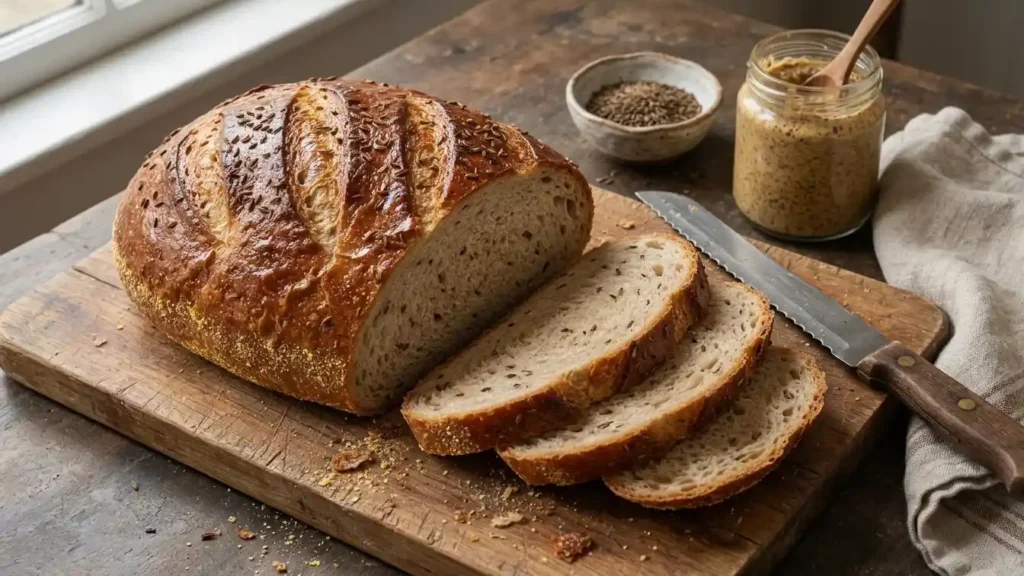
The rye bread under a pastrami sandwich is mostly wheat. That is the first surprise in the American deli loaf, a soft, fine-crumbed bread with a glossy crust, a faint sourness and, usually, a scattering of caraway seeds. The rye is there for flavor and tang. The wheat is there so the bread can hold a stack of meat without collapsing. Behind that compromise sits a long line of Eastern European baking, a quirk of grain chemistry and one of the most famous advertising slogans in American history.
Video: Jewish Corn Rye Bread, from the Yiddish Book Center YouTube channel
A bread adopted, not invented
Local loaves in every Jewish community
Jewish rye does not have a single birthplace. Bread author Stanley Ginsberg, interviewed for My Jewish Learning’s The Nosher in June 2017, described Jewish baking as adaptive: “wherever in Europe Jews established communities they adopted the local breads,” changing them where needed to fit kashrut, the Jewish dietary laws. By that measure, he said, the dark, sweet-sour ryes of Lithuania are every bit as Jewish as the light caraway ryes of southern Poland and Ukraine.
What crossed the ocean
Only some of those breads survived the move. Ginsberg noted that the lighter, low-percentage ryes adapted best to American conditions, while the heavier, high-percentage ryes of Lithuania, Belarus and northern Poland nearly disappeared by the end of World War II. His simplest definition of Jewish rye in the U.S. is practical: the rye bread routinely sold in the bakeries of Jewish neighborhoods in New York, Boston, Chicago and other cities where Eastern European Jews settled.
Why rye fights back in the mixer
Pentosans instead of gluten
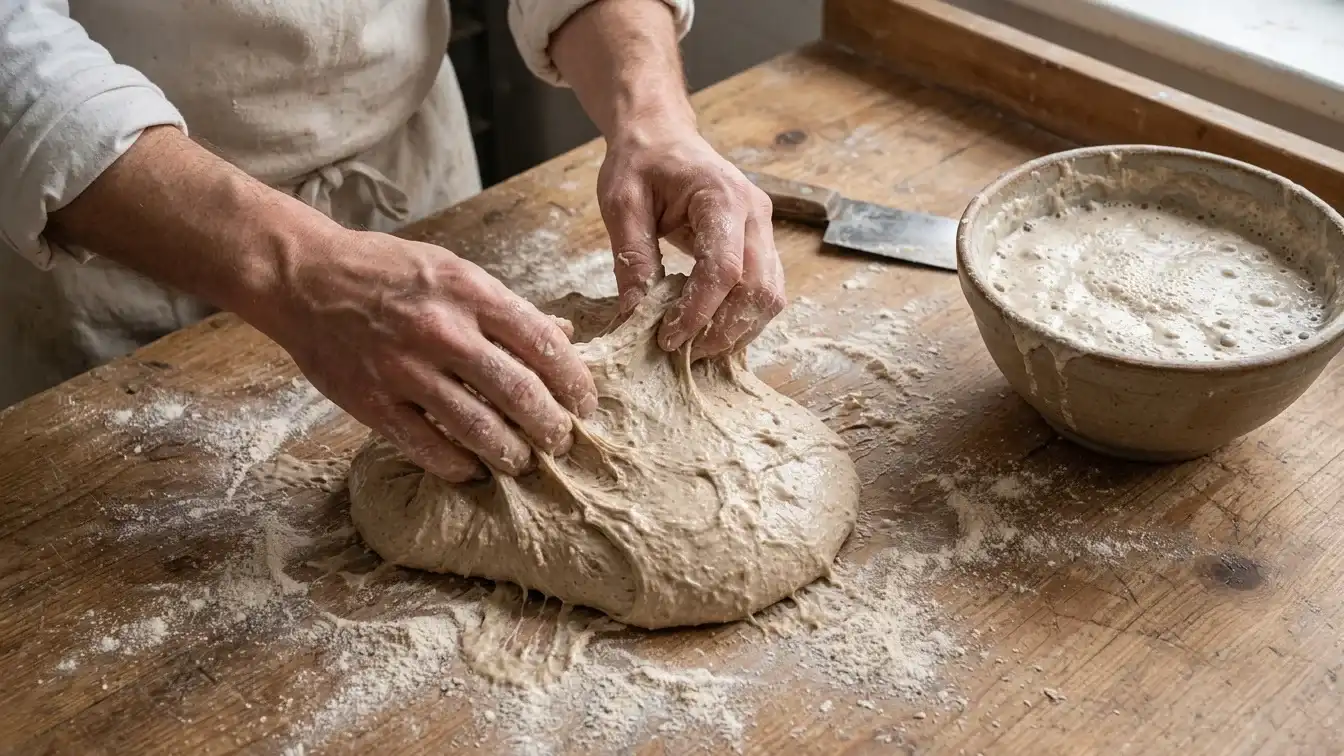
Rye is hard to bake with on its own, and the reason is chemistry. King Arthur Baking explained in a March 2016 guide to Jewish rye that rye flour does not develop gluten the way wheat flour does, no matter how long it is kneaded. Rye is high in pentosans, plant compounds that absorb a great deal of water and get in the way of gluten forming. They are also fragile, so a rye dough worked too hard breaks down and turns stickier.
That is why an all-rye loaf is dense and compact, and why the American deli loaf leans on wheat. In King Arthur’s own Jewish rye formula, unbleached all-purpose flour supplies the gluten strands that let the dough rise tall, while rye flour, a rye sour and a soaker made from old bread supply flavor.
The sour
The tang comes from fermentation. Jane and Michael Stern, writing in Saveur in March 2011, described good Jewish rye as an American hybrid of rye and white wheat flour with a fine crumb suited to sandwiches, its sourness usually coming from a sourdough starter. Zingerman’s Bakehouse in Ann Arbor, their top pick, used a high ratio of rye to wheat, a rye-sour culture and a mash made from previously baked bread.
Caraway, corn and crust
Seeds and cornmeal
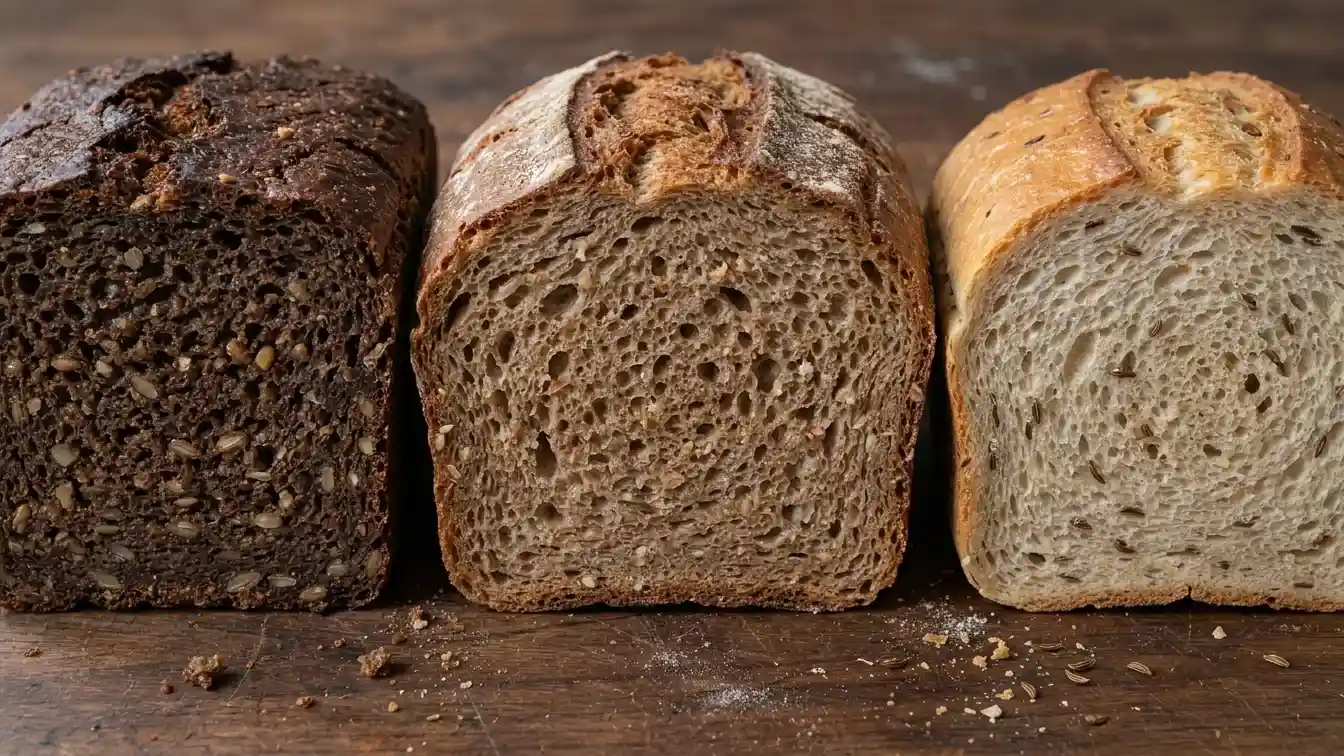
The Sterns’ description also explains two familiar details. Caraway seeds add the flavor many Americans think of as rye. Cornmeal on the bottom of the loaf is what gives “corn rye” its nickname.
A shine or a crackle
Crust finishes are a matter of house style. An egg-wash glaze gives the shine seen on many deli loaves. Zingerman’s instead brushed its loaves with water, baked them with steam and brushed them again while hot, producing what the Sterns called a crinkly, crisp crust.
The complaint about New York rye
Great meat, weak bread
Not everyone thinks the deli loaf has held up. The Sterns opened their Saveur piece by calling the rye at New York delis anemic, comparing a loaf at 2nd Ave Deli to Wonder bread and faulting Katz’s and Carnegie Deli for pairing excellent meat with bread whose crust and crumb were nearly indistinguishable. They found better rye outside the city: at Shapiro’s in Indianapolis, founded in 1905, where loaves are baked overnight and cut extra thick, and at Langer’s in Los Angeles, where rye from Bea’s Bakery in Tarzana is double-baked in-house and comes out moist with a crisp crust.
GrillCheesy has covered both of those counters, Katz’s Delicatessen and Langer’s Deli, along with Zingerman’s Deli, the Ann Arbor deli that sells the Bakehouse’s loaves.
Levy’s and the slogan
You don’t have to be Jewish
The bread’s reputation outside Jewish neighborhoods owes a lot to a Brooklyn bakery’s posters. Levy’s, a Brooklyn bakery popular with its Jewish neighbors, hired the agency Doyle Dane Bernbach, and in 1961 copywriter Judy Protas wrote the line “You don’t have to be Jewish to love Levy’s Real Jewish Rye,” according to Tablet’s report on her death at 91. Others have also been credited with the slogan over the years. The campaign ran from 1961 through the 1970s, with posters in the New York subway showing a wide range of faces.
Rye in a sandwich
Built for the stack
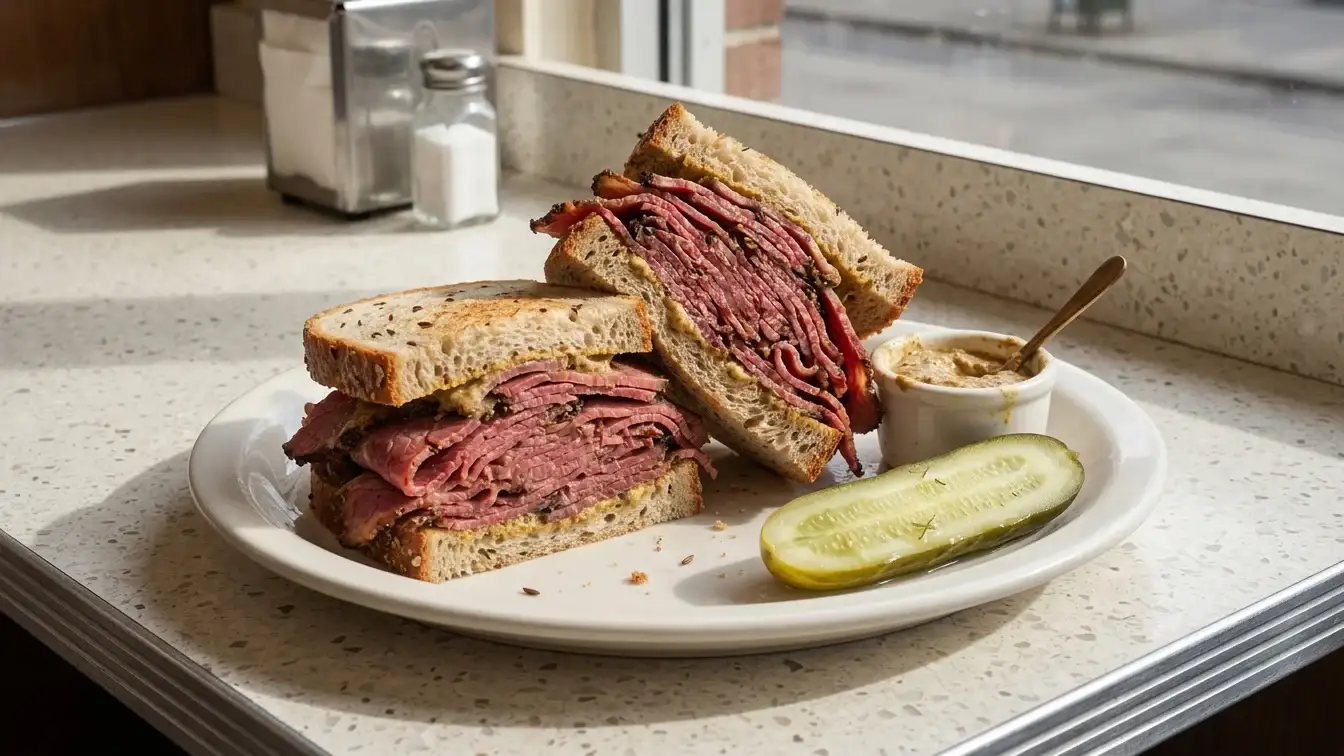
The gluten that wheat brings is what lets the deli loaf rise tall and slice thin enough for a stacked sandwich. Rye is the bread of the patty melt, griddled with onions and Swiss, and of the deli pairings with sauerkraut. For a broader look at which loaves suit a hot pan, see GrillCheesy’s guide to the best bread for grilled cheese, and for the industrial loaf that changed how Americans bought bread, the history of sliced bread.
Home bakers working toward a deli loaf need rye flour and whole caraway:
- Bob’s Red Mill Organic Dark Rye Flour, 20oz (4 Pack): whole-grain dark rye flour for blending with wheat in a deli-style loaf. See it on Amazon (affiliate link)
- Frontier Co-op Whole Caraway Seed, 1lb Bulk Bag: whole caraway seeds for seeded rye. See it on Amazon (affiliate link)
Video: Is Bob's Red Mill Organic Dark Rye Flour Worth Buying?, from the Joyful Gems by Jimmy Smith YouTube channel
As an Amazon Associate I earn from qualifying purchases. A commission may be earned if you buy through this link, at no extra cost to you.
Sources
- My Jewish Learning (The Nosher), What Makes Rye Bread Jewish? (2017): https://www.myjewishlearning.com/the-nosher/what-makes-rye-bread-jewish/
- King Arthur Baking, Make Jewish rye bread, part 2 (2016): https://www.kingarthurbaking.com/blog/2016/03/23/make-jewish-rye-bread-part-2
- Saveur, Bread Alone: In Search of the Best Rye Bread in America (2011): https://saveur.com/article/Travels/best-rye-breads-in-america
- Tablet, Woman Behind Levy’s Jewish Rye Slogan Dies: https://www.tabletmag.com/scroll/159401/woman-behind-levys-jewish-rye-slogan-dies