In this story
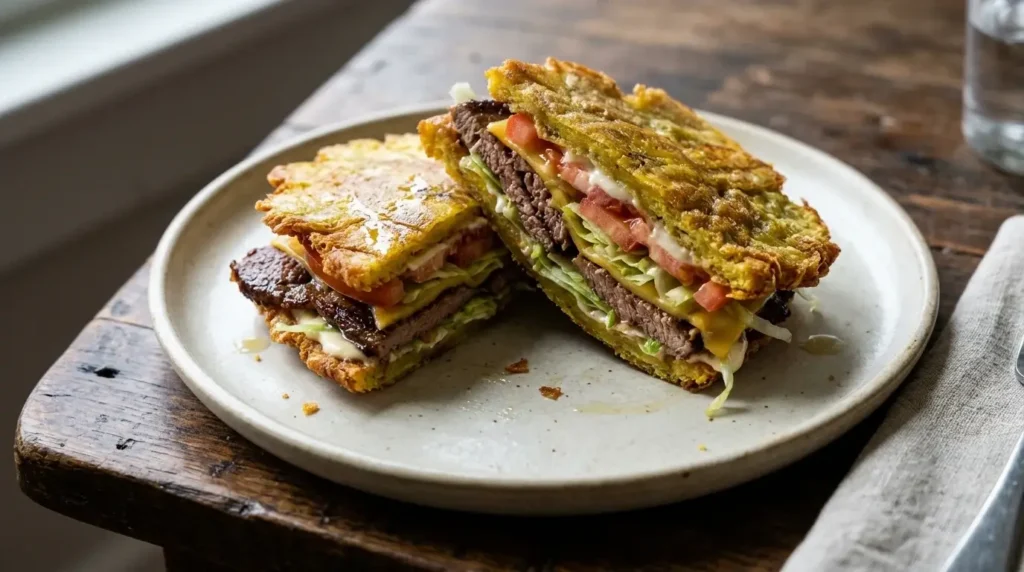
The jibarito is a Chicago sandwich that replaces bread with fried, flattened green plantains. Steak, garlic mayonnaise, cheese, lettuce and tomato go between two plantain slabs, and the first one is usually credited to Juan “Peter” Figueroa, who put it on the menu at his Borinquen restaurant in Humboldt Park in 1996.
Video: Crispy Plantains And Juicy Steak Make The Jibarito A Chicago Icon | Legendary Eats, Insider Food
Almost every detail of that origin story shifts a little depending on the outlet telling it. The year, the spelling of the inventor’s first name, whether a patent exists and how the story began vary from one account to the next. The sections below follow what each source reports and mark the places where they disagree.
What goes between the plantains
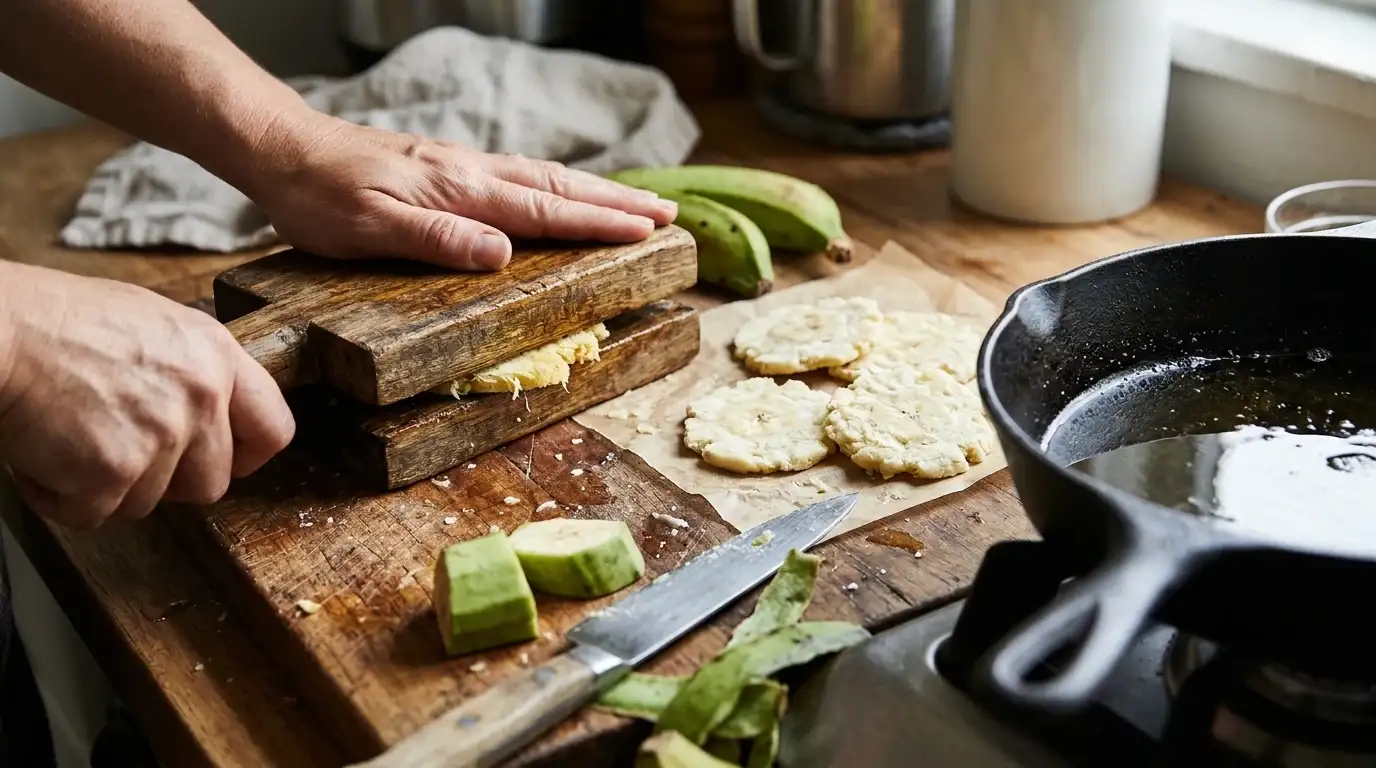
The structure is the same in every account: green plantains are fried, pressed flat and fried a second time, so the slabs turn crisp enough to hold a filling. ABC7 Chicago describes the plantain as cut in half lengthwise, deep-fried, smashed and fried again. WGN-TV, in a segment with Borinquen’s kitchen, shows the plantain peeled, halved and flattened in a tostonera, the press used for tostones. At Jibaritos y Más, a restaurant named in an NBC Chicago feature, the plantain is fried, flattened in a tortilla press, then fried again.
The filling, source by source
The fillings are less fixed than the bread substitute. Published descriptions of the sandwich list slightly different components:
| Source | Meat | Cheese | Other components |
|---|---|---|---|
| ABC7 Chicago | Steak or another meat | American | Tomato, lettuce, mayonnaise, plenty of garlic and seasoning |
| Tasting Table | Thinly cut steak with garlic oil | White cheese | Grilled onions |
| Saveur | Seasoned skirt steak | Cheese | Sautéed onions |
| WGN-TV | Round steak cooked in oil, vinegar, salt and adobo | Two slices of American | Tomato, lettuce, mayonnaise, garlic-oil blend, adobo |
The WGN version is the most specific about assembly. Cheese, steak, tomato and lettuce go on one plantain half, mayonnaise is spread on the other, a garlic-oil blend is smeared across the top, and the finished sandwich is cut in half. NBC Chicago adds that the garlic on top mimics the flavor of a tostone.
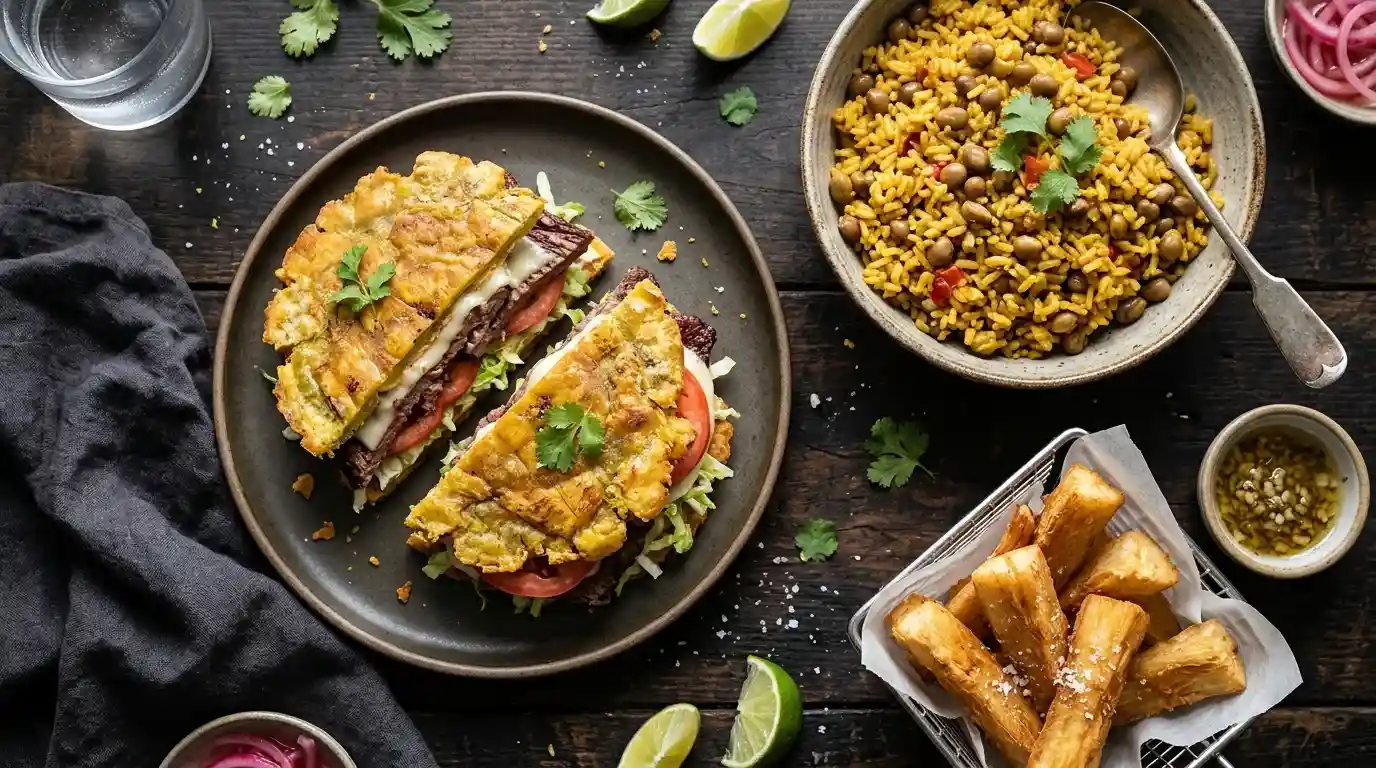
Jibaritos y Más, as the News-Tribune describes it, treats fresh plantains, mayonnaise, cheese and a protein as the essentials, and its co-owner Jesus Arrieta tells NBC Chicago that the real challenge is sourcing a large volume of plantains. Steak is the protein named in every description above. According to NBC Chicago, steak, chicken and pork are the most popular choices at Jibaritos y Más. Rice with pigeon peas, arroz con gandules, is the side most often named, and Tasting Table also mentions yuca fries.
With no bread involved, the sandwich is gluten-free, a point Glutto Digest makes in its guide to jibarito restaurants.
Borinquen and Juan “Peter” Figueroa
Tasting Table names the creator as Juan C. “Pete” Figueroa, owner of Borinquen in Humboldt Park, and dates the menu debut to 1996. Glutto Digest gives the same year and the same name, Juan “Peter” Figueroa. A neighborhood guide to Chicago’s food places the addition to the menu “around 1996”, while Saveur, which does not give a year, says only that he invented it in the mid-1990s from recipes he knew in Puerto Rico.
Two motives appear in the sources, and they do not exclude each other. Culture Trip reports that Figueroa made one to honor his father, who loved it and asked for one every day for about a month. The same article adds that Figueroa arrived in the United States in 1976 with very little and ran an unremarkable restaurant before the sandwich made his name. The sandwich then sold by the thousands and became a staple of Chicago cooking, in Culture Trip’s account.
The second motive is a newspaper clipping. Tasting Table says Figueroa read about a plantain sandwich in a Puerto Rican newspaper, refined the idea and named it. A News-Tribune article on Chicago’s jibarito restaurants quotes Gabriela Figueroa, a Borinquen co-owner, saying the idea came from her uncle, who read about a plantain sandwich in a Puerto Rican newspaper.
The restaurant today
Borinquen has moved since the 1990s. ABC7 reports that the restaurant now sits at 3811 N. Western Ave. in North Center, about two decades at that address, having begun in Humboldt Park. Angel Figueroa and his daughter Gaby run it now. Angel is Pete’s brother, and ABC7 notes that Pete has retired. Gaby Figueroa told ABC7 that keeping the legacy alive matters to the family, and the restaurant still serves what WGN calls the “Original Jibarito”.
The plantain sandwich in Aguada
Figueroa did not invent the idea of putting meat between fried plantain. The newspaper that he read was describing a sandwich from Plátano Loco, a small restaurant in Aguada, Puerto Rico. Tasting Table says the restaurant began as a storage shed and that the paper called the dish a “sandwich de platano”. The same article reports that Plátano Loco has since widened its menu to include plantain pizza and hot dogs. La Nación, writing in Spanish, calls Plátano Loco a place that started as a bodega and says it served the sandwich that inspired him.
English Wikipedia, which serves here only as a pointer because Plátano Loco’s own history page could not be fetched, gives an earlier date for the Aguada sandwich than for the Chicago one. It also links the jibarito to the Venezuelan patacón. Glutto Digest confirms that Venezuelans have their own version, the patacón, and Wikipedia adds that the patacón is called a tostón in Puerto Rico. That overlap explains why the garlic on a jibarito is described as imitating a tostone: the bread itself is a pair of large tostones.
What Figueroa added, according to these accounts, was the build and the name. The News-Tribune article says early versions were assembled like a burger, with lettuce, tomato, mayonnaise, cheese and a protein.
Where the accounts disagree
The patent. Tasting Table states that Figueroa’s brother patented the jibarito name. Culture Trip tells a different story: the brother suggested a patent and Figueroa decided against it. The neighborhood guide agrees with Culture Trip, saying the brother urged a patent and Juan declined. ABC7, quoting the family, says Pete never sought a trademark or patent because he wanted everyone to make the sandwich. Three of the four sources therefore say no patent exists.
The date. The year 1996 appears in Tasting Table, Glutto Digest and the neighborhood guide. Saveur gives the mid-1990s. The News-Tribune article, though, reports that Gabriela Figueroa’s uncle opened his Chicago restaurant in the late 1980s and made the city’s first jibarito, and the article itself offers two different dates without stating whether the uncle is Pete. The gap may separate the opening of the restaurant from the first jibarito on the menu, but the sources do not say so.
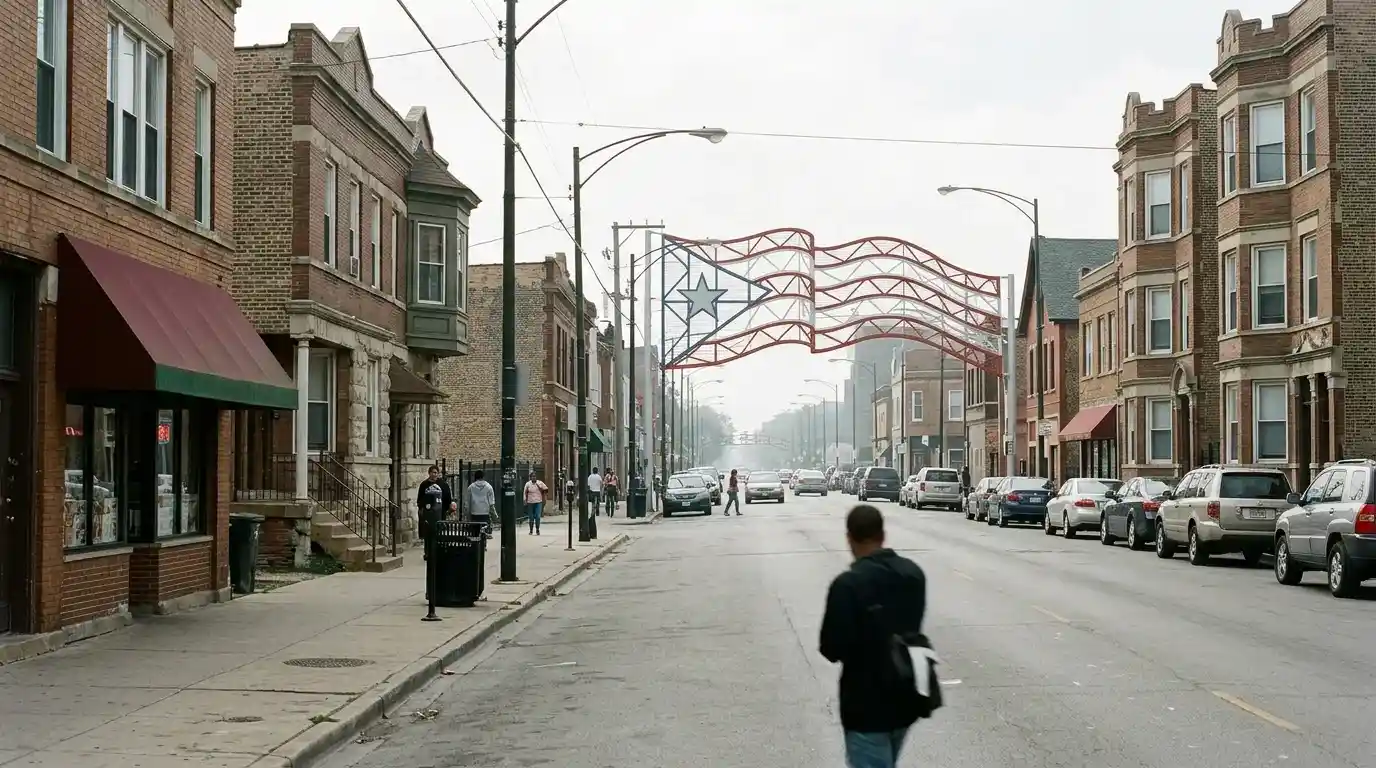
The name and the place. Figueroa appears as Peter, Pete and Juan C. in different articles. The restaurant’s first neighborhood is Humboldt Park in all of them, and WGN-TV describes the sandwich as born right here in Humboldt Park even though Borinquen has since moved north. NBC Chicago hedges the credit, writing that the sandwich is widely acknowledged to have started with a Puerto Rican restaurant owner in Humboldt Park, without naming him.
What the name means
Jibarito is built on jíbaro, the Puerto Rican term for a countryman from the island’s rural interior. Culture Trip describes the jíbaro as one of the hard-working farmers who worked the land with traditional methods. Glutto Digest translates the word as a little country person or a hillbilly, and Saveur renders the sandwich’s name as roughly “little hillbilly”.
The word carries two charges. ABC7 explains that in Puerto Rico it can be an insult or a term of endearment, depending on who says it and how. In Chicago the same article observes that the word has settled onto the sandwich itself.
The family’s own geography may have played a part. Gabriela Figueroa says her relatives come from Añasco, a hilly rural town in Puerto Rico, and that this may have influenced the name. The sources offer no more precise account of how the name was chosen, and none quotes Pete Figueroa on the point.
How the jibarito spread
Within Chicago, the sandwich moved beyond its Puerto Rican home base. The neighborhood guide says it is sold in many neighborhood eateries across the city, mostly Puerto Rican restaurants but also Cuban and Dominican ones. Angel Figueroa told ABC7 that people of all backgrounds enjoy it, and he sees that as a celebration of Chicago’s Puerto Rican community. His daughter would like it available everywhere.
Specialist restaurants followed. NBC Chicago reports that Jibaritos y Más has four city locations, including a takeout-only spot in Logan Square. According to the News-Tribune, the Logan Square branch opened in April 2016, and The Jibarito Stop in the Loop started as a food truck in 2012 before introducing half-size sandwiches, with the half steak jibarito now its top seller. The same article says Omarcito’s Latin Cafe draws on other Latin American traditions, including Venezuelan patacón-style sandwiches and a ropa vieja jibarito, and that Smash Jibarito on Division Street, opened in 2025, builds a smashburger-style version on a plantain bun after going viral at the 2023 Puerto Rican Festival.
Outside Chicago the sandwich is scattered. Glutto Digest lists places serving it in New York, Los Angeles and Orlando, alongside Chicago’s Papa’s Cache Sabroso. Tasting Table mentions Jibarito Shack in New York and Mofongos in Miami. The same article frames the sandwich’s reach as a kind of “reverse immigration” but gives no detail beyond the phrase.
Recognition has come from food rankers as well. La Nación reports that TasteAtlas placed the jibarito 21st on its list of the world’s 100 best sandwiches. Borinquen, meanwhile, is described as the family’s last remaining location, keeping the original recipe while diners reportedly travel from other states to eat there.
Sources:
- Tasting Table, “The Origins Of The Jibarito Sandwich Are Uniquely Chicagoan”: https://www.tastingtable.com/1539729/origins-jibarito-sandwich-chicago
- ABC7 Chicago, “Jibarito Origin: Sandwiched between Chicago’s Humboldt Park and Puerto Rico”: https://abc7chicago.com/post/jibarito-sandwich-chicago-puerto-rican-plantain/13779074/
- NBC Chicago, “The Food Guy: Jibarito, a Chicago Staple”: https://www.nbcchicago.com/the-food-guy/the-food-guy-jibarito-a-chicago-staple/2854043/?amp=1
- WGN-TV, “Borinquen, home of the original jibarito”: https://wgntv.com/daytime-chicago/borinquen-home-of-the-original-jibarito/amp
- WGN-TV, “The Jibarito: A Puerto Rican Sandwich Born in Chicago”: https://wgntv.com/daytime-chicago/the-jibarito-a-puerto-rican-sandwich-born-in-chicago/amp/
- Saveur, “The Originals”: https://www.saveur.com/article/Travels/The-Originals
- Culture Trip, “The Story Behind Chicago’s Jibarito Sandwich”: https://theculturetrip.com/north-america/usa/illinois/articles/the-story-behind-chicagos-jibarito-sandwich
- Neighborhoods.com, “The History of the Jibarito and Where to Find One in Chicago”: https://www.neighborhoods.com/blog/the-history-of-the-jibarito-and-where-to-find-one-in-chicago
- Glutto Digest, “Jibarito: The Puerto Rican sandwich with plantains for bread”: https://gluttodigest.com/jibarito-restaurants-recipes/
- La Nación, “Así es el jibarito, el sándwich con plátano frito en vez de pan que se inventó en Chicago”: https://www.lanacion.com.ar/estados-unidos/illinois/asi-es-el-jibarito-el-sandwich-con-platano-frito-en-vez-de-pan-que-se-invento-en-chicago-nid05082025/
- News-Tribune, “How the jibarito became Chicago classic”: https://www.newstribune.com/news/2026/sep/09/how-the-jibarito-became-chicago-classic/
- Wikipedia, “Jibarito” (pointer only): https://en.wikipedia.org/wiki/Jibarito
- Insider Food (YouTube), “Crispy Plantains And Juicy Steak Make The Jibarito A Chicago Icon | Legendary Eats”: https://www.youtube.com/watch?v=RGvyBriWAw4