
In this story
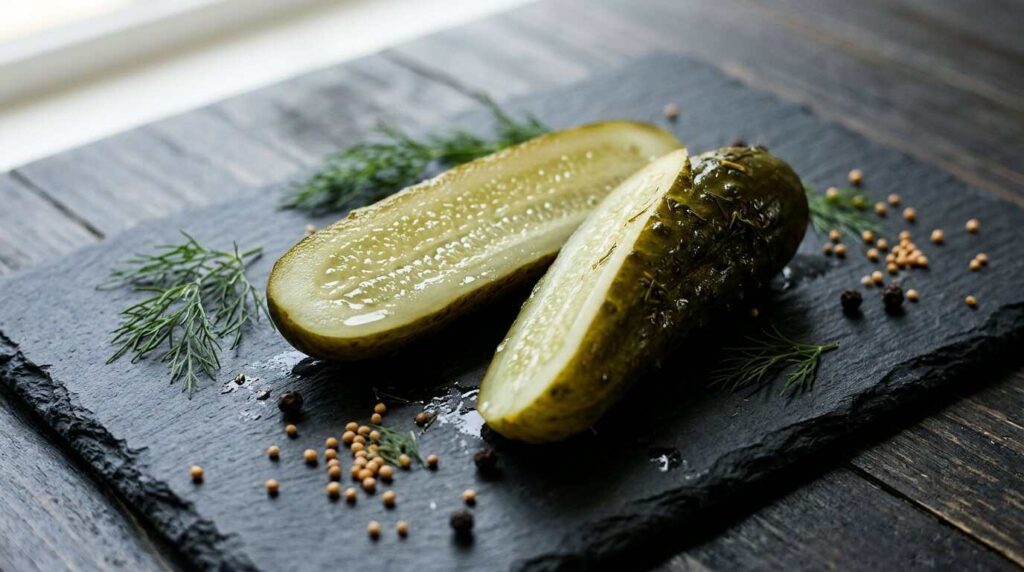
Once a cucumber goes soft, nothing makes it firm again, and it starts heading that way the day it comes off the vine. What holds the crunch in the meantime is pectin. Utah State University Extension states that crispness comes from the vegetable’s natural pectin, the same substance extracted from apples and citrus for jams and jellies, and that keeping it intact through brining, heating and storage is the whole problem of crisp pickles. Calcium, enzymes, salt, acid and temperature all push on that one structure, and the research on each of them is less tidy than the folklore suggests.
Video: How Do Pickles Stay Crunchy in Jars? The Fight Against Floppiness — from the Explaining Everything YouTube channel
Pectin, the glue between cells
Plant glue, and what happens when it dissolves
Every cucumber is a mass of cells, and each cell sits inside a wall. Between neighboring walls lies a thin layer called the middle lamella, and pectin is its main component. A page from Florida State University’s microscopy resource describes pectin as the “glue” that holds plant cells together and says that when calcium combines with it, the result is calcium pectate, a salt that keeps cell walls firm and rigid.
Electron microscopy has shown what the loss of that glue looks like. In a 1985 study in Food Structure, W. M. Walter Jr., H. P. Fleming and R. N. Trigiano compared firm cucumber pickles with softened ones under light, transmission electron and scanning electron microscopes. Softening was “characterized by a weakening of cell-to-cell junctions at the middle lamellae”, and the softened pickles offered much less resistance to compression.
The damage is permanent. Utah State Extension puts it flatly: “Once a vegetable is soft it cannot be made firm again.” Penn State says the same in nearly the same words, and adds that softening arises from changes to pectin caused by microbes, heat or rough handling, and that crisp pickles begin with fresh, just-picked vegetables, because cucumbers lose firmness with every day after harvest.
Calcium and the cell wall
Lime, calcium chloride and the limits of adding more
Calcium is the most widely documented firming agent. Extension guidance describes two ways home pickle makers have supplied it. Food-grade lime (calcium hydroxide) is used as a soak of 12 to 24 hours, after which the cucumbers are rinsed and re-soaked in fresh water three times. Penn State explains that excess lime remaining in the brine lowers the brine’s acidity, and Illinois Extension states that excess lime absorbed by the cucumbers must be removed to make safe pickles. Penn State notes that calcium chloride is a safer alternative because it lacks lime’s hydroxide component.
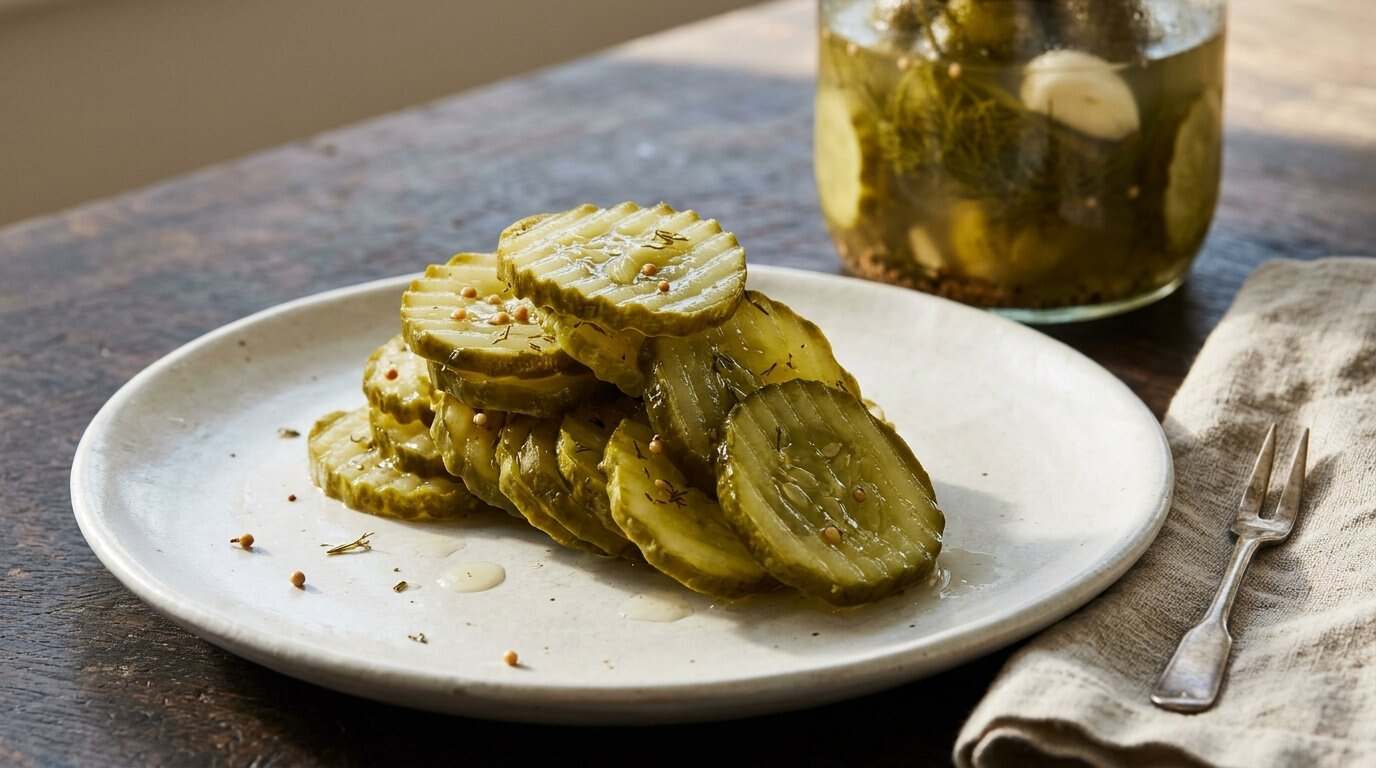
Industrial research explains why calcium works in an acid brine. A 2010 paper in the Journal of Food Science by Roger McFeeters and Ilenys Pérez-Díaz, both with USDA-ARS at North Carolina State University, states that the ability of calcium to maintain firmness at low pH is related to its ability to bind to cell wall components. The same paper reports that calcium in pickled vegetable products generally stays below about 25 mM, since consumers can detect a chalky flavor above that level, and that calcium is not tightly bound in fermented cucumbers, so any excess can be washed out.
Calcium also matters most when salt is scarce. Rashmi Maruvada and Roger McFeeters reported in 2009 that cucumbers soften rapidly when fermented at low salt concentrations without added calcium, and that calcium greatly reduces the rate of a non-enzymatic softening process. That softening occurred even in tissue that had been heat-treated to disable enzymes.
Alum, a once-common additive, has a narrower record. The National Center for Home Food Preservation states that alum can safely firm fermented pickles but is unnecessary and does not improve quick-process pickles. Utah State reports that firmness rises with alum up to 1/4 teaspoon per pint, and that larger amounts decrease firmness.
The blossom end, where softening starts
Enzymes, microbes and a one-sixteenth-inch cut
Extension services agree on one preparation step: the blossom end of the cucumber, opposite the stem, is trimmed. The National Center for Home Food Preservation says that blossoms may contain an enzyme that causes excessive softening and specifies a slice of 1/16 inch. Penn State asks for at least 1/16 inch to come off.
The enzyme in question is pectinase, which breaks down pectin. Utah State places it at the blossom end and adds that the blossom harbors microbes that can cause softening. Fungal polygalacturonase, a pectin-cutting enzyme, appears in the research literature as a cause of softening in brined cucumbers; Walter and colleagues cite earlier work attributing it to fungi and note that enzymes native to the cucumber may also contribute at low salt.
The tidy story has loose ends. In their low-salt fermentation work, Maruvada and McFeeters concluded that softening could not be associated with specific enzymes, and one enzyme they tested, pectinesterase, kept about 71 percent of its activity after a 65 °C blanch. The 1985 microscopy study itself found fungal hyphae in both soft and firm tissue, so its authors could not say whether invading organisms or the cucumber’s own enzymes caused the softening.
Burpless cucumbers present a variety-specific problem. Penn State states that they produce an enzyme that causes pickles to soften during fermentation, which makes them unsuitable for that method.
Grape leaves and tannins
An old trick with a documented mechanism
Grape leaves in the crock are among the oldest folk methods for crisp pickles, and they have a mechanism behind them. Utah State reports that the tannins in grape leaves were found to inhibit the pectinase enzyme, and that removing the blossom end makes the leaves unnecessary. University of Illinois Extension adds that most modern recipes omit the leaves because they can add a bitter flavor.
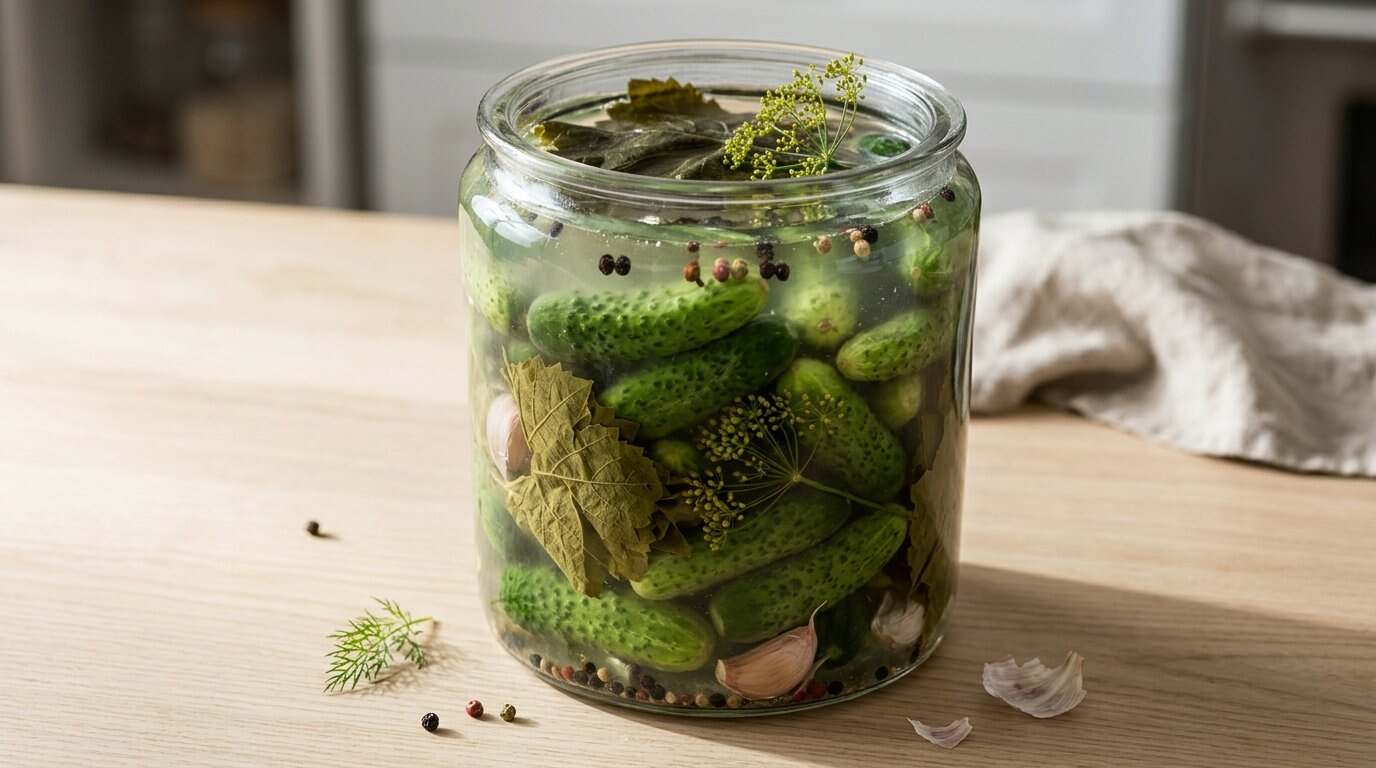
The practice survives mostly as a tradition. The enzyme the tannins block is the same one the blossom-end trim removes, so the two methods target one problem from different sides.
Salt, brine and water
Why a pickle that loses water can stay crisp
Salt does two jobs in a pickle. The Exploratorium’s cooking pages describe brine as a solution with a lower water concentration than the inside of a fresh vegetable, so water moves out of the cucumber by osmosis, and the page says this makes the pickles crunchier. The same page adds that at the right concentration lactic acid bacteria outgrow spoilage microbes, and that too much salt blocks them and lets salt-tolerant yeasts spread. Water on the move is also what ruins a sandwich, from the other direction, covered in why sandwiches get soggy and why bread goes stale.
Industry practice leaned on salt for firmness for decades. Maruvada and McFeeters note that traditional fermentation uses 5 to 8 percent sodium chloride, and that salt levels are raised after fermentation, a habit that leaves the industry with a brine disposal problem. Walter and colleagues describe the industry’s reliance on high sodium chloride concentrations to prevent enzymatic softening, and report that adding calcium to the fermentation brine improved firmness retention, which opened the way to lower salt.
Home-canning guidance treats the two methods differently. Penn State states that salt should never be reduced in fermented pickles, since it supports beneficial bacteria, while in quick-process pickles it can be reduced at the cost of changes in flavor and texture.
Fermented pickles and vinegar pickles
Two methods, two sets of softening risks
The two main styles differ in how they become acidic. The National Center for Home Food Preservation lists regular dill pickles as fermented and cured for about three weeks, and refrigerator dills as fermented for about one week. Fresh-pack or quick-process pickles are not fermented: they are brined for several hours or overnight, drained and covered with vinegar and seasonings. University of Nebraska-Lincoln Extension says these pickles do not require a fermentation period and are usually made and processed within a day.
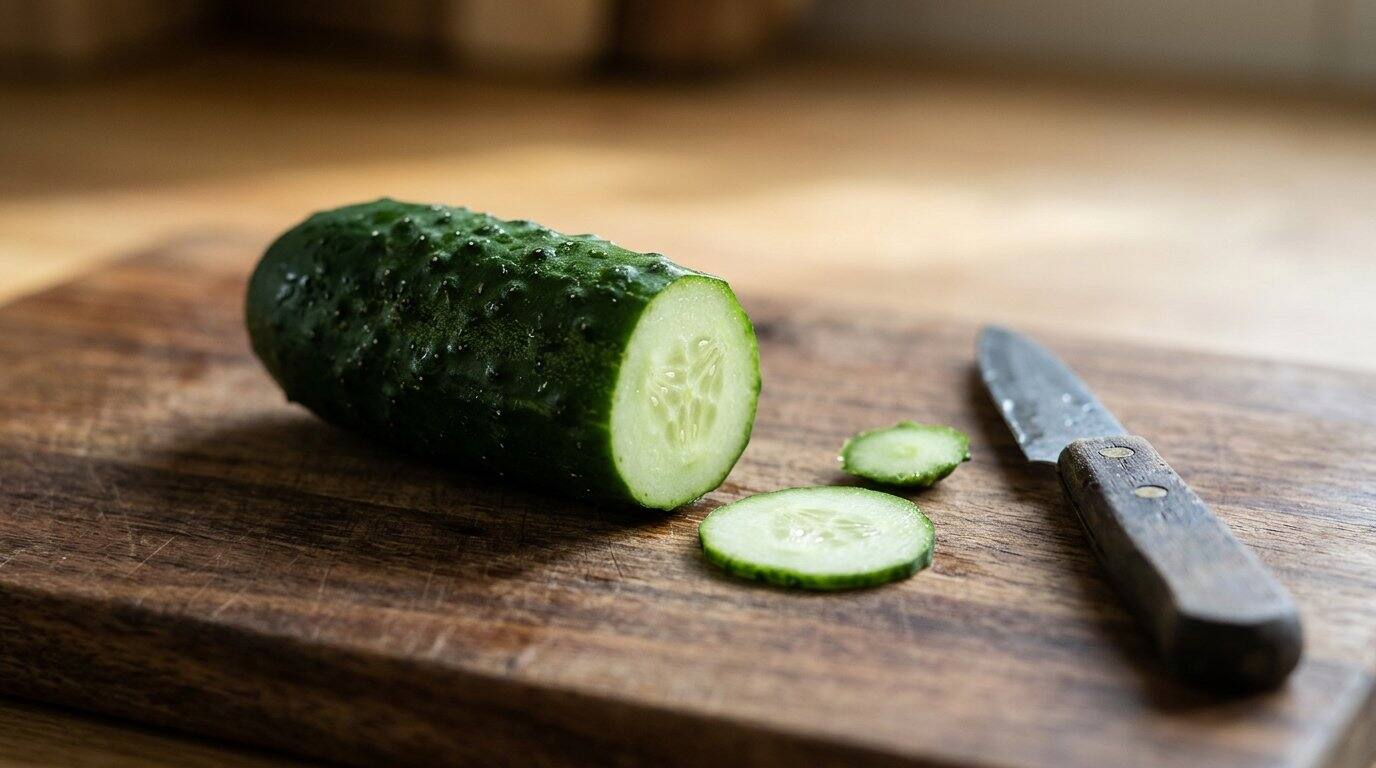
Fermentation produces its acid in the jar. In the 2010 USDA-ARS study, sugars were converted mainly to lactic acid and the pH fell below 3.5 in the brines tested. Acid itself can soften tissue. A 2018 study of commercial calcium chloride brines by Erin McMurtrie and Suzanne Johanningsmeier reported that lactic acid can soften cucumbers over time, though lactic acid levels in that study did not correlate with firmness.
That study also produced a result that complicates the calcium story. Cucumbers fermented in calcium chloride brine without sodium salts were, on average, 1.8 newtons less firm than those in sodium chloride brine, and the authors described the tissue softening as atypical and called for more research. Calcium helps, and the conditions under which it helps are still being mapped.
Temperature during fermentation is a separate risk. North Carolina State Extension warns that above 80°F pickles will become too soft during fermentation.
Heat, chilling and shelf-stable jars
Why canned pickles walk a narrow temperature line
Heat is the other main threat to pectin, and shelf-stable pickles must be heated to be shelf-stable. Where a tested recipe specifies low-temperature pasteurization, jars are held in water between 180°F and 185°F for 30 minutes. Penn State states that below 180°F microorganisms can survive, and Utah State advises keeping the temperature below 185° to avoid breaking down the pectin. The window is only five degrees wide.
Processing cucumber pickles for 30 minutes in water can further improve firmness, according to the National Center for Home Food Preservation, as long as the water does not fall below 180°F. Utah State recommends heat treatment even for refrigerator pickles, citing the survival of Listeria monocytogenes in unheated ones, which puts food safety and firmness in direct tension.
Cold has its own role. Penn State describes soaking cucumbers in ice water or layering them with crushed ice for four to five hours before pickling as a firming method. University of Illinois Extension says an ice bath firms the cucumber cell walls and may help refrigerator pickles, and that keeping pickles refrigerated also yields a crisp result.
Stability is a matter of recipe, not of the jar. University of Nebraska-Lincoln Extension notes that only recipes developed for boiling water canners are shelf-stable, which separates the shelf jar from the refrigerator one on safety grounds before texture enters. A pickle can be perfectly safe and perfectly limp, and the lid gives no hint which one is waiting inside.
Common questions
Why are pickles crunchy?
Utah State University Extension states that crispness comes from the vegetable’s natural pectin, the same substance extracted from apples and citrus for jams and jellies. Keeping it intact through brining, heating and storage is the whole problem of crisp pickles.
Why is the blossom end trimmed?
The National Center for Home Food Preservation says that blossoms may contain an enzyme that causes excessive softening, and specifies removing a slice of 1/16 inch. Penn State asks for at least 1/16 inch to come off.
Do grape leaves keep pickles crisp?
Utah State reports that the tannins in grape leaves were found to inhibit the pectinase enzyme, and that removing the blossom end makes the leaves unnecessary. University of Illinois Extension adds that most modern recipes omit the leaves.
Sources
- Utah State University Extension, “Getting Crisp Home Pickled Vegetables”: https://extension.usu.edu/preserve-the-harvest/research/getting-crisp-home-pickled-vegetables
- Penn State Extension, “Crispy Pickles”: https://extension.psu.edu/crispy-pickles
- University of Illinois Extension, “Pickling FAQ”: https://extension.illinois.edu/food-preservation/pickling-faq
- National Center for Home Food Preservation, “General Information on Pickling”: https://nchfp.uga.edu/how/pickle/general-information-pickling/general-information-on-pickling
- University of Nebraska-Lincoln Extension, “Types of Pickles”: https://food.unl.edu/article/types-pickles/
- North Carolina State Extension, “How to Make Fermented Pickles”: https://foodsafety.ces.ncsu.edu/2020/05/how-to-make-fermented-pickles/
- Florida State University Molecular Expressions, “Calcium Pectate”: https://micro.magnet.fsu.edu/phytochemicals/pages/calpectate.html
- Walter, Fleming and Trigiano, “Microstructure of firm and stem-end softened cucumber pickles,” Food Structure, vol. 4, 1985: https://core.ac.uk/download/32566523.pdf
- Maruvada and McFeeters, “Evaluation of enzymatic and non-enzymatic softening in low salt cucumber fermentations,” Int. J. Food Sci. Technol., 2009: https://www.ars.usda.gov/ARSUserFiles/60701000/Pickle%20Pubs/p358.pdf
- McFeeters and Pérez-Díaz, “Fermentation of Cucumbers Brined with Calcium Chloride Instead of Sodium Chloride,” J. Food Sci., 2010: https://www.ars.usda.gov/ARSUserFiles/60701000/Pickle%20Pubs/p366.pdf
- McMurtrie and Johanningsmeier, “Quality of Cucumbers Commercially Fermented in Calcium Chloride Brine without Sodium Salts,” J. Food Quality, 2018: https://www.ars.usda.gov/ARSUserFiles/60701000/Pickle%20Pubs/p416.pdf
- Exploratorium, “The Accidental Scientist: Science of Cooking, Pickles and Salt”: https://annex.exploratorium.edu/cooking/pickles/salt.html
Keep reading
- Sodium Citrate and Smooth Melted Cheese: How the Salt Works
- The Maillard Reaction and Why Bread Browns
- Why Cheese Melts and Why Some Cheese Turns Greasy
More in this section: Food Science guide.