In this story
A turkey sandwich packed at 7 a.m. and eaten at noon spends five hours away from a refrigerator. Federal food safety guidance on how to get it through that stretch is short, specific and mostly about gear: what the bag is made of, how many cold packs go in it, and how long food can sit out before it should be thrown away.
Video: USDA Food Safety Advice for Packing Lunches, from the USDA YouTube channel
The two-hour line
Everything else hangs on one rule. A 2017 USDA release says perishable food left at room temperature for more than two hours should be discarded, and that the limit drops to one hour when the temperature is above 90°F. The agency’s August 2025 back-to-school release frames the same idea as a temperature range, the Danger Zone between 40°F and 140°F, where bacteria multiply quickly.
For a sandwich, that covers most of what goes between the bread. The 2017 release names luncheon meats, eggs, cheese and yogurt as the perishable items that need cold sources.
Why the paper bag lost
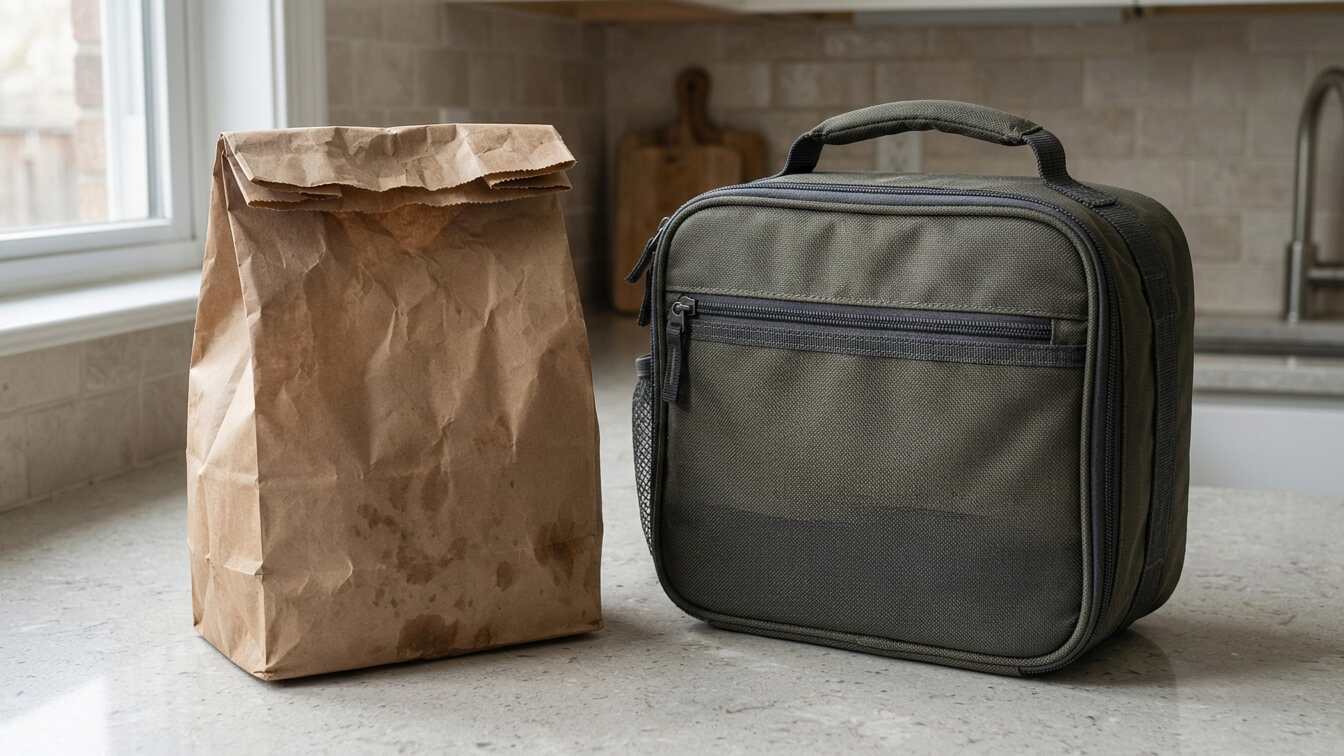
The brown bag is the classic, and USDA advises against it for perishables. The 2025 release says paper bags tear and leak as cold items thaw, which lets cold air escape, and recommends an insulated lunchbox instead.
Clemson University’s Home & Garden Information Center, in a bag lunch fact sheet revised in September 2024, makes the same case against plastic lunch bags: they can turn soggy or leak as items thaw and do not hold cold as well as an insulated box.
Two cold sources, top and bottom
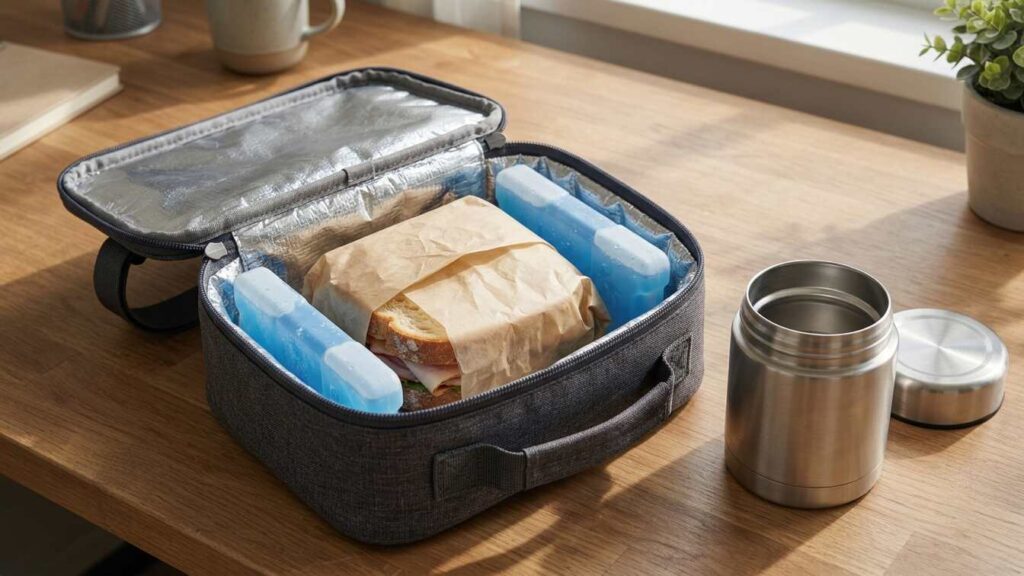
The number matters. USDA’s 2025 guidance calls for at least two cold sources, such as gel packs, frozen water bottles or frozen juice boxes, placed on the top and bottom of perishable items. The Clemson sheet describes the same stack: one cold source at the bottom, then the food, then the second on top.
The 2017 USDA release adds two practical details. A frozen juice box or bottle of water can count as one of the sources, paired with a freezer pack, and a lunch packed the night before should go in the refrigerator overnight so it starts the day cold.
Making the sandwich ahead
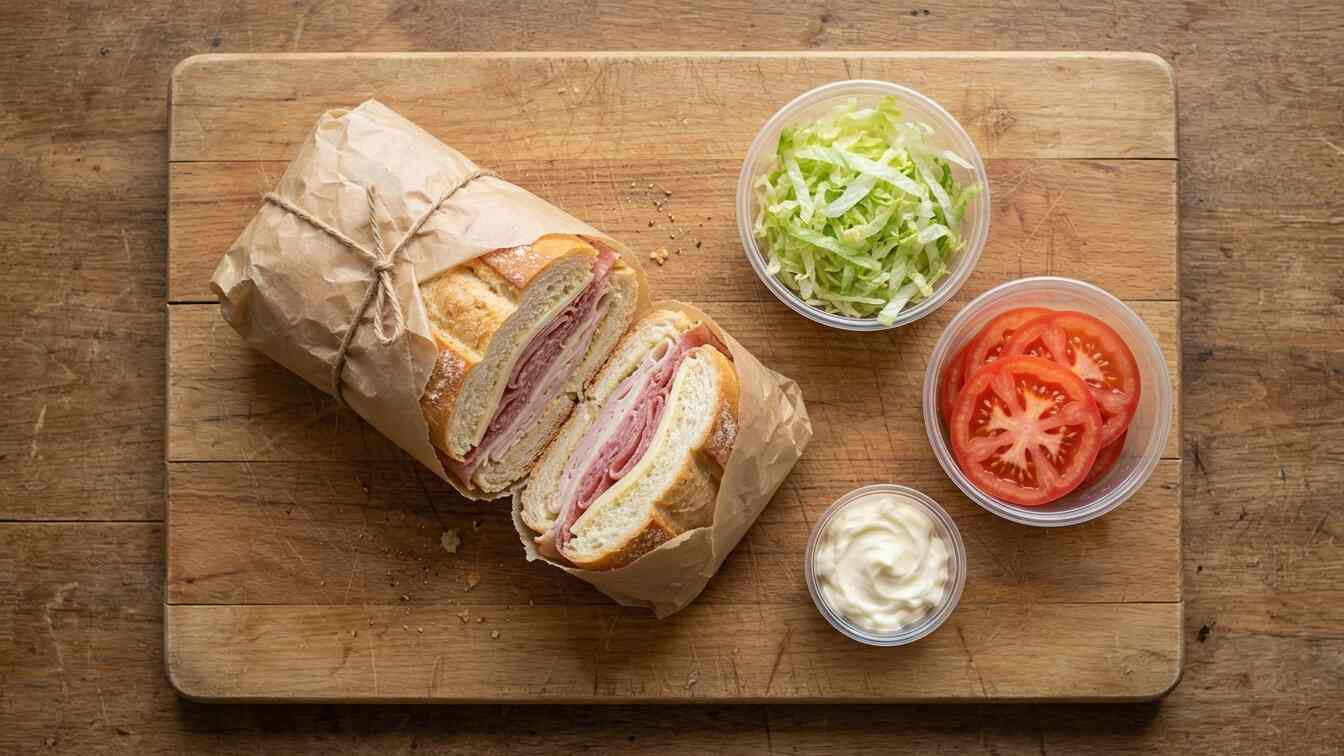
Sandwiches can be made ahead and refrigerated or frozen before packing, according to the Clemson fact sheet, with one caution. It says sandwich ingredients such as mayonnaise, lettuce and tomatoes should not be frozen, so those go on later.
That split suits sturdy builds. A hoagie, sub, hero or grinder can be assembled from meat and cheese the night before, with the wet toppings carried separately, while a BLT depends on lettuce and tomato that Clemson’s list keeps out of the freezer.
Soup on the side
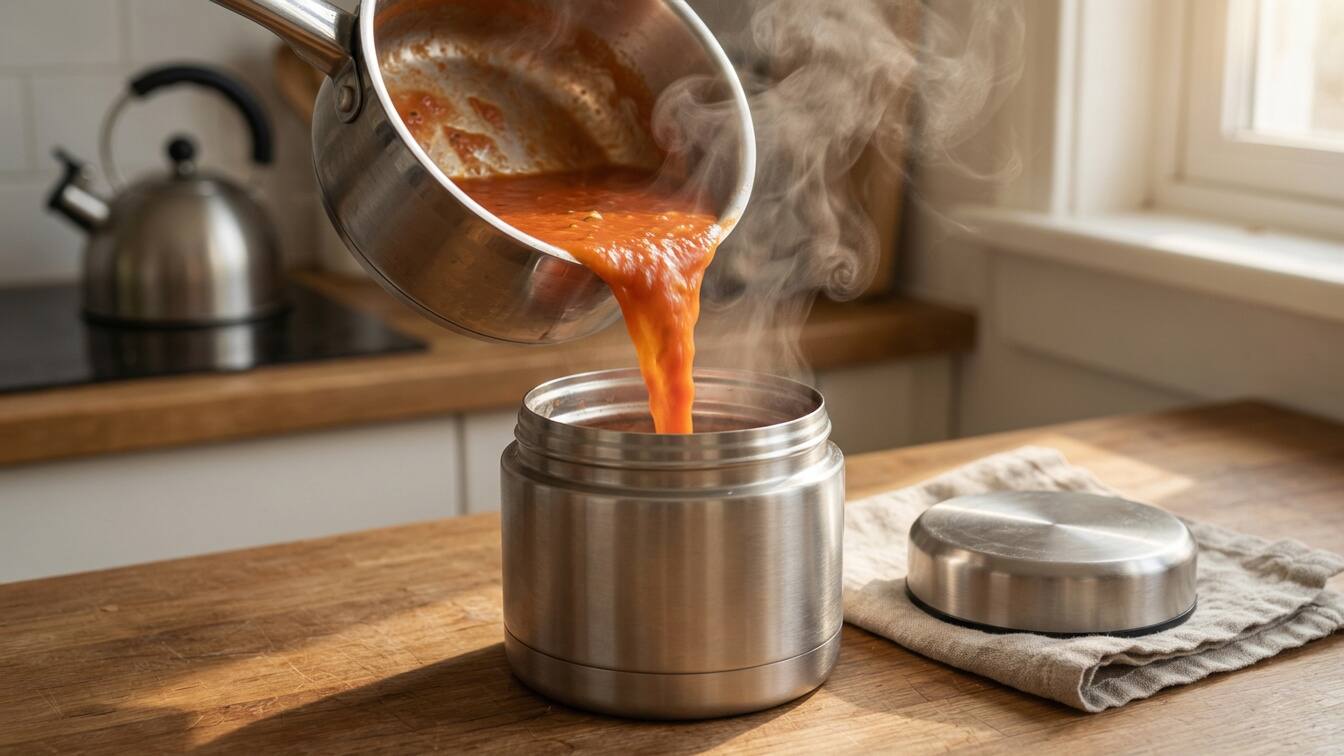
Hot food runs on the other end of the Danger Zone. Both USDA releases describe the same method for an insulated container: fill it with boiling water, let it stand for a few minutes, empty it, add the hot food, and keep the lid closed until lunch so the food stays at 140°F or higher.
Cleanup is part of the routine too. The 2017 release says leftover food and used packaging should be thrown away after lunch and lunch boxes cleaned nightly with warm soapy water or a disinfectant wipe; the 2025 release says to sanitize lunchboxes regularly.
The kit
Each item below matches a piece of the USDA and Clemson guidance: an insulated bag, cold sources, and an insulated jar for hot food.
- Lifewit Medium Lunch Bag, Insulated Lunch Box, Soft Cooler Cooling Tote for Adult Men Women, Black 12-Can (9L): a soft-sided insulated tote listed at 9 liters. See it on Amazon (affiliate link)
- PackIt Freezable Classic Lunch Box, Blue Sky: a lunch box sold as freezable, which puts a cold source in the bag itself. See it on Amazon (affiliate link)
- Cool Coolers by Fit & Fresh 4 Pack XL Slim Ice Packs, Quick Freeze Space Saving Reusable Ice Packs for Lunch Boxes or Coolers, Blue, 239ICE, 4 count (Pack of 1): four slim reusable ice packs, enough for a top-and-bottom stack. See it on Amazon (affiliate link)
- THERMOS Stainless King Food Jar with Bowl, 24oz, Army Green: an insulated food jar for soup or chili alongside the sandwich. See it on Amazon (affiliate link)
As an Amazon Associate I earn from qualifying purchases. A commission may be earned if you buy through this link, at no extra cost to you.
Questions people ask
How long can a packed sandwich sit out? USDA says perishable food should be discarded after more than two hours at room temperature, or one hour above 90°F.
How many ice packs go in a lunch bag? USDA recommends at least two cold sources, one above and one below the perishable food.
Is a paper bag safe for lunch? USDA advises against paper bags for perishables because they tear and leak as cold items thaw.
Can sandwiches be frozen for lunch? Clemson’s fact sheet says yes, but mayonnaise, lettuce and tomatoes should not be frozen.
How do you keep soup hot until lunch? Preheat an insulated container with boiling water, empty it, add hot food and keep it closed, per USDA.
Sources
- U.S. Department of Agriculture, “Make Food Safety a Priority This Fall” (August 15, 2017): https://www.usda.gov/about-usda/news/press-releases/2017/08/15/make-food-safety-priority-fall
- U.S. Department of Agriculture, “USDA Reminds Families to Pack Food Safety with Back-to-School Lunches” (August 5, 2025): https://www.usda.gov/about-usda/news/press-releases/2025/08/05/usda-reminds-families-pack-food-safety-back-school-lunches
- Clemson Cooperative Extension Home & Garden Information Center, “Bag Lunch Safety” (revised September 26, 2024): https://hgic.clemson.edu/factsheet/bag-lunch-safety/