In this story
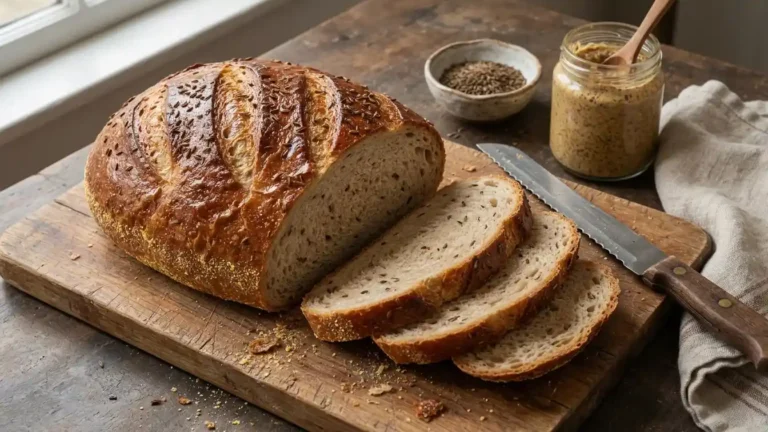
Shokupan is the soft, fine-crumbed white loaf that Japan treats as its everyday bread, sold sliced thick for toast and trimmed thin for sandwiches. Outside Japan it is often called Hokkaido milk bread. Its story runs through Yokohama’s foreign settlement, a samurai’s bakery in Ginza and a postwar school lunch program built on American wheat.
Video: Shokupan (+ what does tangzhong do for Milk Bread?), from the Ethan Chlebowski YouTube channel
Bread before shokupan
Nagasaki, Nirayama and Ginza
Japan’s word for bread is borrowed. Shane Mitchell, writing in TASTE in October 2017, traced bread’s arrival to Portuguese and Dutch ships at Nagasaki in the 16th century, with “pan” taken from the Portuguese pão.
Domestic baking came centuries later. Ako Mari, writing for Nippon.com in June 2019, identified Egawa Tarōzaemon, a scholar of Western learning, as purportedly the first Japanese person to bake bread, in 1842; a bread festival in Nirayama, Shizuoka, commemorates him. In 1869 a former samurai, Kimura Yasubē, opened a bakery in Ginza with his son, and in 1874 he filled a roll with sweet bean paste to make anpan, the start of Japan’s distinct snack-bread style.
That style still dominates. Mitchell notes that Kimuraya still sells anpan in Ginza and that the cream-filled cream pan followed in 1904 at Nakamuraya.
The first square loaf
A British baker in Yokohama
Shokupan’s own starting point is usually placed in the Meiji era. Jessica Thompson of SBS Food reported in October 2020 that the first shokupan is thought to have been sold in Yokohama in the 1880s by a British baker, for expatriates and naval guards. Bread spread through the Meiji period, 1868 to 1912.
The name is a second puzzle. Shokupan translates literally as “food bread” or “eating bread.” Mitchell wrote that schoolchildren in the Occupation years gave the standard square loaf that name, alongside a dome-topped Pullman loaf known as igirisu-pan. His article does not say what the square loaf was called before, and the SBS account places the first shokupan decades earlier, so the dating of the word itself remains unsettled here.
Kyushoku and American wheat
School lunch, 1946 to 1976
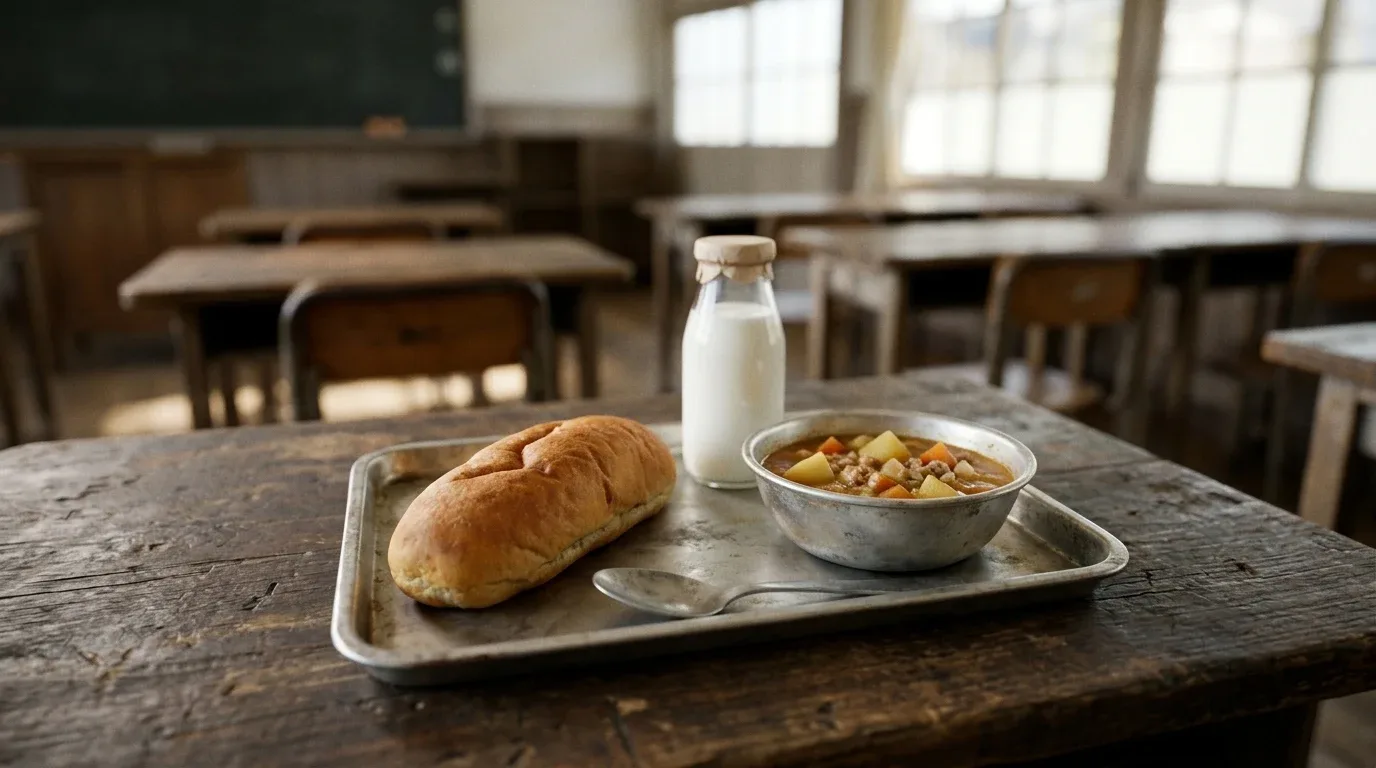
Shokupan became a national habit through the cafeteria. Nakajima Katsuo, writing for Nippon.com in March 2025, laid out the timeline. From 1946, with help from the United States and others, bread and powdered skim milk were supplied for school lunches. By 1950, full meals of bread, milk and side dishes were served twice a week to 1.3 million elementary schoolchildren in eight cities.
In 1952 the government began subsidizing half the price of flour, and complete school lunches spread nationwide; the same year, a Tokyo school cook invented agepan, a deep-fried roll coated in kinako and sugar. The School Lunch Program Act followed in 1954. Rice was not formally adopted for school lunches nationwide until 1976, and bread stayed the main staple in many schools until lunch discounts in 1979 tipped the balance toward rice.
SBS framed the same period from the home side: with rice scarce after the war, American aid came as wheat, and bread moved from school meals to the breakfast table. Ako Mari added that the boom spread west, and that residents of Kyoto, Kobe and Osaka now outeat their Kantō counterparts on bread.
How it is made soft
Yudane, tangzhong and the 65-degree roux
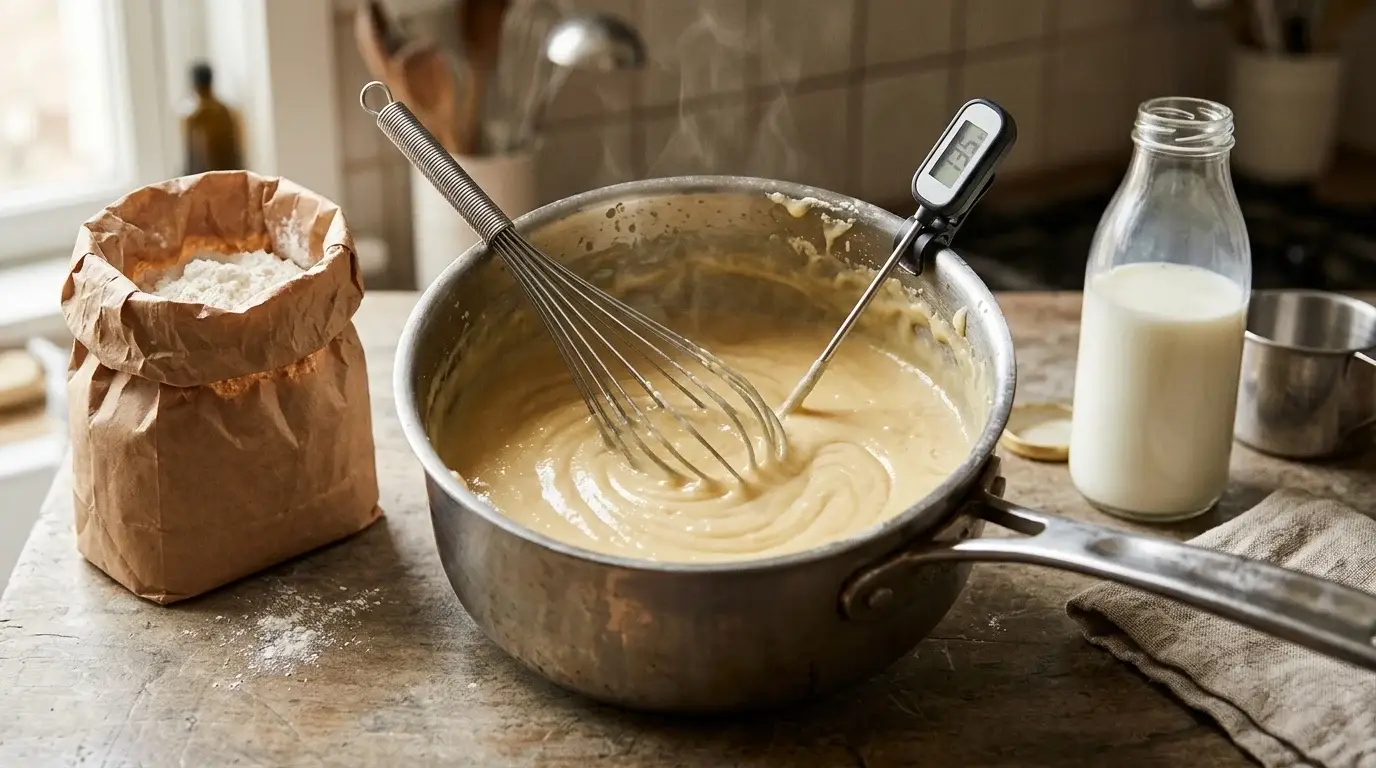
Shokupan’s texture comes from cooked starch. SBS described the yudane method used by Shun Hashimoto, owner-baker at Azuki Japanese Bakery in Sydney: a roux of flour and water or milk, at a ratio of 1 to 5, heated to 65 degrees Celsius so the starch gelatinizes before it goes into the dough. Hashimoto said it makes bread sweeter, softer and moister, with a texture he compares to rice.
The Aoyama Pan Matsuri festival organizer Maiko Nishiki told SBS that, although it is white bread, good shokupan “conveys the scent of wheat.” Baker Shinji Nagata called the springy texture mochi-mochi and singled out the crust, pan no mimi or “bread ears.”
Two shapes
Yama and kaku
Loaves come in two forms. SBS describes yama, the mountain-topped loaf that rises freely above an open pan, and kaku, the square-cornered loaf baked under a lid. The kaku shape is the Pullman loaf, the same closed-pan bread covered on Grill Cheesy under pain de mie and the Pullman loaf.
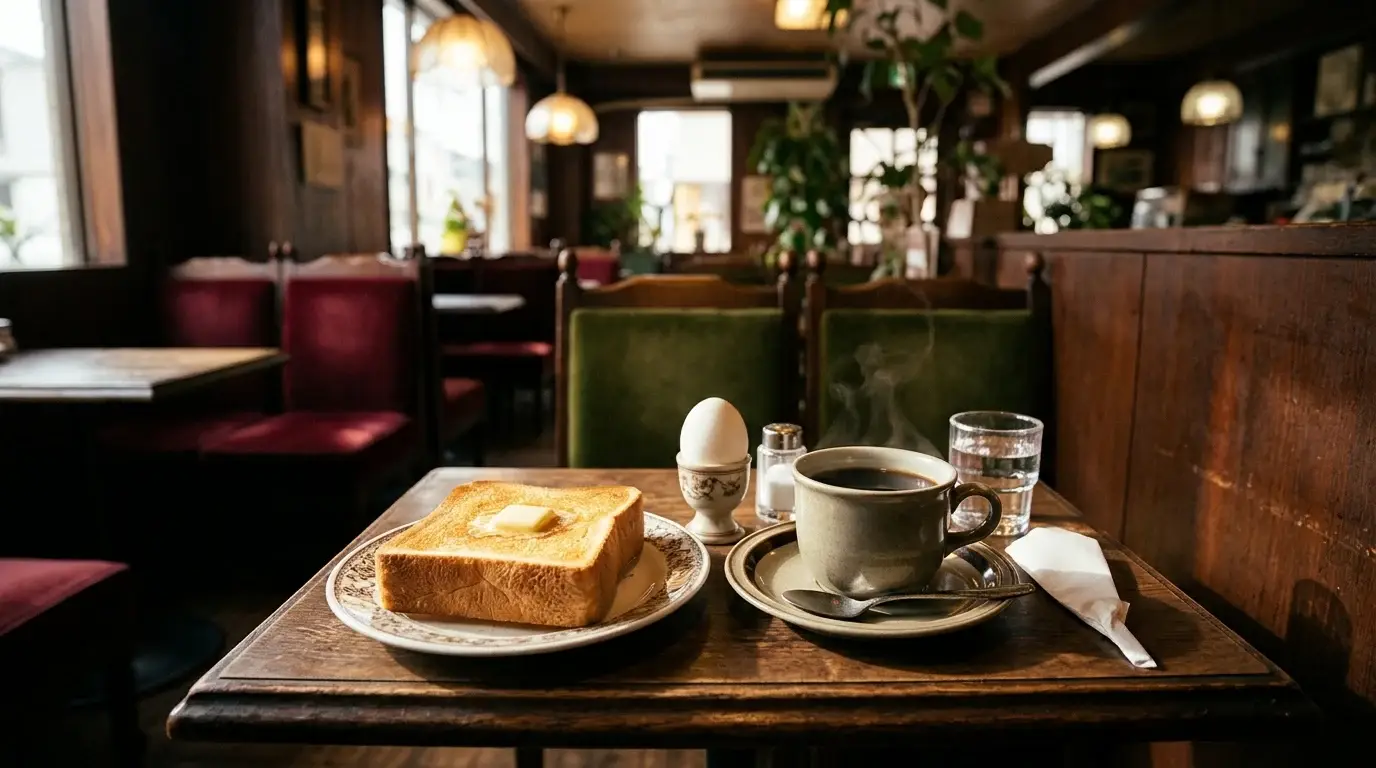
Thick slices feed Japan’s toast culture. Mitchell described a 400-yen kissaten “morning set” of coffee, thick-cut atsugiri toast with butter or margarine and a hard-boiled egg, and the Shibuya honey toast dessert built from a hollowed loaf. SBS opened its piece in a Ginza kissaten over pizza toast: a slab about 3 centimeters thick topped with capsicum, olives, tomato, cheese and seaweed.
Sandwiches on shokupan
Crusts off
Trimmed shokupan is the bread of the Japanese sando. The breaded pork cutlet version is covered in Grill Cheesy’s katsu sando. The enriched dough also bears on shelf life, covered in why bread goes stale, and on browning, in the Maillard reaction and bread.
Questions people ask
What does shokupan mean? “Food bread” or “eating bread,” per SBS and TASTE.
Is shokupan the same as Hokkaido milk bread? SBS reports that outside Japan the loaf is more commonly known as Hokkaido milk bread.
When did shokupan become common in Japan? After World War II, when bread and powdered skim milk were supplied for school lunches from 1946, according to Nippon.com.
What makes shokupan so soft? A cooked flour-and-liquid roux (yudane or tangzhong) heated to about 65°C so the starch gelatinizes, per SBS.
What pan is used for shokupan? An open loaf pan for the domed yama loaf, or a lidded Pullman pan for the square kaku loaf.
Pan for a square loaf
- USA Pan Bakeware Pullman Loaf Pan with Cover, 13 x 4 inch, Nonstick & Quick Release Coating, Made in the USA from Aluminized Steel: a lidded Pullman pan for square-cornered loaves. See it on Amazon (affiliate link)
Video: USA Pan Pullman Loaf Pan With Cover, Honest Review, from the UGC With Raphaela YouTube channel
As an Amazon Associate I earn from qualifying purchases. A commission may be earned if you buy through this link, at no extra cost to you.
Sources
- Shane Mitchell, TASTE, A Brief History of Toast in Japan (Oct. 31, 2017): https://tastecooking.com/a-brief-history-of-toast-in-japan
- Ako Mari, Nippon.com, The Roots of Japanese Bread Culture (June 13, 2019): https://www.nippon.com/en/japan-topics/g00694
- Jessica Thompson, SBS Food, Japan’s shokupan is the upper crust of loaves (Oct. 15, 2020): https://www.sbs.com.au/food/article/2020/10/14/japans-shokupan-upper-crust-loaves
- Nakajima Katsuo, Nippon.com, Feeding the Nation: How Japan’s School Lunches Changed Through the Twentieth Century (Mar. 18, 2025): https://www.nippon.com/en/japan-topics/g02481/