In this story
In Armenian villages, dried lavash is kept in stacks and brought back with a sprinkle of water, according to AZ Cuisines. That thin, pliable sheet is one of three flatbreads that do different jobs in a sandwich: lavash rolls around kebabs, pita splits open into a pocket, and naan, enriched and chewy, mostly scoops. The roles are settled. How old each bread is, where lavash comes from and what flour belongs in a pita are not.
Video: Every Flatbread Explained, from the Food Explained YouTube channel
Pita and its pocket
Yeast, steam and a hollow center
Pita comes from the Middle East and is roughly 4,000 years old, according to Tasting Table’s pita and naan comparison, citing Hummus Bowls. It is made from just yeast, water and flour and baked on high heat, often on stone, and the steam from the dough creates a pocket that makes it easy to stuff with meat, vegetables or falafel for wraps such as shawarma and gyros.
The oven runs hot: roughly 698 to 932°F in a hearth oven, per Food Republic, which is what opens the hollow. Its dough is flour, water, yeast and salt with a longer fermentation and proofing, and the finished bread is crispier, drier, milder and firmer than naan. Chowhound says water turns to steam and forms a “hollow bubble inside the finished bread,” and dates pita to about 2500 B.C., which is older than the 4,000-year estimate.
Pita’s uses include wraps like gyros, dipping in hummus or baba ghanoush and scooping chopped salads, per Food Republic. The site’s posts on the gyro and sabich both rely on pita.
Lavash and the clay oven
Thin, flexible and dried for storage
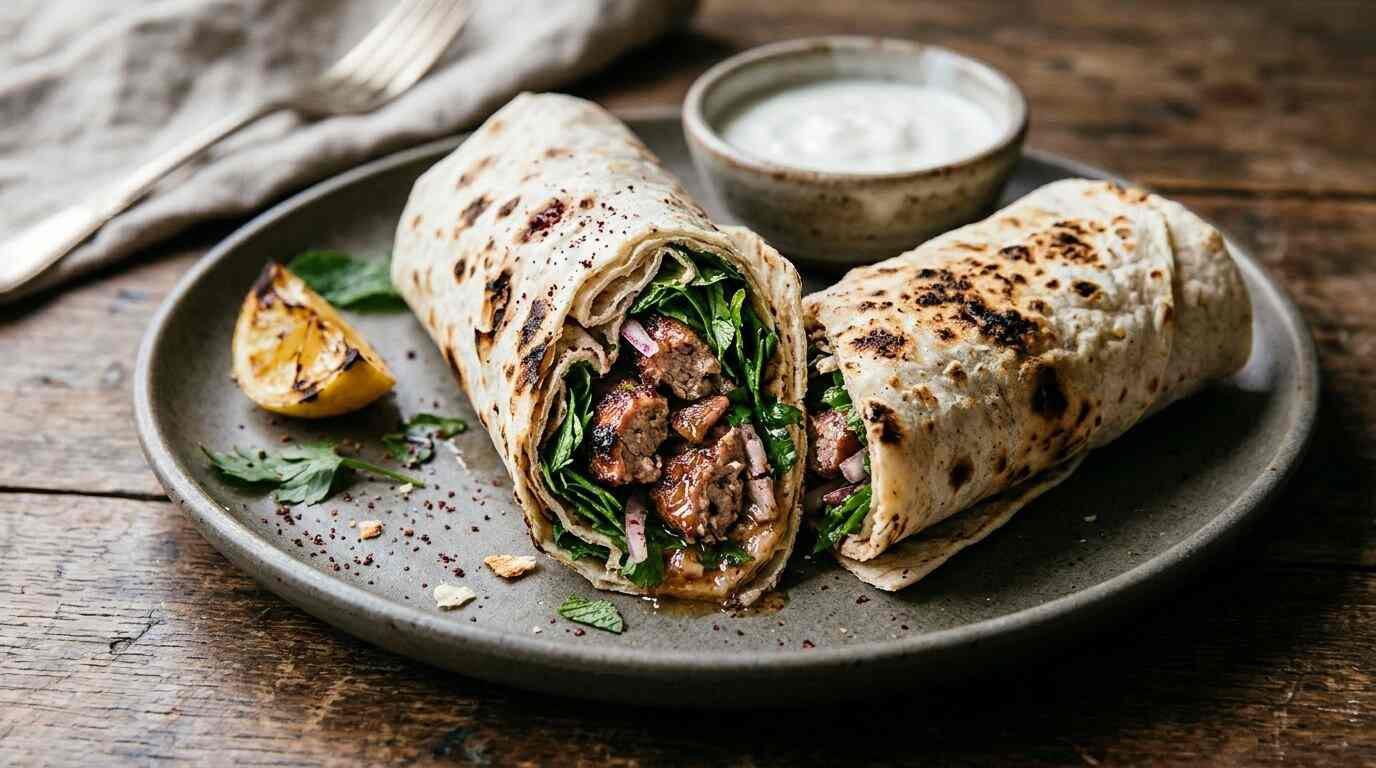
Lavash developed near the Black and Caspian Seas, where it was “originally called tonir lavash,” according to Tasting Table’s pita and lavash comparison. It is dense and toasty, can be leavened or unleavened, and was traditionally baked in a “subterranean clay oven” called a tonir. Today it is baked in an oven, on a stovetop or on a griddle, and it is used for wrapping kebabs such as dürüm and doner.
Armenia or Iran gets the credit at AZ Cuisines, which notes the bread is shared among several regional nations. It was inscribed by UNESCO in 2014 for its preparation process, meaning and appearance, and again in 2016 as part of flatbread making and sharing in Azerbaijan, Iran, Kazakhstan, Kyrgyzstan and Turkey. Fresh lavash is flexible, which makes it suitable for wrapping.
The oven changes name between the two. Tasting Table says tonir, while AZ Cuisines describes a clay oven called a tandoor or a sajj. Bob’s Red Mill calls lavash a traditional Armenian flatbread shaped and flavored by the hot walls of a clay oven, soft when fresh, brittle when dried and storable for several weeks, and often used as a wrap.
Armenians wrap lavash around khorovats, AZ Cuisines says, while in Iran and Turkey it wraps kebabs and forms dürüm wraps such as tantuni. The doner side is covered in the site’s doner kebab post.
Naan and the tandoor wall
Enriched, tandoor-baked and pocketless
Naan is the richer bread. Tasting Table says its dough includes dairy such as yogurt, milk and eggs, and sometimes butter or ghee, which makes it softer than pita, and that bakers slap it onto the walls of a tandoor so it puffs into bubbles. Food Republic describes it as hand-stretched into a teardrop shape and baked in a dome-shaped clay oven above 900°F, quickly, with little rise and charred bubbles. Chowhound lists yogurt or sour cream, ghee, and sometimes sweet or savory mix-ins such as raisins or pistachios, and says naan has no pocket.
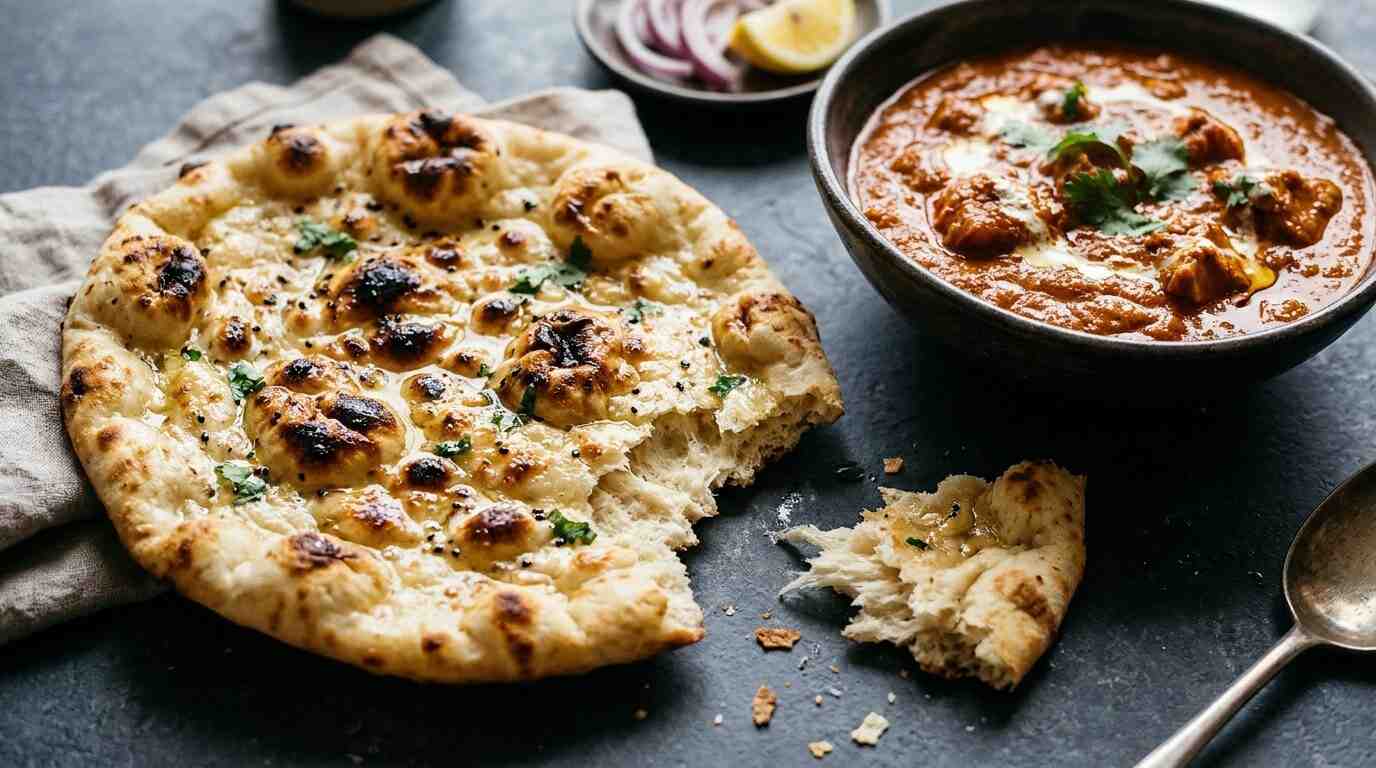
Uses follow the texture. Tasting Table says naan’s mild flavor balances spicier food and it is often used to scoop up curries. Food Republic says it is well suited to soaking up curry sauce and comes in flavored versions such as garlic and keema.
How old each bread is
Four thousand years, 2,500 years or 1300 A.D.
Age is the widest gap. Pita is about 4,000 years old per Tasting Table and Food Republic, and about 2500 B.C. per Chowhound. Naan is about 2,500 years old per Tasting Table, citing the Indian Express, but Food Republic says it first appears in records around 1300 A.D. and became a staple in India by the 1500s, and Chowhound likewise gives the earliest known reference as about 1300 A.D. and the origin as likely Central Asia, then South Asia.
Over a thousand years separates the naan estimates. They may be measuring two different things, first baking against first written reference, but none of the articles says which it is using.
Food Republic says the name naan may come from the Persian “nân-e sangak,” meaning bread baked on hot pebbles. Bob’s Red Mill goes further back, estimating that “nearly 30,000 years ago, the first flatbread was produced,” and also says flatbread originated in ancient Egypt, giving no source for either claim. Thirty thousand years is a long way to travel without a footnote.
Falafel, kebab or curry
Pocket, roll or scoop
For a filling that needs to be held, pita works as a pocket, and the sources name falafel, shawarma and gyro as typical. For a sandwich built by rolling, lavash is the one that stays flexible, and the sources name kebabs and dürüm. For curry or a sauce, naan soaks it up.

Flour is the point left open. Tasting Table’s lavash article says pita recipes disagree on bread flour against all-purpose, and gives lavash as all-purpose flour, plus salt, sugar, butter, egg and milk in one recipe, so a lavash can be enriched too. Bob’s Red Mill defines flatbread broadly as bread rolled into a thin, flat shape from a simple dough of flour, water and salt, sometimes with yeast. Steam makes the pita’s pocket, thinness keeps lavash flexible and a tandoor wall raises naan’s bubbles, and the flour inside all three is still being argued over.
Common questions
What is the difference between pita, lavash and naan?
Pita splits into a pocket, lavash is thin and flexible for rolling, and naan is enriched and mostly used for scooping, per the sources cited in the post.
Does naan have a pocket?
No. Chowhound says naan has no pocket, as the post reports.
How old is pita bread?
Estimates differ, from about 4,000 years per Tasting Table and Food Republic to about 2500 B.C. per Chowhound.
Sources
- Every Flatbread Explained (Food Explained, YouTube) — https://www.youtube.com/watch?v=UfNrvRvXTYs
- The Real Difference Between Pita And Naan (Tasting Table) — https://tastingtable.com/1035616/the-real-difference-between-pita-and-naan
- The Difference Between Pita Bread And Lavash (Tasting Table) — https://tastingtable.com/1141018/the-difference-between-pita-bread-and-lavash
- Pita Bread Vs Naan: What’s The Difference? (Food Republic) — https://www.foodrepublic.com/1735875/pita-bread-vs-naan-difference/
- What’s The Difference Between Pita And Naan Bread? (Chowhound) — https://www.chowhound.com/1710994/difference-between-naan-pita-bread
- What Is Flatbread? (Bob’s Red Mill) — https://www.bobsredmill.com/articles/what-is-flatbread
- Lavash (AZ Cuisines) — https://azcuisines.com/dishes/lavash
Keep reading
- Gyro: Etymology, Doner Lineage and the Chicago Cone Industry
- Sabich: The Iraqi Jewish Eggplant and Egg Sandwich of Israel and the Story Behind Its Name
- Döner Kebab: Origins, the Berlin Claim and the Disputed Inventor
More in this section: Ingredients guide.