In this story
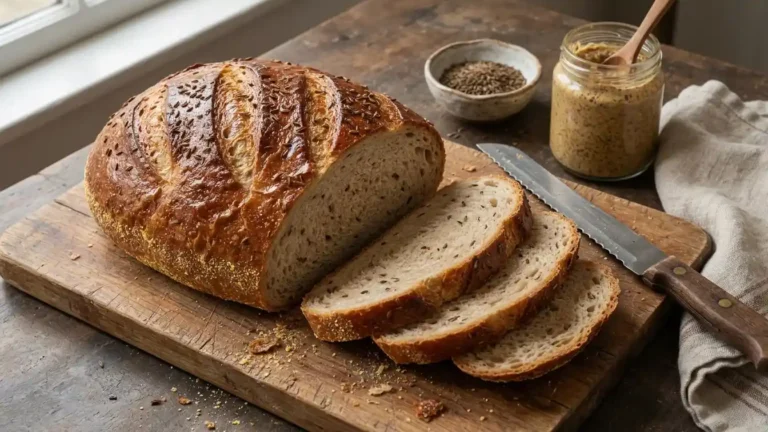
Ciabatta looks like a loaf from a medieval village oven, flat and floury and full of holes. It is younger than the compact disc. The bread was developed in the early 1980s at a flour mill in Adria, a town in the Polesine area of northern Italy, by a miller who wanted a domestic answer to the French baguette, which had become popular in Italian shops.
Video: Ciabatta: Born to battle the baguette, from the BBC World Service YouTube channel (Witness History)
A rally driver at a flour mill
The man credited with it is Arnaldo Cavallari. Sources describe him in slightly different ways. SBS Italian, in a January 2023 episode, calls him a four-time Italian rally champion whose family owned a flour mill. Fodor’s describes a rally car driver with a sideline in baking who ran the mill, Molini Adriesi. Food Republic simply calls him a miller.
The motive is the same in every account. Food Republic reports that Cavallari was concerned by how popular French bread had become in Italy. SBS adds that the mill gave him a commercial reason to act: a better bread meant more demand for his flour.
He did not work alone. SBS names two bakers, Francesco Favarone and Arnaldo Cremonesi, who spent weeks at the mill testing doughs and proving times. The flour blend, according to the same episode, was called farina natura uno.
1982 or 1983
The date is mostly agreed, with one exception. SBS gives July 1982. Fodor’s says Cavallari perfected the recipe in 1982, and Food Republic also gives 1982. Tasting Table, in a September 2025 article, credits him with developing the dough and naming the bread in 1983. The difference may be the gap between finishing the recipe and launching it, but none of the sources fetched here says so.
SBS also reports that in 1983 Cavallari promoted a “Rally del Pane,” a bread rally, on Radio Adria, a launch that borrowed from his racing life.

The name, three times over
Ciabatta means slipper, and SBS says the name came from the loaf’s flat, slipper-like shape. The first registered version tied it to place. Fodor’s gives it as ciabatta polesana, after the Polesine area; SBS spells the registered name “Ciabatta Polisano.”
Fodor’s reports two later renamings: ciabatta italia in 1990 and ciabatta natura in the mid-2000s.
Old recipe or new bread
The originality of ciabatta has been argued over. Food Republic reports that some critics said Cavallari had only repackaged an older traditional recipe. He rejected that, and the same article quotes him: “There is no question of that recipe having existed before.”
Tasting Table takes a middle position. It says Cavallari relied on old regional bread recipes handed down over time, and that some Italians questioned whether the bread was original. On that reading, the technique drew on older Italian baking even if the loaf, the flour and the name were new.
What made the dough distinctive was water. Fodor’s reports that Cavallari’s recipe used 75 percent water relative to flour, and that Giovanni Cazzola, a baker in Adria, says very good flour can take more. Food Republic contrasts the result with a baguette: higher hydration, a crisper crust and an airier interior. It also contrasts ciabatta with breads like focaccia, which usually have denser, softer interiors.
Licensed abroad
Cavallari sold ciabatta as a system. Fodor’s describes him traveling widely to present the recipe to bakeries and set up outlets.
The licensing count is consistent, but the timing differs. SBS says that by 1999 his company had licensed bakers in 11 countries. Food Republic says he had licensed production to 11 countries by the mid-1990s.
Britain came early. SBS says ciabatta reached British shelves in 1985. Fodor’s, citing archive records, says Marks & Spencer was selling it by at least 1994. Fodor’s also reports that the bread reached Australia and Brazil.
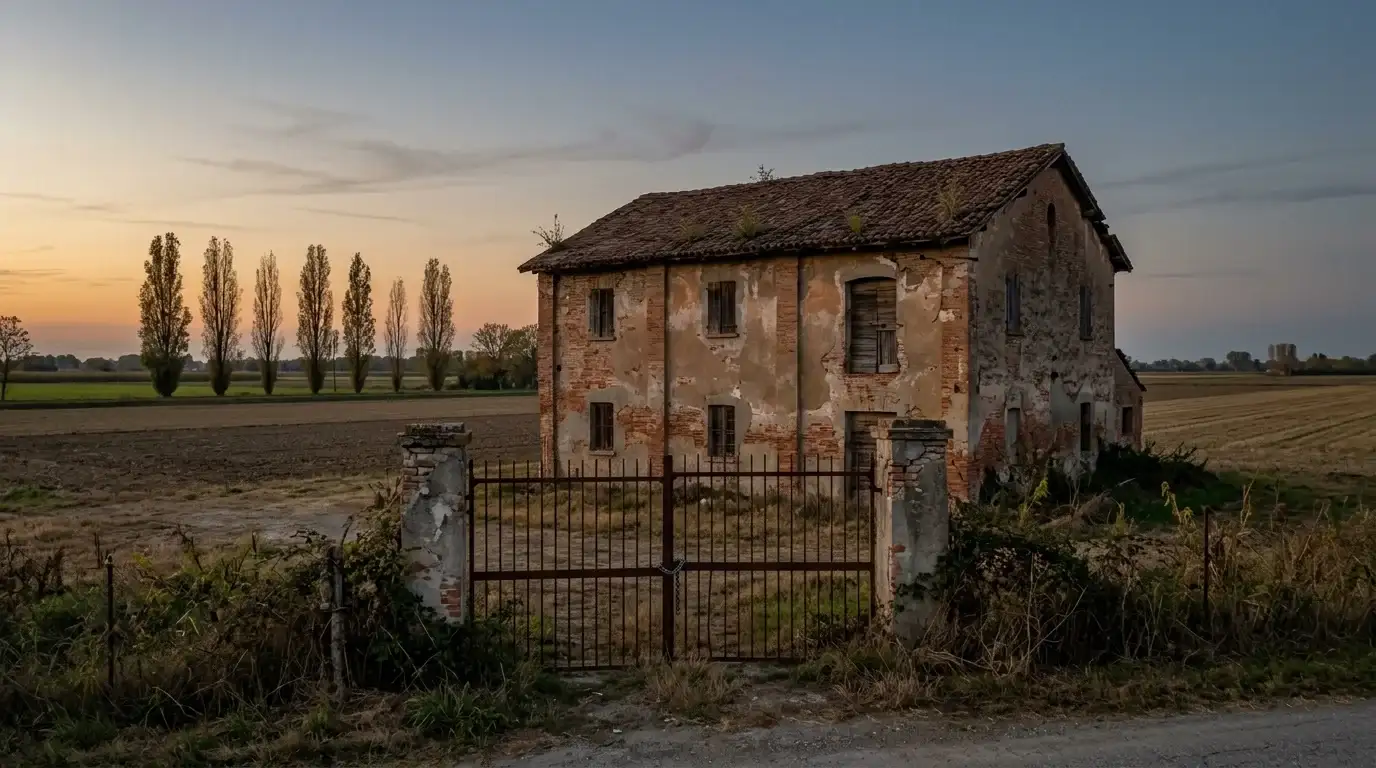
The story at home ended badly. Fodor’s reports that the mill fell into financial ruin while Cavallari was often away traveling and is now closed, with a faded “Ciabatta Village” banner on its locked gates. Marco Vianello, a friend of Cavallari and president of the Accademia del Pane, told Fodor’s that the bread’s success was also its destruction.
How it reached America
Two routes appear in the sources. Food Republic places ciabatta’s first American appearance in Cleveland, Ohio, in 1987. SBS says it reached US shelves in the late 1980s, and Fodor’s also says the late 1980s.
Tasting Table tells a New York story built around a cookbook. Carol Field, an American writer living in Italy, published The Italian Baker in 1985 with detailed English instructions for ciabatta. According to Tasting Table, the book inspired Sarah Black, a New York City baker, to sell ciabatta commercially. She started a business called Campanio, baked at Tom Cat Bakery and sold to shops including Dean & DeLuca and Murray’s Cheese Shop. Tasting Table adds that Florence Fabricant wrote about the recipe in The New York Times in 1992.
The two accounts do not necessarily conflict. One describes a first appearance in Ohio; the other describes how the bread spread through New York’s specialty food trade.
Making it at home
Home recipes keep the wet dough and add a preferment. Sally’s Baking Addiction uses a biga, a mix of flour, water and a pinch of yeast made the day before, which it says strengthens the gluten and deepens the flavor. That recipe calls for four rounds of stretching and folding, 30 minutes apart, and a bake at 450°F until the bread reaches about 205 to 210°F inside.
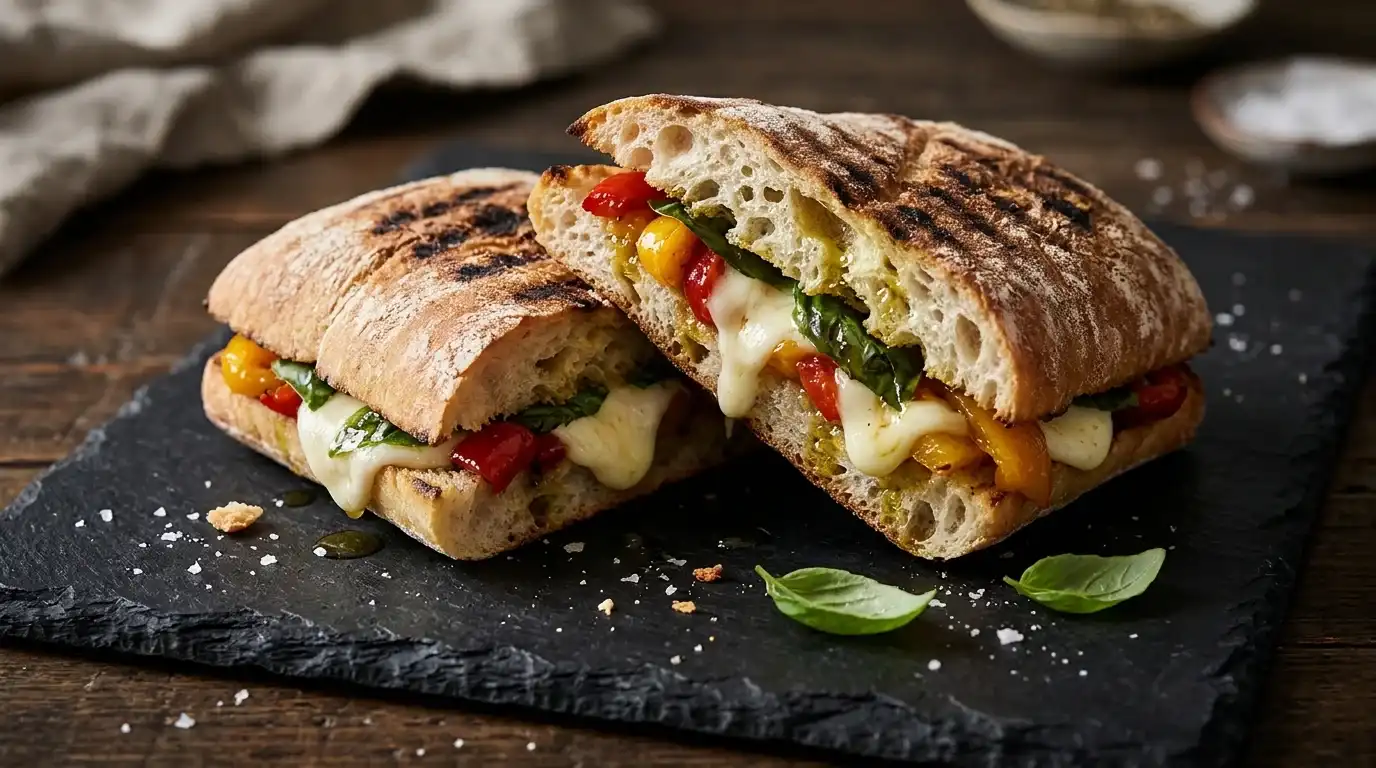
As a sandwich bread, the open crumb is the point. It holds oil and juices without collapsing, and its flat shape fits a press. Grill Cheesy covers pressing in panini press versus skillet, another Italian-American bread story in the muffuletta, and what happens to a loaf like this after a day on the counter in why bread goes stale. For a bread with a far longer history, see sourdough.
The book that brought it over
- The Italian Baker, Revised: The Classic Tastes of the Italian Countryside–Its Breads, Pizza, Focaccia, Cakes, Pastries, and Cookies: the revised edition of Carol Field’s book, first published in 1985. See it on Amazon (affiliate link)
As an Amazon Associate I earn from qualifying purchases. A commission may be earned if you buy through this link, at no extra cost to you.
Questions people ask
When was ciabatta invented? In 1982 according to SBS, Fodor’s and Food Republic; Tasting Table gives 1983.
Who invented ciabatta? Arnaldo Cavallari, a miller in Adria, with bakers Francesco Favarone and Arnaldo Cremonesi, according to SBS.
What does ciabatta mean? Slipper, after the bread’s flat shape.
Is ciabatta a traditional Italian bread? It is disputed. Critics called it a repackaged older recipe; Cavallari said the recipe had not existed before him.
When did ciabatta come to America? In the late 1980s, with a first appearance in Cleveland in 1987 according to Food Republic.
Sources
- SBS Italian, “Ep. 246: La sorprendente storia della ciabatta” (January 12, 2023): https://www.sbs.com.au/language/italian/en/podcast-episode/ep-246-la-sorprendente-storia-della-ciabatta/9r2j1sx4c
- Fodor’s, “Italy’s Ciabatta Bread Was Invented in 1982” (undated): https://www.fodors.com/world/europe/italy/experiences/news/italys-ciabatta-bread-was-invented-in-1982
- Food Republic, Adam Raphael (October 21, 2024): https://www.foodrepublic.com/1689794/origin-of-ciabatta-bread/
- Tasting Table, J. Henley (September 2, 2025): https://www.tastingtable.com/1950840/ciabatta-bread-history/
- Sally’s Baking Addiction, Homemade Ciabatta Bread: https://sallysbakingaddiction.com/ciabatta-bread-recipe/