In this story
Trinidad has two sandwiches that most visitors eat before they leave. Bake and shark is fried fish in fried bread, eaten at the beach on the north coast. Doubles is curried chickpeas on two pieces of small fried flatbread, sold from roadside stands for a few Trinidad dollars. One is a seafood sandwich with a conservation problem; the other is a street snack with two competing invention stories.
Video: Bake and Shark!! #1 FAST FOOD in Trinidad and Tobago – Maracas Bay!!, from the Mark Wiens YouTube channel
The bake at Maracas Bay
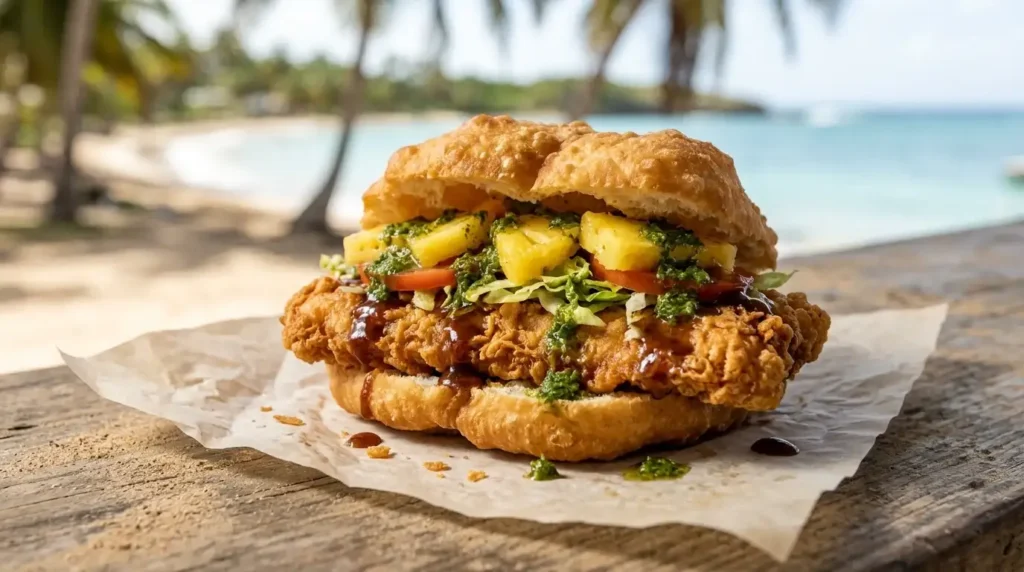
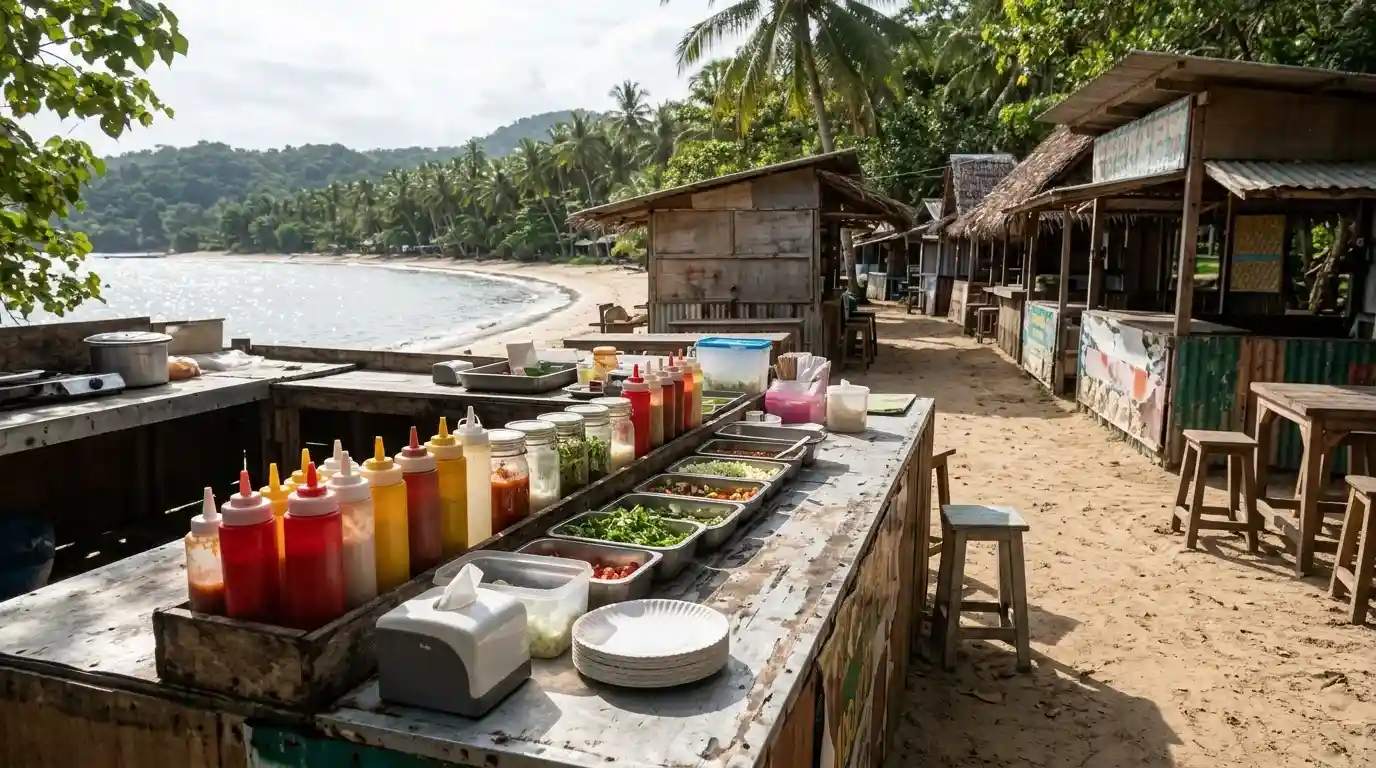
The bread is fried, despite the name. LargeUp, in a March 2014 report from Maracas Beach by Tishanna Williams, calls the bake a popular bread that is fried rather than baked, and describes the sandwich as shark meat with pineapple, vegetables and a long list of condiments, mango chutney and tamarind sauce among them. The report places the dish at Maracas and Las Cuevas bays, where it treats a bake and shark as close to mandatory.
Caribbean Beat, in its July/August 2014 issue, lists the toppings vendors offer with the deep-fried fish: pineapple, chadon beni, tamarind and garlic sauce.
The best-known stall is named in both reports. Caribbean Beat calls Richard’s Bake & Shark the most popular stall on Maracas Beach, and LargeUp interviewed its cooks.
What shark is in the bake
The species question has no single answer in the sources. LargeUp says great white and mako are the preferred species. Caribbean Beat, writing a few months later, does not name a species at all.
Supply was already tightening in 2014. Richard’s cooks told LargeUp that demand had risen while suppliers were sending less meat, and Melissa Tulsie of Asha’s, another stall, said the trawlers were catching fewer sharks. LargeUp also noted that shark was the cheaper filling, with kingfish or shrimp costing TT$15 to $20 more.
The case against the shark
Conservationists have pushed vendors to change the fish. Caribbean Beat profiles Papa Bois Conservation, founded by Marc de Verteuil, and quotes him: “when traditions become unsustainable, they must change.” The magazine reports that the group took lionfish caught in Tobago to Richard’s, cooked it the same way, and that Richard’s sister said she could not tell it from shark.
De Verteuil made the argument again in the Trinidad Guardian in March 2015. The seafood guide Papa Bois published, written by Dr Amy Deacon and marine biologist Robin Ramdeen, advises leaving shark off the menu because sharks mature slowly and produce few young. Maracas vendors also sell bake with kingfish, shrimp and flying fish, and the article names flying fish as the one sustainable choice on the beach. Caribbean Beat explains the lionfish pick: a single lionfish can lay up to 10,000 eggs at a time and may eat up to 90 percent of juvenile native reef fish.
Doubles: bara and channa
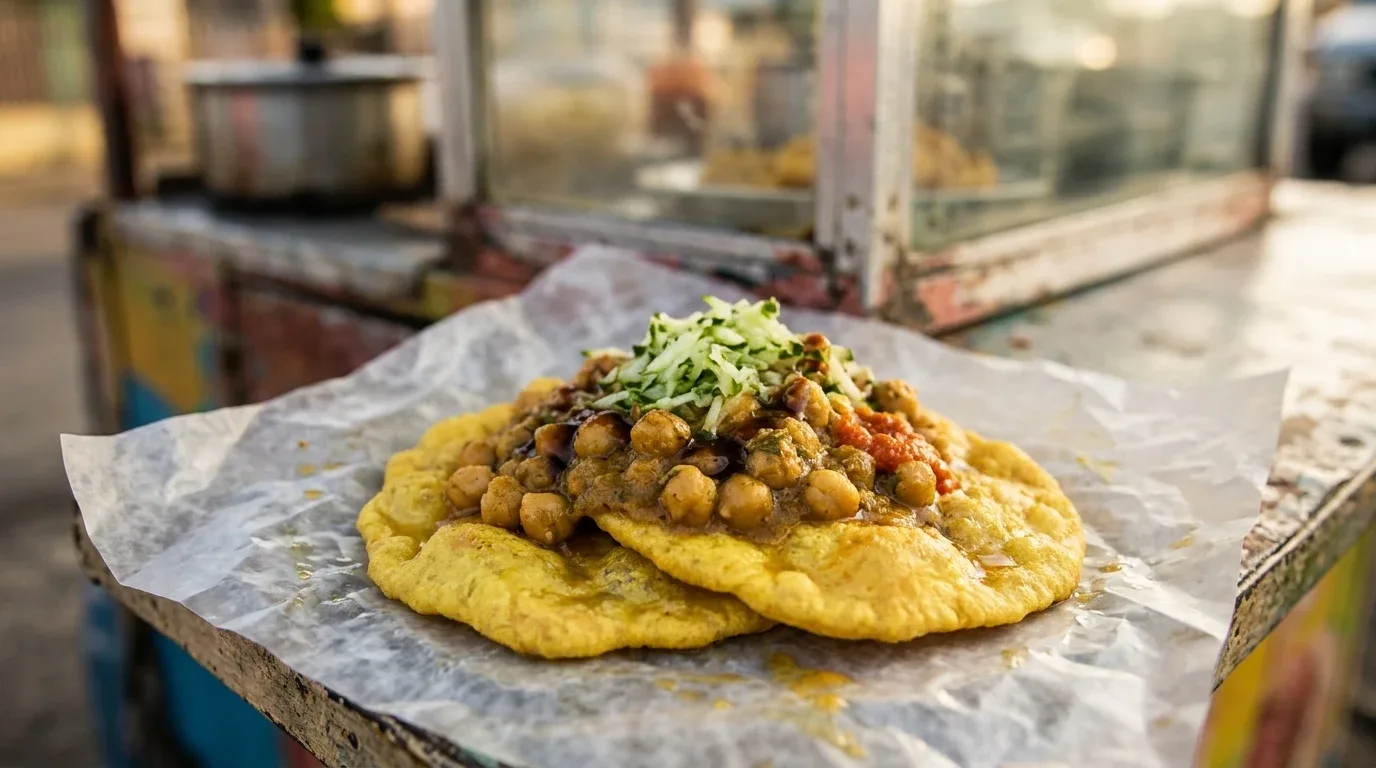
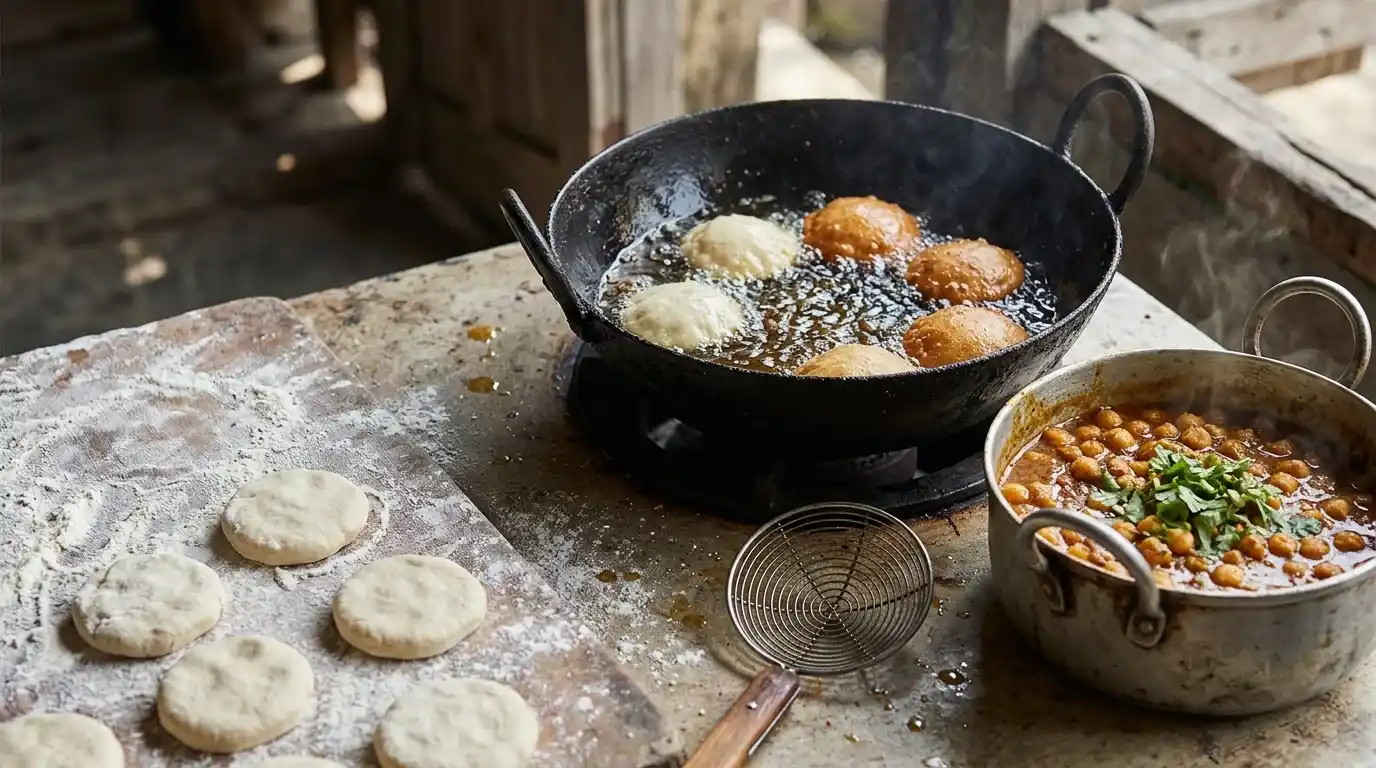
Doubles starts with a different bread. The Oxford Business Group, in a 2016 report on Trinidad’s street food, describes bara as thin, palm-sized discs of fried flour, salt, baking powder and turmeric, with two layers of bara topped by two large spoonfuls of curried chana and served on waxed paper.
The price has always been part of its appeal. The same report says doubles cost TT$4 until the end of 2015, and that after an October 2015 fuel subsidy cut most vendors had settled at TT$5 by early 2016, with triples a dollar more before the change.
The report lists the optional toppings as mango, coriander, cucumber, coconut, tamarind and extra pepper sauce.
Who invented doubles
The Deen family has the best-documented claim. The Trinidad Guardian, in an August 2019 article by Bobie-Lee Dixon, reports that Emamool “Mamoodeen” Deen and his wife, Rasulan, began selling fried channa in 1936 from his father-in-law’s home on Bonanza Street, Princes Town, then sold channa on a single bara until customers asked him to “double up.” Their son Badru Deen tells the story in his book Out of the Doubles Kitchen. The article says the Ali family, Emamool’s brothers-in-law, joined the business, later branched off as Ali’s Doubles, and took the lead after the Deens moved to San Juan.
The Oxford Business Group gives the same 1936 date for Deen but treats the origin stories in general as largely urban legend. It also dates the book to 2014, a year later than the Guardian’s November 2013.
A different account names a different man. In an October 2019 Trinidad Guardian piece, Al Ramsawack recounts a 1979 conversation with Singh, a Princes Town vendor he calls the doubles man, who learned from Chote, Dean and Asga Ali. In Singh’s version the name came after 1945 at King’s Wharf in San Fernando, when a garage worker asked for curried channa on bara and then a second one, which Singh jokingly called a “double.” The two accounts agree on Princes Town and on bara and channa, and disagree on who coined the name and when.
Where they sit among street sandwiches
Both are bread-first street food, built around a small hot bread split or stacked by hand. Venezuela and Colombia do something similar with the corn arepa, and the nearest American cousin of the fish sandwich is New Orleans’ po’ boy, which swaps the bake for French bread.
The book
- Out of the Doubles Kitchen: A Memoir of the First Family of Doubles – The Number One Street Food of Trinidad & Tobago.: Badru Deen’s memoir of his parents’ doubles business in Princes Town. See it on Amazon (affiliate link)
As an Amazon Associate I earn from qualifying purchases. A commission may be earned if you buy through this link, at no extra cost to you.
Questions people ask
What is a bake in bake and shark? A fried bread, despite the name, split and filled with fried fish.
Where is bake and shark from? Trinidad’s north coast, especially Maracas Bay and Las Cuevas Bay.
What fish can replace shark? Maracas vendors also sell kingfish, shrimp and flying fish; conservation groups recommend flying fish or lionfish.
What are doubles made of? Two baras, fried discs of flour, turmeric and baking powder, with curried chickpeas and sauces.
Who invented doubles? The Deen family claims 1936 in Princes Town; another account credits a Princes Town vendor named Singh with the name after 1945.
Sources
- LargeUp, Tishanna Williams, “LargeUp Investigates: Bake and Shark” (March 25, 2014): https://www.largeup.com/2014/03/25/bake-and-shark-2/
- Caribbean Beat, Nazma Muller, “Save the sharks” (Issue 128, July/August 2014): https://www.caribbean-beat.com/issue-128/save-sharks
- Trinidad Guardian, Marc De Verteuil (March 1, 2015): https://www.guardian.co.tt/article-6.2.375863.8478a7e190
- Oxford Business Group, “Plenty of pepper: The nation’s street food staples have an Asian flavour” (2016): https://oxfordbusinessgroup.com/reports/trinidad-tobago/2016-report/economy/plenty-pepper-the-nations-street-food-staples-have-asian-flavour
- Trinidad Guardian, Bobie-Lee Dixon, “The Deens’ legacy” (August 16, 2019): https://guardian.co.tt/news/the-deens-legacy-6.2.907793.561272fcc8
- Trinidad Guardian, Al Ramsawack, “Pioneers of the doubles” (October 26, 2019): https://www.guardian.co.tt/life/pioneers-of-the-doubles-6.2.970236.89eb32838a