In this story
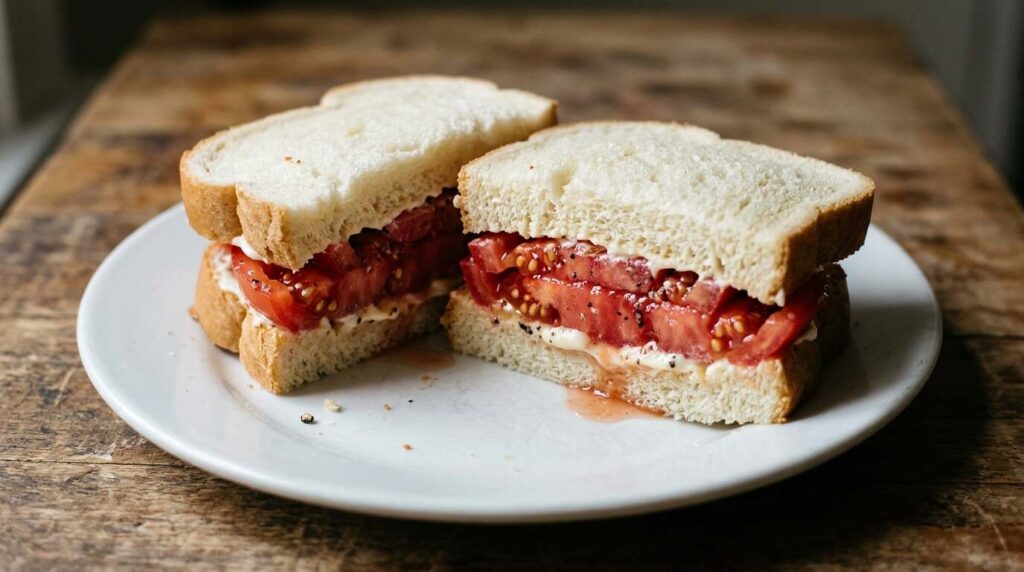
The Southern tomato sandwich is two slices of soft white bread, mayonnaise, a thick slice of ripe tomato, salt and black pepper, and nothing else. Nobody holds a patent on it, and no restaurant or chef is credited with it. Tasting Table calls it especially popular across the southern United States, and the argument about how to make it correctly is part of the pleasure for the people who care.
Video: How to Make a Southern Tomato Sandwich | Classic Recipe | Get Cookin’ | Allrecipes
The build
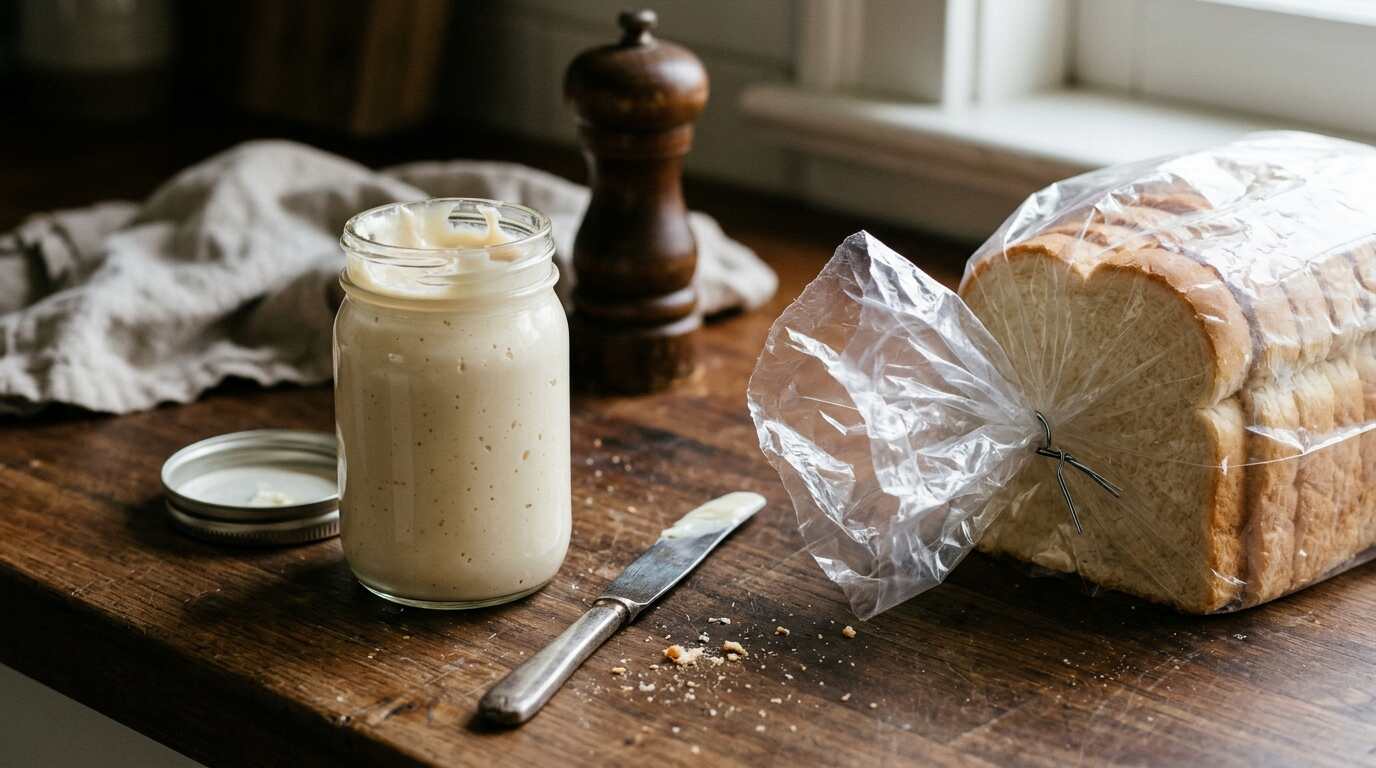
Tasting Table’s account of the sandwich rests on a reader survey by Gwinnett Magazine, a regional publication covering the north Atlanta suburbs. Respondents settled on fresh white bread that is never toasted, a garden tomato left unpeeled, black pepper, salt and real mayonnaise rather than a mayonnaise-style dressing. The magazine’s own write-up adds that the bread should be fresh enough to cling to the roof of the mouth and that Miracle Whip does not count.
Method varies by cook. Garden & Gun’s survey of chefs and writers, titled tomato sandwich rules and regulations, has the writer and podcast producer Stephanie Burt cutting two half-inch tomato slices into half-moons so they are less likely to slide out. A personal chef quoted there, Lynn Wells, prefers a one-inch slice and spreads mayonnaise on both pieces of bread. The Post and Courier’s South Carolina recipe calls for slices of a quarter to a half inch, seasoned on both sides before they go on the bread, and treats toasting as optional.
Lettuce and cheese are left out. Garden & Gun’s piece says they belong on a BLT, and Gwinnett Magazine notes that readers who suggested bacon, lettuce or ham were describing different sandwiches. The bacon version has its own entry in the post on the BLT.
An old sandwich with a thin paper trail
Tasting Table says the Virginia Chronicle is widely credited as the first publication to mention the sandwich in print, in 1911. Gwinnett Magazine quotes the item: a man described his lunch as “tomato sandwich, a slice of watermelon, iced tea, and a slice of coconut cream pie.” Neither article gives a date more specific than the year or a page reference, and neither source treats 1911 as the sandwich’s beginning. Tasting Table assumes it existed before then.
Nothing in the fetched sources names an inventor. Donald Bryson, writing in a July 2026 opinion column for the Carolina Journal, says printed references to tomato sandwiches appear by the early twentieth century but that the dish is probably older. In his telling it was never a restaurant or chef’s creation. It arose when home gardens produced more tomatoes than families could preserve or give away. That is an argument from circumstance and not a documented history, and the column presents it as such.
Duke’s and the woman who made it
Duke’s is the brand most often named for the sandwich, and its history is better documented than the sandwich’s. The South Carolina Encyclopedia dates Eugenia Duke’s first batch of mayonnaise to about 1917, at her home on Manly Street in Greenville, and says the date is the one most often cited. She began by selling sandwiches to drugstore soda fountains and corner groceries. Soldiers stationed nearby during World War I then wrote asking for jars of the mayonnaise to be shipped to them, and her business shifted toward manufacturing.
The accounts differ on the camp. Duke’s own site says the legacy began at Camp Sevier in 1917, where soldiers praised the sandwiches she sold to army canteens. The South Carolina Encyclopedia calls the place Fort Sevier. KQED’s account adds that Duke and her daughter Martha made egg salad, chicken salad and pimento cheese sandwiches in their rental house and sold them for ten cents to infantrymen, and that local lore credits her with 10,000 sandwiches in a single day in 1919.
The dates after the war line up across sources. The encyclopedia says she sold the sandwich business in 1920 and opened a mayonnaise plant in Greenville in 1923, a year that matches the date on Duke’s site for bottling the spread as a product of its own. In 1929 she sold the mayonnaise business and her recipe to the C. F. Sauer Company of Richmond, Virginia, which still owns the brand. Duke’s says the flagship jar is still made in Greenville according to her original recipe.
The recipe explains the sandwich’s loyalty. Tasting Table reports that Duke’s contains no sugar and uses only egg yolks, with both apple cider and distilled vinegar, which gives the tang the brand calls “twang.” Chef John Fleer, quoted by KQED, put the balance this way: “the right balance of richness and acidity.”
Duke’s, Blue Plate, Hellmann’s
The mayonnaise is where agreement ends. In the Gwinnett survey Duke’s took first place, Hellmann’s second and Blue Plate third. Audre Langebartel of Charleston, quoted by Garden & Gun, described the Charleston preference as “squishy white bread and Duke’s.” Bill Smith, a former Crook’s Corner chef, offered a looser rule in the same piece, to use what one’s grandmother used, and Dean Neff of Seabird in Wilmington, North Carolina, reserves Duke’s for versions with bacon and uses Hellmann’s when the sandwich is only tomato and bread.
Chuck Reece, editor of Salvation South, names two Southern contenders in a Georgia Public Broadcasting segment: Duke’s from Greenville and Blue Plate from Gretna, Louisiana. He grew up on Blue Plate, finds Duke’s slightly tangier, and says either works, but he warns that Hellmann’s is out because it began in New York City. The same advice appears in his earlier Bitter Southerner column.
Blue Plate’s own history gives 1927 and New Orleans, with first production in a small warehouse in Gretna. The brand says it was named for the blue willow-pattern plate and that its recipe is oil, vinegar and only egg yolks. Garden & Gun’s roundup of tomato sandwiches also points to Creole tomatoes, grown in the alluvial soil of southern Louisiana and in season only briefly.
The tomato, the fridge and the salt
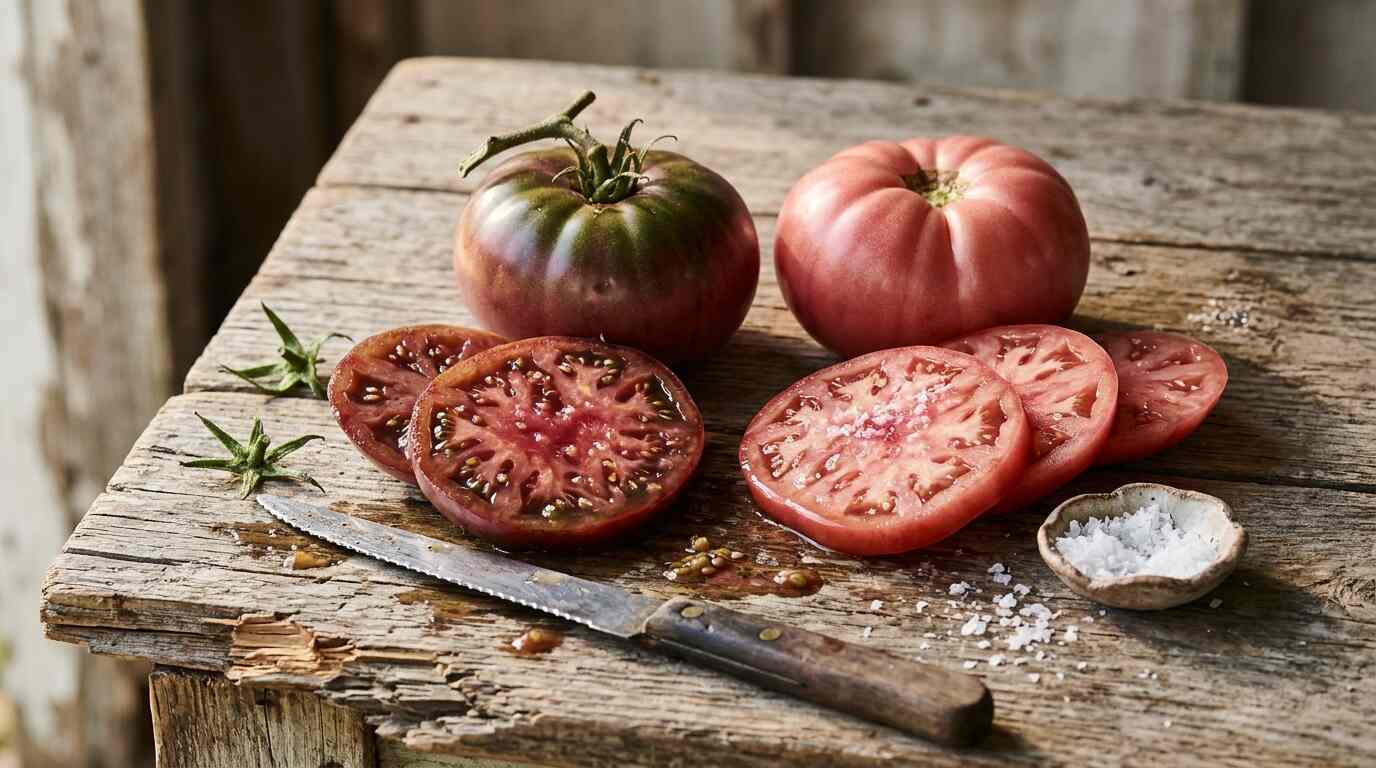
Every source agrees on the tomato: ripe, home-grown or from a farm stand, and never a shipped supermarket one. Reece’s phrase is a “mealy, plain-Jane, supermarket tomato” as the thing to avoid. Burt, in the Garden & Gun piece, waits for a tomato “that whispers,” often a Cherokee Purple that has never been refrigerated.
Cold storage has a measurable effect. A University of Florida team led by horticultural scientist Harry Klee, publishing in the Proceedings of the National Academy of Sciences in October 2016, found that tomatoes held at about 41 degrees Fahrenheit, the temperature of most refrigerators, had some flavor-related genes switch off, and that the genes stayed off after warming. Cosmos Magazine’s report on the same work says flavor volatiles fell by as much as 65 percent in cold air while sugar and acidity stayed the same.
Varieties come up by name. Bryson’s column says Cherokee Purple originated in 1990, when a Tennessee gardener, John Green, sent seeds from an unnamed purple tomato to heirloom specialist Craig LeHoullier, then living in Raleigh. LeHoullier grew it, named it and helped spread it. The same column calls German Johnson a large pink heirloom grown in North Carolina and Virginia for generations, and says locally grown German Johnsons became central to the North Carolina General Assembly’s Tomato Sandwich Day, begun in the 1990s by state senator Hugh Webster. The Post and Courier recipe names Big Boy or Cherokee Purple.
Salt is the other point of order. The Post and Courier writer is blunt, ordering the cook to “Always, always, always season” the sliced tomatoes with salt and pepper. Reece prefers kosher salt for “a smidge of crunchiness” rather than table salt. Burt adds a dash of cayenne and serves the sandwich with original Lay’s potato chips.
The bread
The bread is the least fashionable part of the argument. Smith, the Chapel Hill chef, told Garden & Gun to use “the cheapest store-brand white bread” available and advised against artisanal loaves. Burt asks for bread that is soft but structured enough to slice, and avoids gummy, seeded or rough-textured loaves. Wells names Wonder Bread, Merita and Bunny Bread. Reece’s choice is Sunbeam, and he specifies store-bought sandwich bread over dense homemade white.
The reasoning is partly structural. A soft slice takes mayonnaise and tomato juice without competing with either, which is the same logic that sends the grilled cheese sandwich to a particular loaf in the post on the best bread for grilled cheese. Toasting is the main dissent. The Post and Courier recipe allows it for crunch and sturdiness, and the Gwinnett respondents ruled it out.
Variations, a book and a summer lunch
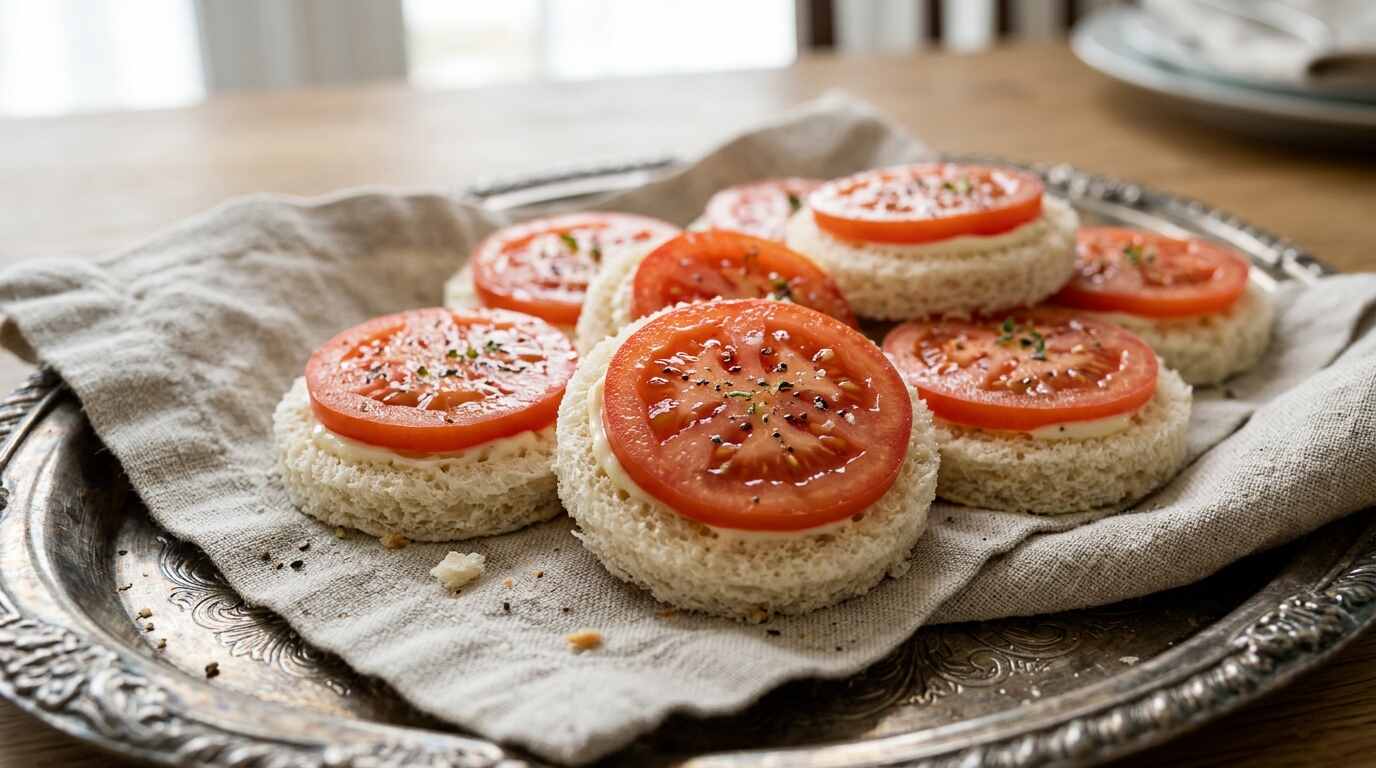
The Vicksburg version turns the sandwich into a tea sandwich. As Catherine Boone Hadaway describes it in the Vicksburg Post, fresh white bread is cut into rounds, spread with mayonnaise and topped with a tomato slice cut to match, drained between paper towels so the sandwich does not turn soggy. The column quotes Harley Caldwell as saying a friend made the sandwich famous through the book A Southern Belle Primer.
Restaurants have built on the plain version. Garden & Gun’s roundup lists Vivian Howard’s Chef & the Farmer in Kinston, North Carolina, with Cherokee Purple slices on onion bread and smoked corn aioli, and Scratch in Durham, which uses celery salt on white bread. The magazine’s author, Hanna Raskin, says the restaurant versions complement the classic and do not replace it.
Children’s literature has a tomato sandwich of its own. In Louise Fitzhugh’s Harriet the Spy, Harriet eats one for lunch every day, and when her mother offers alternatives she answers with a single word, “Tomato,” according to The Takeout’s essay by Gwen Ihnat. Book Riot’s piece on the novel notes that the routine breaks when someone pilfers the sandwich.
The season is short, and institutions mark it. Alabama’s Commissioner of Agriculture and Industries, Rick Pate, hosted the 22nd annual Tomato Sandwich Lunch on June 25, 2025, serving Alabama-grown tomatoes with products from state manufacturers, including Flowers Bakery bread. Georgia Public Broadcasting’s segment said homegrown tomatoes were due in backyards and farmers’ markets within four to six weeks of its April 2024 publication. Reece frames the sandwich as a rare point of agreement across the region, and recommends eating it standing over the kitchen sink, since the juice and mayonnaise will run down the arms.
The soup counterpart, in which tomato goes into a bowl beside a grilled cheese, is covered in the post on grilled cheese and tomato soup.
Sources:
- Tasting Table, “In The South, There’s An Art To Making The Perfect Tomato Sandwich”: https://www.tastingtable.com/1352008/southern-tomato-sandwich-art-form
- Gwinnett Magazine, “How Do You Make a Tomato Sandwich?”: https://gwinnettmagazine.com/how-do-you-make-a-tomato-sandwich/
- Garden & Gun, “Tomato Sandwich Rules and Regulations”: https://gardenandgun.com/tomato-sandwich-rules-and-regulations
- Garden & Gun, “The South’s Best Tomato Sandwiches”: https://gardenandgun.com/articles/the-souths-best-tomato-sandwiches/
- Post and Courier (Free Times), South Carolina tomato sandwich recipe: https://www.postandcourier.com/free-times/food/tomato-sandwich-recipe-dukes-mayonnaise-south-carolina/article_8f749480-5fe1-11ef-a579-f399bfa4bf26.html
- Carolina Journal, Donald Bryson, “In praise of the tomato sandwich”: https://www.carolinajournal.com/opinion/in-praise-of-the-tomato-sandwich/
- South Carolina Encyclopedia, “Duke’s mayonnaise”: https://www.scencyclopedia.org/sce/?p=6511
- Duke’s Mayonnaise, About: https://dukesmayo.com/pages/about
- KQED, “Worth the Whisk: How the Woman Behind Duke’s Mayo Became a Tycoon”: https://www.kqed.org/bayareabites/128813/worth-the-whisk-how-the-woman-behind-dukes-mayo-became-a-tycoon
- Tasting Table, “12 Little-Known Facts About Duke’s Mayonnaise”: https://www.tastingtable.com/1743522/dukes-mayonnaise-facts/
- Blue Plate Mayonnaise, About: https://blueplatemayo.com/about/
- Georgia Public Broadcasting, Chuck Reece, “One Perfect Thing: The Tomato Sandwich”: https://www.gpb.org/blogs/salvation-south/2024/04/26/one-perfect-thing-the-tomato-sandwich
- The Bitter Southerner, “How to Make and Eat a Tomato Sandwich”: https://bittersoutherner.com/from-the-southern-perspective/food/how-to-make-and-eat-a-tomato-sandwich
- Genetic Literacy Project, “Refrigerating tomatoes causes genetic changes that reduce flavor”: https://geneticliteracyproject.org/2016/10/19/refrigerating-tomatoes-causes-genetic-changes-that-reduce-flavor/
- Cosmos Magazine, “Why you shouldn’t store tomatoes in the fridge”: https://cosmosmagazine.com/science/chemistry/why-you-shouldnt-store-tomatoes-in-the-fridge
- Vicksburg Post, “An ode to the Vicksburg tomato sandwich”: https://www.vicksburgpost.com/2019/09/24/an-ode-to-the-vicksburg-tomato-sandwich/
- The Takeout, “Harriet The Spy Inspired My Lifelong Love Of Tomato Sandwiches”: https://thetakeout.com/tomato-sandwiches-toast-mayo-harriet-spy-1833073407
- Book Riot, “Harriet the Spy, Tomato Sandwiches, and Breaking Routines”: https://bookriot.com/2020/06/10/harriet-the-spy-tomato-sandwiches-and-breaking-routines/
- Alabama Department of Agriculture and Industries, 22nd Annual Tomato Sandwich Lunch: https://agi.alabama.gov/2025/06/alabama-commissioner-of-agriculture-and-industries-rick-pate-hosts-22nd-annual-tomato-sandwich-lunch/
- Allrecipes (YouTube), “How to Make a Southern Tomato Sandwich”: https://www.youtube.com/watch?v=psfzL-vdi3E