In this story
Choripán is a grilled chorizo served in a crusty roll, and its name is the whole recipe: chorizo plus pan, the Spanish word for bread. Argentina treats it as a national street food and Uruguay serves it at the same kinds of grills, so neither country can claim the sandwich cleanly. A Billiken article by Ignacio Risso calls it “profundamente argentino” and then adds that it is “no es exclusivamente argentino.” The same piece reports that no document names an inventor or the day the first one was made.
Video: Choripan – The original Argentinian street food sandwich | The Street Food Channel
What goes into a choripán
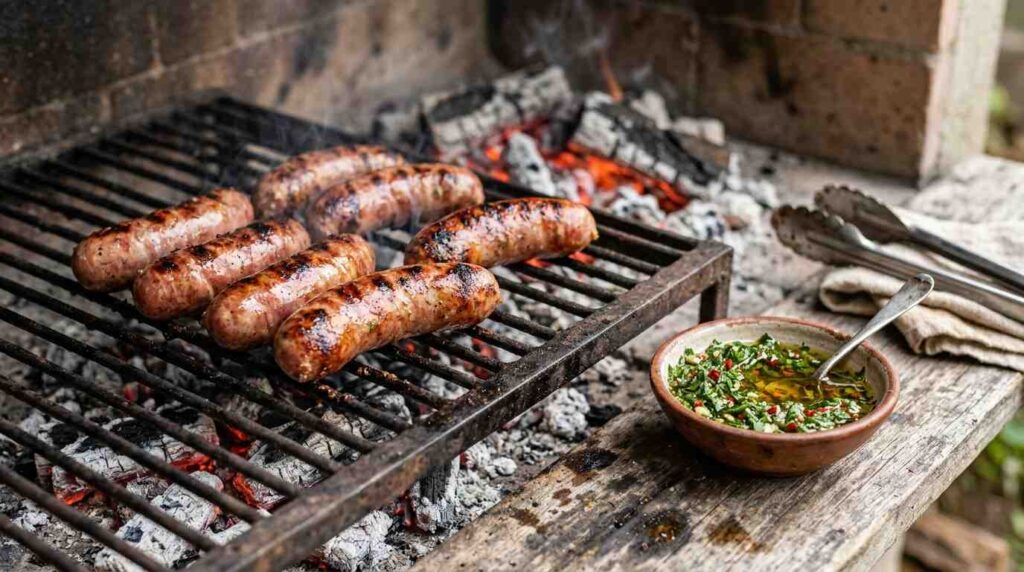
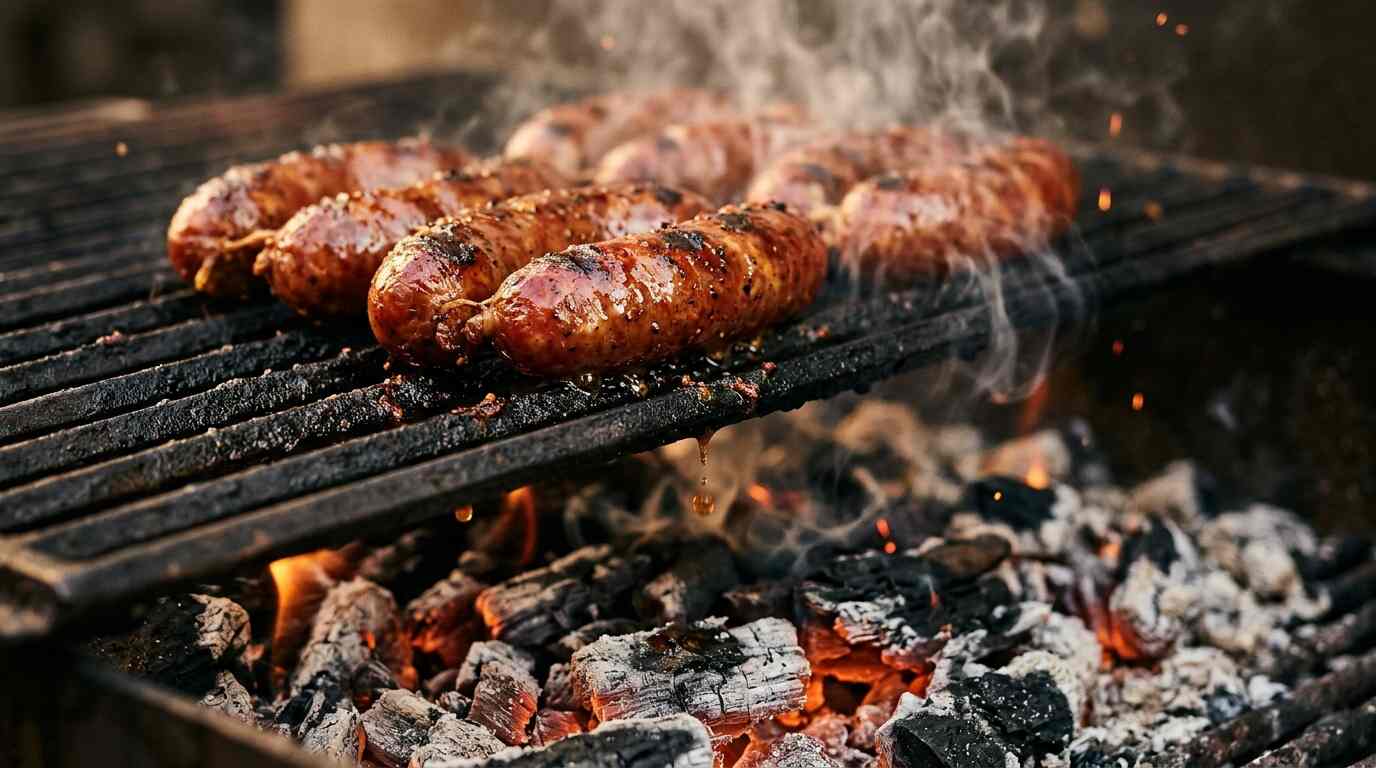
The sausage is fresh, not dried. Billiken describes it as the criollo or parrillero type of chorizo, cooked over a grill and served either whole or opened lengthwise in the butterfly cut known as a mariposa, with bread that is sometimes toasted on the same grill. That is a different product from the cured, paprika-heavy chorizo sold in Spain, and different again from the loose Mexican kind.
Composition varies by cook and by region. Gaucho Life says Buenos Aires chorizos are typically a beef and pork blend, that smaller Argentine cities often use pork-only criollos, and that southern Argentina sometimes uses mutton. The same page names the colorado (paprika-red), the spicier bomba and the smaller bombón. Tasting Table relays a Google Arts & Culture description of a traditional sausage at roughly 70 percent beef and 30 percent pork, seasoned with nutmeg, paprika, fennel or clove. The same article gives the usual bread as a long white roll, similar to a baguette, split and often grilled cut side down.
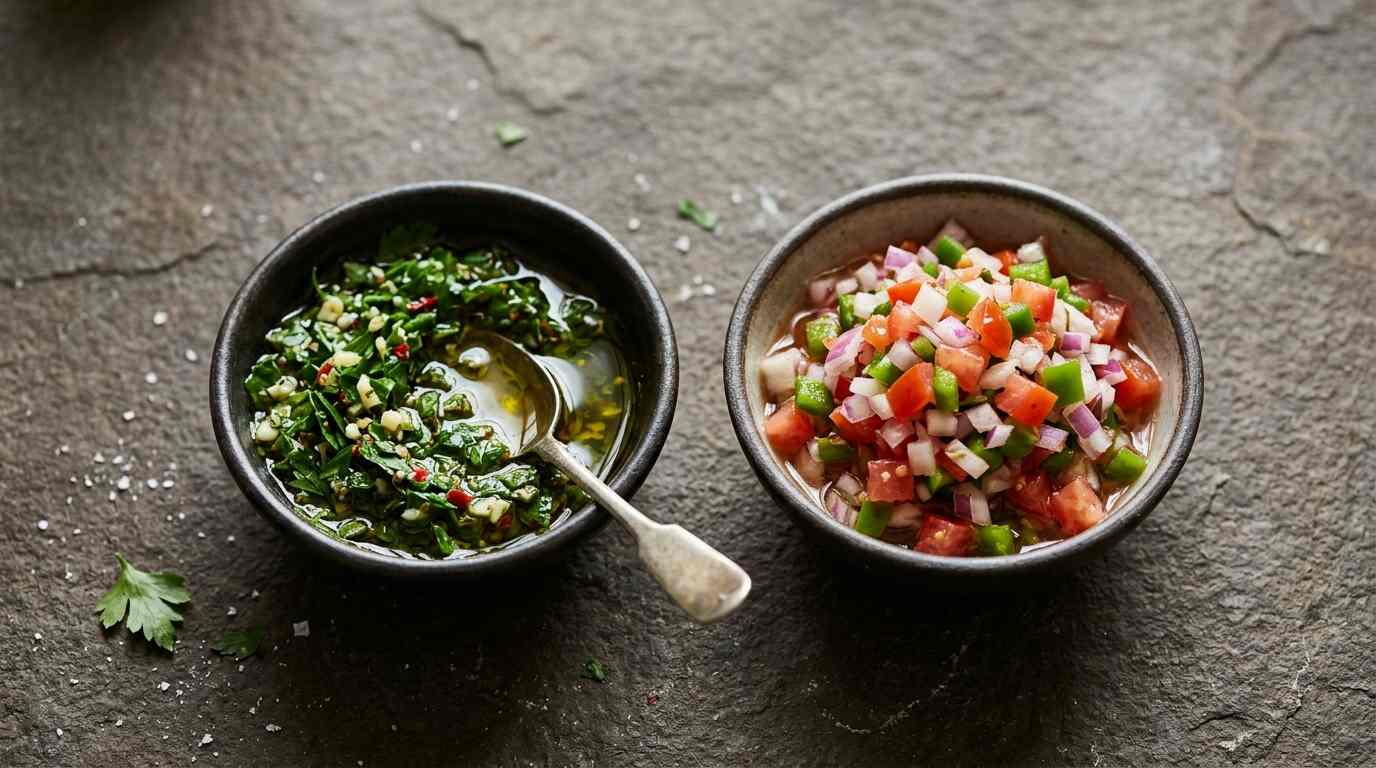
Sauce is where the sandwich takes its character. Chimichurri, a mixture of herbs, garlic, vinegar and oil, is the standard in Buenos Aires, and salsa criolla, a chopped relish of onion, tomato and pepper, is the common alternative. The same page gives its own chimichurri recipe as ground chili, oregano, water, garlic, parsley, oil and vinegar, and notes that Buenos Aires places sometimes add provoleta, a grilled provolone.
The name
Every source consulted derives the name the same way. Saveur says it combines chorizo and pan, and Diario UNO describes it as a contraction of “chorizo y pan.” Nothing in the fetched pages dates the first written use of the word. The Real Academia Española entry for choripán, which would settle the dictionary question, could not be retrieved for this post, so no dictionary definition is cited.
The affectionate short form, “chori,” is a separate matter. Billiken’s survey of the provinces lists it as the nickname and adds that a World Choripán Day is observed on March 15, though the article does not say who established it.
The gaucho claim
The most repeated origin story puts the sandwich on the Argentine plains. Billiken calls the Río de la Plata region in the middle of the nineteenth century the “most widespread” version of its birth, and says gauchos at country asados may have begun placing a chorizo, fresh from the embers, inside a piece of bread. The verb is hedged (“habrían comenzado”) and the article presents the account as a version, not as an established event.
Other writers state it more firmly. Gaucho Life says gauchos, constantly traveling or working, began serving the sausage between slices of bread for convenience, and that choripán followed them to the cities when they migrated in the twentieth century. Tasting Table cites a Portland restaurant, Alecocina, for a likely mid-nineteenth-century date, when gauchos grilled meat in the countryside and ate it in bread. Diario UNO’s Raúl Adriazola likewise puts the roots in the mid-1800s, among rural gauchos with little tableware, and says chorizo in bread was a practical option that spread to cities. None of these pages names a document, a diary or a traveler’s account from that period. Each repeats the tradition rather than proving it.
The sources establish less than their confidence suggests. The ingredients are older than any recorded sandwich, and the sandwich itself has no dated first appearance in any fetched page.
Where the sausage came from
Gaucho Life traces the underlying ingredients to colonial South America, when the Spanish brought cattle, pigs and sausage-making, and says many believe chorizo was one of the earliest collaborations between Indigenous peoples and European settlers. Diario UNO adds that Spanish conquerors carried sausages on their voyages because salting preserved the meat, and that these took hold in the Americas. The argument for a Spanish ancestry is therefore not about the sandwich but about its filling: the sausage crossed the Atlantic, and the idea of eating it in bread arrived, if it arrived at all, on the river plains.
Diario UNO also records the morcipán, a version that replaces chorizo with morcilla, blood sausage, which the article calls another Iberian inheritance.
Chimichurri and its competing origins
The sauce that defines the Argentine sandwich has a name nobody can trace with confidence, and the explanations fall into two groups. The first is English-sounding folk etymology. The Daily Meal reports the story of an Irish immigrant named Jimmy McCurry who missed Worcestershire sauce and improvised a local substitute, so that “Jimmy’s curry” turned into chimichurri. It also reports a legend that British soldiers captured after the failed early-nineteenth-century invasion of Buenos Aires asked for “curry,” a version that the Argentine writer Miguel Brascó believed and that the article says cannot be verified. Wikipedia’s chimichurri entry, used here as a pointer because it summarizes the dictionary and cookbook citations, calls the English versions false etymologies and says no contemporary documentation of any of them has been found.
The second group points to language and people already in the region. Wikipedia reports that, citing Merriam-Webster, the word may derive from the Basque tximitxurri, a mixture of things in no special order, and describes a second Basque theory based on zurrumurru, meaning noise or rumor. The Daily Meal calls Basque settlement a likely contributor and notes that the Basque word means roughly a hodgepodge. It also reports a view from the historian Daniel Balmaceda, cited via the BBC, that the word is Quechua and was applied to a sauce served with meat. The Mashed article on the name adds a claim attributed to the chef Eduardo Massa Alcantara that the word means friendship.
The sauce’s age is equally uncertain. The Daily Meal notes that the earliest published recipes appear to date from about the 1950s and that early versions were probably made with dried herbs. The Culture Trip cites unnamed food historians who think gauchos likely invented it to flavor meat cooked over open fires, and quotes the chef Staffan Terje comparing it with Sicily’s salmoriglio. Salmoriglio shares parsley, oregano and garlic with chimichurri but, according to The Daily Meal, uses lemon juice in place of vinegar and is usually served with seafood.
Choripán at the asado
In Argentina the sandwich frequently starts the meal. Billiken says it is often served at the beginning of an asado while larger cuts finish cooking. Gaucho Life describes a choripaneada as a gathering where choripán is the main event, a quicker and cheaper alternative to a full asado, and says many festive asados open with choripán alongside Malbec.
Uruguay places the same sausage in a similar position without the sandwich name always attached. The Culture Trip’s guide to Uruguayan grilled meats describes the picada, the first items off the grill, as chorizo, salchicha, provolone, morcilla and achuras (offal), typically with bread, and says a single designated person, the asador, tends the fire. The same page calls chorizo a typical Uruguayan pork sausage, short and thick, with spicier red and cheese-filled varieties.
Street food and football
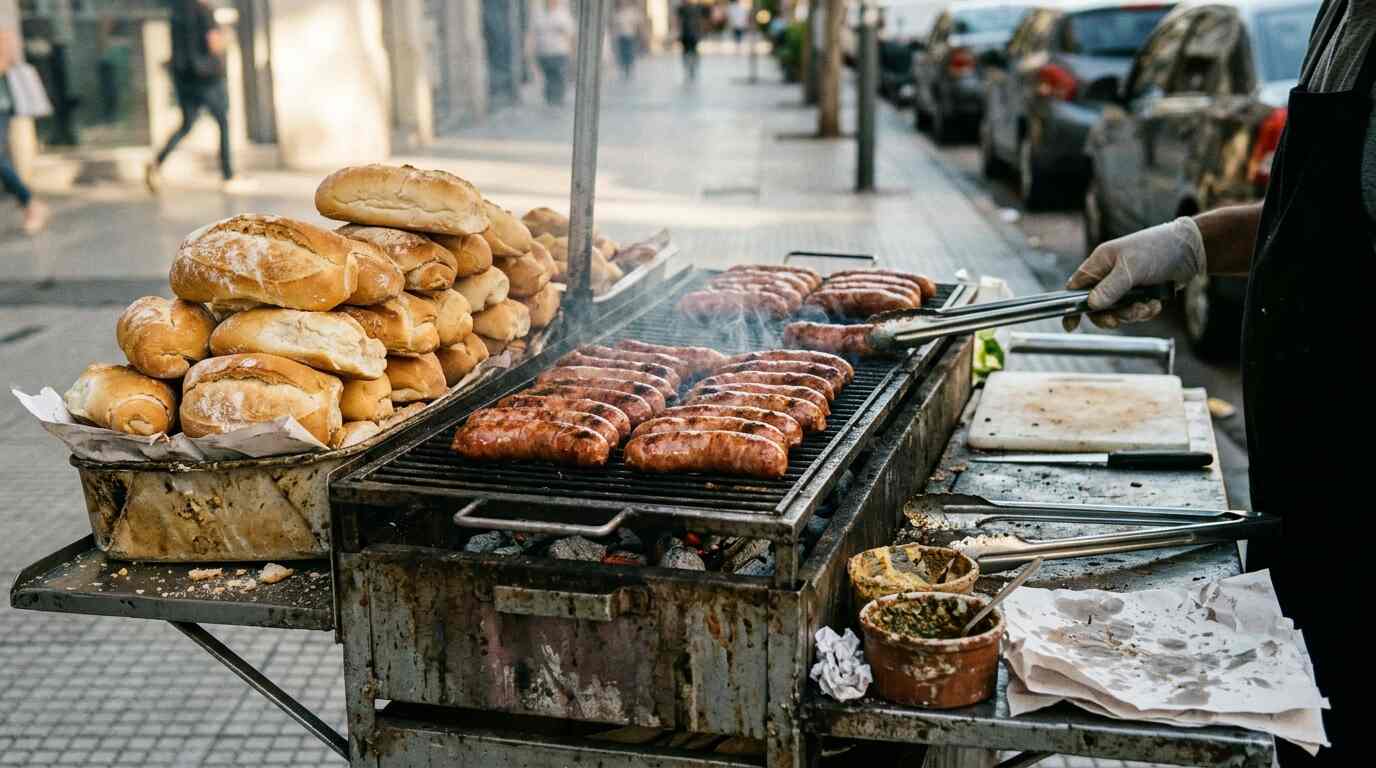
The sandwich left the asado for the pavement. Diario UNO’s account places the rise of the grill carts on the Costanera in Palermo, along the Río de la Plata in Buenos Aires, in the early 1960s, and says portable braziers later spread to areas near football stadiums, where choripán competed with the pizza de cancha, a pizza without mozzarella. Billiken lists concerts, festivals and public events among its other settings, and attributes its spread partly to its low price and ease of eating.
Festivals followed. Billiken lists Chorifest in Buenos Aires, plus annual celebrations in Ranchos (Buenos Aires province), Rosario del Tala (Entre Ríos) and Providencia (Santa Fe). Diario UNO mentions the VI Festival Mundial del Humor y el Choripán in Córdoba in February 2019.
In January 2026 the Argentine outlet Noticias NQN reported that Taste Atlas had placed choripán in its list of the best Latin American “hot dogs,” at 4.2 points and tied with Chile’s completo. The article quotes the ranking’s description of it as “la máxima comida callejera argentina”, the ultimate Argentine street food.
Regional variants across Argentina, Uruguay and beyond
Inside Argentina, the same Gaucho Life page lists the following local habits. Buenos Aires builds the classic version on untoasted bread with chimichurri. Córdoba uses mayonnaise, a hint of mustard, tomato and whole lettuce leaves, and often toasts the bread right on the grill. Tucumán prefers pan sanguchero, a softer sandwich bread. Patagonia is described as using mutton chorizo with lettuce, tomato and scrambled eggs.
Uruguay shares the sandwich and, according to Saveur, makes it with a juicy, fatty, mildly spiced pork sausage in a fluffy white roll, topped with chimichurri. The sausages cook on an angled metal rack over a wood fire, and the sandwich is sold at soccer matches, street fairs and rodeos. The Culture Trip’s chimichurri article adds that the Uruguayan version of the sauce includes red pepper flakes, in contrast with the Argentine base of parsley, garlic, oregano and white vinegar. For Uruguay’s better-known sandwich, which belongs to a different tradition of steak and toppings, see the post on the chivito.
Across the Andes, Gaucho Life describes the Chilean pan con longaniza on marraqueta bread with pebre and merkén, and a Peruvian version with ají, garlic mayonnaise and potato sticks. Chilean Food and Garden says the marraqueta is also called pan batido, and that pebre is made from cilantro, onion, tomato and ají, with many cooks removing the soft crumb (la miga) before filling the roll. Wikipedia’s choripán entry, the only fetched page that covers them and so used cautiously, lists Brazil’s salsipão, built on pão francês, and Cuban-bread versions in Miami and pan de agua versions in Puerto Rico.
Sources:
- Billiken, “¿El choripán es realmente argentino?” (Ignacio Risso): https://billiken.lat/mi-pais/el-choripan-es-realmente-argentino/
- Billiken, “Choripán: ¿cuáles son las provincias argentinas más fanáticas de esta comida?”: https://billiken.lat/mi-pais/provincias-fanaticas-choripan-argentina/
- Diario UNO, “Milenario, pero rioplatense” (Raúl Adriazola, 2019): https://www.diariouno.com.ar/sociedad/historia-choripan-04212019_SyBtnCm9E
- Gaucho Life, “Choripán: The Argentine Icon”: https://gaucholife.com/blogs/all/choripan-the-argentine-icon
- Tasting Table, “Argentina’s Versatile Chorizo Sandwich, The Choripán”: https://www.tastingtable.com/1118829/argentinas-versatile-chorizo-sandwich-the-choripan
- Saveur, “7 Essential Street Snacks in Montevideo, Uruguay”: https://www.saveur.com/seven-snacks-in-montevideo-uruguay/
- The Culture Trip, “Uruguay’s Different Grilled Meats and Where to Try Them”: https://theculturetrip.com/south-america/uruguay/articles/uruguays-different-grilled-meats-and-where-to-try-them
- The Culture Trip, “A Brief History of Chimichurri”: https://theculturetrip.com/south-america/argentina/articles/a-brief-history-of-chimichurri-argentinas-favorite-sauce
- The Daily Meal, “The Unknown Origins of Chimichurri Sauce”: https://www.thedailymeal.com/1319692/chimichurri-sauce-unknown-origins
- Mashed, “No One Can Agree On How Chimichurri Got Its Name”: https://mashed.com/1337282/argentinian-history-origin-chimichurri
- Wikipedia, “Chimichurri” (pointer only): https://en.wikipedia.org/wiki/Chimichurri
- Wikipedia, “Choripán” (pointer only, for Brazil, Miami and Puerto Rico variants): https://en.wikipedia.org/wiki/Chorip%C3%A1n
- Noticias NQN, “El choripán argentino entre los mejores hot dogs de América Latina”: https://www.noticiasnqn.com.ar/noticias/2026/01/26/327203-el-choripan-argentino-entre-los-mejores-hot-dogs-de-america-latina
- Chilean Food and Garden, “Chilean Choripán”: https://www.chileanfoodandgarden.com/chilean-choripan/
- The Street Food Channel (YouTube), “Choripan – The original Argentinian street food sandwich”: https://www.youtube.com/watch?v=Xu9kpLMkaN8
- Grill Cheesy, “Chivito Sandwich: Uruguay’s National Sandwich”: https://grillcheesy.com/chivito-sandwich/