In this story
Colman’s is England’s best-known mustard, sold as dry powder or as a prepared paste. It is a Norfolk brand by birth, made for more than a century and a half at a riverside factory in Norwich, and in July 2019 the last jar came off the line there. The founding date is fixed. Almost every other date in its history has two or three versions.
Video: A history of Colman's Mustard and its Norwich origins, from the Norfolk Now YouTube channel
A miller at Stoke Holy Cross
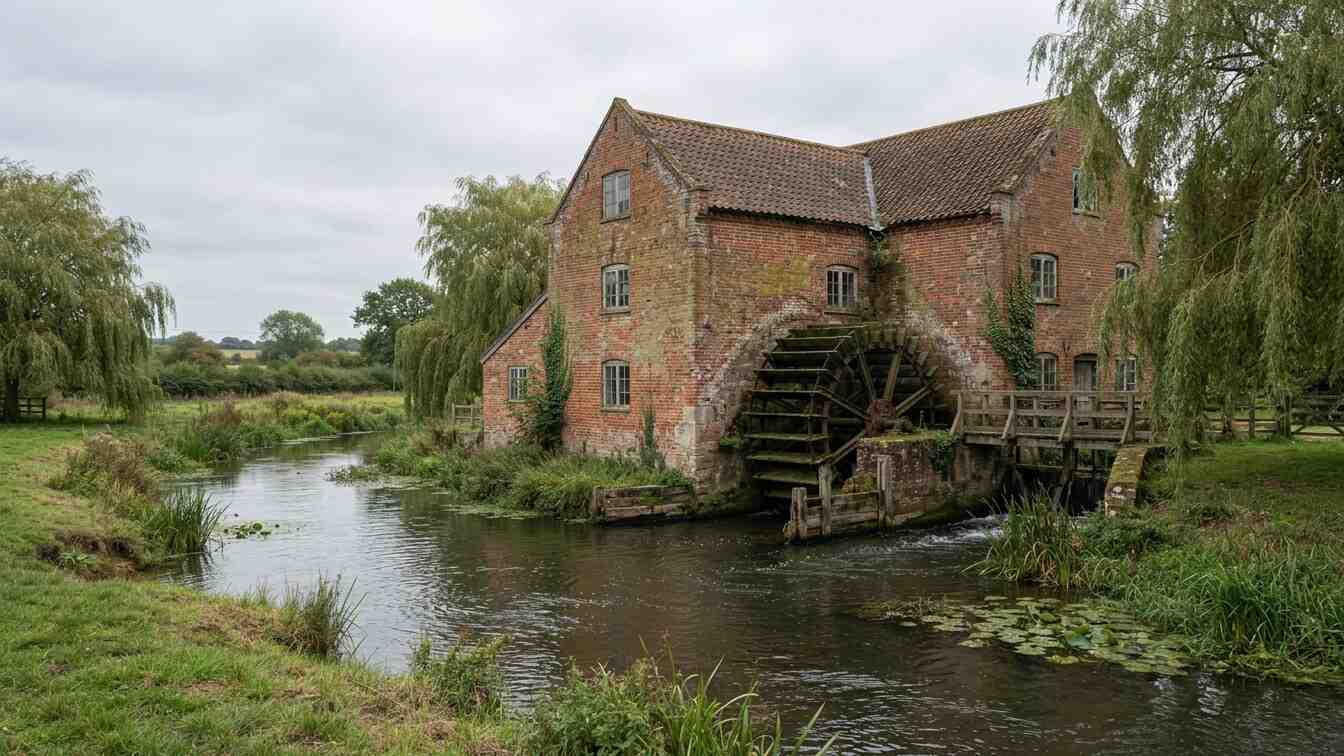
The business began with a purchase. Norfolk Museums Service, in its collections history of the founders, says Jeremiah Colman (1777–1851), the son of a farmer from Bawburgh near Norwich, started a flour-milling business near Magdalen Gates in Norwich in 1804 and in 1814 bought the flour and mustard business of Edward Ames at Stoke Holy Cross. Grace’s Guide, the online archive of British industrial history, gives the same 1814 purchase at the Stoke Holy Cross mill.
ITV News Anglia describes Stoke Holy Cross as just south of Norwich, which is why the brand is usually called a Norwich one from the start.
Family came next. The Norfolk Museums history says Jeremiah and his wife, having no children of their own, adopted their four-year-old nephew James, who became a partner in 1823 when the firm became J. & J. Colman.
Moving to Carrow
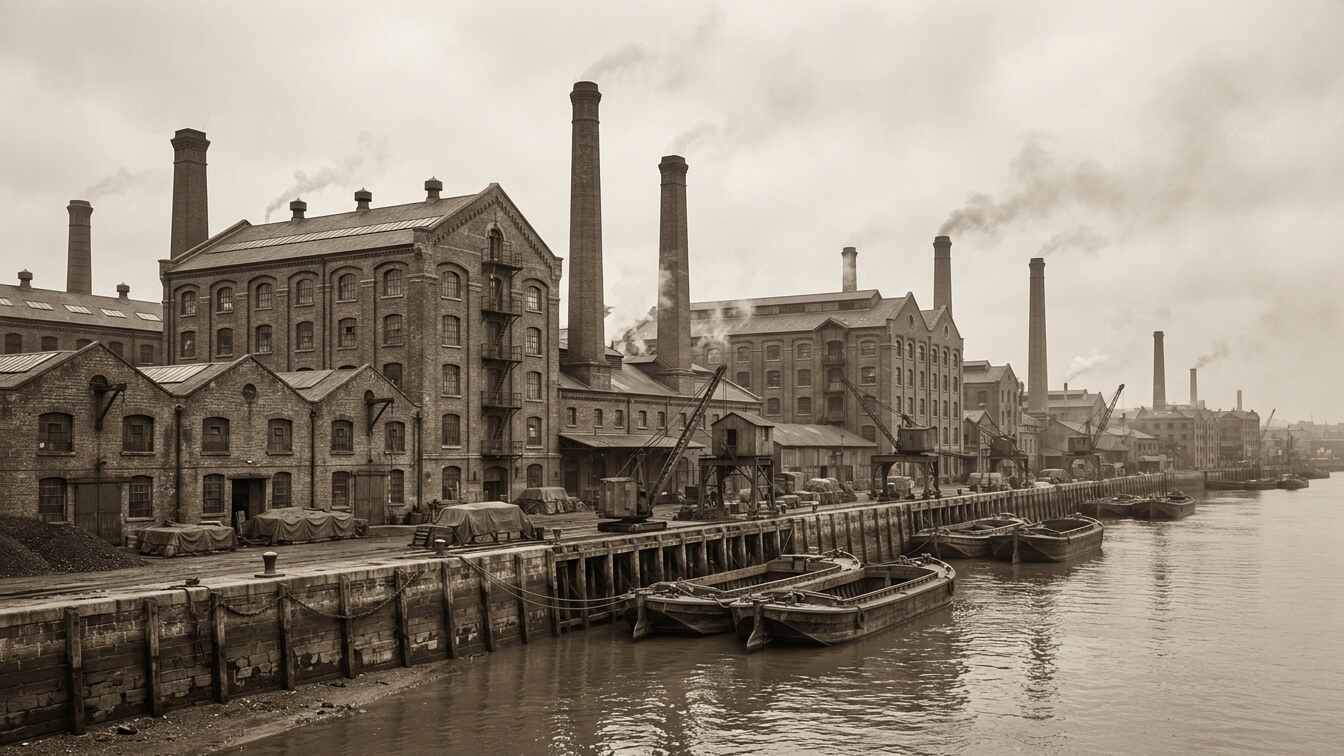
The big factory came mid-century, and the sources cannot agree on when. Grace’s Guide says the factory moved from Stoke to an integrated site at Carrow, Norwich, between 1856 and 1862. ITV News Anglia, reporting the closure plan in January 2018, dated the move to 1858. Grace’s range suggests the move happened in stages.
Carrow grew fast. Grace’s Guide records about 1,100 employees there in 1869 and 2,500 by 1898, and a Royal Warrant in 1866 as mustard manufacturer to Queen Victoria. The firm merged with Reckitt and Sons in 1938 to form Reckitt and Colman, and in 1995 the Colman’s business was demerged and became part of Unilever.
A company town inside the city
The works came with institutions. On Camera: The Mustard Makers, a 1973 BBC East film by Douglas Salmon catalogued by the East Anglian Film Archive, describes a 56-acre site with its own fire service and band, a school founded by the Colmans on Carrow Hill, a works canteen selling food at cost, and a home for single women workers. The film also records a company dispensary and, in 1872, the hiring of Philippa Flowerday, a fully trained nurse credited as the first industrial nurse.
The footage also shows boxes of Colman’s Mustard carrying a Japanese-language label.
The last jar
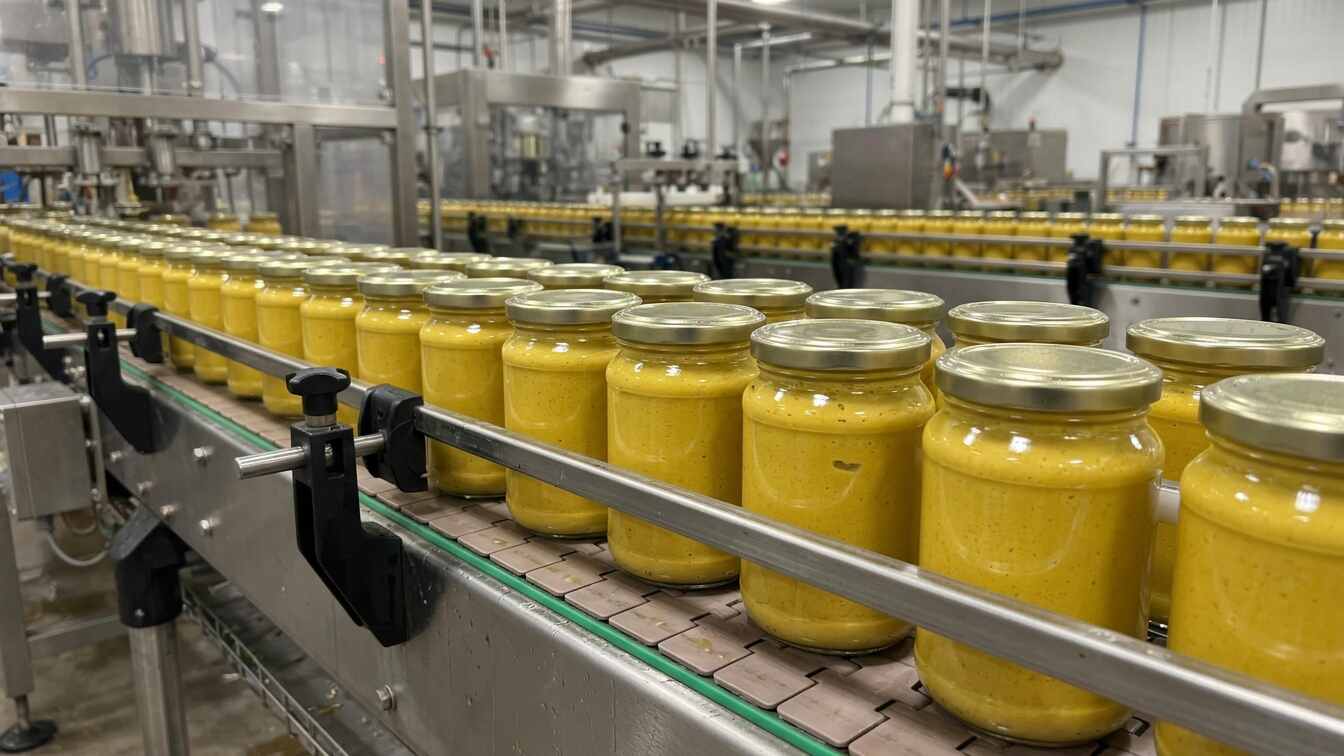
The factory closed in stages. Gwen Ridler, reporting for Food Manufacture in July 2019, wrote that the last jar of Colman’s Mustard came off the Norwich line at 6 p.m. on July 24, 2019, its best-before date replaced with “Norwich’s Last. By Its Finest. July 24th 2019.” Of the 113 jobs affected, 43 moved to Burton-on-Trent, where most production went, and 25 to a new milling facility near Norwich. A Unite official called it a “heart-breaking end.”
The powder stayed in Norfolk. A Unilever press release on its partnership with Condimentum, a consortium of Norfolk mint and mustard growers, describes a facility at the Norfolk Food Enterprise Park in Honingham Thorpe that mills the mustard into flour, blends mint and packs Colman’s mustard powder, under an initial 10-year agreement. Condimentum’s chief executive, David Martin, called it “the only one of its kind in Europe.”
Powder versus prepared
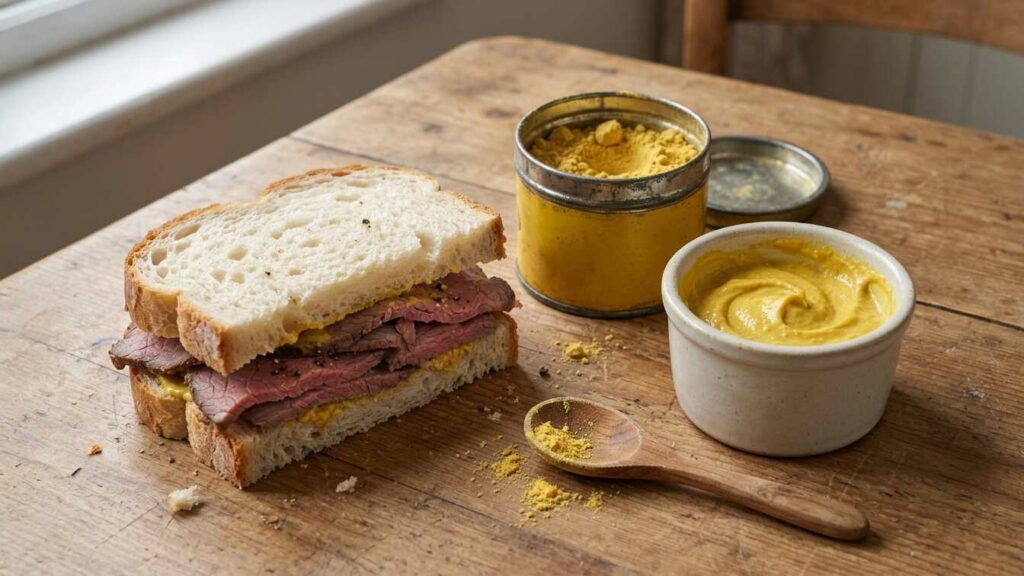
English mustard comes two ways. The powder is the milled product the Honingham facility packs; the prepared jar comes ready mixed. Why either one bites the way it does is covered on Grill Cheesy in why mustard is hot.
On a sandwich
For an English sandwich to put it near, Grill Cheesy’s bacon butty covers the British breakfast roll.
Build-it-at-home kit
- Colman’s, Dry Mustard Powder, 4 oz: the classic yellow tin of dry English mustard. See it on Amazon (affiliate link)
- Colman’s Original English Prepared Mustard 3.53 oz: the ready-mixed version in a small jar. See it on Amazon (affiliate link)
As an Amazon Associate I earn from qualifying purchases. A commission may be earned if you buy through this link, at no extra cost to you.
Questions people ask
When was Colman’s founded? In 1814, when Jeremiah Colman bought a flour and mustard business at Stoke Holy Cross near Norwich.
When did Colman’s move to Carrow Works? Between 1856 and 1862, per Grace’s Guide; ITV dated it to 1858.
Is Colman’s still made in Norwich? The Norwich factory made its last jar in July 2019; mustard powder is milled and packed near Norwich at Honingham Thorpe.
Who owns Colman’s? Unilever, since 1995.
What is the difference between Colman’s powder and prepared mustard? The powder is dry milled mustard to mix with water; the prepared version comes ready mixed.
Sources
- Norfolk Museums Service, “Jeremiah Colman and James Colman”: https://www.museumscollections.norfolk.gov.uk/article/63652/Jeremiah-Colman-and-James-Colman
- Grace’s Guide to British Industrial History, “J. and J. Colman”: https://gracesguide.co.uk/J._and_J._Colman
- East Anglian Film Archive, “On Camera – The Mustard Makers” (BBC East, 1973): https://eafa.ehost.uea.ac.uk/work/?id=1469
- ITV News Anglia, “Historic Colman’s Mustard to leave Norwich after 200 years” (January 4, 2018): https://itv.com/news/anglia/2018-01-04/historic-colmans-mustard-to-leave-norwich-after-200-years
- Food Manufacture, Gwen Ridler, “Unilever shuts down historic Colman’s factory” (July 26, 2019): https://www.foodmanufacture.co.uk/Article/2019/07/26/Unilever-shuts-down-historic-Colman-s-factory
- Unilever UK, “Unilever and Condimentum confirm long-term partnership” (2019): https://www.unilever.co.uk/news/press-releases/2019/unilever-and-condimentum-confirm-long-term-partnership