In this story
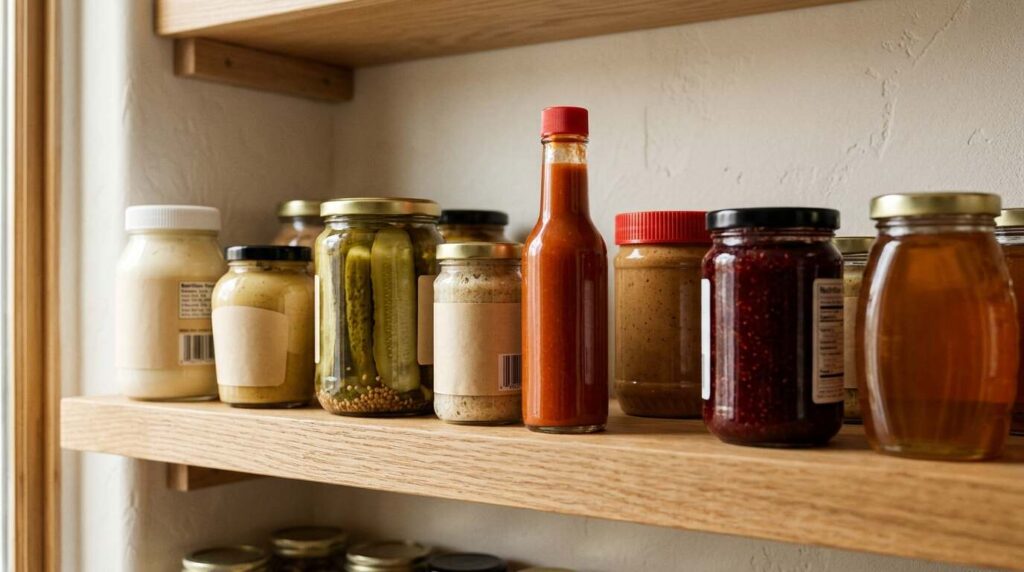
Most sandwiches are built from the same short shelf: something creamy, something sharp, something sour, something hot and something sweet. Eight jars cover nearly all of it. The question that follows every one of them is how long it keeps once the lid comes off, and the U.S. Department of Agriculture has a database with an answer for each.
Video: Which Condiments Should Be Refrigerated?, from The Takeout YouTube channel
How the storage numbers work
The figures below come from FoodKeeper, the storage database maintained by the USDA’s Food Safety and Inspection Service. It lists two times for most condiments: how long the unopened product keeps in the pantry from the date of purchase, and how long it keeps in the refrigerator after opening.
Those dates describe quality. The FSIS page on shelf-stable food puts it plainly: “Dating is for quality, not safety.” It also says a shelf-stable product can still be safely used after its sell-by date. The times are the window for best flavor and texture, and anything that smells, looks or tastes off should go regardless.
Mayonnaise
The creamy base comes first. FoodKeeper gives commercial mayonnaise 3 to 6 months in the pantry unopened and 2 months in the refrigerator once opened, the shortest refrigerated window of any jar on this list. Grill Cheesy’s history of Duke’s mayonnaise covers one Southern brand’s story, and the Japanese alternative gets its own post in Kewpie mayonnaise.
Mustard
Mustard lasts the longest of the spreads. FoodKeeper lists 1 to 2 years unopened in the pantry and 1 year in the refrigerator after opening. The reasons it bites as hard as it does are covered in why mustard is hot.
FoodKeeper’s mustard entry does not split by style, so Dijon, yellow and brown share one set of numbers. Dried, ground mustard is listed separately, at 6 months in the pantry.
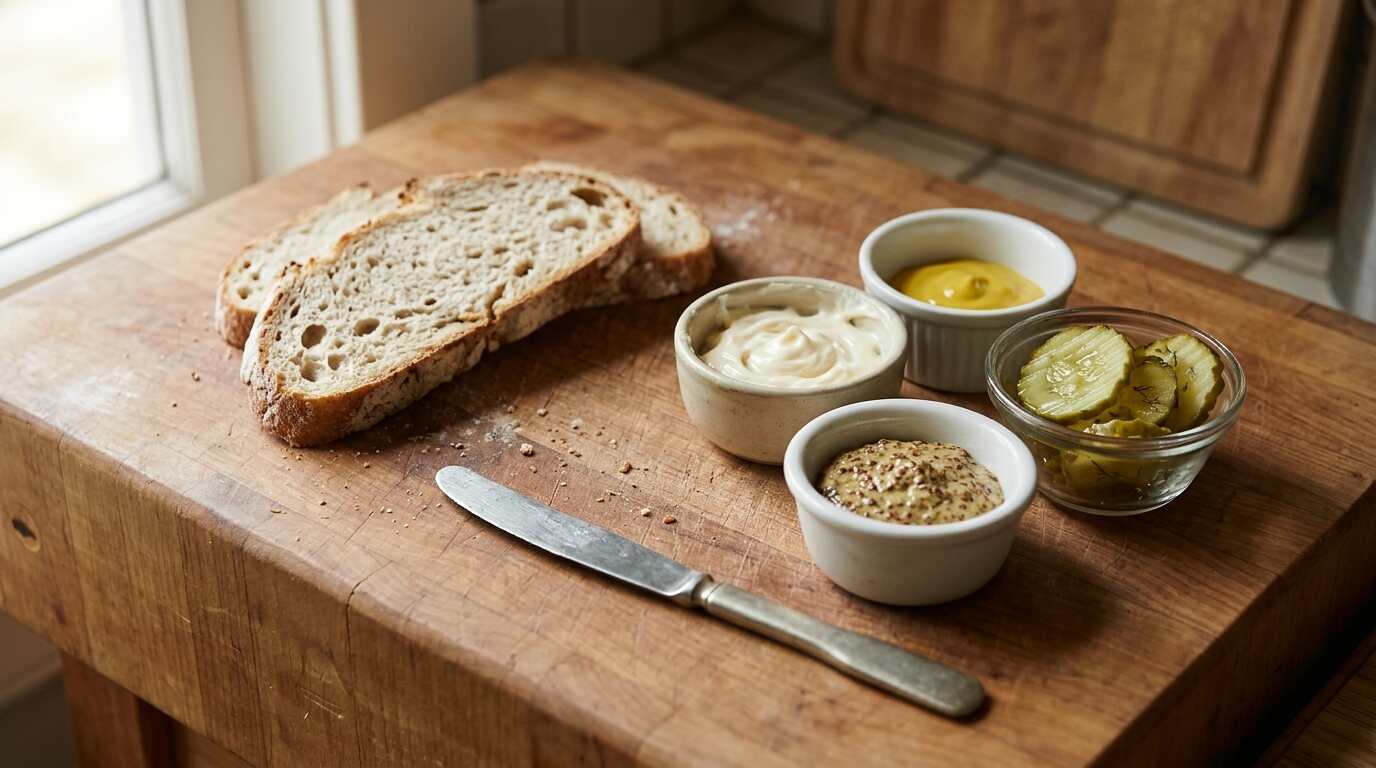
Pickles and horseradish
The sour layer keeps longer than most cooks expect. FoodKeeper gives pickles 1 year unopened and 1 to 3 months refrigerated after opening; the sandwich-slice style has its own history on Grill Cheesy in bread and butter pickles. Prepared horseradish in a jar keeps 3 to 4 months in the refrigerator after opening, according to the same database.
Hot sauce
Heat is the easiest staple to store. FoodKeeper lists hot sauce at 6 months in the pantry and gives no separate refrigerated figure. Worcestershire sauce keeps 1 year in the pantry by the same table.
Peanut butter, jam and honey
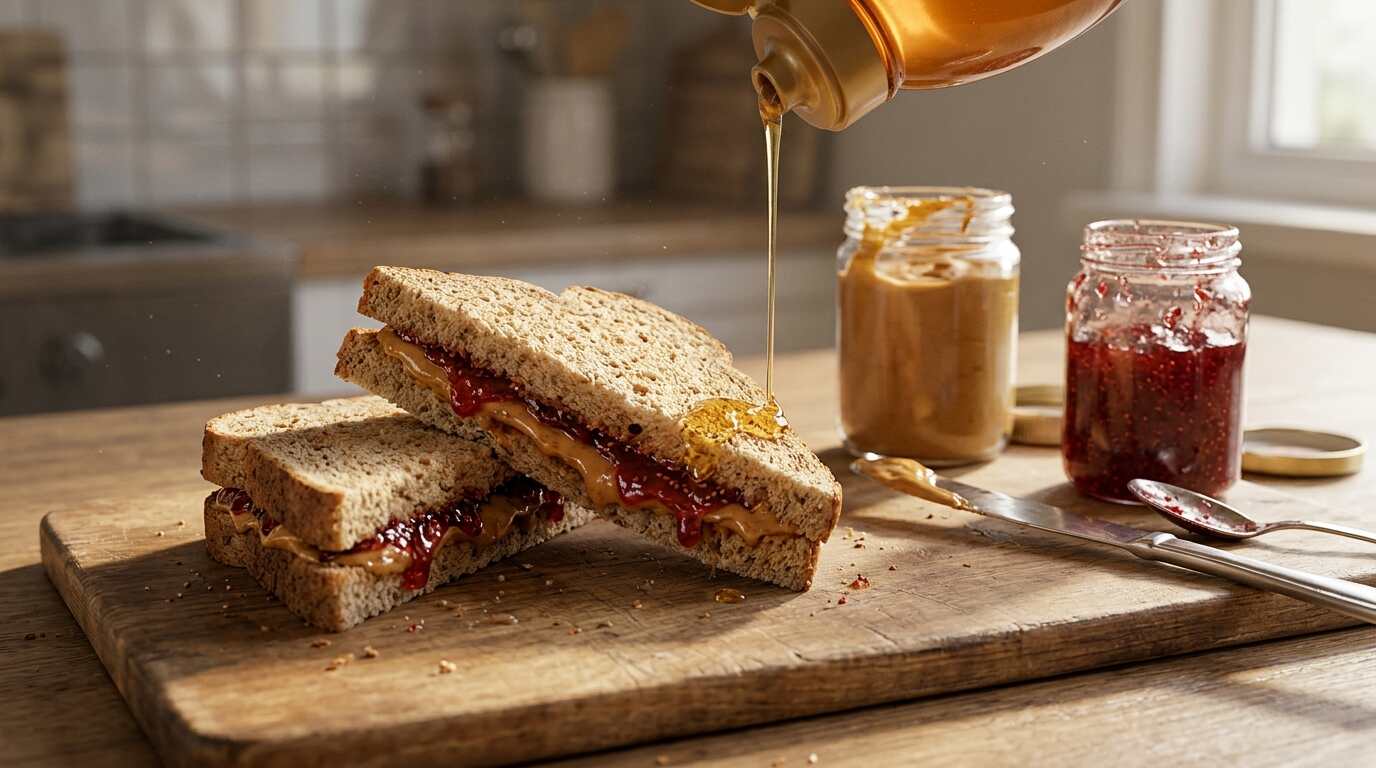
The sweet shelf has the widest spread of numbers. FoodKeeper gives commercial peanut butter 6 to 24 months unopened and 2 to 3 months in the pantry after opening. Peanut butters made with hydrogenated fat or other stabilizers are listed at 6 to 9 months unopened, 2 to 3 months in the pantry after opening, or 3 to 4 months refrigerated. Natural peanut butter gets 3 to 4 months in the refrigerator.
Jams, jellies and preserves keep 6 to 18 months unopened and 6 to 12 months refrigerated after opening. Honey is listed at 2 years in the pantry.
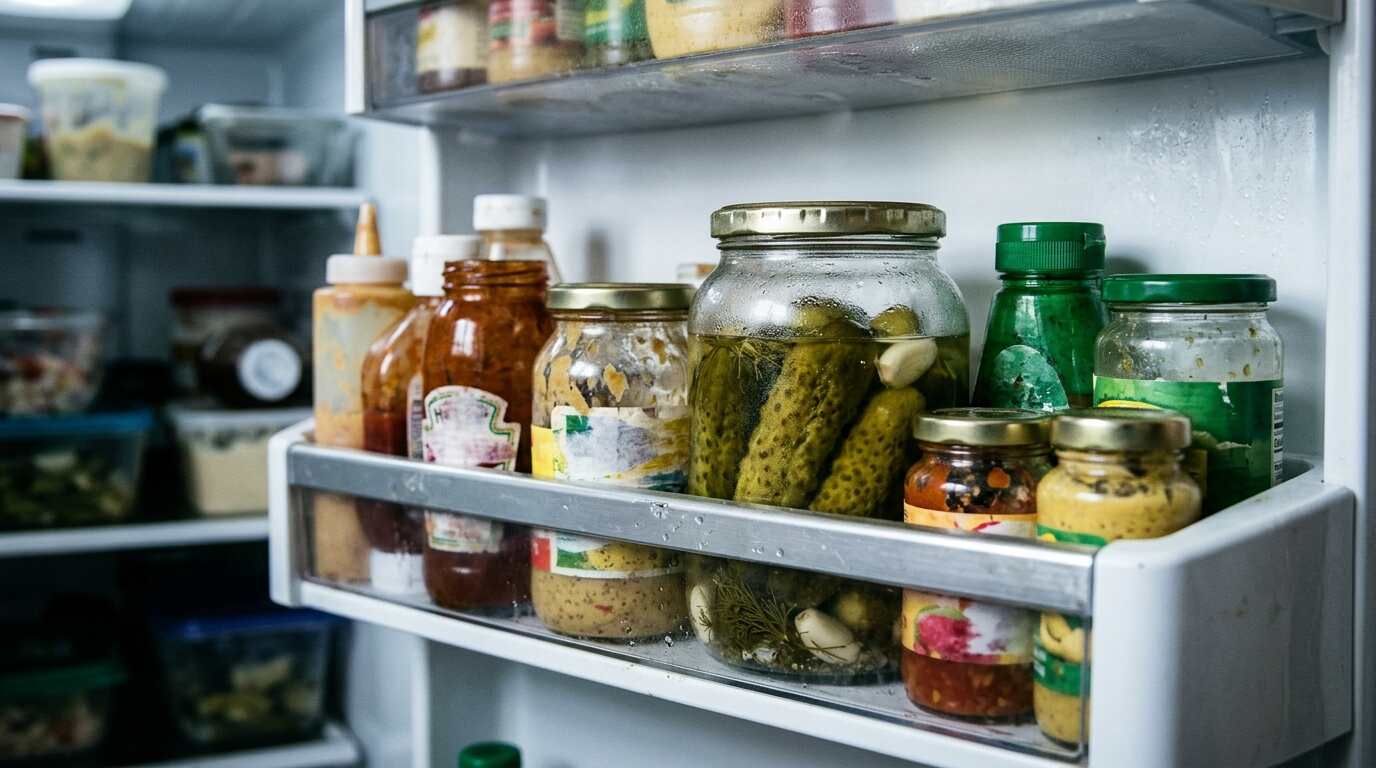
Building the shelf
The list below matches one jar to each staple above. Each is a widely sold version of the category, chosen to cover the shelf rather than ranked against competitors.
- Duke’s Real Mayonnaise Jar – Original Smooth & Creamy Taste, 30 Ounce (Pack of 1): Southern-style mayonnaise in a 30-ounce jar. See it on Amazon (affiliate link)
- Grey Poupon Mustard, Dijon, 10 oz. Squeeze Bottle: Dijon mustard in a squeeze bottle. See it on Amazon (affiliate link)
- MT. OLIVE Sandwich Stuffers, Bread & Butter Jar, 16 oz: bread and butter pickles cut lengthwise for sandwiches. See it on Amazon (affiliate link)
- Morehouse Distinctive Prepared Horseradish, Since 1913, 2-Pack – 8 Ozs: prepared horseradish in jars. See it on Amazon (affiliate link)
- TABASCO® Brand Original Red Pepper Sauce, Hot, 12 Oz Glass Bottle (1-Pack): the original red pepper sauce in a 12-ounce bottle. See it on Amazon (affiliate link)
- SKIPPY Creamy Peanut Butter, Plant Based Protein, 16.3oz x8: creamy commercial peanut butter in an eight-jar pack. See it on Amazon (affiliate link)
- Bonne Maman Preserve, Strawberry, 13-Ounce: strawberry preserves in a 13-ounce jar. See it on Amazon (affiliate link)
- Nate’s Organic Honey – 16oz. Squeeze Bottle: organic honey in a squeeze bottle. See it on Amazon (affiliate link)
As an Amazon Associate I earn from qualifying purchases. A commission may be earned if you buy through this link, at no extra cost to you.
Questions people ask
How long does opened mayonnaise last in the fridge? Two months, according to USDA FoodKeeper.
Does mustard need to be refrigerated? FoodKeeper lists 1 year refrigerated after opening; the date reflects quality, not safety.
How long do opened pickles last? One to three months in the refrigerator.
Does peanut butter need refrigeration? Commercial peanut butter keeps 2 to 3 months in the pantry after opening; natural peanut butter is listed for the refrigerator.
Does hot sauce go bad? FoodKeeper gives it 6 months in the pantry.
Sources
- USDA Food Safety and Inspection Service, FoodKeeper data: https://www.fsis.usda.gov/shared/data/EN/foodkeeper.json
- USDA Food Safety and Inspection Service, “Shelf-Stable Food Safety”: https://www.fsis.usda.gov/food-safety/safe-food-handling-and-preparation/food-safety-basics/shelf-stable-food