In this story
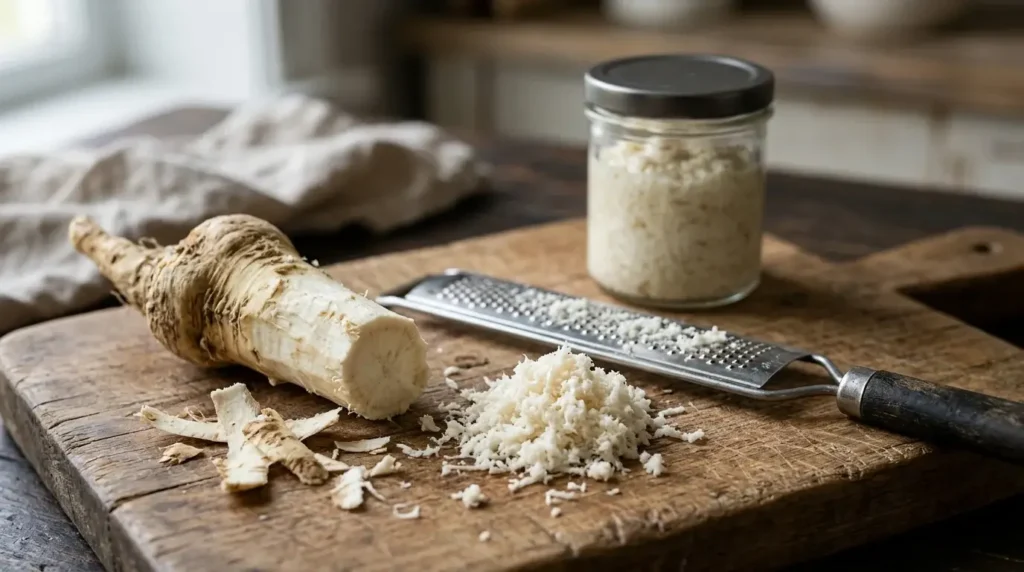
Horseradish is the thick white root of Armoracia rusticana, a member of the cabbage and mustard family, grated and usually preserved in vinegar. Its heat is not stored ready-made in the root. It is produced when the cells are broken, and it starts to fade soon after.
Video: Illinois Horseradish Festival, Pt.1 – America's Heartland, from the America's Heartland YouTube channel
Heat made on demand
The mechanism is a reaction. America’s Test Kitchen explains that grating ruptures the root’s cells and releases an enzyme, myrosinase, which reacts with another compound in the root to form allyl isothiocyanate, the chemical behind horseradish’s sharp, nasal burn. The reaction runs its course quickly, which is why freshly grated horseradish loses its punch.
ATK tested it. Its cooks grated fresh root and tasted it plain and in tomato juice after two hours, four hours and overnight, and the flavor grew milder the longer it sat.
Wasabi works on similar chemistry with differences. National Geographic, in a 2015 piece by Rebecca Rupp, notes that both contain allyl isothiocyanate, but horseradish also contains 2-phenylethyl isothiocyanate, which wasabi lacks, and that horseradish stays hot for hours while wasabi powder fades in about 15 minutes.
Why the jar has vinegar
Commercial prepared horseradish keeps its bite for weeks. ATK attributes that to vinegar: acetic acid slows myrosinase, so the pungent compound forms more gradually and steadily, holding the heat longer.
The test kitchen’s own method follows from that. Peel an 8- to 10-inch root, grate it finely on a rasp-style grater, and stir in 6 tablespoons of water, 3 tablespoons of white vinegar and half a teaspoon of salt. Stored airtight in the refrigerator, ATK says, it keeps its heat for up to two weeks.
Processors do the same at scale. The Madison Historical encyclopedia of Southern Illinois University Edwardsville says the roots are cleaned, graded, crated and frozen until shipped, then grated and mixed with vinegar to stabilize flavor and prevent browning.
Heat is the other enemy. St. Louis Public Radio notes that cooking destroys horseradish’s pungency, so it should be added after the stove is off.
Collinsville and its numbers
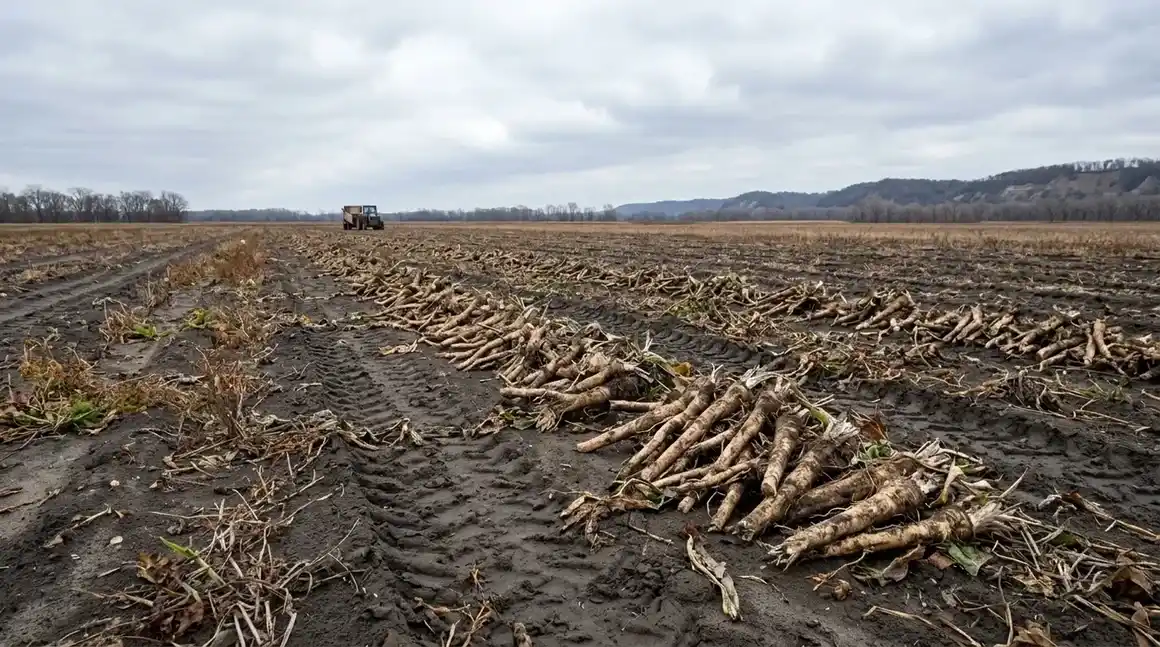
Most American horseradish comes from a small patch of river bottomland across the Mississippi from St. Louis. The Madison Historical entry, by Angela Little, dates commercial growing in the American Bottom to around the 1850s, led by German immigrant farmers, and names the Fingerhut and Bruns families as likely the first two in the Collinsville area. It describes sandy, loose soil rich in potash from centuries of flooding.
How much of the world’s supply grows there is a moving figure. St. Louis Public Radio, in a 2018 report by Madelyn Beck, says festival organizers claim up to 80 percent, and that their past claims have ranged from 60 to 80 percent of the world’s horseradish to 60 percent of the nation’s. St. Louis Magazine gives 60 to 80 percent for Madison, St. Clair and Monroe counties. A University of Illinois Press blog post attributes the 60-to-80 figure to local boosters.
Not everyone accepts it. Volume One, a magazine in Eau Claire, Wisconsin, wrote in 2010 that a check of USDA farm census data showed the Collinsville area grows far less than the 85 percent it often claims, even nationally. The same article says Eau Claire’s Silver Spring is the largest single grower and producer in the world, while the Collinsville area has the most acreage, and that Collinsville’s trademark on “World’s Horseradish Capital” requires no supporting evidence. Volume One was writing about its own city’s rival.
Germany has objected too. FOX 2 St. Louis recalled a 2002 story in which the mayor of Urloffen, a German village signposted as the “horseradish village of the world,” wrote to Collinsville asking about its festival and crop.
Potash, sulfur and steel
Southern Illinois horseradish is often described as hotter. St. Louis Magazine explains the region’s advantage as “part nature, part culture, and part…pollution.” The nature is the potash-rich soil left by the Mississippi. The culture is the “horseradish families,” descendants of immigrants; one grower’s family has farmed there since 1887.
The pollution is the surprising part. According to the magazine, sulfur compounds released by industry before emissions rules, mostly from steel mills that largely closed in the 2000s, helped the plants produce the compounds behind their heat. Growers now add sulfur to the soil themselves.
The University of Illinois Press post makes the potash case more strongly, calling it “a big part of the Collinsville secret.” St. Louis Public Radio reports that fifth-generation growers Dennis and Jeff Heepke rotate horseradish with soybeans and corn every five to seven years to control pests and protect the soil.
Passover and a Long Island buyer
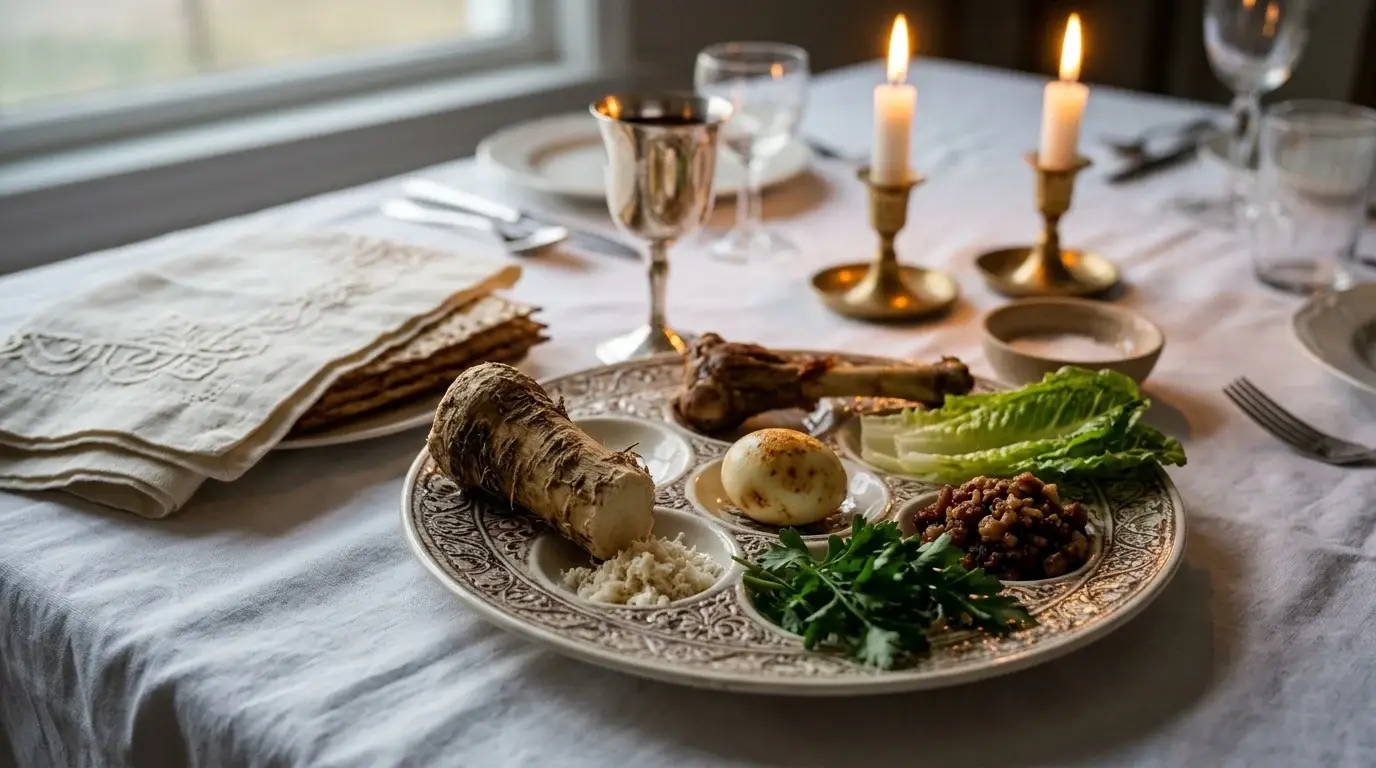
The biggest single demand spike comes in spring. The St. Louis Jewish Light, in a 2019 article by Eric Berger, explains that the seder calls for a bitter herb to recall slavery in Egypt, and that some Jews use green-top horseradish for it. St. Louis Magazine notes that horseradish is counted among the “bitter herbs” of the Old Testament.
The Jewish Light traces some of that demand to Long Island. Gold’s Pure Food Products of Hempstead, New York, a family business for nearly 90 years at the time, bought two to three trailer loads of Illinois horseradish a month, about 40,000 pounds each. Steven Gold, the third generation, recalled when 90 percent of his customers were Jewish and the month before Passover was the busiest of the year. The company was sold to LaSalle Capital in 2015, the article says, with the family keeping a stake. Illinois farmer John Relleke told the paper he had sold 1,000 50-pound bags of green-top horseradish in the month before Passover, mostly to East Coast vendors.
The harvest runs from September to April, according to the same article, and green-top roots have only a short window before the holiday.
Usually not wasabi
Much of what is sold as wasabi is horseradish. National Geographic reports that the green paste served with sushi is usually European horseradish ground with mustard and green food coloring. Real wasabi, Wasabia japonica, is native to Japan, grows only in clear running water and can take two years or more to mature; the article cites a North American grower charging $70 for half a pound.
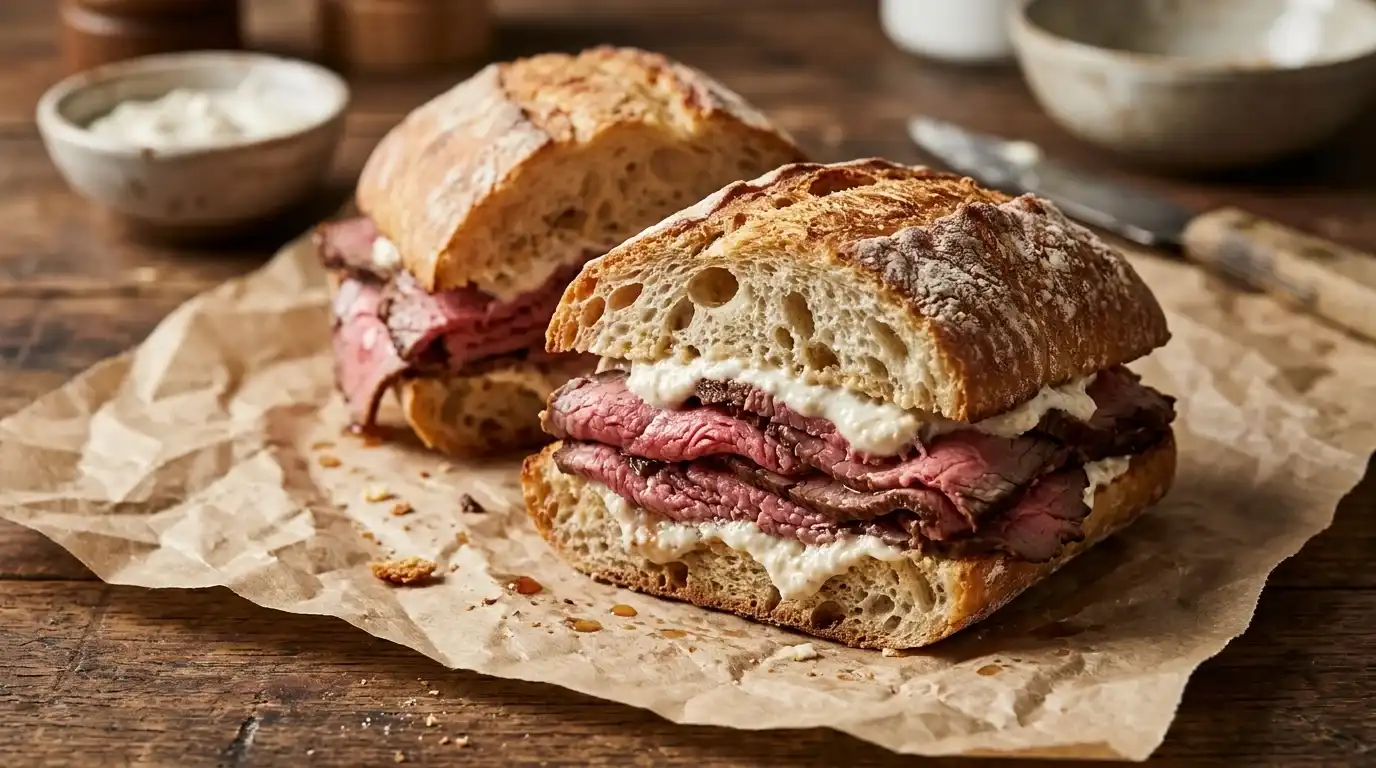
Grill Cheesy’s deli profiles, including Katz’s Delicatessen and Langer’s, cover the cured beef sandwiches that sit naturally beside a jar of it, and Mississippi’s comeback sauce is another sharp, creamy condiment.
For grating and for the jar
- Microplane Classic Red Zester Grater, Stainless Steel – Citrus Zesting & Cheese Grating, Dishwasher Safe, Made in USA, Model Name: Microplane: a rasp-style grater of the kind ATK uses for fresh root. See it on Amazon (affiliate link)
- Golds Horseradish SQZ ZESTY, 9 oz ( 1 Bottle): prepared horseradish from Gold’s, the Hempstead company that buys Illinois roots. See it on Amazon (affiliate link)
As an Amazon Associate I earn from qualifying purchases. A commission may be earned if you buy through this link, at no extra cost to you.
Questions people ask
Why is horseradish hot? Grating releases myrosinase, which forms allyl isothiocyanate from a compound in the root.
Why is there vinegar in prepared horseradish? Vinegar slows the enzyme, so the heat lasts longer.
Where is most horseradish grown? Around Collinsville, Illinois, though its share of world supply is disputed.
Is wasabi just horseradish? Real wasabi is a different plant, but most green paste sold as wasabi is horseradish with mustard and coloring.
Does cooking ruin horseradish? Heat destroys its pungency, so it is added after cooking.
Sources
- America’s Test Kitchen, “Keeping the Kick in Fresh Horseradish”: https://www.americastestkitchen.com/how_tos/6058-keeping-the-kick-in-fresh-horseradish
- Madison Historical, Angela Little, “Horseradish in Collinsville” (December 19, 2017): https://madison-historical.siue.edu/encyclopedia/?p=1436
- St. Louis Public Radio / Harvest Public Media, Madelyn Beck (June 11, 2018): https://stlpr.org/2018-06-11/if-it-aint-got-that-zing-a-weekend-at-the-international-horseradish-festival
- St. Louis Magazine, “Why is Southern Illinois the horseradish capital of the world?” (May 17, 2018): https://www.stlmag.com/history/st-louis-sage/why-is-southern-illinois-the-horseradish-capital-of-the-worl
- University of Illinois Press blog, “200 Years of Illinois: The most dangerous root”: https://www.press.uillinois.edu/wordpress/200-years-of-illinois-the-most-dangerous-root/
- Volume One, Eric Rasmussen, “Our Horseradish Rival: Collinsville, Illinois” (July 12, 2010): https://volumeone.org/news/2010/07/12/250820-our-horseradish-rival-collinsville-illinois
- FOX 2 St. Louis via Yahoo News, John Pertzborn, “The time Germany contested Collinsville’s horseradish title”: https://www.yahoo.com/news/time-germany-contested-collinsville-horseradish-181933924.html
- St. Louis Jewish Light, Eric Berger (April 18, 2019): https://stljewishlight.org/news/news-local/midwestern-roots-of-a-seder-staple-just-across-the-river-is-americas-horseradish-hub
- National Geographic, Rebecca Rupp (May 12, 2015): https://www.nationalgeographic.com/culture/article/wasabi-more-than-just-a-hot-sushi-condiment