In this story
In Lima a sandwich is a sánguche, and it usually starts in the morning. The two classics are the butifarra, sliced jamón del país with onion relish on a crusty roll, and the pan con chicharrón, fried pork belly with sweet potato on the same bread. Both are sold at sangucherías, sandwich shops that range from century-old bars near the presidential palace to busy chains. The names confuse visitors from other Spanish-speaking countries.
Video: LA RUTA DE LOS MEJORES SANGUCHES DE LIMA, from the A comer YouTube channel
Pan francés first
The roll is the constant. Food52, in a 2019 travel column by a writer born in Peru to a father from Lima, calls pan francés, a slashed white roll, a requirement for every Lima sandwich. The same column says Limeños eat sandwiches mostly in the morning, though sangucherías often stay open late and serve them at any hour.
The butifarra
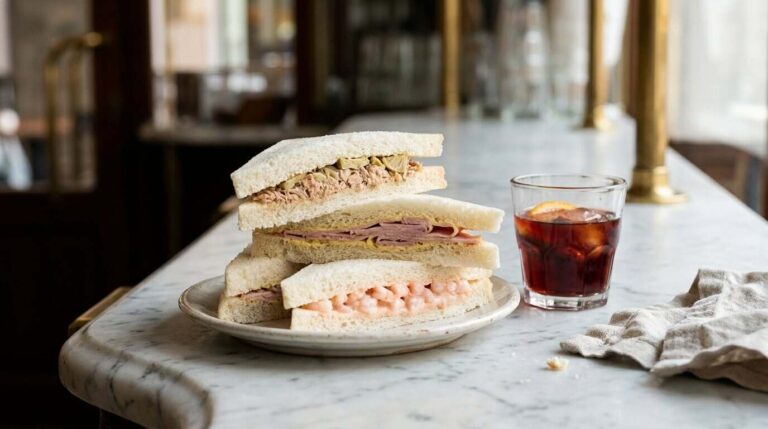
The butifarra is Lima’s ham sandwich. The Lima newspaper El Comercio defined it in a 2013 guide as jamón del país, pan francés, salsa criolla and lettuce, and called it one of the country’s most revered sandwiches.
The name causes confusion. Food52 notes that in Spain a butifarra is a sausage, so Spanish speakers expect something else entirely when they order one in Lima.
The ham is a craft. Food52 describes jamón del país as pork loin or shoulder that is brined, spread with ají chiles and spices, rolled and poached, then coated in oil infused with annatto, which gives the outside its orange color. The writer adds that it is hard to make well, which is why it is mostly found at shops that specialize in sandwiches.

Pan con chicharrón
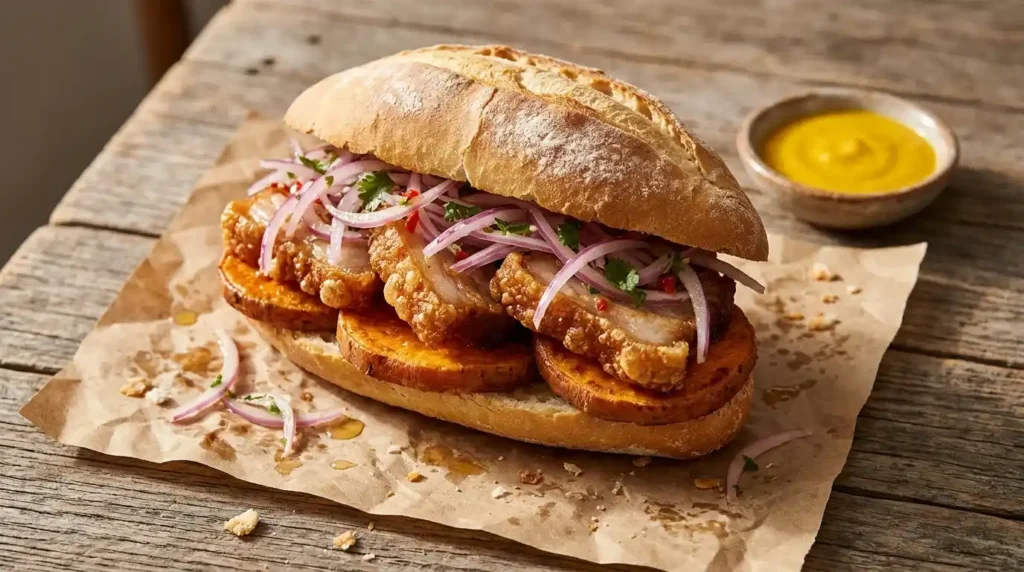
The breakfast sandwich is pork belly. Food52 explains that Peruvian chicharrón is pork belly without the skin, slow-braised and then deep-fried in its own fat, and notes that the sandwich confuses other Latin Americans too. It usually comes with fried sweet potato, salsa criolla and an ají sauce.
It also has a Sunday form. Food52 describes the desayuno Lurín, which pairs pan con chicharrón with a red tamal made from mote corn and wrapped in banana leaves.
Cordano and the old bars
The oldest addresses are in the historic center. Fodor’s dates Bar-Restaurante Cordano, next to the Government Palace, to 1905 and says it has served ham sandwiches and pisco sours to Peru’s presidents for over a century, with a worn wooden bar and old photographs. Its butifarra, by Fodor’s description, is marinated pork with pickled onions on a homemade roll.
The founding dates are approximate in some guides. El Comercio’s 2013 list called Cordano more than 100 years old and described Carbone, another historic center spot known for its ham, as about to turn a century old. It also listed Bar Queirolo in the center and an unrelated Antigua Taberna Queirolo in Pueblo Libre.

El Chinito
The best-known chicharrón shop is El Chinito. Diario Correo, in a 2023 profile by Marlon Carrasco, says founder Félix Yong was a Peruvian of Chinese descent who grew up in Lima and in 1960 rented a small storefront on Chancay street in the old center. He took over an existing corner store called El Muelle and began selling sandwiches to passersby.
The name came from customers. According to Correo, people started calling it “la bodega del Chino” because of the owner’s Chinese ancestry and looks, and the nickname stuck. His son Luis, a physician, later helped run the business while keeping his medical career, and grandchildren followed.
The 1960 date is consistent across sources: El Comercio’s 2013 guide and Fodor’s both give it. Fodor’s says the shop began in a run-down part of central Lima and grew into a chain known for chicharrón and turkey sandwiches with zarza criolla. Food52 describes it as a Peruvian-Chinese spot known for chicharrón and char siu sandwiches.

Other fillings
The menu goes well beyond two sandwiches. Food52 lists roast turkey, asado (beef pot roast), lechón (roast pork), relleno (made with fried chicken blood) and huachana, a spicy sausage from Huacho served with scrambled eggs. It also profiles La Lucha, a modern chain serving smoked meats with huayro potato fries.
Grill Cheesy covers another pork-and-bread pairing from a different coast in pork roll versus Taylor ham.
The chile paste
- Inca’s Food Aji Amarillo Paste – Hot Yellow Pepper Paste, 7.5 Oz Jar – Product of Peru: yellow ají paste for making the ají sauce served with pan con chicharrón. See it on Amazon (affiliate link)
As an Amazon Associate I earn from qualifying purchases. A commission may be earned if you buy through this link, at no extra cost to you.
Questions people ask
What is a butifarra in Peru? A sandwich of jamón del país, salsa criolla and lettuce on pan francés.
What is jamón del país? Pork loin or shoulder brined, seasoned with ají, rolled, poached and coated in annatto oil.
What is pan con chicharrón? Braised and fried pork belly with fried sweet potato and salsa criolla on pan francés.
What is a sanguchería? A Peruvian sandwich shop.
When did El Chinito open? In 1960, founded by Félix Yong in central Lima.
Sources
- Food52, “The Best Peruvian Sandwiches” (January 11, 2019): https://food52.com/blog/23635-best-peruvian-sandwiches
- El Comercio, “Guía de la butifarra” (May 24, 2013): https://elcomercio.pe/gastronomia/peruana/guia-butifarra-10-mejores-lugares-disfrutarlas-lima-noticia-1580561
- Fodor’s, El Centro restaurants, Lima: https://www.fodors.com/world/south-america/peru/lima/neighborhoods/el-centro/restaurants
- Diario Correo, Marlon Carrasco (October 8, 2023): https://diariocorreo.pe/miscelanea/el-chinito-la-historia-del-negocio-familiar-que-se-convirtio-en-la-sangucheria-mas-popular-de-lima-noticia/