In this story
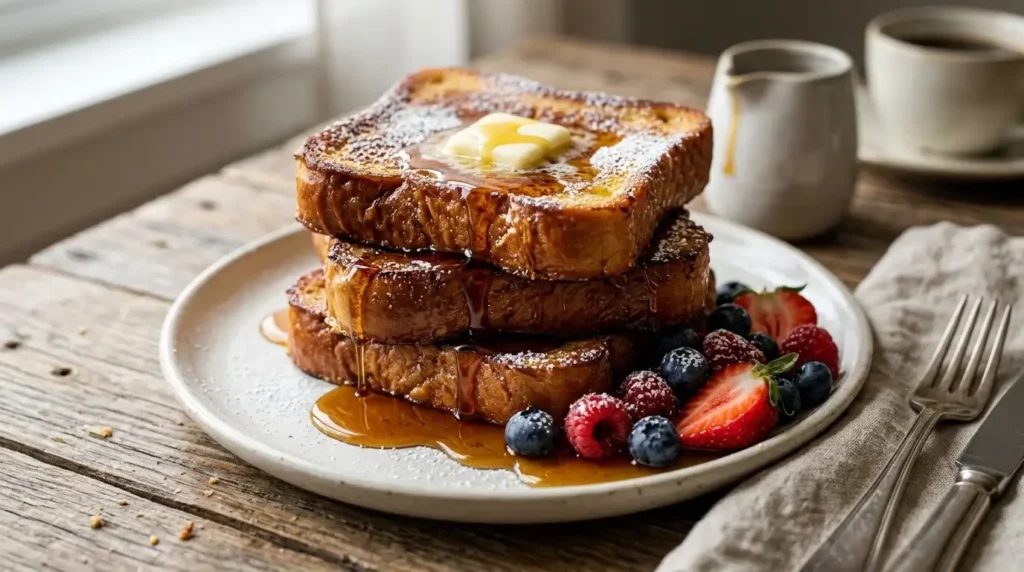
French toast is sliced bread soaked in a mixture of beaten egg and milk, then fried in butter until the outside browns and the middle sets like custard. It is a breakfast plate in the United States and pain perdu, “lost bread,” in France. The dish is old enough that no country can claim it, and the most popular story about its name does not survive a check.
Video: Medieval French Toast, from the Tasting History with Max Miller YouTube channel
A Roman ancestor
Bread, milk, oil and honey
The oldest recipe usually cited comes from the Roman cookbook attributed to Apicius. Jannelle Mestas, in a December 2014 history seminar paper posted on the University of Southern California’s Scalar site, described the recipe filed as aliter dulcia, “another sweet dish”: fine white bread with the crust removed, soaked in milk, fried in oil and covered with honey. Mestas noted that the Apicius text, as translated by Joseph Vehling, includes no eggs, which arrived in later versions.
Medieval golden bread
Suppe dorate and pain perdu
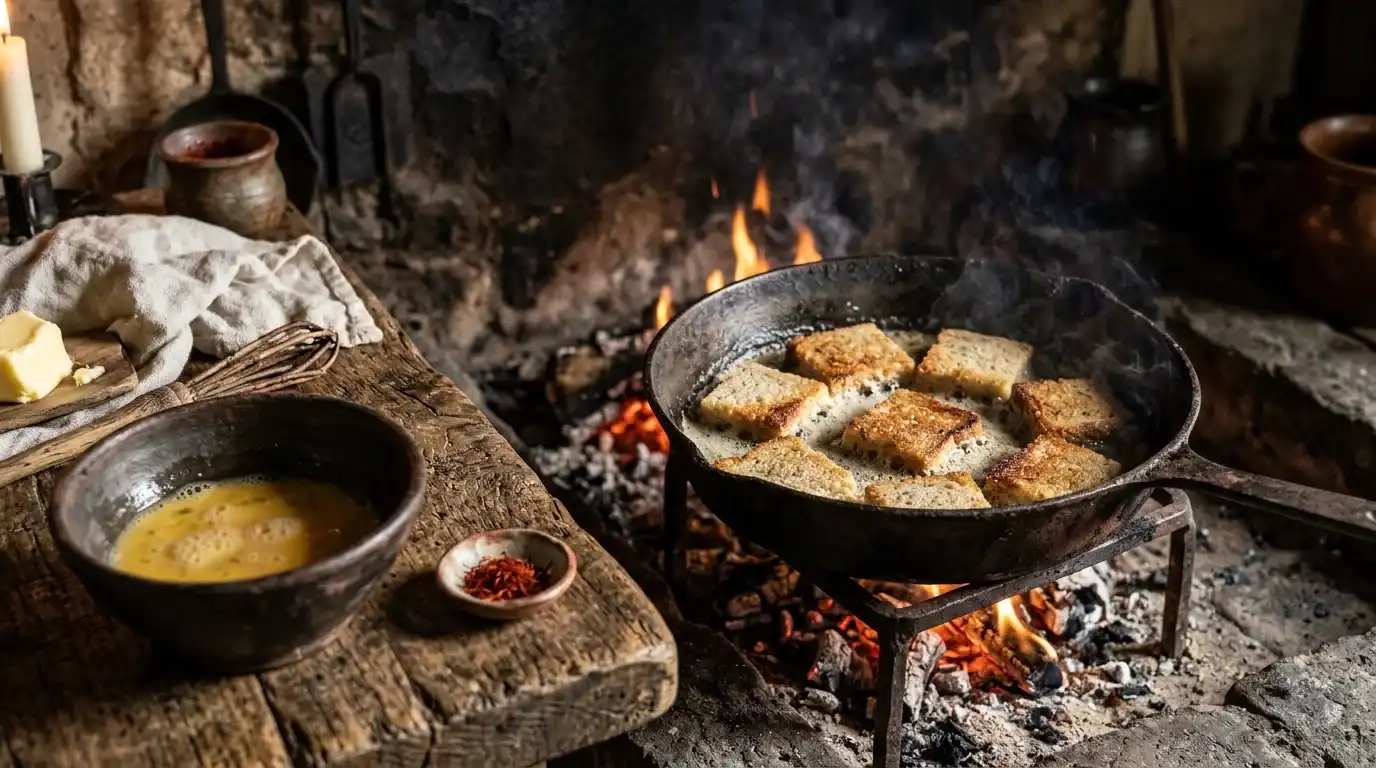
By the Middle Ages the dish had eggs and a courtly reputation. Mestas describes “golden sops,” suppe dorate, in the 15th-century cookbook of Maestro Martino of Como: crustless squares of bread, lightly toasted, soaked in sugared beaten eggs with rosewater, fried in butter, and finished with saffron-colored rosewater and sugar.
Brendan Koerner, writing Slate’s Explainer in September 2003, traced a similar dish in medieval England under the name suppe dorate, and noted that historians are unsure whether the Normans brought it from what is now France, where they may have eaten “tostees dorees” before 1066. Koerner explained pain perdu as “lost bread,” probably because the batter rescued bread that would otherwise be thrown out.
The English name
1660, and no eggs
The term “French toast” is English and early. Koerner reported that the Oxford English Dictionary dates it to 1660, in “The Accomplisht Cook,” where the recipe had no eggs at all: toasted bread soaked in wine, sugar and orange juice. He wrote that the first printed egg-based recipe under that name appeared in 1870.
The dish has collected other names along the way. Slate’s list includes nun’s toast, poor knights of Windsor, egg toast, Spanish toast, German toast, torrija in Spain and arme Ritter in Germany. Mestas adds eggy bread and Queen Esther’s bread.
The Joseph French myth
An innkeeper and a lost apostrophe
A popular story credits an Albany, New York, innkeeper named Joseph French, who supposedly served the dish in 1724 as “French’s toast” until a grammatical slip dropped the apostrophe and the s. Slate called the tale contradictory and highly dubious, and the 1660 English use of the term predates it by more than six decades. Slate also dismissed a related claim that the dish was called German toast in the United States until World War I.
The name did become political once. Koerner’s 2003 piece was prompted by the House cafeteria renaming the dish “Freedom toast” in the spring of that year, amid anger over France’s opposition to the Iraq war, and a member of Congress asking for the old name back.
In American kitchens
From leftovers to weekend brunch
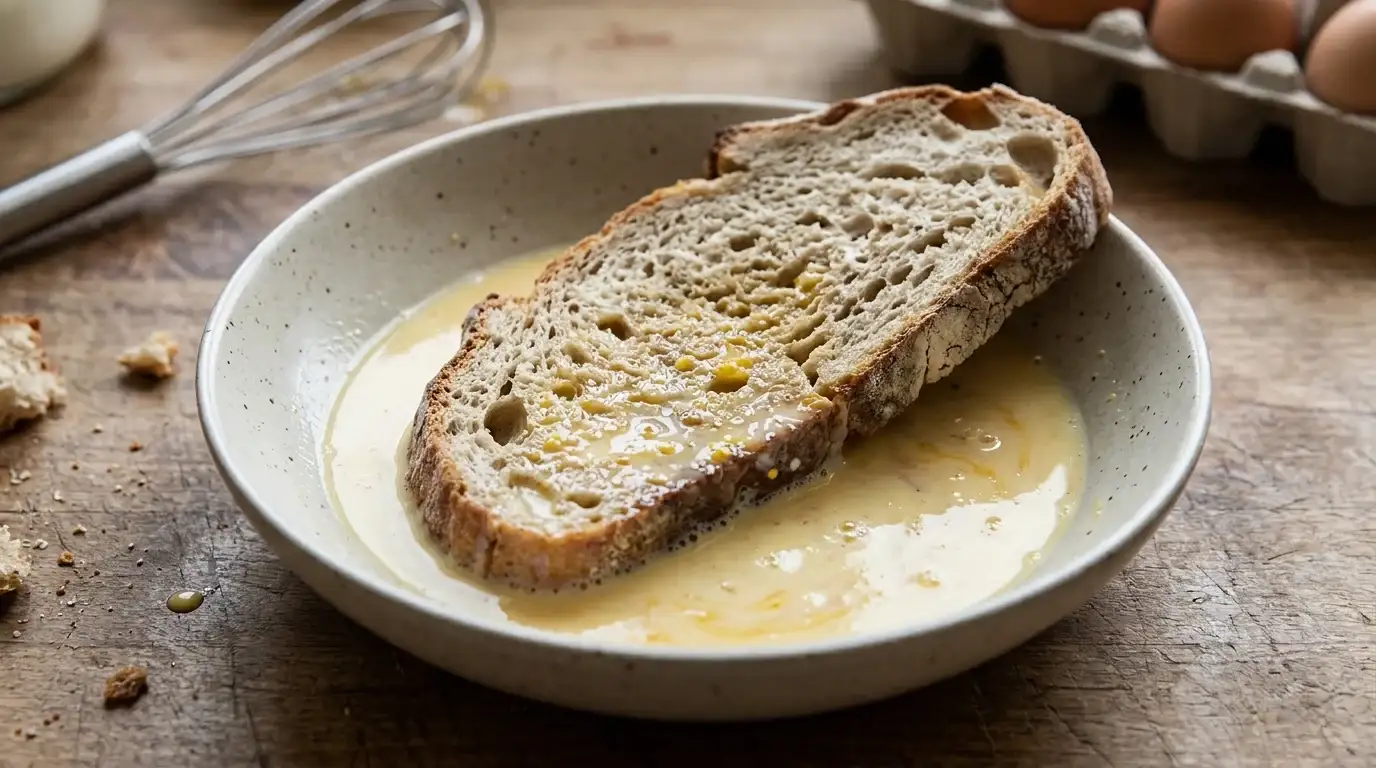
Mestas traced the dish’s American printed record through the 1887 “White House Cookbook,” which called it “American toast,” and an 1890 cookbook offering “Queen Elizabeth’s Toast” and “Spanish Toast.” Progressive-era cookbooks on using leftovers and women’s magazines kept it in circulation, and it grew into a weekend breakfast and, later, a canvas for richer restaurant versions.
French toast shares technique with griddled sandwiches. The browning on its surface is the same chemistry explained in Grill Cheesy’s Maillard reaction and bread browning, and a griddled French bread classic of another kind is the croque monsieur. Stale bread, the original reason for the dish, is explained in why bread goes stale.
A griddle for a batch
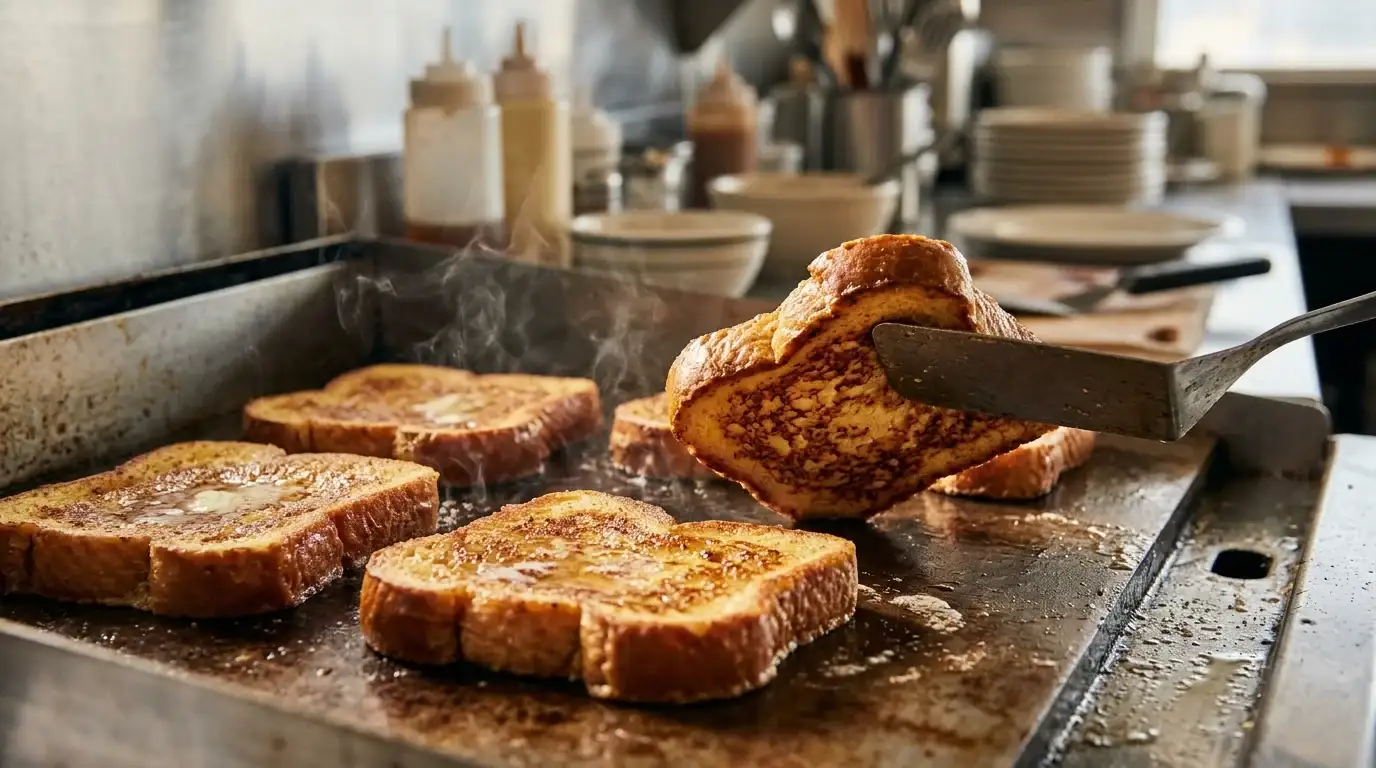
A large electric griddle cooks several slices at an even temperature:
- Presto 07061 22-Inch Electric Ceramic Griddle: a 22-inch countertop griddle with a ceramic nonstick surface. See it on Amazon (affiliate link)
Video: The Presto 22-inch Griddle is Nice with One Big Flaw, from the Aaron's Rapid Reviews YouTube channel
As an Amazon Associate I earn from qualifying purchases. A commission may be earned if you buy through this link, at no extra cost to you.
Sources
- Jannelle Mestas, French Toast: Lasting Indulgence (History 493 seminar paper, Dec. 4, 2014, USC Scalar): https://scalar.usc.edu/works/food-in-america/media/French%20Toast%20Arial.pdf
- Brendan Koerner, Slate, Is French Toast Really French? (Sept. 16, 2003): https://www.slate.com/articles/news_and_politics/explainer/2003/09/is_french_toast_really_french.html