In this story
Published air fryer grilled cheese recipes settle between 360°F and 400°F and finish in roughly 6 to 11 minutes, with one flip in most of them. Past that point the sources split: on preheating, on butter versus mayonnaise, on grated cheese versus slices, and on whether the sandwich needs a toothpick to stay in one piece. Each figure below is attributed to the page it came from, since air fryers vary and no single recipe is the standard.
Video: Air Fryer Grilled Cheese in 5 Minutes (So Crispy!) | Easy Quick Meal
What the appliance does to a sandwich
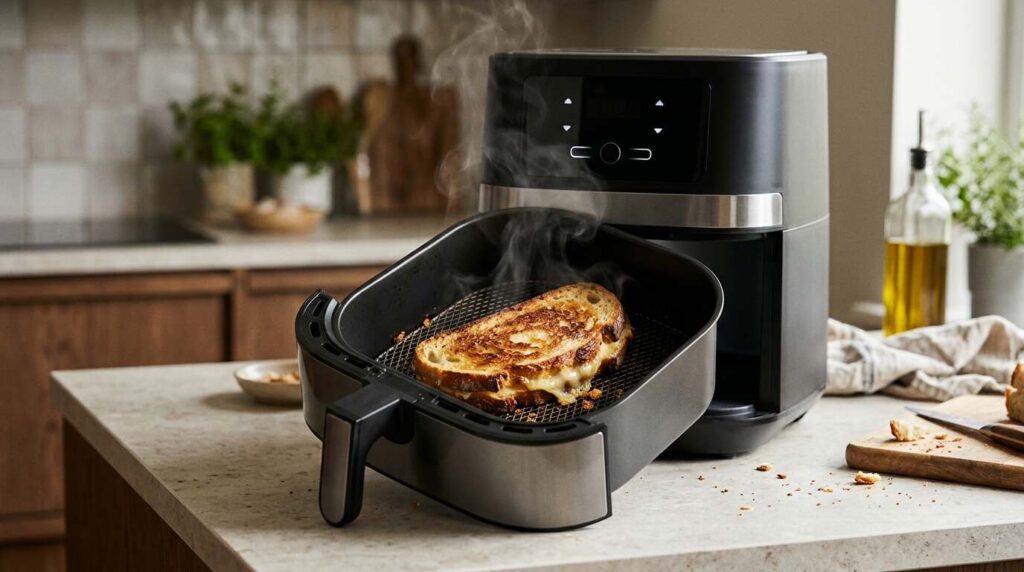
An air fryer is a small convection oven with a basket. The History Cooperative describes the design as hot air pushed at high speed around the food inside a compact chamber, which is how the machine crisps a surface with little or no oil. Philips, the company that sold the first one, says only that its models use Rapid Air Technology and cook with a tablespoon or less of oil, and the product page does not explain the mechanism.
The dates are muddier than the marketing. Tasting Table credits Dutch inventor Fred van der Weij, who started in the early 2000s and was after what he called a holy grail that many companies were looking for: crisp fries without the mess of deep frying or the dried-out result of a convection oven. That article says the prototype debuted in 2010 at IFA, the German electronics show. Hunker dates the invention to 2006 and says van der Weij sold his patent to Philips in 2010, with the first Philips model shown at IFA in Berlin that year. The History Cooperative agrees on a September 2010 launch at a Berlin fair but does not name IFA. No fetched source gives the filing date of the patent itself, so 2006 and “the early 2000s” stand as competing accounts.
Grilled cheese was a later use. The sandwich suits the machine for a simple reason, which Tasting Table’s Kat Lieu puts this way: “Since hot air circulates nicely in the air fryer, the cheese melts evenly in the sandwich.”
Temperatures and times in published recipes
Recipes fall into three temperature bands.
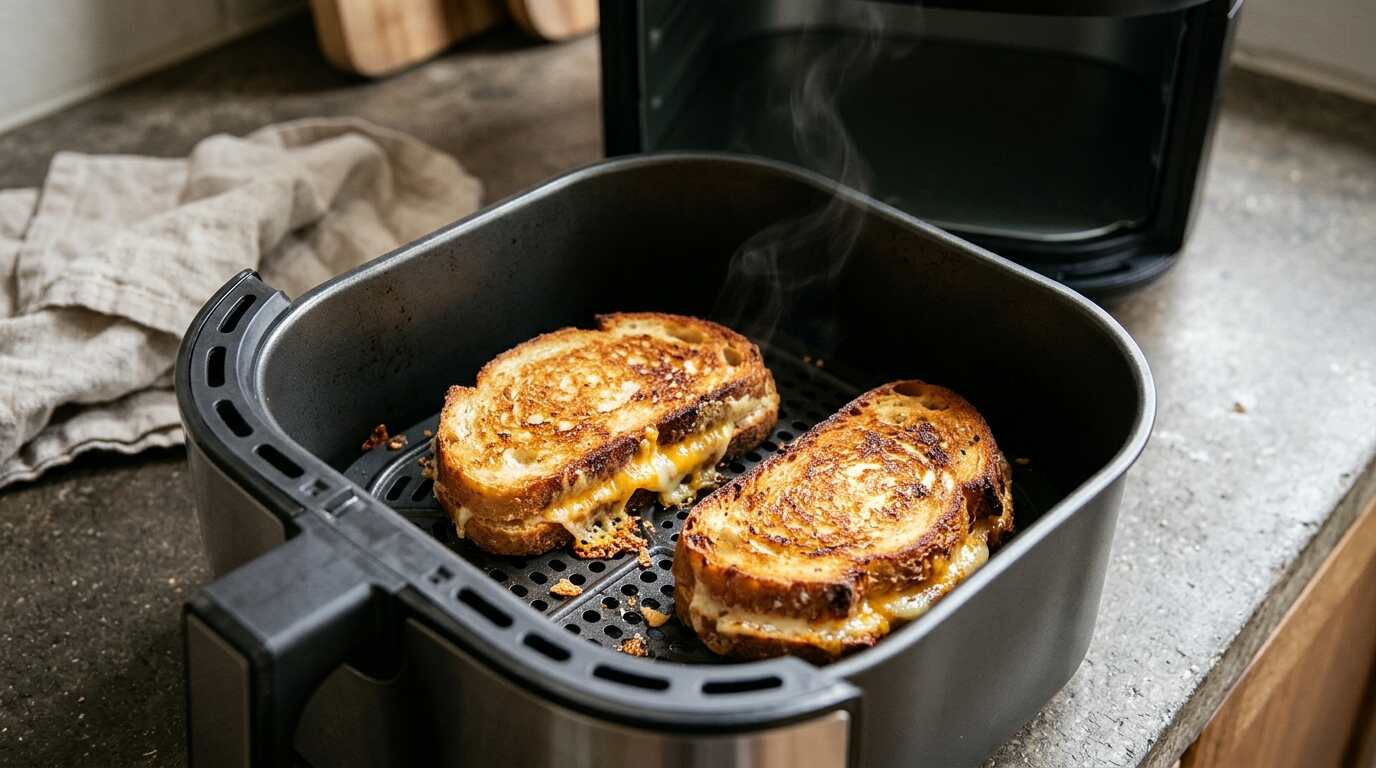
At 360°F, Becky Krystal’s Washington Post recipe, reprinted by the Portland Press Herald, preheats the machine in air fry mode, then cooks for about 8 minutes with a flip at the halfway point and a rest of 1 to 2 minutes before slicing. Erin Clarke’s Well Plated version also uses 360°F, with 4 to 6 minutes on the first side and 3 to 4 on the second. The AndiAnne page lands slightly higher, at 370°F for 4 minutes per side, with a note to start checking at the 6-minute mark.
The 375°F group is the largest. Food Network Kitchen cooks the tops for about 4 minutes, flips, and gives 2 to 4 minutes more until the cheese is fully melted; the recipe was written for a 6-quart machine and tells cooks to check the manufacturer’s guide for exact settings. Love and Lemons allows 3 to 5 minutes on the first side and 2 to 5 on the second. The Kitchen Magpie’s recipe card is the only one that adjusts for the loaf: 3 minutes per side for white bread, 4 for rye or other heavy bread.
At the hot end sit TechRadar’s 385°F and Tasting Table’s 400°F. Carrie-Ann Skinner’s TechRadar test, run in an Instant Vortex Plus, took 8 minutes at 385°F and flipped the sandwich once, gently. Lieu’s 400°F method is built inside the basket: the bottom slice and its cheese go in alone for 3 minutes, the top slice is added and pressed down for 4, and the sandwich is flipped for 4 more, about 11 minutes in all.
Preheating is a live disagreement. Krystal and Clarke preheat. Love and Lemons preheats only if the machine requires it. Lieu writes that these small convection ovens do not need the preheat that a standard oven does.
Bread
Thick slices come up repeatedly. Skinner’s test found that thin bread turns hard and crisp all the way through, and she recommended thickly sliced loaves. Krystal specifies slices about half an inch thick and names country white, sourdough or whole grain. The AndiAnne page calls sourdough, French bread and Texas toast the sturdy choices, while Food Network Kitchen’s list runs wider, from white and rye to brioche, potato bread and pumpernickel.
Weight is a practical limit. Pages that mention light bread moving in the basket solve it the same way, with a toothpick, described in the section on holding the sandwich together. Best bread for grilled cheese covers how individual loaves behave under heat in any appliance.
Cheese
Melting cheeses dominate every list. Krystal’s cheddar, Monterey Jack and Gouda; Food Network Kitchen’s American, muenster, havarti, Swiss, fontina and provolone; Clarke’s sharp cheddar paired with gruyere, fontina or gouda. The cheeses that suit the sandwich in a skillet suit it here too, and best cheese for grilled cheese sorts them by how they melt. American cheese has its own page.
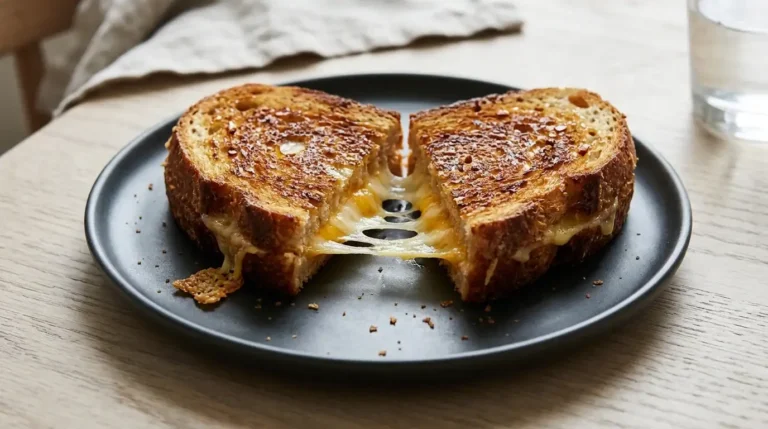
The form of the cheese is where the sources disagree. Love and Lemons recommends sliced cheese because grated cheese can make a mess in the basket. Skinner grated sharp cheddar on the largest holes of a box grater and wanted the stringiness that gave her. Krystal calls for 2 to 3 ounces of shredded cheese, and Clarke advises grating a block rather than buying pre-shredded, because pre-shredded melts less smoothly. Food Network Kitchen sticks to sliced cheese, about six slices for two sandwiches.
Butter or mayonnaise on the outside
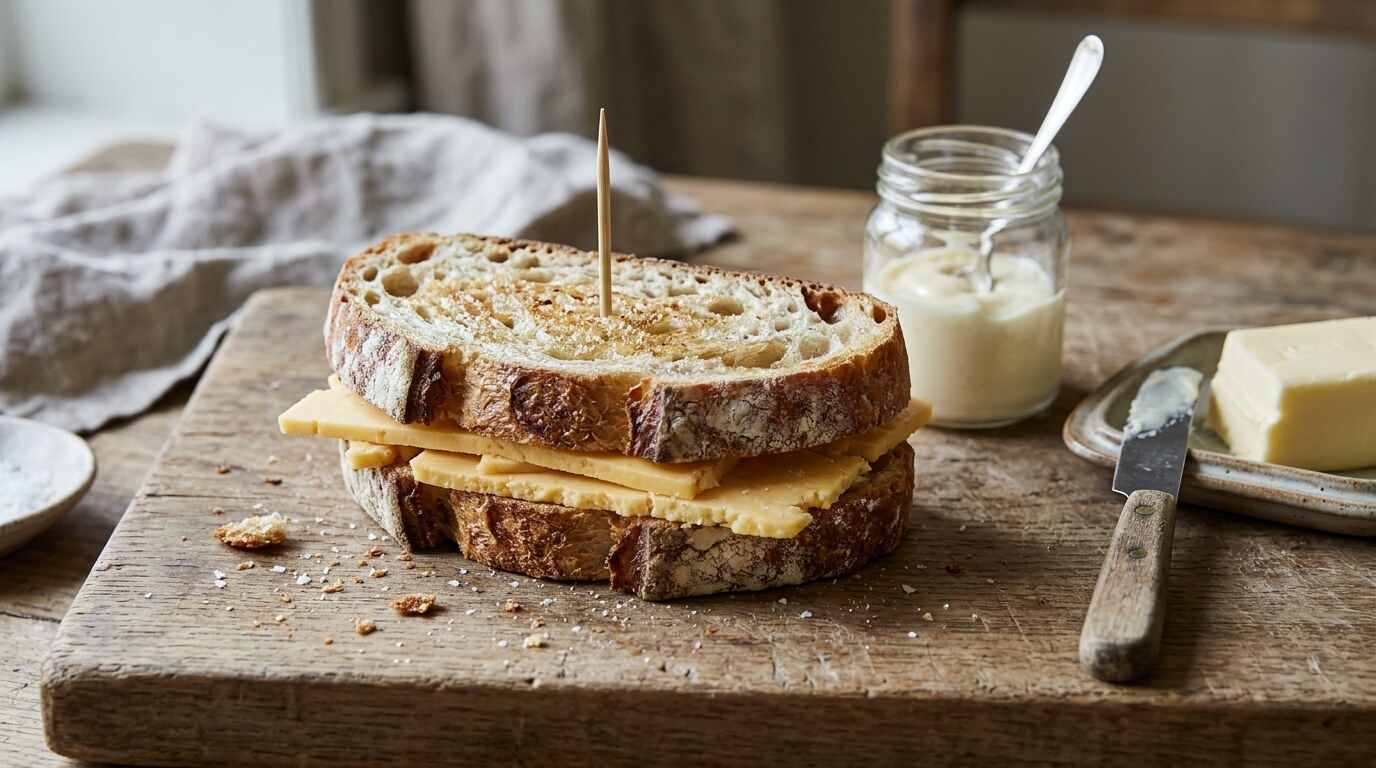
Nearly every recipe coats the outside of the bread, and Love and Lemons calls mayonnaise or butter essential for getting it crisp. Which fat to use is unsettled.
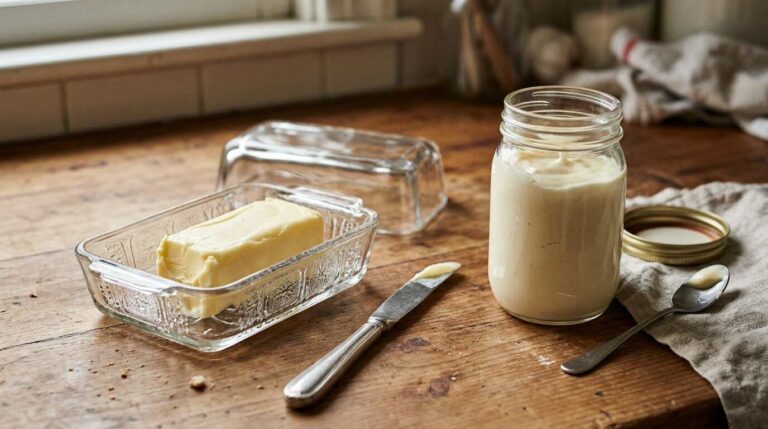
Krystal’s top pick is mayonnaise, with canola oil or softened butter as alternatives. Love and Lemons prefers mayo because it browned better in testing, and The Kitchen Magpie recommends a thin layer of it because it has a higher smoking point than butter and spreads more easily. Lieu favors butter for crispness and says mayonnaise also works. Skinner used a tablespoon of butter on the outside of both slices. Food Network Kitchen offers either at a tablespoon per slice, and the AndiAnne recipe lists them as interchangeable.
The Kitchen Magpie also suggests real mayonnaise over Miracle Whip, and a reader comment on that page says Miracle Whip contains too much water and leaves the bread soggy. The comment is anecdotal.
Fat does not disappear because air is doing the heating. Krystal writes that “it’s best to think of the air fryer as a less-fat, not no-fat, strategy for cooking.” Lieu’s comparison is with the pan: the air fryer needs much less oil than a skillet, which the article credits with avoiding the oily finish of stovetop versions.
Holding the sandwich together
Moving air can shift a loosely assembled sandwich, and several sources address it directly. The Kitchen Magpie and AndiAnne both suggest running a toothpick through the middle of the sandwich, and the Kitchen Magpie adds that a top slice that flies off can be fixed by opening the sandwich and pinning it. Clarke secures hers with toothpicks at two opposite corners and removes them before flipping. Lieu’s method sidesteps the problem by cooking the bottom slice first and pressing the top slice down onto it.
Basket space matters as well. Love and Lemons advises cooking only as many sandwiches as fit in a single layer, since crowding produces uneven cooking. Krystal says most mid-size or larger baskets hold two, and AndiAnne recommends one or two at a time.
Skinner’s test turned up the messier details. A sheet of parchment under the sandwich hampered browning, leaving one slice paler. Setting the sandwich directly on the crisper plate fixed that, though cheese burned onto the plate and needed a dishwasher cycle to remove. An 8-inch pan that she tried first was too small and squashed the bread.
Against the skillet and the oven
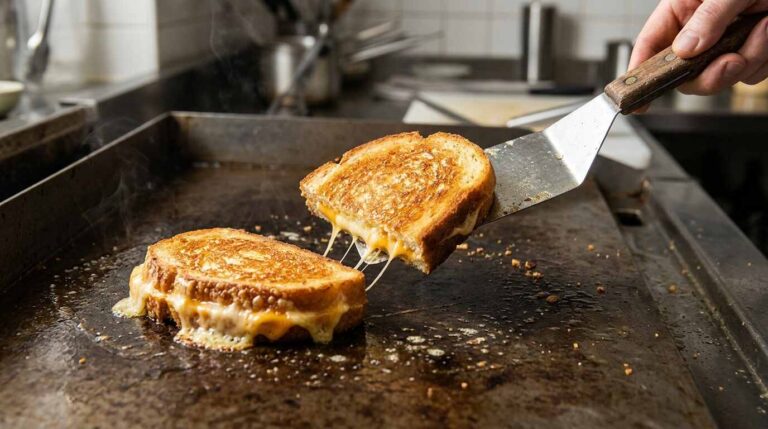
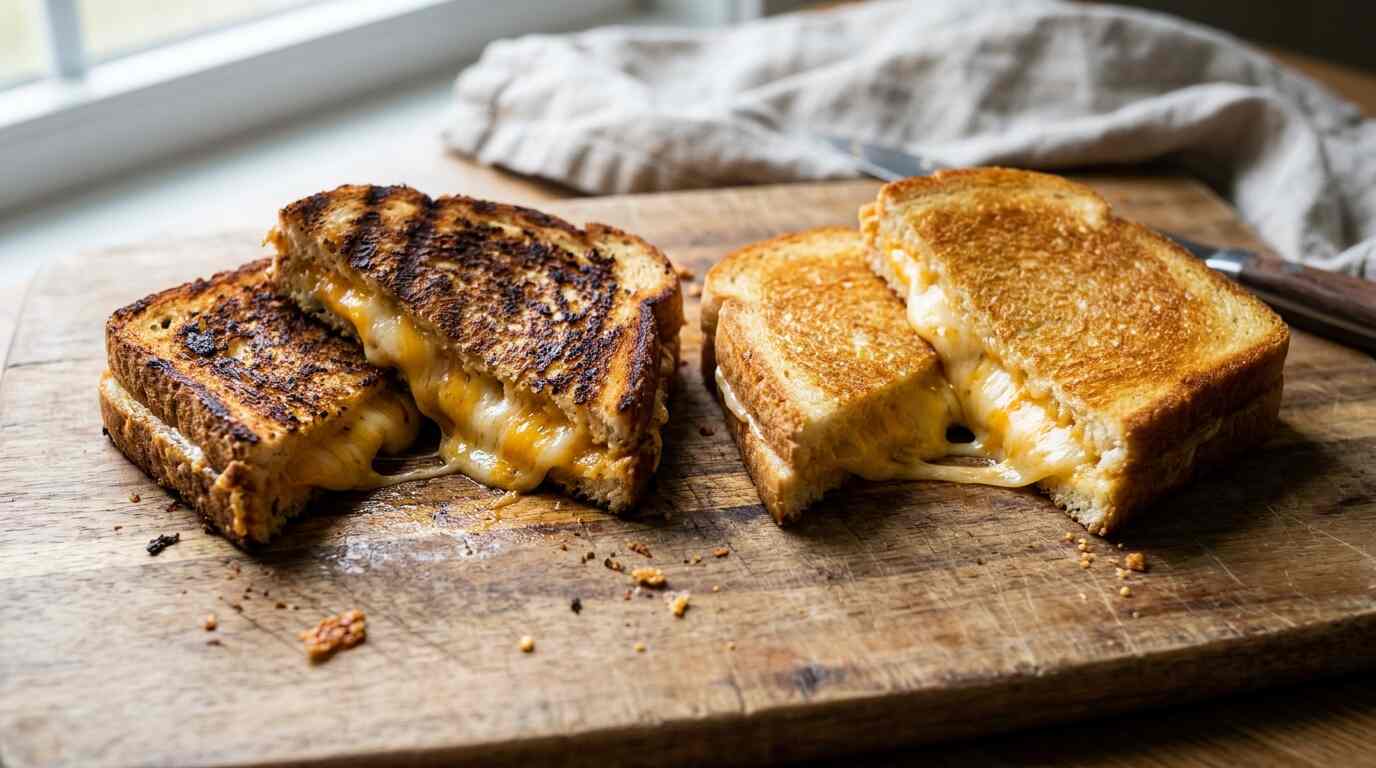
America’s Test Kitchen’s skillet method is the baseline. A 12-inch cast-iron pan heats over medium for 3 minutes, the heat drops to medium-low once two sandwiches are in, and each side takes about 2 to 4 minutes, with the next two sandwiches following. That works out to 4 to 8 minutes of cooking per sandwich, and the pan needs attention throughout. Skinner describes stovetop cooking as something that must be watched closely because pan temperature drifts, and found the air fryer far less demanding. The Takeout’s write-up of Ree Drummond’s version calls it much more hands-off and just as quick as the stovetop.
Melt quality is where the air fryer claims its edge. The notes with Krystal’s recipe say the bread browns more evenly from edge to edge than in a skillet and that the cheese melts fully, which is hard to achieve in a skillet. Drummond is quoted saying that “the cheese melts at a perfectly even pace.” These are cooks’ reports, not controlled comparisons.
The oven handles volume better. Emily Dingmann’s sheet-pan recipe at My Everyday Table bakes four sandwiches at 450°F for 10 to 12 minutes with a flip at the midpoint, on a pan that spent the preheat inside the oven, and the same pan can hold six or eight. The air fryer’s basket caps a batch at roughly two. The grilled cheese in the oven post covers the sheet-pan and two-pan methods in full, along with waffle irons and presses.
Sources:
- History Cooperative, “Who Invented the Air Fryer?”: https://historycooperative.org/who-invented-the-air-fryer/
- Philips, Viva Collection Airfryer with Rapid Air Technology: https://www.usa.philips.com/c-p/HD9220_56/viva-collection-airfryer-with-rapid-air-technology/overview
- Tasting Table, “The Crispy Conundrum That Inspired The Inventor Of The Air Fryer”: https://www.tastingtable.com/1149069/the-crispy-conundrum-that-inspired-the-inventor-of-the-air-fryer
- Hunker, “Everyone Called It A Fad”: https://www.hunker.com/2221648/air-fryer-fad-most-used-kitchen-appliance/
- Tasting Table, “The Ideal Temperature For Air Fryer Grilled Cheese”: https://tastingtable.com/1659735/ideal-temperature-air-fryer-grilled-cheese
- Portland Press Herald (Washington Post recipe by Becky Krystal): https://www.pressherald.com/?p=7256282
- Daily Herald (Washington Post recipe by Becky Krystal), “The best grilled cheese is made in your air fryer”: https://www.dailyherald.com/20240215/food/the-best-grilled-cheese-is-made-in-your-air-fryer/
- Well Plated, “Air Fryer Grilled Cheese”: https://www.wellplated.com/air-fryer-grilled-cheese/
- AndiAnne, “Air Fryer Grilled Cheese”: https://andianne.com/air-fryer-grilled-cheese/
- Food Network Kitchen, “Air Fryer Grilled Cheese”: https://www.foodnetwork.com/recipes/food-network-kitchen/air-fryer-grilled-cheese-16412915.amp
- Love and Lemons, “Air Fryer Grilled Cheese”: https://www.loveandlemons.com/air-fryer-grilled-cheese/
- The Kitchen Magpie, “Air Fryer Grilled Cheese Sandwiches”: https://www.thekitchenmagpie.com/air-fryer-grilled-cheese-sandwiches/
- TechRadar, “I made grilled cheese in an air fryer and it was better than ever”: https://www.techradar.com/news/i-made-grilled-cheese-in-an-air-fryer-and-it-was-better-than-ever
- The Takeout, “The Quick And Easy Way Ree Drummond Makes Grilled Cheese Sandwiches”: https://www.thetakeout.com/1830522/ree-drummond-air-fryer-grilled-cheese/
- America’s Test Kitchen, cast-iron grilled cheese: https://www.americastestkitchen.com/recipes/9856-cast-iron-grown-up-grilled-cheese-sandwiches-with-cheddar-and-shallots
- My Everyday Table, “10-Minute Sheet Pan Grilled Cheese”: https://myeverydaytable.com/10-minute-sheet-pan-grilled-cheese/
- Easy Quick Meal (YouTube), “Air Fryer Grilled Cheese in 5 Minutes (So Crispy!)”: https://www.youtube.com/watch?v=ffdmCvZPAaI