In this story
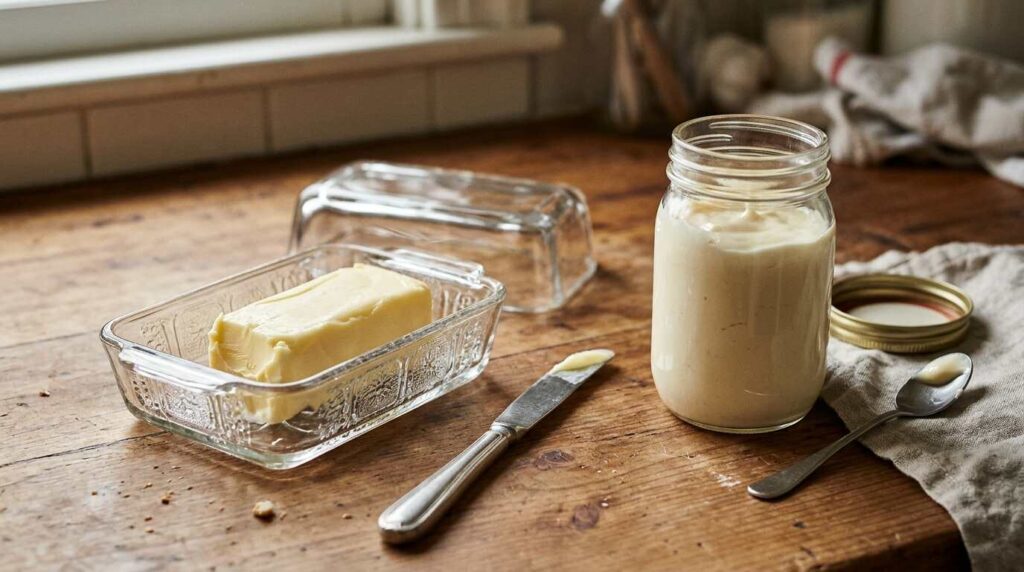
Butter and mayonnaise both put fat on the outside of a grilled cheese, but they are different materials, and the difference decides how fast the bread browns, how it tastes and how closely the pan needs watching. Butter is at least 80 percent milkfat, with water and a small share of milk solids making up the rest. Mayonnaise is defined by federal rule as at least 65 percent vegetable oil bound with egg yolk and acid. Published kitchen tests by America’s Test Kitchen, Tasting Table, Food & Wine, Delish and others reach different verdicts on which is better, and the disagreement says as much as any single result.
Video: Does Mayo or Butter Make A Better Grilled Cheese??? | Unqualified Cooking
What each fat is made of
Oklahoma State University Extension’s butter fact sheet states that USDA defines butter as containing not less than 80 percent milkfat by weight. The same page reports that the Codex standard allows a maximum of 16 percent water and 2 percent non-fat solids. Those solids are the part that matters for browning, and they are small in quantity.
Mayonnaise has its own legal definition. Under 21 CFR 169.140, it is an emulsified semisolid food made from vegetable oil, an acidifying ingredient (vinegar, lemon juice or lime juice) and an egg yolk-containing ingredient, with vegetable oil making up at least 65 percent of the weight. Salt and sweeteners are permitted but not required.
Reduced-fat mayonnaise falls outside that arrangement. America’s Test Kitchen reports that a low-fat product has about one-third of the fat of regular mayonnaise, with water as the first ingredient, and its testers found it browned spottily. Delish’s tester gave the same warning from the other direction, saying the extra water steams the bread rather than toasting it. The three sources that raised the point told cooks to use full-fat mayonnaise.
Smoke points and what burns first
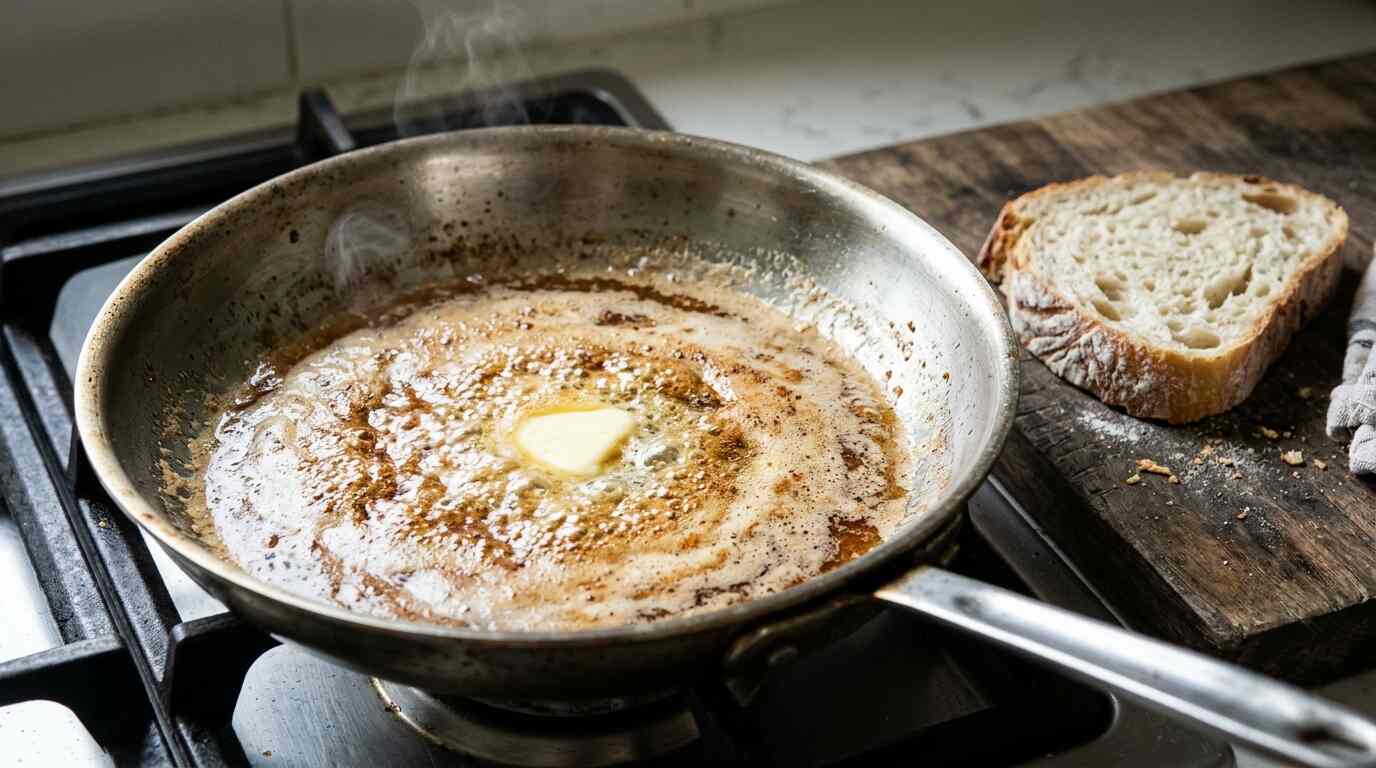
The common argument for mayonnaise is that it tolerates more heat. Food Republic puts butter’s burning point at about 350 degrees Fahrenheit and mayonnaise at around 450, depending on type and brand. The Takeout’s butter-versus-mayo test gives a wider range for butter, 302 to 350 degrees, and credits a cooking site called Firefighter Insider for the 450-degree figure on mayonnaise. Neither article measured these numbers; both repeat them.
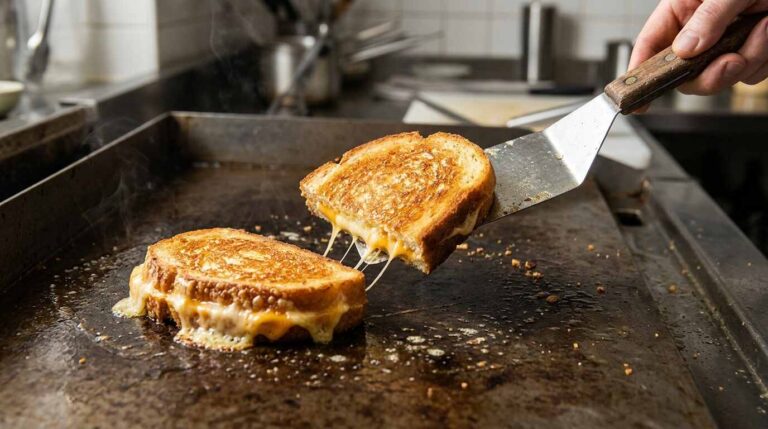
What the tests did measure was behavior in the pan. In Tasting Table’s side-by-side, run on milk bread with American cheese in a nonstick skillet over medium-low heat, the butter pan began to smoke at about the two-minute mark. The mayonnaise pan did not smoke at any point. The writer added that the butter, even at its smoking point, still smelled good, and that the browned butter’s sweet nuttiness was hard to beat.
The reason butter smokes first is the solids, not the fat. Ideas in Food tested butter against a butter-and-oil blend and concluded that butter has solids in it that will burn. Adding oil, they found, did not raise the true smoke point; it diluted the solids so that browning appeared later, about 25 seconds in versus about 12 for butter alone. Both pans hit 200 degrees Celsius when the solids began to burn. The Takeout describes the solids as composed of lactose, minerals and vitamins and says burnt solids pass their flavor to the food.
A cook working with butter therefore has a narrow window. Delish’s tester summed it up with the line “Brown butter turns into burnt butter in a matter of seconds”. Mayonnaise, in the same test, allowed more time to brown without burning, but the tester judged its neutral flavor to lack butter’s nostalgic taste.
Browning chemistry: milk solids against egg and sugar
Browning on toast, seared meat and grilled sandwiches is mostly the Maillard reaction, which MasterClass describes as a non-enzymatic browning reaction between amino acids and reducing sugars. It occurs at roughly 140 to 165 degrees Celsius (280 to 330 degrees Fahrenheit), and the same page notes that it does not proceed well in the presence of moisture. Caramelization, a separate process that involves only simple sugars, takes over at higher temperatures.
Butter carries both reactants in its solids. America’s Test Kitchen’s guide to browned butter says the milk solids contain sugars and amino acids, that heating drives off the water, and that the Maillard reaction between those compounds produces the new flavor and the color. Solids that go very dark or black have burned and taste bitter.
Mayonnaise brings a different set. America’s Test Kitchen’s panini article argues that mayo browns bread better than butter because mayo contains fat (from oil) plus sugar plus protein from egg yolks, a combination it calls a toasty one-two punch. The sugar part depends on the jar. Duke’s, according to a profile of its founder, was made without sugar from the start, and the federal definition lists sweeteners as optional. Food Republic offers a version of the egg argument: the yolks’ protein and the oil help deliver better browning and crispiness.
Read together, the sources suggest two routes to the same brown crust. Butter supplies its own protein and sugar, concentrated in a thin layer that colors quickly and also scorches quickly. Mayonnaise spreads its egg protein through a large volume of oil, which holds heat evenly against the bread. None of the pages cited here tested that mechanism directly, so it remains a reading of the chemistry, not a finding.
What the tests found
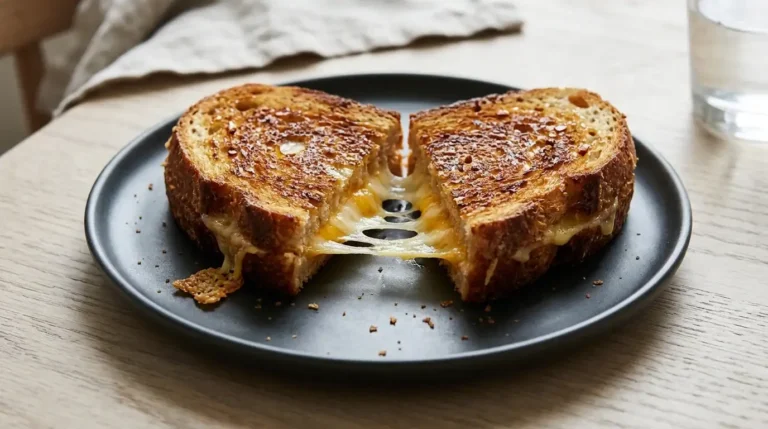
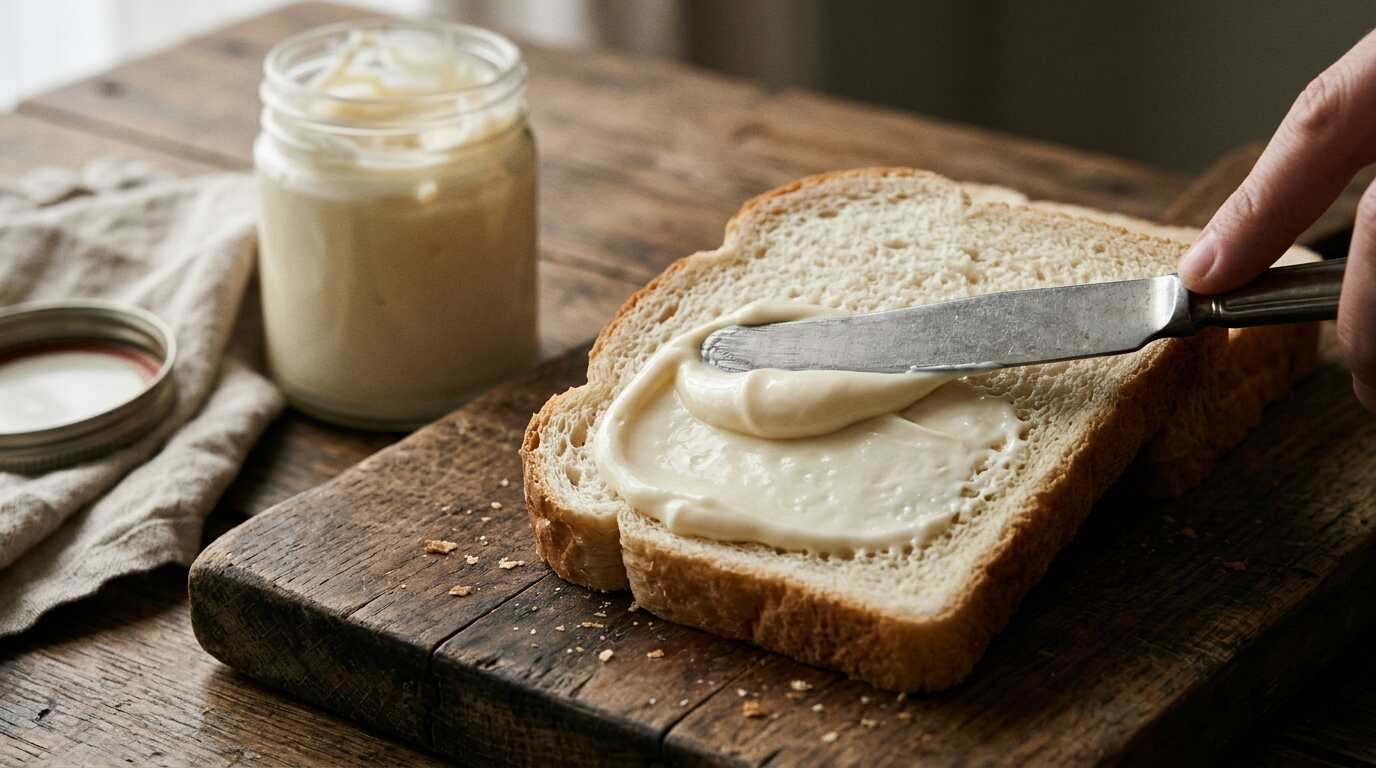
The results do not line up behind one winner. A Cook’s Country randomized tasting, reported by America’s Test Kitchen, found that butter, mayonnaise and olive oil all produced nicely browned, crispy sandwiches. Butter tasted buttery. Mayonnaise tasted slightly tangy, which the page attributes to the lemon juice or other acid in most jarred mayo. The page adds that mayonnaise is spreadable straight from the refrigerator while butter has to soften first. This test and the Tasting Table one below are also summarized, with cooking times, in the post on the grilled cheese sandwich.
Tasting Table’s test favored mayonnaise overall. Butter browned evenly but left some spots untoasted until a second flip and light pressure with a spatula; the mayonnaise sandwich browned its edges faster than its center, which a light press corrected. Tasters rated the butter version higher on flavor, calling the mayonnaise slightly eggy with a lingering tang, and found it less greasy. Butter needed about an hour out of the refrigerator. Duke’s mayonnaise came out about 33 cents per ounce against 69 cents for Kerrygold butter, by the article’s figures.
The Takeout’s tester, a writer named Goldsby, found no difference. Both versions browned evenly and were equally crispy, and she tasted no difference, concluding that the mayonnaise switch is not a meaningful upgrade. TheCookful’s 2017 test, with two tasters, ran white bread and processed cheese over low heat and landed the other way: butter browned more evenly and left the bread drier and crumblier, while mayonnaise gave a crisp surface over fluffier bread. They still preferred butter for taste.
Food & Wine’s Ann Taylor Pittman, testing six outside fats in an October 2025 article, scored butter 10 out of 10 for a crisp, golden, nutty result and mayonnaise 4 out of 10, writing that mayonnaise’s flavor was “overpowering and not complementary to the cheese”. A February 2026 Delish test went the other way on the combination, preferring mayonnaise on the bread with a small pat of butter heated in the pan, which browned deeply and avoided burnt butter solids.
Across these tests, browning was a draw or a narrow call, flavor leaned toward butter, and convenience leaned toward mayonnaise. Almost every test was a single cook or a pair of tasters, with one sandwich per fat, so none settles the question statistically. The bread and cheese also varied from test to test, and the choice of bread is covered in the post on the best bread for grilled cheese.
Other fats on the outside
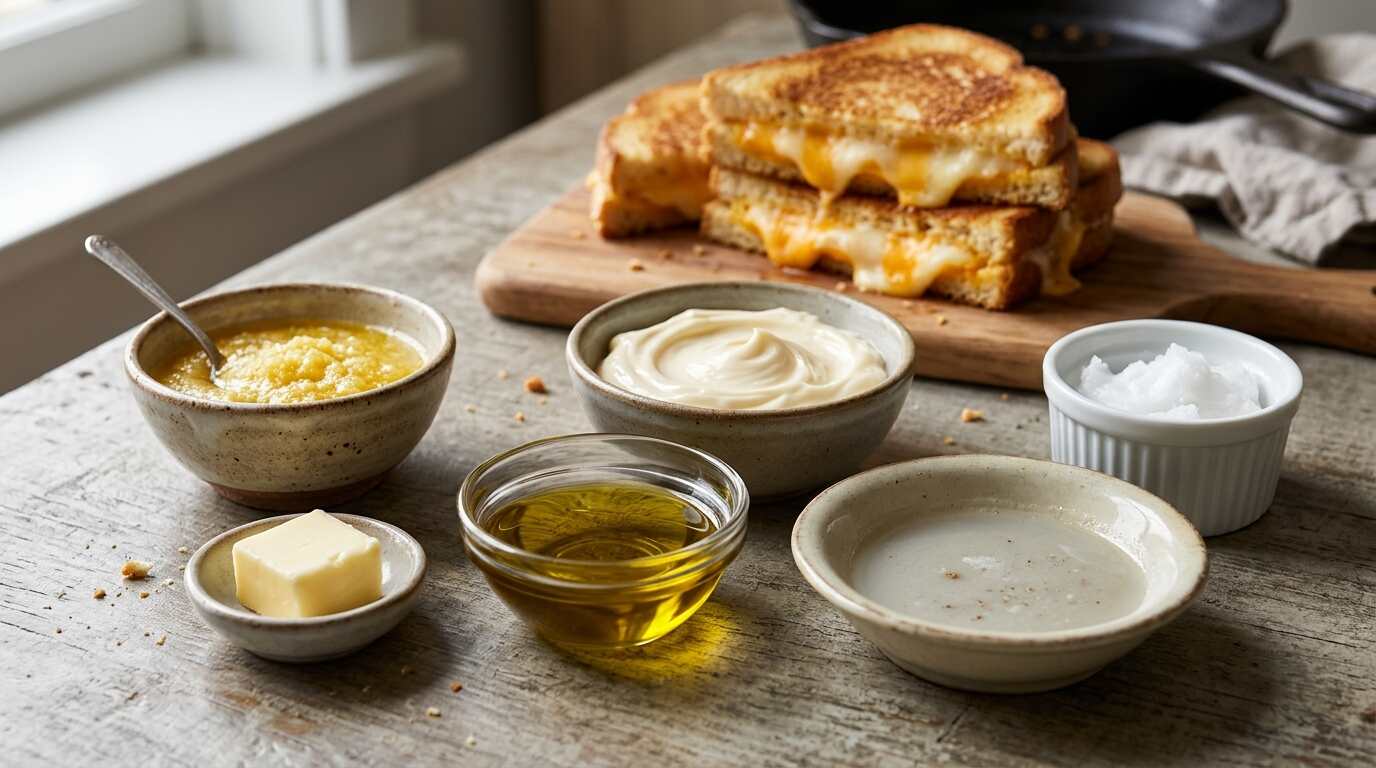
The same Food & Wine test is the broadest of the group. Coconut oil scored 9 out of 10, with the crispiest crust and a neutral flavor that let the cheese come through. Bacon grease scored 8.5 and tasted savory and smoky, though it partly overshadowed the cheese. Olive oil scored 7: very crispy, with a fruity, peppery flavor that clashed with the cheese. America’s Test Kitchen reached the same verdict on olive oil from a separate tasting, saying the extra-virgin sample tasted too strongly of the oil.
Ghee and clarified butter sit between butter and oil. Ghee, per The Takeout, is made by heating butter until the solids separate and brown, then straining them out. The Takeout gives ghee a smoke point of 485 degrees Fahrenheit against about 350 for butter, and Ideas in Food puts it at 250 degrees Celsius. Food Republic gives clarified butter a range of 375 to 485 degrees and notes the extra time to prepare. The cost shows up in browning. A Yahoo Lifestyle writer who compared butter, mayonnaise and ghee found that ghee, having no milk solids, does not brown the way butter does, and recommended it only when nothing else is on hand. That result fits the chemistry above, since the amino acids and sugars that drive browning in butter are in the solids that ghee discards.
Manufacturers have noticed the split. In November 2025, Tillamook County Creamery Association and the Japanese mayonnaise brand Kewpie released Butternaise, a limited-edition spread of Tillamook unsalted butter and Kewpie organic mayonnaise with spices, sold online as part of a $15 kit with cheese slices and a spreader, according to Food Network. It is a commercial version of the butter-and-mayonnaise hybrid that Delish’s tester arrived at by hand.
Where Duke’s and Hellmann’s come in
Two American brands dominate the argument, and their histories are tied to the sandwich more closely than most condiments. Hellmann’s own parent company, Unilever, says Richard Hellmann, a German immigrant, started the brand in 1905 in a New York City delicatessen, selling mayonnaise made from his wife’s recipe. A profile on Strong Women in History identifies her as Margaret Vossberg Hellmann and reports that the couple opened on Columbus Avenue, began wholesale production by 1912 and sold the company to Best Foods in 1927. Researchers quoted there believe the recipe used oil, raw egg yolks, white vinegar, salt, sugar and lemon juice.
Duke’s began with sandwiches. KQED reports that Eugenia Duke and her daughter made egg salad, chicken salad and pimento cheese sandwiches in 1917 and sold them for 10 cents each to soldiers at Camp Sevier near Greenville, South Carolina, then launched Duke’s Mayonnaise in 1923 after her top salesman argued that the spread was what sold the sandwiches. She sold the company to the C.F. Sauer Company in 1929. The sources disagree on the timing of the first bottled batch: the South Carolina Encyclopedia says about 1917 in her home and a plant in 1923, while the Strong Women profile has bottling start about five years after 1917. The encyclopedia also writes the camp as Fort Sevier. Both accounts agree the recipe used cider vinegar and left out sugar.
Neither the Unilever page nor the Duke’s histories mention grilled cheese. Their connection to the debate is the formulas themselves. A mayonnaise with no sugar, such as Duke’s, gives the Maillard reaction only egg protein to work with, and a sweetened one gives it both. Whether that shows up on the bread was not tested in any source fetched for this post. Tasting Table used Duke’s and Delish used Hellmann’s, and their conclusions differed in other ways, so no clean comparison between the two is available.
Sources:
- Oklahoma State University Extension, “Butter: Chemical and Physical Properties and Health Effects” (FAPC-253): https://extension.okstate.edu/fact-sheets/butter-chemical-and-physical-properties-and-health-effects-fapc-253
- eCFR, 21 CFR 169.140, Mayonnaise: https://www.ecfr.gov/current/title-21/chapter-I/subchapter-B/part-169/subpart-B/section-169.140
- America’s Test Kitchen, “Is Mayonnaise Better Than Butter on Grilled Cheese?”: https://www.americastestkitchen.com/how_tos/13705-is-mayonnaise-better-than-butter-on-grilled-cheese
- America’s Test Kitchen, “Should You Put Butter or Mayo on Grilled Cheese Sandwiches?” (Eden Faithfull, May 9, 2023): https://www.americastestkitchen.com/articles/7184-should-i-use-butter-or-mayo-on-the-outside-of-my-grilled-cheese
- America’s Test Kitchen, “For the Toastiest Panini, Put Mayonnaise on the Outside” (Tess Berger, Jan 12, 2022): https://www.americastestkitchen.com/articles/4250-for-the-toastiest-panini-put-mayonnaise-on-the-outside
- America’s Test Kitchen, “How to Make Browned Butter”: https://www.americastestkitchen.com/articles/7960-how-to-make-browned-butter
- Delish via AOL, “Mayo vs. Butter: I Found Out Which One Gives You A Perfectly Golden Grilled Cheese” (Gabby Romero, Feb 6, 2026): https://www.aol.com/articles/mayo-vs-butter-found-one-162035574.html
- Food Republic, “You Should Be Using Mayo (Not Butter) For The Crispiest Grilled Cheese”: https://www.foodrepublic.com/1451178/use-mayo-instead-butter-crispy-grilled-cheese
- Tasting Table, “Butter Vs. Mayo: We Resolve The Debate Over Which Makes A Better Grilled Cheese”: https://tastingtable.com/1161681/butter-vs-mayo-we-resolve-the-debate-over-which-makes-a-better-grilled-cheese
- Ideas in Food, “Essential Observations on Cooking with Butter and Oil”: https://ideasinfood.com/2015/08/13/essential-observations-on-cooking-with-butter-and-oil/
- The Takeout, “Why Ghee Has A Higher Smoke Point Than Butter”: https://www.thetakeout.com/1741414/why-ghee-higher-smoke-point-butter/
- The Takeout, “The Great Grilled Cheese Debate: Is Butter Or Mayo Better?”: https://www.thetakeout.com/1839447/butter-mayo-grilled-cheese/
- MasterClass, “Maillard Reaction Explained”: https://www.masterclass.com/articles/maillard-reaction-explained
- TheCookful, “Butter vs Mayo Grilled Cheese Taste Test”: https://thecookful.com/butter-vs-mayo-grilled-cheese-taste-test
- Food & Wine via AOL, “I Tested 6 Ways to Make Grilled Cheese” (Ann Taylor Pittman, Oct 2, 2025): https://www.aol.com/lifestyle/tested-6-ways-grilled-cheese-130000353.html
- Yahoo Lifestyle, “Butter vs. Mayo vs. Ghee: What’s the Best for Cooking Grilled Cheese?”: https://www.yahoo.com/lifestyle/butter-vs-mayo-vs-ghee-210251226.html
- Food Network, “Where to Buy Tillamook Butternaise” (Nov 6, 2025): https://www.foodnetwork.com/fn-dish/news/where-to-buy-tillamook-butternaise
- Unilever USA, Hellmann’s brand page: https://www.unileverusa.com/brands/foods/hellmanns/
- Strong Women in History, “Eugenie Thomas Duke and Margaret Vossberg Hellmann: the Mayonnaise Queens”: https://strongwomeninhistory.com/2016/07/01/eugenie-thomas-duke-and-margaret-vossberg-hellmann-the-mayonnaise-queens-by-linda-harris-sittig/
- KQED Bay Area Bites, “Worth the Whisk: How the Woman Behind Duke’s Mayo Became a Tycoon”: https://www.kqed.org/bayareabites/128813/worth-the-whisk-how-the-woman-behind-dukes-mayo-became-a-tycoon
- South Carolina Encyclopedia, “Duke’s Mayonnaise”: https://www.scencyclopedia.org/sce/?p=6511
- Unqualified Cooking (YouTube), “Does Mayo or Butter Make A Better Grilled Cheese???”: https://www.youtube.com/watch?v=qPZmZR2swoo
- Grill Cheesy, “Best Bread for Grilled Cheese”: https://grillcheesy.com/best-bread-for-grilled-cheese/
- Grill Cheesy, “Grilled Cheese Sandwich”: https://grillcheesy.com/grilled-cheese-sandwich/